What's the difference?
The world is full of shock brand announcements.
Remember the time Coke suddenly changed its cola recipe? Or when Apple decided to take on Nokia with iPhone? Nobody saw those coming.
We all know how the latter turned out and even the former eventually became a marketing masterstroke.
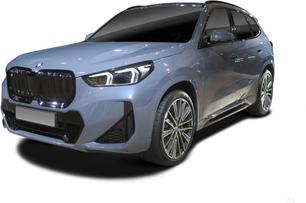
Now here's another super-surprise – a German electric luxury SUV that’s actually comparatively inexpensive. And not stingily equipped. Yep, we’re talking about the iX1.
Based on the really rather impressive third-generation X1, it decisively undercuts similarly-specified rivals from Mercedes-Benz (EQA, EQB) and Genesis (GV60).
But is the Bavarian EV SUV worth paying that little bit extra for against (only very slightly) cheaper alternatives like the Hyundai Ioniq 5, Kia EV6, Tesla Model Y, Polestar 2 and Volvo XC40 Recharge?
Let’s see.
The Audi Q8 has had a mid-life upgrade and it brings a few minor tweaks to the design, technology and equipment.
Plug-in hybrids tend to rank a little lower on my excitement scale when it comes to available powertrains because I usually find the constant charging inconvenient.
However, the electric driving range of the 60 TSFIe quattro S Line grade has been bolstered by 27km, increasing it to 74km overall.
BMW is a true EV pioneer, as the 2014 i3 and subsequent models prove. There’s never been one that we didn’t like. The only problem was that all were expensive. And at times, prohibitively so.
Astoundingly, the iX1 breaks that cycle, comparatively speaking, while impressing us with its design, quality, packaging, dynamics and equipment levels.
As it stands, the xDrive30 is one of the most convincing and best-value medium-sized luxury SUV EVs on the market right now.
Who’d have thought it from a BMW?
The updated Audi Q8 60 TFSIe quattro S line still looks good inside and out. It fits a family comfortably without feeling too big and there’s enough here to satisfy those who like the luxury features.
It's price tag will hurt it but the improved power outputs and driving range is a big plus and makes the plug-in hybrid powertrain make more sense.
Arguably the prettiest new BMW SUV you can buy today, the well-proportioned iX1 is nearly impossible to spot over its almost-identical ICE (U11) X1 siblings.
Besides the badging, look for some blue trim bits and pieces inside and out, along with additional digital touchpoints inside.
And while both ride on the same all-new platform that’s resulted in a substantially larger body compared to previous X1 generations, the EV version seems a bit more slammed.
Dimensionally, the iX1 mirrors today’s X1 at 4500mm long and 1845mm wide, and still sits on the same 2692mm wheelbase, but is 26mm shorter at 1616mm tall and offers 35mm less ground clearance at 170mm.
Result? These plus a bunch of aero enhancements mean the slipperiest iX1 manages a Cd of just 0.26, according to BMW.
And, inevitably, the extra size equals more space inside.
When it comes to style, the Q8 60 TFSIe quattro S line has it in spades. Featuring a design that looks athletic with its long lines and wide stance, you'll always be proud to hop into it.
Red calipers now come standard and they look awesome on the optioned 22-inch alloys. The update sees a redesigned front with new grille and reshaped matrix LED headlights and a 2D badge design.
While SUV coupes aren’t usually my jam, the Q8 manages to tick the 'sexy' box.
The interior is honestly the same and only die-hard fans will notice the new menu screens on the multimedia system. The cabin is a fine example of what a luxury SUV should look like because its polished, well-built and sumptuous but it has the classic Audi edge, so there is still a sporty vibe going on.
The panoramic sunroof adds some airiness to the otherwise dark cabin and the Valcona leather upholstery is liberally splashed about, so most of what you touch feels premium and soft.
BMW also says the iX1’s cabin is almost as roomy in some ways as the larger X3.
Large doors allow for easy entry and egress, onto sumptuous front seats that provide exceptional comfort and support even on longer journeys.
Surrounded by an expansive feeling of space, the interior feels light and airy, as well as fresh, inviting and premium looking – something previous-gen X1s were rarely accused of being.
We’re talking on-brand stuff here, beginning with the excellent driving position, ahead of a crisp and attractive dash that’s pleasing to behold. Push-button starting and a small toggle lever operates the transmission.
An ever-so-slightly curved (towards the driver in the best-BMW old-school way) rectangular binnacle houses two digital displays – a 10.25-inch one ahead of the driver offering an array of configurable electronic dials, as well as a 10.7-inch multimedia touchscreen.
BMW pioneered the multimedia controller more than 20 years ago with iDrive, and this descendent of that system reveals all that expertise gained by being intuitive to operate and quick to respond to commands once familiarised. Which shouldn’t take too long.
It’s all very-EV centric, as the industry inexorably moves to total electrification, but there were a couple of voice-command errors in the iX1, revealing that such systems are still far from perfect. BMW does provide audio volume and climate hard buttons, thankfully, so the basics are looked after.
Speaking of which, the iX1 offers decent levels of vision out, superb ventilation and ample storage in the doors, on the dash and between the front seats. And, as we’ve noted previously in BMWs, the upright smartphone charger is a clever idea. Keeps it in position and is handy to glance at.
Out back, backrest comfort and support is A-OK, and even with the optional sunroof, our test iX1 provided sufficient space for taller bodies, while expected items like ventilation grilles, USB ports and cupholders are fitted.
Note that, though the 40/20/40-split backrests recline slightly, they do not slide as per in the ICE X1, as this is a desirable option.
Nor is the cargo capacity as good in the iX1, due to the inevitable space demanded by that rear-axle-mounted electric motor and battery pack. For the record, ranges from 490 litres to 1495L instead of 540-1527L. Plus, there’s no spare tyre, with just a tyre repair kit fitted.
These aside, the iX1’s spacious and inviting interior remains one of the compact SUV segment’s best.
The cabin offers plenty of space for passengers and you never feel like you're jostling for elbow room unless there's three adults across the rear seat. Comfort is high with ergonomic seating up front with plenty of adjustment and functions. The rear seat has long bases and the seat backs can recline.
Individual storage leaves a little to be desired for the class and the glove box shoulders most of the burden up front as the middle console is really just a shallow shelf large enough for a wireless charging pad and keys or a chapstick.
Each row gets a couple of cupholders and drink holders, and the rear map pockets round out back-seat storage.
Because of the PHEV powertrain, the 60 TFSIe quattro S line has the smallest boot capacity in the line-up at 505L but this is still more than enough for a decent road trip or grocery haul.
The wide boot aperture, level loading area and powered tailgate add some convenience, as does the 40/20/40 split fold on the rear seats.
Access for each row is solid with wide door openings, low seat positions and 205mm ground clearance. Although, the doors have to been slammed shut for them to close properly and this annoyed everyone in the family. You can spring for a soft-close door feature for $1500 and, honestly, it would be worth it.
The 10.1-inch touchscreen multimedia system is logically laid out and the graphics look great. It has haptic feedback which my husband didn’t love as it made it hard to select things on a bumpy road. You also get built-in sat nav, wireless Apple CarPlay and Android Auto. Other than the occasional lag with the CarPlay connecting upon start up, it's all simple enough to use.
Charging options are good with two USB-C ports in each row and the front also gets a wireless charging pad. The big 12.3-inch digital instrument cluster looks great but it can be annoying to find information on it or personalise it.
For now, only a single iX1 grade is available, dubbed xDrive30, starting from $84,900 (all prices are before on-road costs).
Most buyers seem to be choosing the no-cost-extra racier 'M Sport' pack over the more-conservatively presented 'xLine'.
Both come complete with double-the-usual AC charging capability (22kW), twin-motor all-wheel drive, a 67kWh battery, variable-ratio steering and adaptive dampers as standard.
In contrast, the Mercedes EQB 350 4Matic equivalent starts from over $107,000 (though a less-expensive single-motor front-drive version comes in from nearly $89,000), and both with a slower 11kW charger. Genesis’ advanced GV60, meanwhile, kicks off from nearly $108K.
We cannot remember BMW ever going so hard on comparative value in Australia, though how it responds to the sensational (though admittedly smaller) Volvo EX30’s $59,990 ask remains to be seen.
Anyway, the iX1 is no bare-bones special.
Besides the aforementioned twin electric motors, AWD, 22kW AC charger and (non-driver-configurable) adaptive dampers, there are goodies like keyless entry/start, a digital key with ultra-wide-band tech, a 10.7-inch multimedia touchscreen, a digital instrumentation cluster, ‘Hey, BMW!’ voice control, a head-up display, sat-nav with augmented reality view, dual-zone climate control, ‘Veganza’ artificial leather, a reversing camera, digital radio, Apple CarPlay/Android Auto connectivity, wireless phone charging, a powered tailgate, roof rails and 19-inch alloy wheels.
On the safety front, you’ll find driver-assist tech like autonomous emergency braking (AEB), lane-support systems, adaptive cruise control, adaptive LED headlights and automatic parking assist. More on those in the safety section below.
Need more but want to think less? BMW’s new and simplified option packs bundles key features like a panoramic sunroof, metallic paint (normally $1500 on its own), Harman Kardon audio upgrade, lumbar massaging front seats and alternative interior trims in a reasonably-priced $4700 'Enhancement Pack'.
There are several others bundles available, too, as well as a handy 22kW BMW AC Wallbox from $1199, not including installation, that cuts down home-charging from over 33 hours using the regular mains to around 3.5 hours.
And don’t worry, BMW diehards. You can still spend tens of thousands of dollars more via the company’s endlessly extensive options list. The Germans aren’t foolish.
Unlike in the iX3’s Hyundai, Kia or Genesis rivals, which use a pure EV skateboard platform and offer no internal combustion engine (ICE) alternatives on this architecture, there is no V2L Vehicle-to-Load capability. In other words, you cannot charge appliances or power your home in an electrical blackout scenario.
There are three Q8 grades before you hop into the flagship SQ8 performance model, and the variant on test for this review sits second from the top.
The mid-life refresh sees pricing increased across the entire range and adds over $1700 to the (already steep) $154,284 MSRP price tag.
Compared to its plug-in hybrid rivals, the BMW X5 xDrive50e and Volvo XC90 Recharge Ultra T8, the 60 TFSIe quattro S line slides in as the most expensive.
Our test vehicle has also been fitted with a few extra items like 22-inch alloys, metallic paint and a luxury seat package, which adds ventilation function to the front seats and heated rear outboard seats. It does tack on $9900 to the overall price tag, though.
The 10.1-inch multimedia system remains and while it sits on the smaller end compared to some of its rivals now, it does get an updated layout and apps for 2025.
Other standard equipment includes a panoramic sunroof, matrix LED headlights, heated side mirrors with memory, keyless entry and start, a powered tailgate, heated front seats, electric lumbar support, three-zone climate control, electrically adjustable steering wheel, electric auto cargo cover, and a tyre repair kit.
The technology is the standout with a 17-speaker Bang & Olufsen sound system, wireless Apple CarPlay and Android Auto, digital radio, as well as built-in satellite navigation, a 12.3-inch digital instrument cluster and colour head-up display.
You also get an Audi Connect plus app which allows remote access for security and assistance services including car finder with remote signal, remote lock and unlock, emergency call, and online roadside assistance.
Does the PHEV Q8 offer good value? Value is relative, the features list is fairly robust but it’s hard to ignore that this PHEV sits $10K above its internal combustion siblings.
The iX1 boasts BMW’s fifth-generation EV drive system, known as eDrive 5.0 (M170SF).
Being an xDrive30, there are two electric motors fitted – one on each axle to provide all-wheel drive. Both are electrically excited synchronous motor set-ups.
Drive is predominantly to the front wheels via a single-speed reduction gear transmission, unless extra traction is required, in which case the rear motor kicks in to power the back axle.
Combined with the aid of an overboost function, they deliver 230kW of power and 494Nm of torque, for a 0-100km/h sprint time of 5.6 seconds, on the way to a 180km/h top speed.
Tipping the scales at 2010kg, the xDrive30 provides a power-to-weight ratio of 114kW per tonne, which is a healthy number.
Suspension is via MacPherson-style struts up front and an independent three-link design out back.
If you care, towing limits are 1200kg braked and 750kg unbraked, with a 570kg maximum payload.
The Q8 60 TFSI e is AWD and has a 3.0-litre V6 turbo-petrol plug-in hybrid powertrain for a combined power output of 360kW and 700Nm of torque.
The power output has increased by 20kW with the mid-life refresh and that shaves 0.4 seconds off the 0-100km/h sprint time bringing it down to just 5.0 seconds. So it’s a quick and powerful SUV.
The powertrain is paired with an eight-speed automatic transmission which is mostly smooth and the switch between petrol and electric is fairly seamless.
As far as plug-in hybrids go, everything seems to work well here.
BMW says the xDrive30 consumes an average of 18.3kWh/100km.
On the launch drive program, the vehicle displayed 21.3kWh/100km. That included some spirited highway and mountain-road driving conditions.
Fitted with a 67kWh lithium-ion battery pack with a useable 65kWh, the iX1 offers an ADR 81/02-rated range of 400km.
This means a relatively common 50kW DC public charger with a CCS Combo 2 socket will need about 65 minutes to replenish the battery from 10 to 80 per cent or about half an hour with a 150kW charger.
If neither are available, you'll require about 34 hours to charge to 100 per cent maximum using the normal household powerpoint plug. Or, as mentioned earlier, a 22kW AC Wallbox cuts that down to about 3.5 hours.
Each iX1 includes a three-year subscription with Chargefox.
The mid-life update sees a larger 25.9kWh lithium-ion battery which improves the electric driving range by 27km, bringing it up to 74km overall. This still falls short of its direct rivals but it’s an improvement for efficiency because it’s now more than enough range if you’re just doing the school runs and some errands around town.
The Q8 60 TFSIe has a Type 2 charging port and like most plug-in hybrids, lacks a CCS enhancement, so you have to make do with AC charging options with this one. On a 7.4kW AC charging system you can go from 0-100 per cent in three hours and 45 minutes but if you’re using just a standard house plug port, it will take a few hours more. It's best to leave it overnight.
Audi throws in three charging cables, including a 240-volt domestic charger but you have to pay extra for a wall-mounted box.
The official combined fuel cycle is a low 1.8L/100km and like all plug-ins the best efficiency will be achieved if you charge it often. After charging almost every day and doing a mix of open road and urban driving, my real-world usage has popped out at 7.7L/100km, which isn’t as good as I was hoping but it’s not terrible. I would expect the efficiency to drop on longer trips.
The Q8 likes to drink the good stuff and Audi recommends a minimum 95 RON unleaded petrol to be used for this grade.
One of the best things about the iX1 xDrive30 is that it has just enough EV smoothness, refinement and speed to feel special, yet still drives and behaves as a BMW should.
Which hasn't always been the case with previous-gen X1s.
It helps that, from the driver’s seat, everything falls into place: the bracing seats, thoughtfully positioned relative to all controls; and the overall sporty/quality ambience that puts you into the brand mindset.
Select Drive, and the iX1 leaps away sweetly and silently, accompanied by an electric motor whir that's quite pleasing. At speed, acceleration is instant for fast overtaking and there’s plenty more in reserve if you really need to hustle along.
For a 2.0-tonne compact SUV, the steering is remarkably responsive, providing nimble yet secure handling. Maybe it’s all the low-slung weight and near-50:50 weight distribution, but the iX1 displays impressive cornering and road grip. It’s an enjoyable drive.
Initially, novices might find the brakes a bit sudden, but they’re actually pretty progressive once you get used to them, and they feel and stop with a more natural pedal feel than many hybrids we’ve experienced. Again, BMW has tuned the xDrive30 to feel inclusive.
Speaking of the stoppers, there are no paddle shifters to control the amount of single-pedal off-accelerator braking as per many other EVs, but putting the transmission from ‘D’ to ‘B’ brings a decent level of deceleration if not a full stop – as if you’re lighting resting your foot on the pedal. We’d like the option of a heavier self-braking function, though.
The launch program avoided city roads and heavy traffic, but we still found plenty of bad, pot-holed surfaces to favourably judge the adaptive dampers’ ability to help soak up the bumps.
While not super-soft or supple, the suspension is cushy enough for a comfy ride. And certainly better than many past BMW SUVs.
A bit too much road and tyre noise intrusion aside, the xDrive30 is dynamically very sorted indeed.
Which, when you consider all the other positive aspects of the iX1, you end up with a BMW offering an impressively broad band of capabilities.
It’s rapid, nimble and reactive to driver inputs, as you’d expect an SUV from this brand to be, without the compromise of harshness or discomfort.
What it’s like around town in a peak-hour crawl, or how far you can really get from a fully-charged battery, is something we’ll find out when we can conduct a full road test, so please watch this space.
Until then, as it stands, things are looking promising indeed for the xDrive30. Especially factoring in the value pricing.
The Q8's athletic looks are matched by its on-road handling. The power has a hefty kick that’s effortlessly delivered once you’re up to speed. It did have a few confused moments when I had to accelerate quickly from a full stop - the lower gears didn’t immediately engage and I got a proper bunny hop but it was short lived and for the most part the powertrain delivers the goods.
The adaptive air suspension makes for a comfortable ride despite the massive wheels and you can comfortably cruise around town or the highway without much jostling.
Cabin noise is minimal around town but you get a low hum of road noise at higher speeds. Overall, it's still a refined cabin space to spend a lot of time in.
I do miss hearing some of the engine thrums though because even when the battery is depleted, you don’t get a lot of engine feedback. It certainly adds to the refinement but it loses some of the fun.
The higher driving position feels comfortable and visibility is quite good. Steering is responsive and feels sporty with lane changes but its 13.3m turning circle lets it down in car parks.
The 360-degree view camera system is clear and this has multiple parking sensors. In theory parking should be easy but again, until you get used to that bigger turning circle it can feel clumsy in smaller spaces.
ANCAP awarded the X1 petrol versions a five-star rating in 2022, based on the European NCAP result. No separate iX1 figure is as-yet available.
The iX1 comes with many of the latest driver-assist safety tech features, including AEB with day/night pedestrian and cyclist detection. This system is operational from 5.0km/h.
You'll also find front and rear cross-traffic alert, secondary collision avoidance braking, as well as a blind-spot monitor, lane-departure warning and swerve-assist systems, speed assist tech like adaptive cruise control with full-stop/go functionality, stability and traction controls, anti-lock brakes with brake-assist and a drowsy driver alert.
The lane support systems start from 60km/h and the driver monitoring system kicks in from 70km/h.
Along with dual-front airbags, the front-seat occupants have side chest and side pelvis airbag protection, as well as an airbag between them to help mitigate lateral-impact injuries while outboard rear-seat occupants have side head airbags (also called curtain airbags) coverage. The total airbag count is seven.
ISOFIX child-seat latches are fitted to outboard rear seat positions, while a trio of top tethers for straps are included across the back bench.
The PHEV Q8 variant is unrated with ANCAP as it’s not covered by it’s siblings' five-star rating from 2019, but it does have a lot of standard safety features like eight airbags, including side chest airbags for the front and rear passengers. Surprisingly, it misses out on a front centre airbag though.
A standout feature is the safe exit assist which will delay your door from opening if it detects a car or cyclist. Always a handy thing when you have a kid like mine who can carelessly throw open their door.
There is also a ‘pre-sense’ feature where the car detects that you’re approaching traffic at lights or a roundabout and it will automatically start slowing down for you, which I quite liked.
Other standard features include adaptive cruise control with stop and go, lane keeping aid, lane departure warning, blind-spot monitoring, forward collision warning, rear cross-traffic alert, driver attention monitoring (sound and visual alerts), 360-degree view camera system, front and rear parking sensors, tyre pressure loss indicator, intelligent seatbelt reminders, first aid kit, hi-vis vests and a collapsible warning triangle.
The autonomous emergency braking (AEB) has car, cyclist and pedestrian detection and is operational up to 85km/h (up to 250km/h for cars).
There are two ISOFIX child seat mounts and three top tether anchor points. The rear seat is wide enough to accommodate three child seats side by side.
The safety systems feel well-calibrated and are not intrusive for daily driving. In a world when cars seem to chime an alert for everything, this is a welcomed plus.
Last year, BMW introduced a five-year/unlimited kilometre warranty with all its products, finally catching up with the industry warranty average after a protracted period of just a three-year coverage.
While there’s no capped-price servicing, you can pre-purchase a number of service bundles, to help save a bit more money further down the track.
There's a choice of 'Basic' or 'Plus' packages, in four or six-year (both with unlimited kilometre) programs, known as 'Service Inclusive'. They cost $1263/$4784 and $1800/$5784, respectively. 'Plus' covers brake pads/discs and wiper blade rubbers.
Note, however, that roadside assistance remains at three years.
Keep in mind, too, that BMW vehicles have a self-diagnosis feature that varies the service intervals according to how they’re used as well as wear and tear.
Our advice is to keep making an appointment annually or at about every 10,000km, just to be on the safe side.
Audi offers the Q8 60 TFSIe with a five-year/unlimited kilometre warranty and the battery is covered by an eight-year/160,000km warranty which are all pretty standard terms compared to its rivals.
There is a standard five-year servicing package that costs $3570 and servicing intervals are spaced at every 12 months or 15,000km, whichever occurs first. However, if you purchase the Audi Advantage Package you add a further two years of coverage to the warranty, roadside assistance and servicing, which is pretty good for the class.