What's the difference?
The world is full of shock brand announcements.
Remember the time Coke suddenly changed its cola recipe? Or when Apple decided to take on Nokia with iPhone? Nobody saw those coming.
We all know how the latter turned out and even the former eventually became a marketing masterstroke.
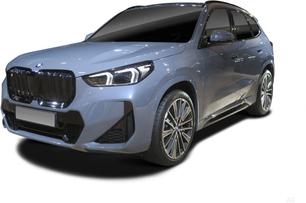
Now here's another super-surprise – a German electric luxury SUV that’s actually comparatively inexpensive. And not stingily equipped. Yep, we’re talking about the iX1.
Based on the really rather impressive third-generation X1, it decisively undercuts similarly-specified rivals from Mercedes-Benz (EQA, EQB) and Genesis (GV60).
But is the Bavarian EV SUV worth paying that little bit extra for against (only very slightly) cheaper alternatives like the Hyundai Ioniq 5, Kia EV6, Tesla Model Y, Polestar 2 and Volvo XC40 Recharge?
Let’s see.
No good deed goes unpunished.
Porsche, a brand synonymous with petrol-guzzling sports cars, tried to do the right thing and make a nearly wholesale switch to electric vehicles by the end of the decade. The problem was, while this made governments happy, it didn’t sit well with customers.
Porsche’s all-electric Macan is enduring a torrid 2026, with sales down over 75 per cent now that all the petrol-engined options are gone.
But that hasn’t stopped the German brand trying again with an all-electric Cayenne. However, there are some key differences that mean this latest electric Porsche won’t suffer the same fate.
Namely, the petrol-powered and hybrid versions aren’t going anywhere and new versions are rumoured to be coming in the not-too-distant future.
For now though, we have this all-new electric Cayenne - so how does it stack up to its predecessors as the sports car brand’s big SUV? And will it be second time lucky for Porsche’s electric transition? Based on two rather unorthodox days of test driving, the verdict might surprise you…
BMW is a true EV pioneer, as the 2014 i3 and subsequent models prove. There’s never been one that we didn’t like. The only problem was that all were expensive. And at times, prohibitively so.
Astoundingly, the iX1 breaks that cycle, comparatively speaking, while impressing us with its design, quality, packaging, dynamics and equipment levels.
As it stands, the xDrive30 is one of the most convincing and best-value medium-sized luxury SUV EVs on the market right now.
Who’d have thought it from a BMW?
There is a lot riding on this new Cayenne Electric, it is the sales leader for the German brand and if it suffers the same sales decline as the Macan, that will be a big concern for Porsche.
The good news is it’s an impressive all-rounder, with an incredible breadth of capability. But so is the electric Macan.
Going electric hasn’t diminished its trademark Porsche elements, and instead has amplified them in many respects. The speed is nothing short of staggering in the Turbo, but across the range the on and off-road driving ability is impressive.
Plus it has the kind of spacious, well-considered and premium appointed cabin you should expect for a luxury SUV.
There are two key differences that could see it succeed where the Macan has faltered. Unlike the Macan, Porsche’s decision to give Cayenne buyers the option to stick with internal combustion if they prefer, is likely to ensure it remains a popular member of its line-up for years to come.
And while the Macan was perhaps too much, too soon, the Cayenne arrives at a time when Australians are embracing electric cars more than ever before. Although the luxury and performance end of the EV market is growing more slowly than the mainstream.
As for the pick of the range, as mind-blowing as the Turbo is, the truth is (like pretty much every Porsche model) the entry-level Cayenne is arguably the pick of the bunch. It has all the performance you’ll reasonably need and offers a good blend of capability and luxury for the lowest price.
Note: CarsGuide attended this event as a guest of the manufacturer with travel, accommodation and meals provided.