What's the difference?
The world is full of shock brand announcements.
Remember the time Coke suddenly changed its cola recipe? Or when Apple decided to take on Nokia with iPhone? Nobody saw those coming.
We all know how the latter turned out and even the former eventually became a marketing masterstroke.
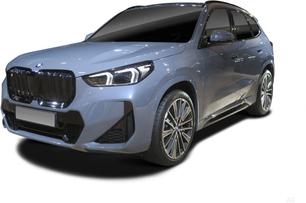
Now here's another super-surprise – a German electric luxury SUV that’s actually comparatively inexpensive. And not stingily equipped. Yep, we’re talking about the iX1.
Based on the really rather impressive third-generation X1, it decisively undercuts similarly-specified rivals from Mercedes-Benz (EQA, EQB) and Genesis (GV60).
But is the Bavarian EV SUV worth paying that little bit extra for against (only very slightly) cheaper alternatives like the Hyundai Ioniq 5, Kia EV6, Tesla Model Y, Polestar 2 and Volvo XC40 Recharge?
Let’s see.
Audi’s littlest and most affordable SUV, the Q2, has been updated with new looks and tech, but something else has snuck in with it. Or should I say roared in? It’s the SQ2, with a whopping 300 horsepower and a snarling bark.
So, this review has something for everybody. It’s for those who want to know what’s new for the Q2 in this latest update - those thinking of buying a cool-looking little SUV from Audi - and for those who want to wake their neighbours up and frighten their friends.
Ready? Let’s go.
BMW is a true EV pioneer, as the 2014 i3 and subsequent models prove. There’s never been one that we didn’t like. The only problem was that all were expensive. And at times, prohibitively so.
Astoundingly, the iX1 breaks that cycle, comparatively speaking, while impressing us with its design, quality, packaging, dynamics and equipment levels.
As it stands, the xDrive30 is one of the most convincing and best-value medium-sized luxury SUV EVs on the market right now.
Who’d have thought it from a BMW?
The Q2 is good value and great to drive – especially the SQ2. The exterior looks new, but the cabin feels older than the larger Q3, and most other Audi models.
More standard advanced safety tech would make the Q2 even more appealing, as would a five-year, unlimited-kilometre warranty. While we’re at it, a hybrid variant would make enormous sense.
So, a great car, but Audi could offer more to make it an even better proposition for buyers.
Arguably the prettiest new BMW SUV you can buy today, the well-proportioned iX1 is nearly impossible to spot over its almost-identical ICE (U11) X1 siblings.
Besides the badging, look for some blue trim bits and pieces inside and out, along with additional digital touchpoints inside.
And while both ride on the same all-new platform that’s resulted in a substantially larger body compared to previous X1 generations, the EV version seems a bit more slammed.
Dimensionally, the iX1 mirrors today’s X1 at 4500mm long and 1845mm wide, and still sits on the same 2692mm wheelbase, but is 26mm shorter at 1616mm tall and offers 35mm less ground clearance at 170mm.
Result? These plus a bunch of aero enhancements mean the slipperiest iX1 manages a Cd of just 0.26, according to BMW.
And, inevitably, the extra size equals more space inside.
This updated Q2 looks almost identical to the previous one and really the only changes are subtle styling tweaks to the front and back of the car.
The front air vents (they aren’t real air vents on the Q2, but they are on the SQ2) are now larger and pointier and the top of the grille is lower. Around the back, the bumper now has a similar design to the front, with those pointy polygons set wide apart.
It’s an angular little SUV, full of sharp-edged shapes like some kind of acoustical wall in an auditorium.
The SQ2 just looks more aggro, with its metallic-trimmed air vents and beefy quad exhaust.
The new colour is called Apple Green and it’s not really like any colour on the road – well not since 1951, anyway when this hue was hugely popular on everything from cars to telephones. It’s also very close to Disney’s “Go Away” green – look it up and then ask yourself if you should be driving a car that’s kind of invisible to the human eye.
I digress. Other colours in the range include Brilliant Black, Turbo Blue, Glacier White, Floret Silver, Tango Red, Manhattan Grey and Navarra Blue.
Inside, the cabins are the same as before, apart from the larger, sleeker media display, and there are some new trim materials, too. The 35 TFSI has silver inlays with a diamond paint finish, while the 40TFSI has aluminium door sills.
The Q2 has beautiful quilted Nappa leather upholstery, which goes beyond just covering the seats and to the centre console, doors and armrests.
All options offer well laid out and premium feeling cabins, but the disappointing part is that it's an older Audi design, which started out in the third-generation A3, launched in 2013, and still exists on the Q2, even though most Audi models, including the Q3, have the new interior design. This would bug me if I was thinking about buying a Q2.
Have you thought about a Q3? It’s not that much more in price, and it’s a tad bigger, obviously.
The Q2 is tiny, at 4208mm end to end, 1794mm wide and 1537mm tall. The SQ2 is longer at 4216mm long, 1802mm wide and 1524mm tall.
BMW also says the iX1’s cabin is almost as roomy in some ways as the larger X3.
Large doors allow for easy entry and egress, onto sumptuous front seats that provide exceptional comfort and support even on longer journeys.
Surrounded by an expansive feeling of space, the interior feels light and airy, as well as fresh, inviting and premium looking – something previous-gen X1s were rarely accused of being.
We’re talking on-brand stuff here, beginning with the excellent driving position, ahead of a crisp and attractive dash that’s pleasing to behold. Push-button starting and a small toggle lever operates the transmission.
An ever-so-slightly curved (towards the driver in the best-BMW old-school way) rectangular binnacle houses two digital displays – a 10.25-inch one ahead of the driver offering an array of configurable electronic dials, as well as a 10.7-inch multimedia touchscreen.
BMW pioneered the multimedia controller more than 20 years ago with iDrive, and this descendent of that system reveals all that expertise gained by being intuitive to operate and quick to respond to commands once familiarised. Which shouldn’t take too long.
It’s all very-EV centric, as the industry inexorably moves to total electrification, but there were a couple of voice-command errors in the iX1, revealing that such systems are still far from perfect. BMW does provide audio volume and climate hard buttons, thankfully, so the basics are looked after.
Speaking of which, the iX1 offers decent levels of vision out, superb ventilation and ample storage in the doors, on the dash and between the front seats. And, as we’ve noted previously in BMWs, the upright smartphone charger is a clever idea. Keeps it in position and is handy to glance at.
Out back, backrest comfort and support is A-OK, and even with the optional sunroof, our test iX1 provided sufficient space for taller bodies, while expected items like ventilation grilles, USB ports and cupholders are fitted.
Note that, though the 40/20/40-split backrests recline slightly, they do not slide as per in the ICE X1, as this is a desirable option.
Nor is the cargo capacity as good in the iX1, due to the inevitable space demanded by that rear-axle-mounted electric motor and battery pack. For the record, ranges from 490 litres to 1495L instead of 540-1527L. Plus, there’s no spare tyre, with just a tyre repair kit fitted.
These aside, the iX1’s spacious and inviting interior remains one of the compact SUV segment’s best.
The Q2 is basically a current model Audi A3, but more practical. I’ve lived with the A3 Sedan and Sportback and while rear legroom is just as confined in those as it is in the Q2 (I’m 191cm and need to squish my knees behind my driving position) getting in and out is easier in the SUV, with its elevated ride height and taller door apertures.
The easier access helps enormously when helping kids into their child seats. In an A3 I need to kneel on the footpath to be at the right level to put my son into the car, but not with the Q2.
The boot space of the Q2 is 405 litres (VDA) for the front-wheel-drive 35 TFSI and for the SQ2 it’s 355 litres. That not bad, and the large hatch makes for a big opening, which is more practical than a sedan’s boot.
Inside, the cabin isn’t enormous, but rear headroom is good, thanks to the fairly high roof.
Cabin storage isn’t terrific, although the front door pockets are big and there are two cupholders up front.
Only the SQ2 has USB ports in the back for rear passengers, but all Q2s have two USB ports up front for charging and media – plus all have wireless charging for phones.
For now, only a single iX1 grade is available, dubbed xDrive30, starting from $84,900 (all prices are before on-road costs).
Most buyers seem to be choosing the no-cost-extra racier 'M Sport' pack over the more-conservatively presented 'xLine'.
Both come complete with double-the-usual AC charging capability (22kW), twin-motor all-wheel drive, a 67kWh battery, variable-ratio steering and adaptive dampers as standard.
In contrast, the Mercedes EQB 350 4Matic equivalent starts from over $107,000 (though a less-expensive single-motor front-drive version comes in from nearly $89,000), and both with a slower 11kW charger. Genesis’ advanced GV60, meanwhile, kicks off from nearly $108K.
We cannot remember BMW ever going so hard on comparative value in Australia, though how it responds to the sensational (though admittedly smaller) Volvo EX30’s $59,990 ask remains to be seen.
Anyway, the iX1 is no bare-bones special.
Besides the aforementioned twin electric motors, AWD, 22kW AC charger and (non-driver-configurable) adaptive dampers, there are goodies like keyless entry/start, a digital key with ultra-wide-band tech, a 10.7-inch multimedia touchscreen, a digital instrumentation cluster, ‘Hey, BMW!’ voice control, a head-up display, sat-nav with augmented reality view, dual-zone climate control, ‘Veganza’ artificial leather, a reversing camera, digital radio, Apple CarPlay/Android Auto connectivity, wireless phone charging, a powered tailgate, roof rails and 19-inch alloy wheels.
On the safety front, you’ll find driver-assist tech like autonomous emergency braking (AEB), lane-support systems, adaptive cruise control, adaptive LED headlights and automatic parking assist. More on those in the safety section below.
Need more but want to think less? BMW’s new and simplified option packs bundles key features like a panoramic sunroof, metallic paint (normally $1500 on its own), Harman Kardon audio upgrade, lumbar massaging front seats and alternative interior trims in a reasonably-priced $4700 'Enhancement Pack'.
There are several others bundles available, too, as well as a handy 22kW BMW AC Wallbox from $1199, not including installation, that cuts down home-charging from over 33 hours using the regular mains to around 3.5 hours.
And don’t worry, BMW diehards. You can still spend tens of thousands of dollars more via the company’s endlessly extensive options list. The Germans aren’t foolish.
Unlike in the iX3’s Hyundai, Kia or Genesis rivals, which use a pure EV skateboard platform and offer no internal combustion engine (ICE) alternatives on this architecture, there is no V2L Vehicle-to-Load capability. In other words, you cannot charge appliances or power your home in an electrical blackout scenario.
The Q2 entry grade is the 35 TFSI and it lists for $42,900, while the 40 TFSI quattro S line is $49,900. The SQ2 is the king of the range and lists at $64,400.
The SQ2 has never been to Australia before, and we’ll get to its standard features in a moment.
Aussies have been able to buy a 35 TFSI or 40 TFSI since the Q2 arrived in 2017, but now both have been updated with new styling and features. The good news is the prices have only gone up by a few hundred bucks, compared to the old Q2.
Standard on the 35 TFSI are LED headlights and taillights, LED DRLs, leather seats and steering wheel, dual-zone climate control, Apple CarPlay and Android Auto, eight-speaker stereo with digital radio, front and rear parking sensors and a rear-view camera.
That was all standard on the previous 35 TFSI, but here’s what’s new: an 8.3-inch media screen (the old one was seven inches); a proximity key with push button start (great news); wireless phone charging (brilliant), heated exterior mirrors (more helpful than you’d think), ambient interior lighting (aww… pretty); and 18-inch alloys (heck yes).
The 40 TFSI quattro S line adds sports front seats, drive-mode selection, a power tailgate, and paddle shifters. The previous one had all that, too, but this new one has the sporty S line exterior body kit (the previous car was just called Sport not S line).
Now, the 45 TFSI quattro S line may appear not to get much more than the 35 TFSI, but the extra money is getting you more grunt and an awesome all-wheel-drive system – the 35 TFSI is front-wheel-drive only. If you love driving and can’t afford the SQ2, then $7K extra for the 45 TFSI is absolutely worth it.
If you have saved all your pennies and the SQ2 is what you’re zeroing in on, then here’s what you get: Metallic/pearl effect paint, 19-inch alloys, matrix LED headlights with dynamic indicators, the S body kit with quad exhaust, sports suspension, Nappa leather upholstery, heated front seats, 10-colour ambient lighting, stainless-steel pedals, auto parking, a fully digital instrument cluster, and a 14-speaker Bang & Olufsen stereo.
Of course, you get an incredible high-output four-cylinder engine, too, but we’ll get to that in a moment.
The iX1 boasts BMW’s fifth-generation EV drive system, known as eDrive 5.0 (M170SF).
Being an xDrive30, there are two electric motors fitted – one on each axle to provide all-wheel drive. Both are electrically excited synchronous motor set-ups.
Drive is predominantly to the front wheels via a single-speed reduction gear transmission, unless extra traction is required, in which case the rear motor kicks in to power the back axle.
Combined with the aid of an overboost function, they deliver 230kW of power and 494Nm of torque, for a 0-100km/h sprint time of 5.6 seconds, on the way to a 180km/h top speed.
Tipping the scales at 2010kg, the xDrive30 provides a power-to-weight ratio of 114kW per tonne, which is a healthy number.
Suspension is via MacPherson-style struts up front and an independent three-link design out back.
If you care, towing limits are 1200kg braked and 750kg unbraked, with a 570kg maximum payload.
There are three grades and each has a different engine.
The 35 TFSI has a new 1.5-litre four-cylinder turbo-petrol engine making 110kW and 250Nm; the 40 TFSI has a 2.0-litre turbo-petrol four making 140kW and 320 Nm; and the SQ2 has a 2.0-litre turbo-petrol as well, but it puts out a very impressive 221kW and 400Nm.
The 35 TFSI is front-wheel drive, while the 45 TFSI quattro S line and SQ2 are both all-wheel drive.
All have a seven-speed dual clutch automatic transmission – nope you can’t get a manual. There are also no diesel engines in the line-up.
I drove all three cars and, from an engine perspective, it’s like turning the ‘Smile Dial’ up from Mona Lisa in the 35 TFSI, to Jim Carrey in the SQ2, with Chrissy Teigen in between.
BMW says the xDrive30 consumes an average of 18.3kWh/100km.
On the launch drive program, the vehicle displayed 21.3kWh/100km. That included some spirited highway and mountain-road driving conditions.
Fitted with a 67kWh lithium-ion battery pack with a useable 65kWh, the iX1 offers an ADR 81/02-rated range of 400km.
This means a relatively common 50kW DC public charger with a CCS Combo 2 socket will need about 65 minutes to replenish the battery from 10 to 80 per cent or about half an hour with a 150kW charger.
If neither are available, you'll require about 34 hours to charge to 100 per cent maximum using the normal household powerpoint plug. Or, as mentioned earlier, a 22kW AC Wallbox cuts that down to about 3.5 hours.
Each iX1 includes a three-year subscription with Chargefox.
Audi engines are superbly modern and efficient – even its monster V10 can shut down cylinders to save fuel, and so can the new 1.5-litre four-cylinder engine in the 35 TFSI. Audi says that over a combination of urban and open roads, the 35 TFSI should use 5.2L/100km.
The 40 TFSI is thirstier at 7L/100km, but the SQ2 demands a bit more at 7.7L/100km. Still, not bad.
What’s not good is the lack of a hybrid, PHEV or EV variant of the Q2. I mean the car is small and ideal for the city, and therefore a perfect candidate for an electric version. Not having a hybrid or EV is why the Q2 model range doesn’t score well for its overall fuel economy.
One of the best things about the iX1 xDrive30 is that it has just enough EV smoothness, refinement and speed to feel special, yet still drives and behaves as a BMW should.
Which hasn't always been the case with previous-gen X1s.
It helps that, from the driver’s seat, everything falls into place: the bracing seats, thoughtfully positioned relative to all controls; and the overall sporty/quality ambience that puts you into the brand mindset.
Select Drive, and the iX1 leaps away sweetly and silently, accompanied by an electric motor whir that's quite pleasing. At speed, acceleration is instant for fast overtaking and there’s plenty more in reserve if you really need to hustle along.
For a 2.0-tonne compact SUV, the steering is remarkably responsive, providing nimble yet secure handling. Maybe it’s all the low-slung weight and near-50:50 weight distribution, but the iX1 displays impressive cornering and road grip. It’s an enjoyable drive.
Initially, novices might find the brakes a bit sudden, but they’re actually pretty progressive once you get used to them, and they feel and stop with a more natural pedal feel than many hybrids we’ve experienced. Again, BMW has tuned the xDrive30 to feel inclusive.
Speaking of the stoppers, there are no paddle shifters to control the amount of single-pedal off-accelerator braking as per many other EVs, but putting the transmission from ‘D’ to ‘B’ brings a decent level of deceleration if not a full stop – as if you’re lighting resting your foot on the pedal. We’d like the option of a heavier self-braking function, though.
The launch program avoided city roads and heavy traffic, but we still found plenty of bad, pot-holed surfaces to favourably judge the adaptive dampers’ ability to help soak up the bumps.
While not super-soft or supple, the suspension is cushy enough for a comfy ride. And certainly better than many past BMW SUVs.
A bit too much road and tyre noise intrusion aside, the xDrive30 is dynamically very sorted indeed.
Which, when you consider all the other positive aspects of the iX1, you end up with a BMW offering an impressively broad band of capabilities.
It’s rapid, nimble and reactive to driver inputs, as you’d expect an SUV from this brand to be, without the compromise of harshness or discomfort.
What it’s like around town in a peak-hour crawl, or how far you can really get from a fully-charged battery, is something we’ll find out when we can conduct a full road test, so please watch this space.
Until then, as it stands, things are looking promising indeed for the xDrive30. Especially factoring in the value pricing.
When it comes to the driving part, Audi can almost do no wrong – everything the company makes, whether it’s low powered or rip-your-face-off fast, has all the ingredients for engaging driving.
The Q2 range is no different. The entry-grade 35 TFSI has the least grunt and, with its front wheels pulling the car along, it’s the only one in the family that’s not blessed with all-wheel drive, but unless you’re doing laps at a track you’re not going to be wanting more power.
I drove the 35 TFSI for more than 100km on the launch, through the country and into the city, and in all situations, from overtaking on highways to merging and slow traffic, the most affordable Q2 performed well. That 1.5-litre engine is responsive enough and the dual-clutch transmission changes swiftly and smoothly.
Superb steering and good visibility (although that rear three-quarter view is slightly obstructed by the back pillar) makes the 35 TFSI easy to drive.
The 45 TFSI is a good mid-point between the 35 TFSI and the SQ2 and comes with a very noticeable bump in oomph, while the extra traction from the all-wheel drive is a reassuring addition.
The SQ2 isn’t the hardcore beast you might think it is – this thing would be super easy to live with daily. Yes, it has firm sports suspension, but it’s not overly hard, and that engine, which nudges almost 300 horsepower, doesn’t feel like a Rottweiler on the end of a leash. If anything, it’s a Blue Heeler that loves to run and run, but is happy to take it easy and get fat.
The SQ2 is my pick of the bunch, and not just because it’s quick, agile, and has an intimidating growl. It’s also comfortable and luxurious, with sumptuous leather seats.
ANCAP awarded the X1 petrol versions a five-star rating in 2022, based on the European NCAP result. No separate iX1 figure is as-yet available.
The iX1 comes with many of the latest driver-assist safety tech features, including AEB with day/night pedestrian and cyclist detection. This system is operational from 5.0km/h.
You'll also find front and rear cross-traffic alert, secondary collision avoidance braking, as well as a blind-spot monitor, lane-departure warning and swerve-assist systems, speed assist tech like adaptive cruise control with full-stop/go functionality, stability and traction controls, anti-lock brakes with brake-assist and a drowsy driver alert.
The lane support systems start from 60km/h and the driver monitoring system kicks in from 70km/h.
Along with dual-front airbags, the front-seat occupants have side chest and side pelvis airbag protection, as well as an airbag between them to help mitigate lateral-impact injuries while outboard rear-seat occupants have side head airbags (also called curtain airbags) coverage. The total airbag count is seven.
ISOFIX child-seat latches are fitted to outboard rear seat positions, while a trio of top tethers for straps are included across the back bench.
The Q2 was given the maximum five-star ANCAP rating when it was tested in 2016, but by 2021 standards it is light on advanced safety tech.
Yes, AEB with pedestrian and cyclist detection is standard on all Q2s and the SQ2, and so is blind-spot warning, but there’s no rear cross traffic alert or reverse AEB, while lane-keeping assistance is only standard on the SQ2, along with adaptive cruise control.
For a car that will most likely be purchased by younger people, it doesn’t seem right that they’re not being protected as well they would be in more expensive Audi models.
For child seats, there are two ISOFIX points and three top-tether anchor mounts.
A space-saver spare is under the boot floor.
Last year, BMW introduced a five-year/unlimited kilometre warranty with all its products, finally catching up with the industry warranty average after a protracted period of just a three-year coverage.
While there’s no capped-price servicing, you can pre-purchase a number of service bundles, to help save a bit more money further down the track.
There's a choice of 'Basic' or 'Plus' packages, in four or six-year (both with unlimited kilometre) programs, known as 'Service Inclusive'. They cost $1263/$4784 and $1800/$5784, respectively. 'Plus' covers brake pads/discs and wiper blade rubbers.
Note, however, that roadside assistance remains at three years.
Keep in mind, too, that BMW vehicles have a self-diagnosis feature that varies the service intervals according to how they’re used as well as wear and tear.
Our advice is to keep making an appointment annually or at about every 10,000km, just to be on the safe side.
The pressure for Audi to move to a five-year warranty must be hugely intense, with Mercedes-Benz offering one, along with pretty much every other mainstream brand. But for now, Audi will only cover the Q2 for three years/unlimited kilometres.
As for servicing, Audi offers a five-year plan for the Q2 costing $2280 and covering every 12-month/15000km service over that time. For the SQ2, the cost is only a fraction higher at $2540.