What's the difference?
Replacing a popular model is fraught with danger. Existing customers will tell you they love it, while focus groups of non-customers will tell you why they hate it and sometimes carmakers get caught trying to appease both groups.
Sometimes they’ll make it too big or change too much in the search for more sales and ultimately end up removing the elements that made it popular in the first place.
Which is why Audi has been extra careful with some subtle evolution for this new-generation Q3 SUV and Sportback. This isn’t just a popular model for Audi Australia, it has been the best-selling model for the German brand for more than five years, so getting it wrong would be a disaster.
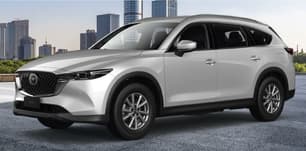
Mazda has a tendency to have a lot of similar looking horses in the stable; blink and you'll miss the (very) subtle differences between the CX-8 and the CX-9 but if you're not super keen on the bulk of the CX-9 and you've outgrown the space of the CX-5... this one's for you.
Especially, if you've been considering its competition - the Hyundai Santa Fe Elite CRDi AWD and Toyota Kluger GXL AWD. Both of which have become known for their features and space.
So, how does it compare? The CX-8 GT SP diesel all-wheel drive seats seven, has a decent boot space (albeit, when the third row isn't in use) and handles like a dream.
Perfect combination? Maybe. I've been driving it for the last week with my family to find out for you.
So is this new Q3 good enough to remain Audi’s number one choice? In a word, yes.
Audi has resisted the temptation that some brands fall into by making too many changes to a proven sales performer. This new Q3 isn’t radically different from the old Q3, but it has improved in almost every way.
It isn’t different enough to widely expand its appeal to a new wave of customers, but there’s no reason it won’t remain Audi’s most popular choice for the foreseeable future.
Note: CarsGuide attended this event as a guest of the manufacturer, with travel, accommodation and meals provided.
So, what did my family think about the Mazda CX-8 GT SP diesel all-wheel drive? I love how it performs on the road - it's super easy to drive and you don't notice how large it is in a car park.
There are some great family-friendly features scattered throughout and I like how practical this is too with the extra seats and top-tether points. The multimedia system isn’t my favourite and I would have preferred to have seen a few extra airbags and a 360-degree view camera, but overall, it’s a good family car and gets an 8.0/10 from me.
My son loved the sun blinds and the cool colour of the seats. He also gives it an 8.0/10.
The brief to the designers was seemingly pretty simple - don’t mess with a good thing.
According to the company, they want it to be recognisable as an Audi from 100m away, but at the same time, it makes sense not to make any radical changes to a design that is clearly a hit with buyers.
There’s still a new grille, which is slightly larger, while the daytime running lights (DRLs) are now mounted high, on the top corners of the front fascia.
Audi prides itself on its lights and the Q3 features multi-segment DRLS, with dynamic light effects, plus the rear badge lights up red with the tail-lights are turned on.
Digital matrix LEDs are available as an option on the quattro grades, which is a first for such a small Audi. While based on the technology already deployed in the bigger, more expensive Audi models, this is an updated system with micro LED matrix capabilities that are better able to light up the road ahead without blinding cars ahead or oncoming.
One very noticeable element to the design of this new Q3 is the size - which hasn’t really changed. Audi has resisted the temptation that so many brands have to upsize a compact model and has instead retained the same size that buyers clearly find appealing. It is slightly longer, approximately 4cm, but is still unmistakably a Q3 in looks and size.
Inside the Q3 is a different story, with the designers clearly empowered to create more change. The elements remain similar, but there have been more dramatic changes compared to the exterior to keep the Q3 looking contemporary and luxurious.
For example, there are still two large screens, just like the old model, but the virtual cockpit and multimedia screen are integrated into the dashboard together and more prominently, moving higher up the centre fascia.
It works well, as the interior looks and feels premium, and very much an Audi, albeit on a smaller scale.
To cap it off there are four interior colour packages to choose from, plus four different choices for the inlays, including two real wood options and an aluminium trim.
To be honest, I can't really tell the CX-8 and CX-9 apart on the road. They're both large SUVs that sport the classic Mazda bonnet - sharp and long. Up close, the CX-9 has a bulkier shape but otherwise they are remarkably similar.
The CX-8's darkened grille generates some interest with its lattice-work and there are enough shiny chrome accents scattered about the car that it looks pretty.
Yet, the sporty sharpness that Mazda is known for is still hinted at with its shaping and the 19-inch black alloy wheels.
Our model is finished in 'Platinum Quartz Metallic' and it is the highlight for the exterior styling for me. I think because it's such an interesting colour to look at - it varies a lot depending on lighting conditions. Sometimes, it almost has a sheen of pink to it and at others, it looks like pearly sand.
The interior looks polished and refined with its burgundy leather trim and soft-touchpoints. Again, there is a lot of chrome inside to make otherwise dull features, like air vents, pop out.
The biggest change to the interior is the technology, with a new multimedia interface with new, larger tiles as well as new ‘Control Unit’ for the key driving functions.
The ‘Virtual Cockpit’ display is much simpler, with a nice, clean look, plus the option to have the satellite image on the screen, whether you’re in navigation or not. The multimedia screen is a good size (12.8 inches) and the menus are easy to navigate. The decision not to have physical controls for the climate control is disappointing, but thankfully there is a volume/on-off dial for the sound system.
The most notable difference is the so-called ‘control unit’ that integrates the indicators, wipers and gear selector on a single ‘bar’ mounted to the steering column. It’s another example of modern cars reinventing something we’ve all become accustomed to, but after a day of driving it quickly becomes second nature to adapt to the slightly different controls.
While it may be the same size, Audi has managed to find more room inside, particularly the rear, by redesigning the door pockets and sculpting out the seat backs. It’s still not the roomiest cabin, but the rear seats will be fine for younger families, couples and singles.
Another plus is the 40:20:40 split/fold rear seats for maximum practicality and adaptability, while all three have child seat anchor points (although if you do have three small children, I wouldn’t be recommending an SUV this size).
As for the boot, because Audi only measures to the top of the seats, it measures 488L in both the SUV and Sportback variants, so you’re not missing out on day-to-day practicality with the sportier-looking roof. However, if you drop the rear seats the cargo capacity expands to 1386L in the SUV but only 1289L in the Sportback.
The CX-8 is a very practical family hauler because there's ample room in all three rows. Yes, even adults will be able to squeeze into that third row without too many complaints!
All rows enjoy well-cushioned seats and up front they are electrically adjustable, but unfortunately, only the driver's side has lumbar support.
The middle row can slide forward manually or by using the electric button found on the side of the seats... but doing it yourself is way faster.
They do slide far enough forward that you won't embarrass yourself too much when you have to clamber into the third row. Where the seats have a 50/50 split-fold and manual adjustments (accessed via the boot).
In the first two rows there are lots of individual storage options but the front enjoys the most. The middle console is deep enough to be useful and I like the dual opening lid. Each row gets a couple of cupholders and drink bottle holders, too.
The charging options are great, with each row getting two USB-C ports and the front getting a wireless charging pad and 12-volt socket.
All of the controls and dials feel within easy reach and the 10.25-inch touchscreen multimedia system graphics are clear.
You can use it as a touchscreen or opt for the rotary dial but switching between the two was awkward for me. Especially, since the touchscreen function is disabled when you are using the wireless Apple CarPlay. This also has wired Android Auto, for those users.
The amenities are practical throughout with a dark headliner, three-zone climate control and heated outboard seats and retractable sun-blinds in the middle row.
Good news for families because there are five top-tether points across the back rows and ISOFIX child seat mounts on the outboard seats in middle row, in case you need them.
You can fit a 0-4 rearward facing child seat and it shouldn’t impact on front passenger comfort.
My six-year old found it super easy to get in and out of this car because of the 205mm ground clearance and wide door apertures. He enjoyed the high seating position, too, but was disappointed he couldn’t see out of the sunroof!
The boot space is a bit cramped with all three rows are in use at 209L but folding the third row opens up a more respectable 775L - perfect for the average family and its stuff!
The loading space is level, with the temporary spare tyre and clever storage compartments housed underneath. There is a retractable cargo blind and net, luggage anchor points and a 12-volt port, too.
And, as always, I love a powered tailgate, which this has!
A key to the popularity of the Q3 is the variety of choices available to customers. By offering a mixture of variants at different price points and with different levels of performance expands the appeal of the Q3 to as many potential buyers as possible. To that end there are no less than 10 variants to choose from, and that’s just for now, with more likely to join in the future.
At this stage the range includes both SUV and Sportback body styles, the choice of a 110kW, 150kW or 195kW engine with front- or all-wheel drive (or quattro, as Audi calls it). While still not confirmed, both a plug-in hybrid and a high-performance RS Q3 are both likely additions sometime in the future.
Starting with the 110kW model, standard equipment includes 18-inch alloy wheels, adaptive LED headlights, ambient interior lighting, keyless entry and ignition, leather-appointed upholstery and a 10-speaker sound system. The 110kW SUV is priced from $61,600 and the Sportback from $64,600.
Moving up to the 150kW quattro variant adds adaptive dampers, which the 195kW models also get, as well as 19-inch alloy wheels, and there’s an optional premium Sonos system for the more powerful models and a panoramic glass sunroof and a head-up display as part of a $4400 option package. Pricing for the 150kW begins at $70,200 for the SUV and $72,700 for the Sportback, while the 195kW is priced from $81,900 (SUV) and $84,400 (Sportback).
There’s also a Launch Edition available which adds between $5400 and $4400 to the price (depending on variant), but includes the S line exterior styling package, black exterior highlights, metallic paint, red brake callipers, a sound actuator and adaptive dampers. As the name implies, these are only available for launch of the new model, so will only be produced for the first two months.
It should also be noted that standard 110kW models won’t arrive until mid-year, once the factory in Europe is done producing the Launch Edition variants.
The GT SP diesel AWD is one of the premium models, sitting third from the top and will cost you $65,560, before on road costs.
However, its price tag positions it as the most expensive compared to its rivals. With the closest rival being the Kluger at $65,310 and the most affordable being the Santa Fe at $60,000.
You do get a stylish-looking package with lots of features for your cash, like heated front seats, heated rear outboard seats, a tilt and slide sunroof, and premium leather interior trim.
There's some great tech scattered throughout, too, like the 10.25-inch touchscreen multimedia system, wireless charging pad, USB-A ports in the third row, Bose Premium sound system with 10 speakers, wireless Apple CarPlay and wired Android Auto.