What's the difference?
Replacing a popular model is fraught with danger. Existing customers will tell you they love it, while focus groups of non-customers will tell you why they hate it and sometimes carmakers get caught trying to appease both groups.
Sometimes they’ll make it too big or change too much in the search for more sales and ultimately end up removing the elements that made it popular in the first place.
Which is why Audi has been extra careful with some subtle evolution for this new-generation Q3 SUV and Sportback. This isn’t just a popular model for Audi Australia, it has been the best-selling model for the German brand for more than five years, so getting it wrong would be a disaster.
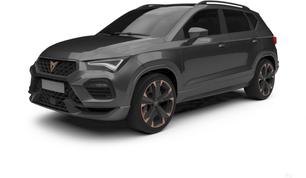
Not many people even know what a Cupra Ateca V is… and this is the second best thing about this small SUV. The first best thing is that Cupra is owned by Volkswagen.
So, this means you can have your mysterious SUV not many other people drive while knowing it’s underpinned by one of the largest car manufacturers in the world which makes cars millions of people drive and one which also has a reputation for high quality vehicles.
The big news here is the Ateca model range has a new and lower entry fee with the arrival of this V grade. See, until now the only Ateca Australians could buy is the high-performance VZx which while really sporty also came with a pretty big price tag.
So, how much is the Ateca V and what do you get for the money? We found this out at the Australian launch along with how practical and safe it is and what it’s like to drive.
So is this new Q3 good enough to remain Audi’s number one choice? In a word, yes.
Audi has resisted the temptation that some brands fall into by making too many changes to a proven sales performer. This new Q3 isn’t radically different from the old Q3, but it has improved in almost every way.
It isn’t different enough to widely expand its appeal to a new wave of customers, but there’s no reason it won’t remain Audi’s most popular choice for the foreseeable future.
Note: CarsGuide attended this event as a guest of the manufacturer, with travel, accommodation and meals provided.
The Cupra Ateca V is a much needed more affordable way into this small SUV while still offering a high-end feeling with plenty of standard features. Yes, the V isn't as high-powered as the VZx but it's still great to drive in the city and on the open road. Big on the inside and small on the outside the Cupra Ateca can perform urban and (small) family duties well.
Note: CarsGuide attended this event as a guest of the manufacturer, with accommodation and meals provided.
The brief to the designers was seemingly pretty simple - don’t mess with a good thing.
According to the company, they want it to be recognisable as an Audi from 100m away, but at the same time, it makes sense not to make any radical changes to a design that is clearly a hit with buyers.
There’s still a new grille, which is slightly larger, while the daytime running lights (DRLs) are now mounted high, on the top corners of the front fascia.
Audi prides itself on its lights and the Q3 features multi-segment DRLS, with dynamic light effects, plus the rear badge lights up red with the tail-lights are turned on.
Digital matrix LEDs are available as an option on the quattro grades, which is a first for such a small Audi. While based on the technology already deployed in the bigger, more expensive Audi models, this is an updated system with micro LED matrix capabilities that are better able to light up the road ahead without blinding cars ahead or oncoming.
One very noticeable element to the design of this new Q3 is the size - which hasn’t really changed. Audi has resisted the temptation that so many brands have to upsize a compact model and has instead retained the same size that buyers clearly find appealing. It is slightly longer, approximately 4cm, but is still unmistakably a Q3 in looks and size.
Inside the Q3 is a different story, with the designers clearly empowered to create more change. The elements remain similar, but there have been more dramatic changes compared to the exterior to keep the Q3 looking contemporary and luxurious.
For example, there are still two large screens, just like the old model, but the virtual cockpit and multimedia screen are integrated into the dashboard together and more prominently, moving higher up the centre fascia.
It works well, as the interior looks and feels premium, and very much an Audi, albeit on a smaller scale.
To cap it off there are four interior colour packages to choose from, plus four different choices for the inlays, including two real wood options and an aluminium trim.
Once you know the Cupra Ateca V is closely related to the Volkswagen Tiguan and Skoda Karoq you can definitely see a resemblance. Still, all three have their own look with the Cupra clearly given the role of being the fierce, sporty one.
While the Ateca V doesn’t have the same menacing styling as the VZx, it’s definitely a seriously sporty looking SUV with its 19-inch alloys, aggressive front bumper, triangular LED running lights and blacked out wing mirrors, roof rails and CUPRA lettering across the tailgate.
The bronze Cupra logo really signals the sporty intent of this brand and I’ve been told on more than one occasion that it looks like a biohazard symbol by people confused by what it is I’m driving. According to Cupra the blade-like design represents “the sense of belonging to a clan”.
Measuring 4381mm long, 1841mm wide and 1625mm tall with 2630mm wheelbase the Ateca V is about 15cm shorter in length than a Tiguan, but as you’ll see in the practicality section the interior dimensions might be larger than you think.
The Ateca V’s cabin is full of dark-coloured materials with black leather upholstered sports seats and steering wheel. In the same way it feels like Batman designed the exterior the interior it has a ‘Made in Gotham City’ feel with a brooding style incorporating high quality textures and surfaces.
The biggest change to the interior is the technology, with a new multimedia interface with new, larger tiles as well as new ‘Control Unit’ for the key driving functions.
The ‘Virtual Cockpit’ display is much simpler, with a nice, clean look, plus the option to have the satellite image on the screen, whether you’re in navigation or not. The multimedia screen is a good size (12.8 inches) and the menus are easy to navigate. The decision not to have physical controls for the climate control is disappointing, but thankfully there is a volume/on-off dial for the sound system.
The most notable difference is the so-called ‘control unit’ that integrates the indicators, wipers and gear selector on a single ‘bar’ mounted to the steering column. It’s another example of modern cars reinventing something we’ve all become accustomed to, but after a day of driving it quickly becomes second nature to adapt to the slightly different controls.
While it may be the same size, Audi has managed to find more room inside, particularly the rear, by redesigning the door pockets and sculpting out the seat backs. It’s still not the roomiest cabin, but the rear seats will be fine for younger families, couples and singles.
Another plus is the 40:20:40 split/fold rear seats for maximum practicality and adaptability, while all three have child seat anchor points (although if you do have three small children, I wouldn’t be recommending an SUV this size).
As for the boot, because Audi only measures to the top of the seats, it measures 488L in both the SUV and Sportback variants, so you’re not missing out on day-to-day practicality with the sportier-looking roof. However, if you drop the rear seats the cargo capacity expands to 1386L in the SUV but only 1289L in the Sportback.
The Ateca V is only about 4.4m long which is a lot shorter than a Kia Sportage, Nissan X-Trail or Subaru Forester, which are truly mid-size SUVs. So, the Ateca is a small SUV but on the larger side compared to say a Volkswagen T-Roc.
Despite its fairly diminutive exterior proportions the Ateca V has excellent storage and is remarkably spacious. If you have a young, small family and want a five-seater SUV big enough for them but small enough to make urban driving easy the Ateca V ticks both boxes.
Up front there are the gigantic door pockets, two cupholders, a decent-sized covered centre console bin and under-dash storage with wireless phone charging and two USB ports.
The second row is incredibly spacious for a small SUV with so much room for me at 189cm tall to sit behind my driving position. Headroom is excellent, too.
There are also cupholders in the fold-down armrest, two USB ports and big door pockets.
The back door apertures are tall and wide which makes getting little kids in and out of their car seats easier for parents.
A 485L cargo capacity is large for the class and under the boot floor is a space-saver spare wheel.
A key to the popularity of the Q3 is the variety of choices available to customers. By offering a mixture of variants at different price points and with different levels of performance expands the appeal of the Q3 to as many potential buyers as possible. To that end there are no less than 10 variants to choose from, and that’s just for now, with more likely to join in the future.
At this stage the range includes both SUV and Sportback body styles, the choice of a 110kW, 150kW or 195kW engine with front- or all-wheel drive (or quattro, as Audi calls it). While still not confirmed, both a plug-in hybrid and a high-performance RS Q3 are both likely additions sometime in the future.
Starting with the 110kW model, standard equipment includes 18-inch alloy wheels, adaptive LED headlights, ambient interior lighting, keyless entry and ignition, leather-appointed upholstery and a 10-speaker sound system. The 110kW SUV is priced from $61,600 and the Sportback from $64,600.
Moving up to the 150kW quattro variant adds adaptive dampers, which the 195kW models also get, as well as 19-inch alloy wheels, and there’s an optional premium Sonos system for the more powerful models and a panoramic glass sunroof and a head-up display as part of a $4400 option package. Pricing for the 150kW begins at $70,200 for the SUV and $72,700 for the Sportback, while the 195kW is priced from $81,900 (SUV) and $84,400 (Sportback).
There’s also a Launch Edition available which adds between $5400 and $4400 to the price (depending on variant), but includes the S line exterior styling package, black exterior highlights, metallic paint, red brake callipers, a sound actuator and adaptive dampers. As the name implies, these are only available for launch of the new model, so will only be produced for the first two months.
It should also be noted that standard 110kW models won’t arrive until mid-year, once the factory in Europe is done producing the Launch Edition variants.
The Ateca model now has a lower priced grade called the V and it lists for $51,990. That’s more than $10K less than the top-of-the-range VZx which has been out for a couple of years and lists for $63,490.
The Ateca V might be less expensive but the features list is still impressive. Coming standard are 19-inch alloy wheels, sports bumpers, LED headlights, running lights and puddle lights. There’s a proximity key and power tailgate with gesture control, too.
Inside black leather upholstery is standard, so are heated front seats and steering wheel, there’s dual-zone climate control, a power driver’s seat, a 9.2-inch media display with wireless Apple CarPlay and Android Auto and wireless phone charging.
As for options, you can have a panoramic sunroof for $1850 and premium metallic paint for $490.
There’s also the optional 'Tech Package' for $2950 bringing a Beats stereo system and a 360-degree camera. But the best thing about the pack is it also adds dynamic chassis control which adds adaptive suspension, so when you select 'Comfort' mode the suspension becomes softer, and in 'Sport' mode the suspension firms for better handling.
Rivals to the Ateca V include the Lexus UX and Volvo XC40 but also its Volkswagen Group cousins such as the Skoda Karoq and VW Tiguan R-Line.
As mentioned above, there are three powertrains to choose from initially, with talk of a plug-in hybrid and hi-po RS Q3 just that (talk) for now.
The entry-level SUV and Sportback get a new 1.5-litre four-cylinder mild-hybrid, turbocharged petrol engine, which makes 110kW/250Nm and sends all that performance to the road via the front wheels through a seven-speed, dual-clutch automatic transmission.
Next up is the TFSI 150kW quattro, which is a bigger 2.0L turbo-petrol four-cylinder, producing (you guessed it) 150kW and 320Nm. It also has a seven-speed dual clutch but also unsurprisingly has a quattro, aka all-wheel drive.
Finally there’s the TFSI 195kW quattro, which has the same engine but tuned to make 195kW and 400Nm, also with the seven-speed, dual-clutch auto and all-wheel drive.
This is naturally the quickest Q3, at least until the RS Q3 arrives, taking just 5.7 seconds to accelerate 0-100km/h, compared to 9.1 seconds for the 110kW and 7.1 seconds for the 150kW.
The Ateca V has a 2.0-litre turbo-petrol four-cylinder engine making 140kW and 320Nm. That’s a step down in output compared to the VZx’s 221kW and 440Nm, but the V doesn't feel underpowered.
A seven-speed dual clutch automatic transmission shifts gears lighting fast with the drive going to all four wheels. Yes, it’s all-wheel drive.
While it may only be a mild hybrid, Audi has done its best to make the TFSI 110kW as fuel efficient as possible. To that end, in addition to the hybrid help this new 1.5-litre engine also features cylinder-on-demand.
The result is a claimed combined cycle fuel use figure of 5.7L/100km for the entry-level model.
Naturally the more powerful engines require more petrol. The 150kW models are rated at 7.3L/100km, while the 195kW has a claimed 8.1L/100km.
It’s worth noting that all three engines require a minimum 95 RON ‘premium’ fuel, which will only add to the cost at the pump in these times of high prices.
The 110KW/150kW models are fitted with a 55-litre fuel tank, while there is a bigger 60-litre tank for 195kW. That means theoretical driving ranges of approximately 960km for the 110kW models and just over 740km for the 150kW and 195kW offerings.
Cupra says that after a combination of open and urban roads the Ateca V should use 7.1L/100km. That’s not hugely fuel efficient and urban consumption of 8.6L/100km will mean higher fuel bills than a hybrid SUV of this size.
On the launch we saw a fuel consumption average of 7.7L/100km and that’s after city roads, motorways and country roads.
Once we have the Ateca V in our CarsGuide garage we’ll be able to perform a real-world test of its fuel consumption.
The Ateca V has a 55-litre fuel tank and requires 95 RON premium unleaded petrol. Theoretical driving range is around 775km.
While it may not be an RS model or a more dynamic sedan, part of the price premium you pay for an Audi is a more polished driving experience.
With that in mind, what Audi calls ‘Progressive steering’ (which is a variable ratio steering rack) is now standard across the range. This decision was driven by a desire to make the Q3 feel ‘more hatch-like’ to drive, being more responsive to driver inputs.
It certainly felt quite nice to drive at the launch, where we drove across a wide variety of conditions, including long stretches on winding mountain roads. The 110kW Launch Edition was enjoyable to drive in these conditions, even if the other two options offer a sportier driving experience with their extra power and all-wheel drive.
It should be noted again, we only drove Q3s fitted with adaptive dampers as those are included on the Launch Edition, so we can’t tell you how the true entry-level TFSI 110kW model rides and handles.
One minor concern was there were some rattles in one of the three cars we tested, centred around the dashboard and front doors. It’s notable because we have experienced similar potential build-quality issues with Volkswagen and Skoda products recently. This raises some questions about an area Volkswagen Group products have traditionally excelled in.
Having said that, it was only a problem in one of the three cars we drove, so it could be an isolated incident. But it’s something we will have to keep an eye and ear open to in future test drives.
The launch of the Ateca V saw us drive the V and the VZx back-to-back, which highlighted how good the V is for the money when it comes to its on-road performance.
The 2.0-litre engine is superbly responsive with loads of torque for such a small petrol SUV, while the dynamics were equally impressive on winding country roads. Even when those roads occasionally and suddenly turned from bitumen to dirt at 100km/h excellent all-wheel drive traction kept everything under control.
The Ateca V we tested has the optional Tech Package fitted which adds dynamic chassis control and adjusts the suspension in the Comfort drive mode setting to a softer level compared to the firmer level in Sport. The ride in any mode, however, is comfortable with great handling.
As standard the Ateca V is given sports suspension and after a quick sample of the Ateca V with this set-up I also found the ride to be comfortable and composed.
There's good visibility even through the rear window, along with nicely weighted accurate steering and a good pedal feel under my feet make the Ateca V effortless and enjoyable to drive.
Audi claims this is the safest Q3 ever, with more safety equipment than before to ensure it meets modern customer demands.
There’s a 360-degree camera setup, reversing camera, adaptive cruise control and a host of other active safety features. But perhaps more importantly than just having these systems, they are locally tested and calibrated for local conditions.
This has quickly become an area where the premium brands are separating themselves from the mainstream. In the case of the Q3 we found that the lane keeping assist and adaptive cruise control worked better than your average mainstream model, so the local testing appears to have paid off.
Another safety feature worth mentioning is the new parking assistance system, which now includes ‘reversing assist’. This new technology can remember the last 50m of your trip and reverse backwards without your help. There’s also ‘trained assist’, which can learn up to five specific parking situations, that you can program and save. So, if you have a particular driveway or parking spot you can teach the car once and it can park itself in future.
The Q3 comes equipped with enough safety to score a maximum five-star rating from Euro NCAP and ANCAP. However, in a confusing twist, this is based on testing done to the 2025 protocols, even though the Q3 has only gone on sale in 2026. So future five-star ANCAP models will have been tested to a theoretically higher standard, which is something to consider when comparing models from other brands.
The Cupa Ateca V hasn’t been tested by ANCAP and the Euro Ncap result of five stars (which is the maximum) has now expired because it was so long ago (2016).
Still, while much of the safety tech isn’t as cutting edge as some new SUVs , there’s AEB, adaptive cruise control, lane keeping assistance, rear traffic alert plus front and rear parking sensors.
The airbag count runs to seven, including a front centre bag to minimise head clash injuries in a side-impact.
For child seats there are three anchor points and two ISOFIX mounts in the back.
The Q3 is covered by Audi Australia’s standard five-year/unlimited kilometre warranty. This includes five years of roadside assistance too.
There is a standard five-year servicing plan for $3300, which is the same as the outgoing model, with servicing required every 12 months or 15,000km, whichever comes first.
Audi has an expansive, nationwide dealer network befitting its place as an established sales leader in the premium space.
The Ateca V is covered by Cupra’s five-year, unlimited-kilometre warranty, with servicing needed every 15,000km or annually.
You can buy a five-year service plan for $1990 - which isn’t overly pricey.