What's the difference?
Replacing a popular model is fraught with danger. Existing customers will tell you they love it, while focus groups of non-customers will tell you why they hate it and sometimes carmakers get caught trying to appease both groups.
Sometimes they’ll make it too big or change too much in the search for more sales and ultimately end up removing the elements that made it popular in the first place.
Which is why Audi has been extra careful with some subtle evolution for this new-generation Q3 SUV and Sportback. This isn’t just a popular model for Audi Australia, it has been the best-selling model for the German brand for more than five years, so getting it wrong would be a disaster.
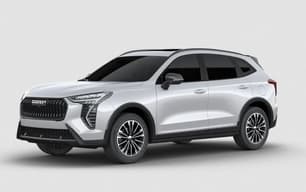
The new GWM Haval Jolion Lux sits second from the bottom in the Jolion line-up but offers a longer features list than most of its competitors. A boast that stands it in good stead from the outset.
But the question is how do those features perform in the real world? In this review we unpack how the new Jolion handles urban life.
So is this new Q3 good enough to remain Audi’s number one choice? In a word, yes.
Audi has resisted the temptation that some brands fall into by making too many changes to a proven sales performer. This new Q3 isn’t radically different from the old Q3, but it has improved in almost every way.
It isn’t different enough to widely expand its appeal to a new wave of customers, but there’s no reason it won’t remain Audi’s most popular choice for the foreseeable future.
Note: CarsGuide attended this event as a guest of the manufacturer, with travel, accommodation and meals provided.
The GWM Haval Jolion Lux offers affordability in a modern, attractive package. However, the execution of some of its features isn’t always convincing. So yes, it’s sharply priced but it also feels underdone in some respects which doesn’t necessarily equate to value. But if affordability is at the top of your priority list and one or two shortcomings doesn't mean the end of the world, this could be the urban SUV you're looking for.
The brief to the designers was seemingly pretty simple - don’t mess with a good thing.
According to the company, they want it to be recognisable as an Audi from 100m away, but at the same time, it makes sense not to make any radical changes to a design that is clearly a hit with buyers.
There’s still a new grille, which is slightly larger, while the daytime running lights (DRLs) are now mounted high, on the top corners of the front fascia.
Audi prides itself on its lights and the Q3 features multi-segment DRLS, with dynamic light effects, plus the rear badge lights up red with the tail-lights are turned on.
Digital matrix LEDs are available as an option on the quattro grades, which is a first for such a small Audi. While based on the technology already deployed in the bigger, more expensive Audi models, this is an updated system with micro LED matrix capabilities that are better able to light up the road ahead without blinding cars ahead or oncoming.
One very noticeable element to the design of this new Q3 is the size - which hasn’t really changed. Audi has resisted the temptation that so many brands have to upsize a compact model and has instead retained the same size that buyers clearly find appealing. It is slightly longer, approximately 4cm, but is still unmistakably a Q3 in looks and size.
Inside the Q3 is a different story, with the designers clearly empowered to create more change. The elements remain similar, but there have been more dramatic changes compared to the exterior to keep the Q3 looking contemporary and luxurious.
For example, there are still two large screens, just like the old model, but the virtual cockpit and multimedia screen are integrated into the dashboard together and more prominently, moving higher up the centre fascia.
It works well, as the interior looks and feels premium, and very much an Audi, albeit on a smaller scale.
To cap it off there are four interior colour packages to choose from, plus four different choices for the inlays, including two real wood options and an aluminium trim.
The Jolion is now longer and wider than it's rivals at 4472mm long, and 1874mm wide. The next largest 'small' SUV is the Kia Seltos at 4385mm long and 1800mm wide which does the Jolion a whole lot of favours for internal passenger space and kerb-side appeal.
The Jolion looks substantial and well-shaped, with enough bells and whistles in the design to keep it fresh; like the swoopy LED DRLs at the front and a curvy behind that’s accentuated by a black spoiler.
The interior has interesting features, like the rotary-dial gear selector, push-button starter and minimalist button panel that sits below the large technology screen.
The dashboard juts out into the cabin and the low-key design is too pared back for my taste. But the cabin looks nice and new with lots of tactile accent panels and shiny screens.
There is still too much plasticky-looking styling to elevate it properly, but for its grade level this is almost luxurious.
The biggest change to the interior is the technology, with a new multimedia interface with new, larger tiles as well as new ‘Control Unit’ for the key driving functions.
The ‘Virtual Cockpit’ display is much simpler, with a nice, clean look, plus the option to have the satellite image on the screen, whether you’re in navigation or not. The multimedia screen is a good size (12.8 inches) and the menus are easy to navigate. The decision not to have physical controls for the climate control is disappointing, but thankfully there is a volume/on-off dial for the sound system.
The most notable difference is the so-called ‘control unit’ that integrates the indicators, wipers and gear selector on a single ‘bar’ mounted to the steering column. It’s another example of modern cars reinventing something we’ve all become accustomed to, but after a day of driving it quickly becomes second nature to adapt to the slightly different controls.
While it may be the same size, Audi has managed to find more room inside, particularly the rear, by redesigning the door pockets and sculpting out the seat backs. It’s still not the roomiest cabin, but the rear seats will be fine for younger families, couples and singles.
Another plus is the 40:20:40 split/fold rear seats for maximum practicality and adaptability, while all three have child seat anchor points (although if you do have three small children, I wouldn’t be recommending an SUV this size).
As for the boot, because Audi only measures to the top of the seats, it measures 488L in both the SUV and Sportback variants, so you’re not missing out on day-to-day practicality with the sportier-looking roof. However, if you drop the rear seats the cargo capacity expands to 1386L in the SUV but only 1289L in the Sportback.
It's a running theme but the practicality of the Jolion doesn't always land. However, what it does well, it does very well.
Take the access and space for passengers. Both rows offer class-leading head- and legroom for its occupants, even middle seaters should be happy considering the transmission tunnel isn't tall.
Despite the manual passenger seat being set too high and both seats lacking lumbar support, front seaters still enjoy the most comfort. The heated front seats are also a pleasant surprise for the grade level, although their function is buried deep within the multimedia system and I mostly forgot about them.
The rear seat is fairly hard and doesn't offer much side bolstering, although the middle armrest helps to secure outer passengers in corners.
Storage is solid throughout the cabin with a reasonably sized glove box that can hold a thick manual, middle console and dedicated phone shelf, as well as a second phone 'slot'.
There is a sunglasses holder (sunnies rattle when stored, though) and a cubby underneath the centre console that can hold a small handbag but anything stored might interfere with the USB ports housed there.
There are two cupholders up front but you can't fit two cups side by side. Two cupholders, a couple of map pockets and storage bins finish up the storage in the back seat.
The boot capacity sits at 337 litres and while large enough for a good grocery haul it falls on the lower end for the class. By comparison, the Kia Seltos offers 433L.
Now, on to what the Jolion doesn't do all that well. It's new 10.25-inch multimedia screen and 7.0-inch digital instrument cluster look the part - all shiny and new-looking - but their usability falls somewhat short.
The media touchscreen is responsive but a punish to use on the go as most functions, including climate control, are accessed via the screen. A few dedicated buttons would be welcome, so changing bits on the road doesn't leave you flustered.
The digital instrument cluster isn't customisable and is set to a dark display screen with a typeface that looks blurry on some key displays, especially the speedometer.
There is a rather large and in-your-face driver monitoring camera installed on the A-pillar which feels too much like you're under surveillance while driving (not a fan, clearly).
Charging options include four USB-A ports and a 12-volt socket but that's it and it would be good to see a newer, faster USB-C port somewhere in the car.
A feature the Jolion does get right is the wired Apple CarPlay as it maintains a steady connection and is very quick to set up. The Lux also has wired Android Auto.
You don't get a powered tailgate and you might miss it as the boot lid is fairly heavy.
A key to the popularity of the Q3 is the variety of choices available to customers. By offering a mixture of variants at different price points and with different levels of performance expands the appeal of the Q3 to as many potential buyers as possible. To that end there are no less than 10 variants to choose from, and that’s just for now, with more likely to join in the future.
At this stage the range includes both SUV and Sportback body styles, the choice of a 110kW, 150kW or 195kW engine with front- or all-wheel drive (or quattro, as Audi calls it). While still not confirmed, both a plug-in hybrid and a high-performance RS Q3 are both likely additions sometime in the future.
Starting with the 110kW model, standard equipment includes 18-inch alloy wheels, adaptive LED headlights, ambient interior lighting, keyless entry and ignition, leather-appointed upholstery and a 10-speaker sound system. The 110kW SUV is priced from $61,600 and the Sportback from $64,600.
Moving up to the 150kW quattro variant adds adaptive dampers, which the 195kW models also get, as well as 19-inch alloy wheels, and there’s an optional premium Sonos system for the more powerful models and a panoramic glass sunroof and a head-up display as part of a $4400 option package. Pricing for the 150kW begins at $70,200 for the SUV and $72,700 for the Sportback, while the 195kW is priced from $81,900 (SUV) and $84,400 (Sportback).
There’s also a Launch Edition available which adds between $5400 and $4400 to the price (depending on variant), but includes the S line exterior styling package, black exterior highlights, metallic paint, red brake callipers, a sound actuator and adaptive dampers. As the name implies, these are only available for launch of the new model, so will only be produced for the first two months.
It should also be noted that standard 110kW models won’t arrive until mid-year, once the factory in Europe is done producing the Launch Edition variants.
The Jolion line-up consists of six variants and the model on test here is the Lux, which sits second-from-the-bottom.
Its $29,990, drive-away, price tag positions it as one of the more expensive options compared to its nearest rivals with the MG ZS Excite the most affordable at $25,083, drive-away and the Mitsubishi ASX ES next at $27,990, drive-away.
Despite a similar specification, the Kia Seltos Sport+ FWD is hamstrung on price as it sits a way up the price ladder at $38,890, drive-away, but comes with the longest servicing schedule.
Premium equipment for the Lux includes synthetic leather upholstery, an electric driver's seat, heated front seats, dual-zone climate control, keyless entry and start, a 360-degree view camera system and rear parking sensors.
Other standard features include a 7.0-inch digital instrument cluster, four USB-A ports, a 12-volt socket, a 10.25-inch touchscreen multimedia system and (wired) Apple CarPlay and Android Auto.
A fixed cargo cover and temporary spare tyre round out its features list. Not bad at all considering it's almost a base model but the usability of those features can be hit or miss.
As mentioned above, there are three powertrains to choose from initially, with talk of a plug-in hybrid and hi-po RS Q3 just that (talk) for now.
The entry-level SUV and Sportback get a new 1.5-litre four-cylinder mild-hybrid, turbocharged petrol engine, which makes 110kW/250Nm and sends all that performance to the road via the front wheels through a seven-speed, dual-clutch automatic transmission.
Next up is the TFSI 150kW quattro, which is a bigger 2.0L turbo-petrol four-cylinder, producing (you guessed it) 150kW and 320Nm. It also has a seven-speed dual clutch but also unsurprisingly has a quattro, aka all-wheel drive.
Finally there’s the TFSI 195kW quattro, which has the same engine but tuned to make 195kW and 400Nm, also with the seven-speed, dual-clutch auto and all-wheel drive.
This is naturally the quickest Q3, at least until the RS Q3 arrives, taking just 5.7 seconds to accelerate 0-100km/h, compared to 9.1 seconds for the 110kW and 7.1 seconds for the 150kW.
The Jolion Lux has a 1.5-litre, four-cylinder, turbo-petrol engine that produces 105kW of power and 210Nm of torque.
The Lux is a 2WD and has a seven-speed dual-clutch automatic transmission which isn’t always smooth with its gear changing but power is sufficient if you don't expect it to be zippy.
While it may only be a mild hybrid, Audi has done its best to make the TFSI 110kW as fuel efficient as possible. To that end, in addition to the hybrid help this new 1.5-litre engine also features cylinder-on-demand.
The result is a claimed combined cycle fuel use figure of 5.7L/100km for the entry-level model.
Naturally the more powerful engines require more petrol. The 150kW models are rated at 7.3L/100km, while the 195kW has a claimed 8.1L/100km.
It’s worth noting that all three engines require a minimum 95 RON ‘premium’ fuel, which will only add to the cost at the pump in these times of high prices.
The 110KW/150kW models are fitted with a 55-litre fuel tank, while there is a bigger 60-litre tank for 195kW. That means theoretical driving ranges of approximately 960km for the 110kW models and just over 740km for the 150kW and 195kW offerings.
The Haval Jolion Lux has an official combined (urban/extra-urban) fuel cycle figure of 8.1L/100km and based on its 55L fuel tank, theoretical driving range is around 680km, which is respectable for a little SUV.
My real-world usage came in at 7.8L/100km after mostly open-road driving, with a smattering of urban stuff. Overall, it's a solid result.
While it may not be an RS model or a more dynamic sedan, part of the price premium you pay for an Audi is a more polished driving experience.
With that in mind, what Audi calls ‘Progressive steering’ (which is a variable ratio steering rack) is now standard across the range. This decision was driven by a desire to make the Q3 feel ‘more hatch-like’ to drive, being more responsive to driver inputs.
It certainly felt quite nice to drive at the launch, where we drove across a wide variety of conditions, including long stretches on winding mountain roads. The 110kW Launch Edition was enjoyable to drive in these conditions, even if the other two options offer a sportier driving experience with their extra power and all-wheel drive.
It should be noted again, we only drove Q3s fitted with adaptive dampers as those are included on the Launch Edition, so we can’t tell you how the true entry-level TFSI 110kW model rides and handles.
One minor concern was there were some rattles in one of the three cars we tested, centred around the dashboard and front doors. It’s notable because we have experienced similar potential build-quality issues with Volkswagen and Skoda products recently. This raises some questions about an area Volkswagen Group products have traditionally excelled in.
Having said that, it was only a problem in one of the three cars we drove, so it could be an isolated incident. But it’s something we will have to keep an eye and ear open to in future test drives.
The Jolion's on-road experience is underwhelming and unsophisticated most of the time. It's strictly an A to B style car, which will work well for some people.
The power and its delivery are okay but this car doesn't get close to zippy and its well of performance feels decidedly shallow on the open road.
The engine whines loudly when trying to get up to speed and its gear changes can come a tad too swiftly, especially between first and third.
The accelerator and brakes are touchy, and until you get used to them the Jolion can feel a little jerky in the city. But the steering is on the right side of firm and that at least feels direct and responsive.
Suspension is hard and you get all the bumps which also translates into a loud cabin. Your senses take a battering on a longer trip and kids in the back will ask you to repeat yourself.
The Jolion is redeemed somewhat by an excellent 360-degree view camera system but you miss out on front-parking sensors.
It’s small enough that it’s not hard to park and for an urban dweller that is a big plus as it's quite suitable for a dash to a busy shopping centre car park.
Audi claims this is the safest Q3 ever, with more safety equipment than before to ensure it meets modern customer demands.
There’s a 360-degree camera setup, reversing camera, adaptive cruise control and a host of other active safety features. But perhaps more importantly than just having these systems, they are locally tested and calibrated for local conditions.
This has quickly become an area where the premium brands are separating themselves from the mainstream. In the case of the Q3 we found that the lane keeping assist and adaptive cruise control worked better than your average mainstream model, so the local testing appears to have paid off.
Another safety feature worth mentioning is the new parking assistance system, which now includes ‘reversing assist’. This new technology can remember the last 50m of your trip and reverse backwards without your help. There’s also ‘trained assist’, which can learn up to five specific parking situations, that you can program and save. So, if you have a particular driveway or parking spot you can teach the car once and it can park itself in future.
The Q3 comes equipped with enough safety to score a maximum five-star rating from Euro NCAP and ANCAP. However, in a confusing twist, this is based on testing done to the 2025 protocols, even though the Q3 has only gone on sale in 2026. So future five-star ANCAP models will have been tested to a theoretically higher standard, which is something to consider when comparing models from other brands.
The Jolion has a maximum five-star ANCAP rating from testing done in 2022 and has seven-airbags, including a front-centre bag.
Standard safety equipment is good for the grade level and includes blind-spot monitoring, driver attention alert, tyre-pressure monitoring, forward collision warning, LED DRLs, rear cross-traffic alert, lane departure alert, lane keeping aid, traffic sign recognition, an intelligent seatbelt warning, adaptive cruise control, a USB outlet near the interior mirror for a dashcam, a 360-degree camera view system and rear-parking sensors.
Despite featuring a robust safety list a running theme has emerged this week. Everything sounds good on paper but the execution is another matter.
Its not enough to just have all of these safety systems in place, they also have to work well for everyday driving. And some of the systems are annoying and intrusive.
There are lots of bings, bongs and chime alerts from the driver monitoring system, traffic sign recognition tech and lane keeping aids.
You also get nonsensical text boxes displayed on the multimedia screen asking non-binary (open) questions requiring a yes or no response.
For families, you get two ISOFIX child seat mounts and three top tethers across the back seat but two seats will fit best.
The Jolion has AEB (operational from 1.0 to 85km/h) including pedestrian, cyclist and back-over detection. It's usual to see this type of system operating from 4.0km/h, so that's excellent.
The Q3 is covered by Audi Australia’s standard five-year/unlimited kilometre warranty. This includes five years of roadside assistance too.
There is a standard five-year servicing plan for $3300, which is the same as the outgoing model, with servicing required every 12 months or 15,000km, whichever comes first.
Audi has an expansive, nationwide dealer network befitting its place as an established sales leader in the premium space.
The Jolion is offered with an excellent seven-year/unlimited km warranty.
There is a five-year capped priced servicing program and services average $310 which is mid-range for the class.
The first service is before 10,000km but thereafter, servicing intervals are at every 12-months or 15,000km, whichever occurs first.