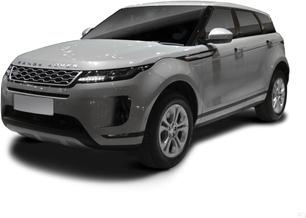
What's the difference?
Range Rover has developed a bit of an image problem in the last few years.
To many the brand is still the face of a quintessentially British aspirational luxurious off-roader. But to a growing group, it has become synonymous with the concept of an environmentally reckless fuel-guzzling SUV.
They’re big, heavy, and still feature V8 engines, but Range Rover knows all too well the writing is on the wall for its increasingly infamous range of combustion vehicles.
The trouble is, customers love them, and while the I-Pace from sister brand Jaguar is a big leap into the future, there needs to be a happy medium for easing some of its existing customers away from combustion, while still offering the kinds of excess and aspirational performance the Range Rover brand is associated with.
Enter this car, the Evoque HSE P300e. It’s a plug-in hybrid, notably only available in the top trim level, with top-shelf performance, too.
Is it the right car to represent Range Rover’s entry-level model at a critical time of technological transformation? Let’s take a look.
Just in case attacking Australia's crowded SUV market with a virtually unheard of Indian brand wasn't a high enough hurdle to leap over, Mahindra had made its task even harder - think a Bollywood version of Mission Impossible - by launching its XUV500 SUV here with a diesel engine (which nobody wanted) and a manual gearbox (which few could even remember how to use).
Fortunately, it fixed one of those issues late in 2016, finally adding an automatic transmission to the line-up. And now, at long last, it's fixed the other.
This, then, is the petrol-powered XUV500 SUV. And, on paper at least, it's the most sense-making Mahindra to date.
For one, it's a ferociously cheap way into a new seven-seat SUV. For another, it's pretty well equipped, even from the base level. There's a long warranty, an equally long roadside assistance offering, and there's capped-price servicing, too.
So, should the mainstream SUV players be looking over their shoulders?
Spoiler alert: no.
The Range Rover Evoque is more highly specified and more luxurious than ever, and this plug-in hybrid version makes the most of what’s on offer with its slick but familiar feel from behind the wheel.
Unfortunately, it does have an eye-watering price tag to go with its classy design and the options list is a bit rude, all things considered, but the core offering is a solid luxury buy for city-slickers, nonetheless.
What makes the Evoque P300e stand out for me is its impressive EV driving range and excellent charging specs which make it as convenient as possible to make the most of its electrified features.
It’s up to the buyer whether these conveniences and the Range Rover badge are worth swapping into a car a full size down from its luxury plug-in rivals for the same money.
This petrol-powered and well-priced XUV500 W6 might mark Mahindra's most convincing effort at cracking Australia's congested SUV market, but we're still not completely convinced.
That said, it's certainly cheap, the ownership credentials stack up and it's a very comfortable way to transport seven people.
The Evoque has always been a car all about its sleek, city-slicking design, an iconic piece of modern SUV art from Jaguar Land Rover head of design, Gerry McGovern.
With its shapely proportions, clever descending roofline, and a silhouette which successfully reflects a miniaturised version of the Range Rover, the Evoque is at once classy with a faint suggestion of toughness under the skin.
The blacked-out grille, slimline headlights, and contemporary strip across the tailgate all serve to add intrigue to this SUV, and the extra detailing in the front bumper, shapeliness of the bonnet, and contrast black trims (with extra contrast panels on our test car matching the gloss black wheels) serving to add to its premium appeal.
It’s important to remember, while the Evoque slides into a busy small SUV landscape now, it was one of the first to make a premium car so successfully appealing in this small SUV space way back in 2011 with the first Evoque, following Land Rover’s historic trend of being in front of the SUV curve.
Rival small SUV designs may have caught up in the minds of many with the likes of the Audi Q3, BMW X2, and Volvo XC40 shining in recent years, but few have won as many design accolades as the Evoque.
Range Rover seems to be leaning into a more upper luxury trend, not just with the pricing, but with the vibe of the car’s interiors, too.
The new generation Evoque, for example, took a big jump in the look and feel of its interior appointments when it launched in 2019, and over time has only consolidated its market positioning.
The HSE grade which our P300e hybrid arrives in is lavish on the inside, with lovely suede-like seats, intricate contrasting grey cloth trims in the doors (do I detect an influence from Volvo here?) and a plush-looking dash, all finished in soft-to-the touch materials.
Attention to detail, like the silver bezels which adorn the centre console and media screen, add to the premium flair which lifts the Range Rover badge above the Land Rover one, and I do like the way the additional function screen seamlessly melts into the piano finish and integrated dials. While it’s always a nightmare to keep gloss piano finishes clean, it looks oh-so primo.
It’s a little odd the P300e has analogue dials, which seems to miss the premium edge which a fully digital dash might provide although the 7.0-inch centre dash screen has a great resolution and speed, as well as a mostly well laid out operating system.
I found the R-Dynamic modes, which can sharpen up the accelerator response and steering buried two menus deep, unnecessarily hard to find, as were various EV information screens and other less important functions.
There's no getting away from the fact the XUV500 is not the sleekest, prettiest SUV in the pack. But it's not ugly, either. More that it looks like it's doing its best with a design philosophy hatched a generation or two ago.
Its best angle by far is when viewed straight on, where the piano-black grille, dual bonnet bulges and complicated (read: a little weird) headlight clusters all add some road presence to Mahindra's only SUV.
A side-on viewing, however, is less satisfying, where a combination of strangely placed and super-sharp body creases (including one over the rear wheelarch, which adds a Harbour Bridge-style crescent to the otherwise-straight window line) and serious rear overhang give the XUV500 an inescapable awkwardness.
Inside, expect a vast collection of rock-hard (though nicely patterned) plastics, with the ambiance rescued somewhat by the clean-looking and vertical central control unit, which is home to the media screen and air-con controls.
Ready for some hashtag real talk? There are better-looking and better-feeling seven-seat SUVs out there. But there aren't many that start at $25,990 drive-away. And I think that's Mahindra's point.
While it still plays the role of Range Rover’s smallest SUV, the current Evoque is much bigger than the car it replaced in 2019. I would go so far as to say it’s deceptively large on the inside.
Front occupants are treated to a cabin which now feels almost as wide as an actual Range Rover, with plenty of room for elbows on either side, which are, of course, met by lovely soft-touch surfaces.
The raised console helps with the upmarket feel, as does the plush dash. The standard 14-way adjust front seats help to accommodate most passengers, with my only criticism being the large A-pillars and height of the dash can make it feel a little bit claustrophobic compared to some rival luxury SUVs.
Storage is offered through a set of large door pockets, a centre console box, dual bottle holders behind the shift lever, and a healthy nook underneath the climate controls, which also hosts a wireless charging bay.
The rear seats share the same comfortable rim as the front ones, and also have large pockets in the doors. Despite the descending roofline, I had just enough room for my head at 182cm tall although it is notable the space in the PHEV feels smaller with the raised floor needed to accommodate the batteries.
I had a little airspace for my knees behind my own driving position, too. The main drawback for rear passengers is the large transmission tunnel, making it difficult to accommodate an adult in the centre position.
There are adjustable air vents for rear passengers, but it is frustrating Land Rover has chosen to make rear USB-C charging ports an arbitrary $270 option.
The boot is also deceptively large for such a small SUV, measuring in at 472 litres (VDA), it’s above average for the small SUV class and fits the full CarsGuide luggage set, provided you remove the parcel shelf as it's just a smidge too high.
You'll also need to keep your charging cables in the boot, as there's no underfloor storage, the entire space being taken up by a space-saver spare wheel.
Pretty damn practical, actually, regardless of whether you want to carry people or cargo. Carrying both at the same time, however, is tricky.
But let's start with people. There is a huge amount of room in the third row of the XUV500, a space with enough head and legroom to put plenty of its competition to shame.
Thanks to second-row seat backs that fold flat, before the the entire seat lifts up and pushes forward, climbing into seats six and seven isn't too big a drama, either.
We rarely say this about seven-seat cars, but at 175cm, I'd feel plenty comfortable back there on a longer drive. There are two air vents in the third row, too, along with bottle storage and side-seat storage for thin items.
All XUV500's are fitted with a 70-litre fuel tank.
The space in the middle row is ample as well, and you'll find three ISOFIX attachment points, one for each of the three seats. There's also a door pocket in each rear door and storage nets on the rear of the two front seats. A pull-down divider that separates the back seat is home to two cupholders, matching the two for front seat riders.
The only downside to all this people-lugging happiness is that, with the third row of seats in place, there is absolutely no room for luggage. Mahindra doesn't quote a litre storage figure when seven are seated (mostly because it would probably be embarrassing to write "one litre"), but trust us, you'll be lucky to squeeze a soft backpack in the boot with all seats in place.
Things improve considerably when you drop the third row of seats, though, which unlocks 702 litres of storage, and that number climbs to 1512 litres with the second and third row folded down.
While we’re on the topic of excess, the Evoque HSE P300e certainly reflects it in the price tag. This plug-in starts from a whopping $105,060 price-wise putting it in the same league as luxury PHEV rivals a full size up.
Because there are no small luxury segment small SUVs in this league currently, we’re in fact forced to compare the Evoque to cars like the Volvo XC60 Recharge (from $100,990), BMW X3 xDrive30e ($107,000), or the particularly good-value Lexus NX 450h+ (from $88,323).
All are larger than our Evoque here, so it’s automatically at a disadvantage, and as is the usual case with Land Rover products, there’s an extensive and occasionally rude options list which can add thousands more to the price.
Our test vehicle, for example, had over $10,000 worth of options attached to it, only three of which (dual-zone climate with second row vents - $1000, and the additional Type 2 charging cable - $528) I would bother to add.
The included equipment at the HSE grade is good, with 20-inch alloy wheels, 14-way electrically adjustable front seats, Matrix LED headlights, a 10-inch tiltable ‘Pivi Pro’ touchscreen with wireless Apple CarPlay and Android Auto connectivity, as well as built-in navigation, and a second screen for the climate and car functions.
There’s also a semi-digital dash (oddly, with analogue dials for engine rpm and road speed, but a 7.0-inch digital element for everything else), the choice of either leather or suede interior trim, a leather-bound steering wheel, and keyless entry with push-start ignition.
It’s nice to see the Matrix LEDs as standard here, as well as a swish set of screens and a premium feeling interior. But it’s also frustrating things like digital radio ($520), a head-up display ($1690), data plan ($1040), and USB-C for the rear seats ($351) are optional on a car north of $100,000, especially since most of these are standard on its rivals.
One major catch is how long you might be waiting for one. Some dealer sources tell us customers will need to wait up to 12 months for delivery at the time of writing, so be prepared for this if you want one.
Make no mistake, this Mahindra kills the competition on price. The entry-level W6 version will cost you a lean $25,990, while the fruited-up W8 version will set you back $29,990. You can even have an AWD W8 for $32,990. The best part? All of those are drive-away prices.
Go for the W6, and you can expect 17-inch alloy wheels, cloth seats, air-con with vents (powered by a second compressor) in the second and third row, cornering headlights with DRLs, front and rear fog lights, cruise control, rear parking sensors and a 6.0-inch multimedia screen linked with a six-speaker stereo.
Spring for the W8, and you'll add leather seats, a reversing camera, tyre-pressure monitoring and a bigger, 7.0-inch screen with standard sat-nav.
The Evoque now sports Jaguar Land Rover’s hybridised ‘Ingenium’ engine family across the range, and the set-up which appears in the plug-in hybrid model might be the most interesting.
It consists of a 1.5-litre three-cylinder combustion engine which is said to produce 147kW/280Nm, and an electric motor powering the rear axle producing 80kW, the two of which combine for an impressive quoted total output of 227kW/540Nm, driving all four wheels.
The motor sources its power from a 15kWh lithium-ion battery pack under the floor of the car, which provides a claimed 62km of fully-electric driving range.
Land Rover also replaced the mechanical brake pedal with a drive-by-wire one to allow for improved ‘blended’ regenerative braking.
There's a diesel engine currently available, but the clock is ticking - Mahindra expects it to be phased out within six months. But the big news here is the new petrol engine, a turbocharged 2.2-litre unit good for 103kW/320Nm. It's paired exclusively with an Aisin-developed six-speed automatic transmission, and will send it's power to the front or all four wheels.
Mahindra doesn't quote official performance figures, but those engine outputs hardly scream excitement, do they?
Claimed energy consumption on the combined WLTP cycle for the Range Rover Evoque P300e is 2.0L/100km. As with all plug-in hybrids though, this will heavily depend on how it is driven.
The 15kWh battery is said to provide a 62km driving range (again, on the WLTP cycle), which seems healthy for a PHEV, and I was pleased to find that my car was reporting about 56km on a full charge, not far off the claim.
Importantly, the Evoque has stellar charging specifications, which make it ideal for a city-slicker with minimal time to conveniently charge.
I was shocked to find a DC charging port when I flipped open the panel, which is capable of charging the tiny battery up in just 20 minutes (at a peak rate of 35kW), while on a slower but easier-to-find AC charger, it can extract 7kW allowing a charge time of around two hours.
This is well above par for a plug-in hybrid, and makes charging quick, painless and convenient, even for those who can’t charge at home.
As a result of this ease-of-charging and therefore minimal time spent in the hold or hybrid modes, my car reported an astounding 1.0/100km of fuel consumption during my week, covering mostly urban kilometres.
The only drawback is the need to fill this small turbo engine with mid-shelf 95RON fuel.
Local numbers are yet to be confirmed, but after an admittedly vigorous local test, the on-board computers was reading 13+ litres per 100km. All XUV500's are fitted with a 70-litre fuel tank.
The second-gen Evoque is still the lovely, luxury, small SUV it was when it launched in 2019, and this plug-in hybrid version only serves to improve the formula, adding sleek electric driving characteristics to the already-smooth turbo engine and torque converter automatic.
Interestingly, and like its Volvo XC60 rival, the electric motor is located on the rear axle, giving this car the odd characteristic of being rear-wheel drive when driven electrically, or predominantly front-wheel drive when driven in combustion mode.
Speaking of modes, this car does the bulk of the management, with only three driving modes available to the pilot. These include the default ‘hybrid’ mode, which as the name suggests, blends the two power sources with more of an emphasis on electric driving when the battery is charged.
There's also an electric mode, which will only use the rear axle motor until the battery runs out, and a ‘Hold’ mode which will still blend the two sources but predominantly rely on the combustion engine to maintain the car’s state of charge.
You might want to use the last mode if you're travelling long-distance, to maintain the electric range for where it is most efficient - in low-speed stop-start driving.
The regenerative braking is not adjustable, having just a single mild level. It’s far from the single-pedal driving you can experience in a fully electric car, but Land Rover has made the brake pedal fly-by-wire so it can blend increased regen with the mechanical brakes.
It makes for a familiar experience from behind the wheel for those coming straight out of a purely combustion vehicle.
The electrified brake pedal does have the consequence of removing a bit of feel for a keen driver, and the same can be said for the rather slow steering tune in the default settings which makes the Evoque feel more luxurious and less sporty or reactive than it could be.
It’s a shame, because the two power sources combine to make for a thumping amount of power when you stick your boot in, and the all-wheel drive system and nicely balanced suspension keep this little SUV well under control in the corners.
As with my original Evoque range review in 2019, though, it is notable how heavy this SUV feels, particularly compared to some rivals like the Audi Q3.
The heftiness suits the Evoque's expanded dimensions and even more upmarket feel, but despite the power on offer it’s not an agile SUV to be carving corners in.
At least the ride quality and quietness is superb, making the Evoque an ideal SUV for driving around the centre of pothole-stricken Sydney, with a notable amount of poise. At the end of the day, isn’t that what this Range Rover was built for?
About as old school as rocking a pair of button-up tracksuit pants with a Run-DMC cassette stuffed into your Walkman.
On a straight and unchallenging road, there's stuff to like about the petrol-powered XUV500. The engine, while gruff under heavy acceleration, doesn't feel too wheezy when you're not asking a great deal of it, and nor is the cabin overly loud at suburban speeds. It's a comfortable space for driver and passengers, too, and the gearbox performed seamlessly on our short test drive.
But that's about where the good news ends. There's an unshakeable agricultural feel to the way this Mahindra SUV goes about its business, and nowhere is that more obvious than through the steering wheel, which has only a vague and difficult relationship with the the front tyres, making it seriously tricky to approach twisting roads with anything approaching confidence.
The steering is slow and cumbersome - light when you first begin turning the wheel, with a ton of weight appearing by surprise midway through the cornering process - and it has a tendency to fight back should the front wheels find a bump or corrugation in the road, too.
The body lolls about when challenged, too, and the tyres are quick to give up their grip on tighter corners. All of which would give it a certain retro charm if it wasn't so very new, and I must admit I was cackling maniacally on some of the more twisting roads.
But it's simply not a car I could live with.
Despite its long options list, thankfully all key safety equipment is standard on the Evoque. Active items include auto emergency braking, lane keep assist with lane departure warning, blind spot monitoring with rear cross-traffic alert, traffic sign recognition, driver attention alert, a clear exit monitor, and adaptive cruise control.
Only two items which could be considered under the safety umbrella remain on the options list (the options list becoming a recurring theme in this review), a 360-degree parking camera ($500), and the ‘ClearSight’ rear view mirror, which is able to show a camera view out the rear if the mirror is obscured by luggage or people in the cabin ($1230).
Elsewhere, the Evoque scores two ISOFIX child seat mounting points on the outer rear seats, and three top tethers across the rear row.
There are six airbags, and despite notably missing a front centre airbag, which is often required for a maximum safety rating to today’s standard, the Evoque maintains the maximum five-star ANCAP safety rating it was awarded in 2019. For the record, it scored very highly across all categories.
Expect dual front, front-side and curtain airbags (though the latter don't extend to the third row of seats), along with rear parking sensors and ESP. Stepping up to the W8 trim adds a reversing camera with dynamic guidelines. The XUV500 was awarded a four-star (out of five) ANCAP assessment when tested in 2012.
As of April, 2021 all Land Rover products are finally covered by an industry-standard five-year and unlimited kilometre warranty, matching its key rivals, and beating out BMW which persists with an old three-year warranty promise. Five years of roadside assist is also included for the duration.
When it comes to servicing, the P300e is available to be purchased with a five-year plan ($2650 - $530 annually) which covers 102,000km of visits.
This pack is well worthwhile as Land Rover servicing is generally quite expensive when purchased a-la-carte.
All XUV500s are covered by a five year/100,000km warranty (though the final two years apply only to the drivetrain), along with five years of complimentary roadside assistance.
The XUV500 is also covered by Mahindra's capped-price servicing program for the first three years of ownership, and will require servicing every six months or 10,000km.