What's the difference?
Range Rover has developed a bit of an image problem in the last few years.
To many the brand is still the face of a quintessentially British aspirational luxurious off-roader. But to a growing group, it has become synonymous with the concept of an environmentally reckless fuel-guzzling SUV.
They’re big, heavy, and still feature V8 engines, but Range Rover knows all too well the writing is on the wall for its increasingly infamous range of combustion vehicles.
The trouble is, customers love them, and while the I-Pace from sister brand Jaguar is a big leap into the future, there needs to be a happy medium for easing some of its existing customers away from combustion, while still offering the kinds of excess and aspirational performance the Range Rover brand is associated with.
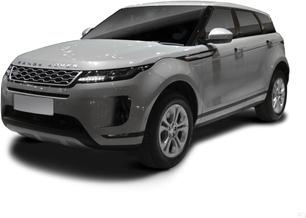
Enter this car, the Evoque HSE P300e. It’s a plug-in hybrid, notably only available in the top trim level, with top-shelf performance, too.
Is it the right car to represent Range Rover’s entry-level model at a critical time of technological transformation? Let’s take a look.
You like performance, love a bit of luxury and fancy a traditional sedan. The budget is healthy and there’s a surprising amount of choice. But Mercedes-AMG believes it’s created the car that perfectly answers your new-car brief.
The Mercedes-AMG E53 Hybrid 4Matic+ is a fresh expression of an established high-performance sedan formula mixing internal-combustion power with electric punch and all-wheel drive.
We were invited to its local launch, so stay with us to see if this newcomer is ready to fill that primo European performance car shaped space in your garage.
The Range Rover Evoque is more highly specified and more luxurious than ever, and this plug-in hybrid version makes the most of what’s on offer with its slick but familiar feel from behind the wheel.
Unfortunately, it does have an eye-watering price tag to go with its classy design and the options list is a bit rude, all things considered, but the core offering is a solid luxury buy for city-slickers, nonetheless.
What makes the Evoque P300e stand out for me is its impressive EV driving range and excellent charging specs which make it as convenient as possible to make the most of its electrified features.
It’s up to the buyer whether these conveniences and the Range Rover badge are worth swapping into a car a full size down from its luxury plug-in rivals for the same money.
The Mercedes-AMG E53 Hybrid 4Matic+ is a superb blend of high-tech hybrid muscle and cossetting top-end luxury. Value is competitive, it looks (and feels) the business, despite the conventional sedan configuration it’s surprisingly practical (except for the modest boot), fuel-efficiency is a key benefit and safety is stellar. The ownership proposition is okay for the category but that’s not top of mind when an enticing series of corners ranges into view. It’s an impressive package.
Note: CarsGuide attended this event as a guest of the manufacturer, with travel, accommodation and meals provided.
The Evoque has always been a car all about its sleek, city-slicking design, an iconic piece of modern SUV art from Jaguar Land Rover head of design, Gerry McGovern.
With its shapely proportions, clever descending roofline, and a silhouette which successfully reflects a miniaturised version of the Range Rover, the Evoque is at once classy with a faint suggestion of toughness under the skin.
The blacked-out grille, slimline headlights, and contemporary strip across the tailgate all serve to add intrigue to this SUV, and the extra detailing in the front bumper, shapeliness of the bonnet, and contrast black trims (with extra contrast panels on our test car matching the gloss black wheels) serving to add to its premium appeal.
It’s important to remember, while the Evoque slides into a busy small SUV landscape now, it was one of the first to make a premium car so successfully appealing in this small SUV space way back in 2011 with the first Evoque, following Land Rover’s historic trend of being in front of the SUV curve.
Rival small SUV designs may have caught up in the minds of many with the likes of the Audi Q3, BMW X2, and Volvo XC40 shining in recent years, but few have won as many design accolades as the Evoque.
Range Rover seems to be leaning into a more upper luxury trend, not just with the pricing, but with the vibe of the car’s interiors, too.
The new generation Evoque, for example, took a big jump in the look and feel of its interior appointments when it launched in 2019, and over time has only consolidated its market positioning.
The HSE grade which our P300e hybrid arrives in is lavish on the inside, with lovely suede-like seats, intricate contrasting grey cloth trims in the doors (do I detect an influence from Volvo here?) and a plush-looking dash, all finished in soft-to-the touch materials.
Attention to detail, like the silver bezels which adorn the centre console and media screen, add to the premium flair which lifts the Range Rover badge above the Land Rover one, and I do like the way the additional function screen seamlessly melts into the piano finish and integrated dials. While it’s always a nightmare to keep gloss piano finishes clean, it looks oh-so primo.
It’s a little odd the P300e has analogue dials, which seems to miss the premium edge which a fully digital dash might provide although the 7.0-inch centre dash screen has a great resolution and speed, as well as a mostly well laid out operating system.
I found the R-Dynamic modes, which can sharpen up the accelerator response and steering buried two menus deep, unnecessarily hard to find, as were various EV information screens and other less important functions.
At first glance the E53 passes as a flash-looking Mercedes-Benz E-Class running 20-inch rims, especially in the launch car’s rich ‘Patagonia Red’ finish.
But then, there’s something about the AMG sedan’s stance that sets it apart. Which makes sense because the front fenders are wider by 11mm on both sides (compared to the E-Class) to make room for a wider front track (increased by just over 30mm over the previous-generation E53).
Wheelbase has also increased by just over 20mm to almost 3.0m and the car’s more aggressive nose treatment enhances the distinctive look.
There’s the AMG-specific radiator trim with ‘Panamericana’-style vertical slats, the sleek dual-section headlights and a large lower inlet that directs air to an additional front intercooler as well as an external opening for a wheel-arch cooler.
In profile there’s barely a hard edge to be seen, although character lines in the bonnet and along the car’s flanks contribute to a taut surface treatment.
At the rear, horizontally-connected LED tail-lights feature a stylised Mercedes three-pointed star signature, then a rear apron housing a diffuser and twin double tailpipe ‘trims’ and a bootlid spoiler on the left and right round off a beautifully proportioned design.
Climbing inside means a trip to screen city with an upright digital display in front of the driver flanked by a large central screen to the left and an additional panel for the front passenger beyond that. It’s a lot.
But once you’re on top of all the glass surfaces, details like open pore grey ashwood trim on the lower console come into focus, as do the brushed metal accents, beautifully sculpted ‘Performance’ front sports seats (optionally fitted to our launch drive example), racy stainless steel pedal covers and the five spoke AMG performance steering wheel with configurable rotary buttons.
It’s a supremely luxurious and comfortable interior.
While it still plays the role of Range Rover’s smallest SUV, the current Evoque is much bigger than the car it replaced in 2019. I would go so far as to say it’s deceptively large on the inside.
Front occupants are treated to a cabin which now feels almost as wide as an actual Range Rover, with plenty of room for elbows on either side, which are, of course, met by lovely soft-touch surfaces.
The raised console helps with the upmarket feel, as does the plush dash. The standard 14-way adjust front seats help to accommodate most passengers, with my only criticism being the large A-pillars and height of the dash can make it feel a little bit claustrophobic compared to some rival luxury SUVs.
Storage is offered through a set of large door pockets, a centre console box, dual bottle holders behind the shift lever, and a healthy nook underneath the climate controls, which also hosts a wireless charging bay.
The rear seats share the same comfortable rim as the front ones, and also have large pockets in the doors. Despite the descending roofline, I had just enough room for my head at 182cm tall although it is notable the space in the PHEV feels smaller with the raised floor needed to accommodate the batteries.
I had a little airspace for my knees behind my own driving position, too. The main drawback for rear passengers is the large transmission tunnel, making it difficult to accommodate an adult in the centre position.
There are adjustable air vents for rear passengers, but it is frustrating Land Rover has chosen to make rear USB-C charging ports an arbitrary $270 option.
The boot is also deceptively large for such a small SUV, measuring in at 472 litres (VDA), it’s above average for the small SUV class and fits the full CarsGuide luggage set, provided you remove the parcel shelf as it's just a smidge too high.
You'll also need to keep your charging cables in the boot, as there's no underfloor storage, the entire space being taken up by a space-saver spare wheel.
At over 4.9m long, close to 2.1m wide and a little under 1.5m tall, with a 2961mm wheelbase, the new E53 is a substantial car and feels it on the inside.
Plenty of breathing space for the driver and front passenger thanks in part to the away slope of the screen-dominated dash.
Generous storage, too, with large door bins including enough space for big bottles, a deep lidded box between the seats (which doubles as a centre armrest), a generous glove box and two cupholders under a sliding top at the front of the centre console.
Hit the second row, and sitting behind the driver’s seat, set for my 183cm position, I have plenty of head and legroom, with enough shoulder space for three adults on short journeys. A trio of up to mid-teenage kids will be fine for a road trip.
Storage is pretty handy as well with hefty door bins and two pop-out cupholders in the fold-down centre armrest. No map pockets on the back of the (optional) Performance front seats, though.
Four-zone climate control means there’s individual temperature control for each side of the back seat, with adjustable vents at the back of the front centre console and trailing edge of the B-pillars. Very civilised.
Power and connectivity runs to three USB-C outlets and a wireless device charging pad in the front.
Thanks to the traction battery under its floor, boot volume is restricted to 370 litres (compared to 540L in the conventional E-Class sedan), although there are bag hooks, tie-down anchors and the 60/40 split-folding rear seat is able to liberate more space.
No spare tyre of any description, just a repair/inflator kit, which might make sense for automotive designers and engineers trying to maximise space and reduce weight, but doesn’t make sense for an owner stranded on the side of the road with an unrepairable puncture.
While we’re on the topic of excess, the Evoque HSE P300e certainly reflects it in the price tag. This plug-in starts from a whopping $105,060 price-wise putting it in the same league as luxury PHEV rivals a full size up.
Because there are no small luxury segment small SUVs in this league currently, we’re in fact forced to compare the Evoque to cars like the Volvo XC60 Recharge (from $100,990), BMW X3 xDrive30e ($107,000), or the particularly good-value Lexus NX 450h+ (from $88,323).
All are larger than our Evoque here, so it’s automatically at a disadvantage, and as is the usual case with Land Rover products, there’s an extensive and occasionally rude options list which can add thousands more to the price.
Our test vehicle, for example, had over $10,000 worth of options attached to it, only three of which (dual-zone climate with second row vents - $1000, and the additional Type 2 charging cable - $528) I would bother to add.
The included equipment at the HSE grade is good, with 20-inch alloy wheels, 14-way electrically adjustable front seats, Matrix LED headlights, a 10-inch tiltable ‘Pivi Pro’ touchscreen with wireless Apple CarPlay and Android Auto connectivity, as well as built-in navigation, and a second screen for the climate and car functions.
There’s also a semi-digital dash (oddly, with analogue dials for engine rpm and road speed, but a 7.0-inch digital element for everything else), the choice of either leather or suede interior trim, a leather-bound steering wheel, and keyless entry with push-start ignition.
It’s nice to see the Matrix LEDs as standard here, as well as a swish set of screens and a premium feeling interior. But it’s also frustrating things like digital radio ($520), a head-up display ($1690), data plan ($1040), and USB-C for the rear seats ($351) are optional on a car north of $100,000, especially since most of these are standard on its rivals.
One major catch is how long you might be waiting for one. Some dealer sources tell us customers will need to wait up to 12 months for delivery at the time of writing, so be prepared for this if you want one.
Priced at $199,900, before on-road costs, the Mercedes-AMG E53 Hybrid 4Matic+ lines up against an interesting mix of internal combustion, hybrid and pure-EV contenders, the most closely aligned on spec and price being the BMW M4 M Competition xDrive ($201,300), Lexus LS500h F Sport ($199,250) and Porsche Taycan 4 Cross Turismo ($197,400).
And as you’d expect for a performance sedan on the cusp of $200K the standard equipment list is long. Aside from the performance and safety tech we’ll get to shortly, the E53 features four-zone automatic climate control, 17-speaker Burmester surround sound audio (including digital radio), Nappa leather trim (including the steering wheel) and the ‘MBUX Superscreen’ display consisting of three screens - 14.4-inch central media, 12.3-inch instrument/info for the driver and 12.3-inch for the front passenger.
You can also tick off the box on Android Auto, Apple CarPlay and Bluetooth connectivity, plus the power front seats (with memory) are heated.
There’s also a head-up display, panoramic sliding sunroof, ambient lighting, keyless entry and start, built-in nav, a 360-degree virtual top-down camera view, LED exterior lighting and 20-inch alloy rims.
There’s more, but you get the idea. This car is loaded with included features that help it match or better its diverse competitive set.
There are four optional AMG packages available - The ‘Night Package’ ($3000) which includes aero-influenced body elements, special rims and more. The ‘Carbon Fibre Package’ ($6000), featuring a range of carbon bits including the exterior mirror caps, bootlid spoiler and interior pieces like the centre console and steering wheel. A ‘Performance Seat Package’ ($5000), which unsurprisingly focuses on racier front seats with integrated headrests. And the ‘Energizing Package Plus’ ($5300) adds ‘multicontour’ front seats that are heated (as are the centre console lid and door armrests) and individual fragrance for the interior, as well as ionisation of the cabin air.
The Evoque now sports Jaguar Land Rover’s hybridised ‘Ingenium’ engine family across the range, and the set-up which appears in the plug-in hybrid model might be the most interesting.
It consists of a 1.5-litre three-cylinder combustion engine which is said to produce 147kW/280Nm, and an electric motor powering the rear axle producing 80kW, the two of which combine for an impressive quoted total output of 227kW/540Nm, driving all four wheels.
The motor sources its power from a 15kWh lithium-ion battery pack under the floor of the car, which provides a claimed 62km of fully-electric driving range.
Land Rover also replaced the mechanical brake pedal with a drive-by-wire one to allow for improved ‘blended’ regenerative braking.
The E53 is powered by a 3.0-litre, turbo-petrol, in-line six-cylinder engine working in concert with an electric motor housed within the car’s nine-speed (torque-converter) automatic transmission.
Drive goes to all four wheels via an electro-mechanically controlled clutch distributing power between the front and rear axles.
Engine performance is up by around 10kW compared to the previous E53 thanks to software upgrades, a new twin-scroll turbo with higher boost pressure (1.5 bar vs 1.1 bar) as well as additional front and wheel-arch intercoolers.
The engine alone produces 330kW/560Nm while the permanently excited synchronous motor chips in with a solid 120kW/480Nm for overall outputs of 450kW/750Nm.
Claimed energy consumption on the combined WLTP cycle for the Range Rover Evoque P300e is 2.0L/100km. As with all plug-in hybrids though, this will heavily depend on how it is driven.
The 15kWh battery is said to provide a 62km driving range (again, on the WLTP cycle), which seems healthy for a PHEV, and I was pleased to find that my car was reporting about 56km on a full charge, not far off the claim.
Importantly, the Evoque has stellar charging specifications, which make it ideal for a city-slicker with minimal time to conveniently charge.
I was shocked to find a DC charging port when I flipped open the panel, which is capable of charging the tiny battery up in just 20 minutes (at a peak rate of 35kW), while on a slower but easier-to-find AC charger, it can extract 7kW allowing a charge time of around two hours.
This is well above par for a plug-in hybrid, and makes charging quick, painless and convenient, even for those who can’t charge at home.
As a result of this ease-of-charging and therefore minimal time spent in the hold or hybrid modes, my car reported an astounding 1.0/100km of fuel consumption during my week, covering mostly urban kilometres.
The only drawback is the need to fill this small turbo engine with mid-shelf 95RON fuel.
The E53’s official combined cycle (urban/extra-urban) fuel figure is 1.7L/100km, a spectacularly frugal number for such a high-performance machine. But it’s worth noting it’s predicated on the drive battery being constantly and completely recharged.
Speaking of which, the 28.6kWh, 400-volt traction battery is housed at the rear of the car under the boot floor. It delivers a claimed EV-only range of up to 100km, although that will diminish dramatically if you decide to push up towards the car’s pure-electric top speed of 140km/h.
Important to note the battery’s 21kWh ‘day-to-day’ capacity, designed to keep charge in reserve for any required ‘high-performance boosts’.
An 11kW AC charger is onboard with regenerative braking also harvesting energy, the car automatically selecting the level of recuperation power in line with traffic conditions.
In pure EV mode you can also manually adjust regen through four levels via the steering wheel-mounted transmission shift paddles.
Auto stop/start for the engine is standard and 98 RON premium unleaded is recommended, although 95 RON is okay at a pinch.
The E53’s official fuel consumption figure and 50-litre tank capacity translate to a range approaching 3000km! But to bring that down to earth somewhat, on the launch drive program, covering urban and mostly highway running, we saw a (dash indicated) average of 6.4L/100km, which equates to a more realistic, but still lengthy, 780km between fills.
The second-gen Evoque is still the lovely, luxury, small SUV it was when it launched in 2019, and this plug-in hybrid version only serves to improve the formula, adding sleek electric driving characteristics to the already-smooth turbo engine and torque converter automatic.
Interestingly, and like its Volvo XC60 rival, the electric motor is located on the rear axle, giving this car the odd characteristic of being rear-wheel drive when driven electrically, or predominantly front-wheel drive when driven in combustion mode.
Speaking of modes, this car does the bulk of the management, with only three driving modes available to the pilot. These include the default ‘hybrid’ mode, which as the name suggests, blends the two power sources with more of an emphasis on electric driving when the battery is charged.
There's also an electric mode, which will only use the rear axle motor until the battery runs out, and a ‘Hold’ mode which will still blend the two sources but predominantly rely on the combustion engine to maintain the car’s state of charge.
You might want to use the last mode if you're travelling long-distance, to maintain the electric range for where it is most efficient - in low-speed stop-start driving.
The regenerative braking is not adjustable, having just a single mild level. It’s far from the single-pedal driving you can experience in a fully electric car, but Land Rover has made the brake pedal fly-by-wire so it can blend increased regen with the mechanical brakes.
It makes for a familiar experience from behind the wheel for those coming straight out of a purely combustion vehicle.
The electrified brake pedal does have the consequence of removing a bit of feel for a keen driver, and the same can be said for the rather slow steering tune in the default settings which makes the Evoque feel more luxurious and less sporty or reactive than it could be.
It’s a shame, because the two power sources combine to make for a thumping amount of power when you stick your boot in, and the all-wheel drive system and nicely balanced suspension keep this little SUV well under control in the corners.
As with my original Evoque range review in 2019, though, it is notable how heavy this SUV feels, particularly compared to some rivals like the Audi Q3.
The heftiness suits the Evoque's expanded dimensions and even more upmarket feel, but despite the power on offer it’s not an agile SUV to be carving corners in.
At least the ride quality and quietness is superb, making the Evoque an ideal SUV for driving around the centre of pothole-stricken Sydney, with a notable amount of poise. At the end of the day, isn’t that what this Range Rover was built for?
If you’re lining up for a Mercedes-AMG you want an optimal blend of luxury and performance and the E53 Hybrid 4Matic+ nails that delicate balance.
With 450kW (that’s 612hp!) and 750Nm under your right foot, engaging ‘Race Start’, pushing the accelerator to the floor and letting the car do its thing will result in 0-100km/h acceleration in 3.8 seconds. The fat band of mid-range torque is so satisfying to lean into.
Induction, engine and exhaust sounds combine to produce a suitably gruff soundtrack with the hybrid powertrain operating seamlessly. Hit your preferred track day or tempt legal fate and you can explore the car’s claimed (governed) maximum velocity of 280km/h.
The nine-speed auto is slick and manual changes using the wheel mounted paddles are rapid. In normal conditions the AWD system is biased to the rear and an electric rear locking diff helps keep things under control if you decide to get the bit between your teeth on a twisting drive.
A chunky brace links the front suspension strut mounts and the car feels predictable and stable in enthusiastic cornering. Rubber is Michelin Pilot Sport 4S (245/35 fr / 275/30 rr) which grips with satisfying determination but does make its rumbling presence felt on anything approaching a coarse chip surface (despite the car’s standard acoustic glass).
Speed-sensitive power-steering delivers accuracy and good road feel without any jitters, the standard active rear-axle steering playing its part. The ‘turning point’ is 100km/h with the rear wheels subtly turning in the opposite direction to the fronts up to that speed and in the same direction beyond it.
‘AMG Ride Control’ combines steel spring suspension (strut front, multi-link rear) with adaptive adjustable damping for the choice of ‘Comfort’, ‘Sport’ and ‘Sport+’ settings. Comfort is the pick for B-road running on typically uneven surfaces. The optional ‘Performance’ sports front seats are comfortable and grippy in equal measure.
Braking is by ventilated composite rotors all around, with beefy four-piston fixed calipers up front. An electro-mechanical brake booster is designed to combine electrical recuperation with the hydraulic brake for more frequent and efficient energy harvesting over a longer period of time. The pedal feels firm and progressive with smooth initial bite.
All around vision is good for a conventional sedan with a quality reversing camera, 360-degree overhead view and front and rear parking sensors helping massively with parking duties. That said, a 12.5m turning circle isn’t tiny.
Despite its long options list, thankfully all key safety equipment is standard on the Evoque. Active items include auto emergency braking, lane keep assist with lane departure warning, blind spot monitoring with rear cross-traffic alert, traffic sign recognition, driver attention alert, a clear exit monitor, and adaptive cruise control.
Only two items which could be considered under the safety umbrella remain on the options list (the options list becoming a recurring theme in this review), a 360-degree parking camera ($500), and the ‘ClearSight’ rear view mirror, which is able to show a camera view out the rear if the mirror is obscured by luggage or people in the cabin ($1230).
Elsewhere, the Evoque scores two ISOFIX child seat mounting points on the outer rear seats, and three top tethers across the rear row.
There are six airbags, and despite notably missing a front centre airbag, which is often required for a maximum safety rating to today’s standard, the Evoque maintains the maximum five-star ANCAP safety rating it was awarded in 2019. For the record, it scored very highly across all categories.
The Mercedes-AMG E53 Hybrid 4Matic+ hasn’t been assessed by ANCAP or Euro NCAP, but that doesn’t mean it comes up short in terms of crash-avoidance and passive safety tech.
It features a comprehensive suite of ‘Advanced Driver Assistance Systems’ (ADAS) features including ‘Active Brake Assist’ (Merc-speak for AEB), adaptive cruise control, blind-spot monitoring, lane-change and lane-keeping assist, front and rear cross-traffic alert, traffic sign recognition, driver attention monitoring, adaptive high-beam, ‘Park Assist’ (including front and rear parking sensors) and tyre pressure monitoring.
And if an impact is unavoidable the airbag count runs to 11 - dual front, front and rear side, full-length side curtains, driver and front passenger knee and a front centre bag.
As the name implies, ‘Auto Emergency Call’ will contact emergency services after a collision and there’s even the obligatory Mercedes first aid kit and high-vis vests.
There are three top tethers for child seats or baby capsules across the rear seat with ISOFIX anchors on the two outer rear positions.
As of April, 2021 all Land Rover products are finally covered by an industry-standard five-year and unlimited kilometre warranty, matching its key rivals, and beating out BMW which persists with an old three-year warranty promise. Five years of roadside assist is also included for the duration.
When it comes to servicing, the P300e is available to be purchased with a five-year plan ($2650 - $530 annually) which covers 102,000km of visits.
This pack is well worthwhile as Land Rover servicing is generally quite expensive when purchased a-la-carte.
The Mercedes-AMG E53 Hybrid 4Matic+ is covered by a five-year/unlimited km warranty with the high-voltage battery covered for eight years/160,000km. Those terms match the key players in the premium and luxury parts of the market.
Mercedes-Benz ‘Road Care’ assistance is included for the duration of the main vehicle warranty.
Maintenance is recommended every 12 months/25,000km, with service plans offered across three- ($4110), four- ($5410) and five-year ($7570) periods. That’s an average of around $1350 for the first two and $1500 for the last one. That added powertrain complexity obviously has an impact in the workshop.