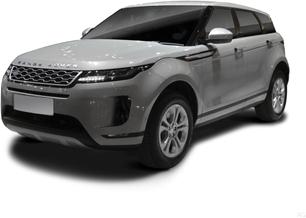
What's the difference?
Range Rover has developed a bit of an image problem in the last few years.
To many the brand is still the face of a quintessentially British aspirational luxurious off-roader. But to a growing group, it has become synonymous with the concept of an environmentally reckless fuel-guzzling SUV.
They’re big, heavy, and still feature V8 engines, but Range Rover knows all too well the writing is on the wall for its increasingly infamous range of combustion vehicles.
The trouble is, customers love them, and while the I-Pace from sister brand Jaguar is a big leap into the future, there needs to be a happy medium for easing some of its existing customers away from combustion, while still offering the kinds of excess and aspirational performance the Range Rover brand is associated with.
Enter this car, the Evoque HSE P300e. It’s a plug-in hybrid, notably only available in the top trim level, with top-shelf performance, too.
Is it the right car to represent Range Rover’s entry-level model at a critical time of technological transformation? Let’s take a look.
The 2022 Mitsubishi Eclipse Cross has a new high-tech powertrain that allows it to run as an electric car, or run using the petrol engine, or even use both at the same time.
But the new hybrid SUV is not like a Toyota hybrid - because this one can be plugged in at home to recharge the batteries, and you should be able to get at least 50 kilometres of EV driving out of just a few dollars worth of electricity.
We’re talking about the new 2022 Mitsubishi Eclipse Cross Plug-in Hybrid EV, or PHEV as we’ve called it in the past. The brand has renamed it to include both ‘Hybrid’ and ‘EV’ in the name because, well, it reckons those terms have a bit more cut-through today than when the company first launched its Outlander PHEV back in 2014.
But with the new Eclipse Cross PHEV variants attracting a huge premium over the regular petrol-turbo models, does the extra money buy you a better car? Let’s find out.
The Range Rover Evoque is more highly specified and more luxurious than ever, and this plug-in hybrid version makes the most of what’s on offer with its slick but familiar feel from behind the wheel.
Unfortunately, it does have an eye-watering price tag to go with its classy design and the options list is a bit rude, all things considered, but the core offering is a solid luxury buy for city-slickers, nonetheless.
What makes the Evoque P300e stand out for me is its impressive EV driving range and excellent charging specs which make it as convenient as possible to make the most of its electrified features.
It’s up to the buyer whether these conveniences and the Range Rover badge are worth swapping into a car a full size down from its luxury plug-in rivals for the same money.
The Mitsubishi Eclipse Cross Plug-in Hybrid EV is an interesting inclusion for the brand, especially as it is typically considered a ‘value player’ in the market.
But with negligible real-world fuel consumption benefits if you drive beyond the limited EV range and a high price premium over the non-PHEV models, it’s important you see if the sums add up for your particular needs.
Primarily going to use the car for running around town? Cool. Think the 50-ish-kay EV range will work for you and make you happy? Amazing. Sold on the look of the car? Hat tipped.
But let me say this - if you are considering the Eclipse Cross PHEV, there are some alternatives you should also have on your list, including the MG HS PHEV, the Hyundai Ioniq PHEV, Kia Niro PHEV, and - the one I’d buy - a Toyota RAV4 Hybrid. For me, plug-in hybrid tech is a bit of a halfway house, in most instances offering too high a price premium for the range you’re getting to drive electric. Heck, a Kona Electric isn’t much more than the top-spec Exceed PHEV, and I’d have that if I wanted a real day-to-day EV experience.