What's the difference?
The Subaru Outback holds a special place in the hearts of adventurers everywhere. It’s long been regarded by its fans as a genuine mix of decent on-road manners, family-friendly practicality and sound off-road capability. Just right for light-duty off-roading.
Now, Subaru claims, it has made the Outback even better and a new off-road-focussed variant called the all-wheel-drive Wilderness now sits near the top of the line-up.
The Wilderness is equipped with a 2.4-litre turbo-petrol, four-cylinder, horizontally-opposed 'boxer' engine, 240mm of ground clearance, improved approach/departure angles and electronically controlled dampers.
But is this new Outback all it’s cracked up to be? Read on.
Land Rover was making SUVs before they were even called SUVs.
Range Rovers were ferrying families around in prestigious four-wheel drive comfort decades before Audi, BMW or Mercedes-Benz even thought of doing it, too.
So, even with all its rivals these days, how well does a Range Rover do modern family duties?
Well the Range Rover Autobiography came to live with my little family of four for a week. We had the seven-seater long-wheelbase version with the twin-turbo petrol V8 engine, and this is what we discovered…
If you’re a Subaru fan chances are the Wilderness will float your boat. It’s an appealing mix of on-road refinement and more than satisfactory capability on bush tracks.
The Wilderness engine-and-CVT combination helps to make this Subaru well refined and highly responsive on-road and it benefits from punchier low-rev output in off-road scenarios.
Subaru has made a habit of producing practical vehicles and this new addition to the upgraded Outback line-up doesn’t disappoint.
Does anyone need a Wilderness version of the Outback? Probably not. Will anyone want a Wilderness edition Outback? I reckon a lot of Outback fans would fall over themselves to get their hands on one of these.
The Range Rover Autobiography long wheelbase is an outstanding SUV that is not just beautiful to drive but makes family practicality a priority, too,
The price is reasonable relative to the competition, the features list is long and complementary servicing offers peace of mind.
If you don’t need the third row, I’d consider the standard wheelbase Autobiography even if it does reduce legroom, there’s still plenty of space.
My son stopped short of giving the Range Rover Autobiography full marks "because there are no massaging seats in the second row".
The most obvious design tweaks include a glare-reducing bonnet decal, the new grille and bumper, substantial durable plastic cladding on each side, and some tailgate trim and lighting variations away from standard Outbacks.
There’s gold edging here and there around the Wilderness exterior (fog lights etc) and it’s eye-catching, but this vehicle attracts some bemused looks.
While it’s based on the mid-spec Outback AWD Premium, the Wilderness stands apart because of its taller stance (with an extra 20mm ground clearance over standard Outbacks) and chunkier overall look.
For numbers nerds, the Wilderness is 4880mm long (with a 2745mm wheelbase), 1880mm wide, 1735mm high and has a listed kerb weight of 1781kg.
Its wheel tracks (1575mm front / 1600mm rear) are 10mm narrower in both cases than those of standard Outbacks.
Inside, the Wilderness has water-repellent upholstery with embossed Wilderness logos on the headrests, Wilderness tags on the seats, orange stitching throughout and all-weather floor mats.
All in all, it looks stylish, inside and out, but it’s also ready to play in the dirt.
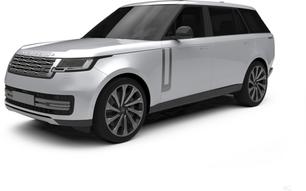
This fifth-generation Range Rover debuted in 2021 and despite its smooth, modern styling this SUV retains the familiar traditional Range Rover look with the short squared bonnet, flat roofline and tall windows.
Let’s talk about the wheelbase, because it has a huge impact on passenger space.
We had the long wheelbase which is 3197mm between the front and rear wheels - that’s 200mm more than the standard wheelbase.
Just look at those stretched rear doors in the photos - this is a go-anywhere limousine, or go-anywhere daycare centre in my case.
The overall length of the long wheelbase Range Rover is 5252mm. That’s big, but the design of this SUV doesn’t make it appear enormous.
What I don't like are the retractable door handles. They take a while to pop out and they look and feel cheap. Land Rover has used these on its other SUVs and if I had time I’d pen a letter asking the company to please stop. I’m sincerely hoping this review will do the same thing. I await your response JLR.
I think the tail-lights are pure genius. The pencil thin design is such a brave move away from the norm where brands are going over the top with LED lighting, and the simplicity is refreshing.
Inside, a traditional-looking Range Rover cabin awaits you with the flat dashboard, the low window sills contrasted by super modern touches like the displays and fully digital dials.
It’s sumptuous, luxurious, but not over the top. Again some people are looking for bling and gimmicks, but you won’t find them here - and I like that. This interior feels solid and substantial, but plush.
In terms of practicality the Wilderness doesn’t disappoint. The cabin has a neat and familiar layout with enough soft-touch surfaces, storage space, cupholders and charge points to satisfy most drivers and passengers.
The 12.1-inch horizontal multi-media touchscreen is easy enough to operate, with many cabin functions able to be controlled via on-screen buttons, but some functions (including air-conditioning and auto vehicle hold) can also be adjusted via physical off-screen controls, which is handy.
The seats offer improved lumbar and pelvic support relative to previous Outbacks, there’s more headroom for the driver and passengers and Subaru reckons the rear cargo area opening is more than 50mm higher than standard for easier loading and unloading of gear into the rear.
According to Subaru the Wilderness upholstery is “hydrophobic synthetic leather with an anti-slip embossed finish” which looks good and seems durable enough for a lifetime of weekend road trips with some dirt inadvertently tracked inside for good measure.
Cargo volume is a listed 530 litres (with the rear seat up and in use), and that expands to 1211 litres when the 60/40 split-folding rear seat is down.
You can conceal whatever is in the rear cargo area with the new foldable fabric cargo cover which can be used as a tonneau-style cover, cargo partition, or even to protect the rear load lip. Its rear-most fixing points attach to the inner walls with magnets.
The cargo area has a 12-volt outlet, two shopping bag hooks on each wall, four tie-down points on the floor and a full-size spare wheel stored under that floor.
The Wilderness has new high-strength roof rails which are claimed to offer a static load capacity of 363kg (increased from 318kg).
Subaru has made a habit of producing practical vehicles and this new Outback doesn’t disappoint.
Range Rovers have been a family favourite for decades and they’ve been doing school runs and trips away long before other brands even thought about producing SUVs for families.
So what you’re buying is Land Rover’s decades of knowing how to make a family SUV and you can tell by little things such as, how wide the doors open, how easy it is to get in and out of (even for little kids), the flat floor, the good visibility (thanks to low window sills), and then there’s the space and cabin storage. Stuff other brands seem to be still working out.
The second row seats in the Autobiography have electric sun shades, dual-zone climate control and the window seats are power adjustable and heated.
My eight-year old couldn’t resist playing with his electric sunshade and the seat adjustment, but fortunately the driver has an override switch which let me turn off his 'seat privileges’ as he called it.
Being the long wheelbase means the rear doors are long and heavy. So while the eight-year old could open them, he had trouble closing them.
The long wheelbase offers unrivalled legroom in the back and that meant my wife and I could put our own seats back further for our own comfort -even with a baby seat behind us.
Enormous door pockets, a giant centre console storage area, cupholders in all three rows, USB ports, wireless phone charging and in our case an optional domestic power outlet ($130) made this a comfortable, roomy, well equipped cabin.
Sure, the third row isn’t exactly spacious, but I’ve never met one that is.
The intelligent seat folding system is remarkable. From the boot or side doors you can electronically adjust the second and third rows - either to raise them or lower them so they are flat for storage.
With all seats in place there is 229 litres of cargo space still left in the boot, but with those back seats folded flat you have 713 litres of capacity - and that’s just up to the cargo cover.
The Range Rover Autobiography has air suspension and this means the SUV can lower itself to an 'Access' height to make it even easier to get in and out.
The 2026 Subaru Outback Wilderness has a manufacturer list price of $59,690, before on-road costs.
It’s based on the mid-range Outback AWD Premium but offers a lot on more onboard than that variant including an upgraded turbo engine, 240mm ground clearance (20mm more than the standard Outback), electronic dampers and extra 'X-Mode' off-road functionality.
As well it gets a new bumper and front grille (with SUBARU emblazoned across the front), substantial cladding on each side, water-repellent upholstery with embossed Wilderness logos, all-weather floor mats and some Wilderness-specific trim and lighting on the tailgate.
The Wilderness also gets a 12.1-inch horizontal multi-media touchscreen with wireless Apple CarPlay and Android Auto (and wireless charger), a 12.3-inch digital instrument cluster, heated/powered front seats, heated outboard rear seats, a hands-free powered tailgate, X-Mode off-road mode, roof rails, 18-inch black-finish alloy wheels (with full-sized spare).
Annoyingly, the Wilderness misses out on some features included in its cheaper stablemate, the Outback AWD Touring ($56,990, before on-road costs) – namely active lane-change assist, a 360-degree camera system, 12-speaker Harman Kardon sound, Nappa leather, ventilated seats and a sunroof.
Spend another $3000 over the Wilderness price-tag and that $62,690 (before on-road costs) will put you in the top-spec Wilderness Apex. Its extras (over the Wilderness grade) include sat-nav, and the aforementioned 360-degree view monitor and Harman Kardon audio system.
In terms of value for money, you get a lot a of bang for your buck in this Outback and it more than holds its own against rivals, such as the Ford Everest, Isuzu MU-X and Toyota RAV4.
The Autobiography sits high in the Range Rover line-up and only the SVO (Special Vehicle Operations) models command higher prices.
Our Range Rover Autobiography was the long-wheelbase with the twin-turbo petrol V8 engine and has a list price of $312,193.
The standard features include retractable door handles with a proximity key, the LED headlights and tail-lights, a power tailgate and the panoramic sunroof.
Inside, 'Caraway' perforated semi-aniline leather seats are standard, too. So is a 13.1-inch screen with wireless Apple CarPlay and Android Auto, plus sat nav. There’s a fully digital driver display, a head-up display, wireless phone charging, and a Meridian 'Signature' sound system.
Four-zone climate control is standard and will keep the kids comfortable in the back, while the sun shades will project them from that giant fireball in the sky.
Up front there are heated and cooled seats which also massage, while the outboard rear seats are heated and power adjustable.
Our Autobiography was the seven-seater and it’s only about $1600 more than the five-seat version.
Ours had a few options fitted - there are the 23-inch wheels, the standard alloys are 22-inch, there’s also the black contrasting roof and the privacy glass which is so dark it’s almost impossible to look in.
All up the total list price for ours came to $318,603.
There are two direct-injection Boxer engines on offer in the Outback line-up: standard Outbacks get a 2.5-litre naturally-aspirated engine (137kW at 5800rpm and 254Nm at 3700rpm), while the Wilderness and Wilderness Apex get a 2.4-litre turbo-petrol boxer engine, producing 194kW at 5600rpm and 382Nm at 2000-3600rpm.
Both engines are matched to a continuously variable auto transmission (CVT) with eight-speed 'manual' mode. No Outback in the new line-up has a manual gearbox.
The Wilderness’s engine-and-CVT combination helps to make this Subaru well refined and highly responsive on-road and it benefits from punchier low-rev output in off-road scenarios.
The 4.4-litre twin-turbo petrol V8 is a perfect match for the Range Rover Autobiography.
There’s enormous power at 390kW and a colossal 750Nm of torque, but it’s delivered so smoothly and without sounding like Armageddon is beginning.
You might here the engine referred to as the P530. That signifies it’s petrol and makes about 530 horsepower.
All that grunt means that despite weighing more than 2.7 tonnes, this SUV can hurl itself from a stand still to 100km/h in 4.8 seconds.
An eight-speed automatic sends the drive to all four wheels. And making this SUV incredibly capable off-road is an excellent four-wheel drive system with a low range gear, plus a maximum ground clearance (thanks to the adjustable air suspension) of 283mm and a wading depth of up to 900mm.
There is a six-cylinder diesel, but if you decide on that instead of the V8 then it's all over between you and me. That’s how good this V8 is.
Official fuel consumption for the combined (urban/extra-urban) cycle is 9.7L/100km.
Fuel consumption on test was 10.8L/100km (combined) and while a lot of this test was spent on sealed surfaces, we did do unsealed road and rough-track driving.
The Outback has a 63-litre fuel tank so going by our on-test fuel consumption figure, you could reasonably expect a driving range of about 583km from a full tank of premium unleaded petrol.
Now, you’re going to use a lot of fuel. But that’s okay because this will probably be your last petrol car and the next one will be electric so let’s go out with a bang - last drinks at the petrol bar! Land Rover says you’ll use 11.8L/100km.
After a week of punishing my Range Rover with school drop offs, shopping centre car parks, hilly suburbs, motorways and rural roads the petrol pump told me we’d used 19.8L/100km.
I’m not shocked by that consumption. This is a 2.7 tonne all-wheel drive twin-turbo V8 SUV that was almost always ferrying around four people with a pram, garden supplies and shopping in bumper to bumper traffic. A real world fuel test.
There is that six-cylinder diesel and a hybrid version of the Range Rover, but this V8 engine suits the character of the SUV perfectly - anything else and it’s like eating reduced fat ice cream.
From the start, this is an enjoyable car to drive. The driver’s seat is eight-way power-adjustable so it’s easy to dial-in your preferred driving position. There’s ample visibility for a vehicle that feels so snug around you and this is a nimble mid-sized SUV with a 11.0m turning circle.
On-road, it is quiet and smooth, and its ride and handling are well controlled, with new dual-pinion electric power steering adding more precision.
The tweaked Wilderness suspension set-up – MacPherson struts at the front and double wishbones at the rear (both with newly tuned electronically-controlled dampers) – yields a comfortable driving experience.
As mentioned, the engine/CVT combination is generally impressive, but if driving based on the CVT’s behaviour is not entirely your cup of tea, you can always use the paddle shifters on the back of the steering wheel to have your fun.
The Outback has always been a solid all-rounder and well suited to light- to medium-duty off-roading and over the years its driver-assist systems have been tweaked and finessed to improve those attributes.
Worth noting, we define light- to medium-duty off-roading as driving on well-maintained gravel tracks or dirt roads in dry weather, or coping with minor corrugations, or muddy potholes on dirt or gravel tracks in wet weather.
This SUV's AWD system is intended to keep you safe on less-than-ideal terrain, such as rain-splattered wet blacktop, loosely gravelled bush tracks or slightly muddy dirt roads, rather than transform the Outback into a rock-crawling beast.
Afterall, this is not a 4WD with low-range gearing, ample ground clearance and aggressive all-terrain tyres.
However, with a skilled, experienced driver at the helm, the Outback is even able to tackle off-roading so difficult it would otherwise seem out of an all-wheel drive’s realm of capability.
The Wilderness edition simply builds on that reputation.
For starters, it has greater ground clearance (240mm) than other Outbacks and so its off-road angles are an improvement, with its 20-degree approach, 21.2-degree ramp-over angle and 23.6-degree departure angle besting its lower-spec stablemates.
Subaru’s X Mode system, with snow/dirt and deep snow/mud modes, adds another level to the Outback’s capability. These modes tweak acceleration, off-road traction-control activity and front and rear axle limited-slip function, among other things, to suit the terrain. Working in conjunction with driver-assist tech such as Hill Descent Control, the Outback handles light- to medium-duty off-roading with no strife whatsoever.
Ride and handling remain fine on unsealed country roads, and the suspension mostly soaks up the more dramatic bush track lumps and bumps.
If you’re looking for a vehicle to tow a 2500kg-plus caravan, boat or horse float then look elsewhere because the Wilderness has 750kg (unbraked trailer) and 2100kg (braked) towing capacities.
In terms of all-around driveability, this Outback has a lot going for it and can stand its ground against the likes of the Toyota RAV4, and even the Ford Everest and Isuzu MU-X.
Driving the V8-powered, long-wheelbase, 2.7-tonne, Range Rover Autobiography is a lot easier than it sounds. Really, it’s the Range Rover’s height above sea level which will strike you first.
You’ll lord it over other cars. The length doesn’t come into it - even for parking because the visibility is so good, the steering is so light and the engine is civilised and smooth.
This is truly an easy and enjoyable SUV to drive, with power and performance whenever you need it.
There are several drive modes from a 'Dynamic' sporty one, which makes the engine more responsive and suspension firmer, to off-road settings.
Most of the time I left the Range Rover in 'Comfort' mode for the softest ride, but with 530 horsepower lurking in the background ready to jump out and eat up hills and overtaking.
The front seats are wide, comfortable and supportive even after hours of driving.
The Wilderness has not been tested ANCAP, but it has an extensive suite of safety gear and driver-assist tech.
Standard safety features include nine airbags, AEB (Auto Emergency Braking), driver monitoring (annoying), active lane-change assist, front and side alert assist, emergency lane keep assist, rear cross-traffic alert, lane-departure warning, blind-spot monitor, traffic-sign recognition, adaptive cruise control and more.
For child seats there are top tether points for all three rear seat positions with ISOFIX anchors on the outer two.
The Range Rover was given the maximum five-star ANCAP rating when it was tested in 2022.
For second-row child occupant protection the Range Rover scored a high 86 per cent in frontal and side impacts.
Standard safety tech includes AEB (junction and forward) with cyclists and pedestrian detection, there’s blind-spot warning, lane keeping assistance and rear cross-traffic alert, but no rear AEB.
For child seats there are ISOFIX mounts in the second row, and top tether anchor points in the second row and third rows.
Along with an entire suite of airbags it’s good to see a centre airbag up front and also head-covering curtain airbags all three rows.
The Wilderness is covered by a five-year/unlimited km warranty, five-year/75,000km capped price servicing, and comes with 12 months of roadside assistance.
Servicing is recommended at 12 month/15,000km intervals.
The upfront prepaid service plans are a three-year service plan ($1275.37) and a five-year service plan ($2347.31).
For comparison, the first five years' service for a comparable Toyota RAV4 will set you back $1625.
At time of writing, Subaru Australia has more than 114 authorised dealerships and more than 120 service centres around the country.
The warranty is good with five-years and unlimited kilometre coverage.
There’s also five years roadside assistance and a complimentary five-year/130,000km service plan.
Yep, that's complimentary, as in free servicing for five years. I didn’t believe it myself and called Land Rover to check and was told that it does indeed mean free-of-charge.