What's the difference?
The Subaru Outback holds a special place in the hearts of adventurers everywhere. It’s long been regarded by its fans as a genuine mix of decent on-road manners, family-friendly practicality and sound off-road capability. Just right for light-duty off-roading.
Now, Subaru claims, it has made the Outback even better and a new off-road-focussed variant called the all-wheel-drive Wilderness now sits near the top of the line-up.
The Wilderness is equipped with a 2.4-litre turbo-petrol, four-cylinder, horizontally-opposed 'boxer' engine, 240mm of ground clearance, improved approach/departure angles and electronically controlled dampers.
But is this new Outback all it’s cracked up to be? Read on.
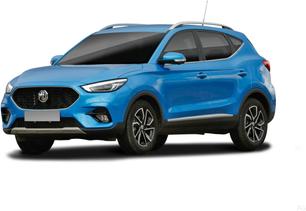
The ZST is essentially an upgraded version of MG's popular small SUV, the ZS.
The ZST sees some tweaks to the overall design and some added standard safety features. So, if you like the original, there's a good chance you'll like the ZST and I've been driving the top-grade Essence variant with my family of three.
The ZST Essence has some stiff competition from similarly specified rivals like the GWM Haval Jolion Lux and Chery Omoda 5 EX offering affordable packages and similar driving experiences. So, what makes the ZST stand out?
If you’re a Subaru fan chances are the Wilderness will float your boat. It’s an appealing mix of on-road refinement and more than satisfactory capability on bush tracks.
The Wilderness engine-and-CVT combination helps to make this Subaru well refined and highly responsive on-road and it benefits from punchier low-rev output in off-road scenarios.
Subaru has made a habit of producing practical vehicles and this new addition to the upgraded Outback line-up doesn’t disappoint.
Does anyone need a Wilderness version of the Outback? Probably not. Will anyone want a Wilderness edition Outback? I reckon a lot of Outback fans would fall over themselves to get their hands on one of these.
Will the MG ZST Essence fit a small family? Absolutely, and all but the middle seat passenger will be comfortable but there are areas open for improvement. Like it's safety, laggy tech and adding a few extra items in the back seat.
Yet, it still offers a good host of features and an attractive package for a reasonable price tag. Unfortunately, my son missed having the basic amenities but did like the sun roof.
The most obvious design tweaks include a glare-reducing bonnet decal, the new grille and bumper, substantial durable plastic cladding on each side, and some tailgate trim and lighting variations away from standard Outbacks.
There’s gold edging here and there around the Wilderness exterior (fog lights etc) and it’s eye-catching, but this vehicle attracts some bemused looks.
While it’s based on the mid-spec Outback AWD Premium, the Wilderness stands apart because of its taller stance (with an extra 20mm ground clearance over standard Outbacks) and chunkier overall look.
For numbers nerds, the Wilderness is 4880mm long (with a 2745mm wheelbase), 1880mm wide, 1735mm high and has a listed kerb weight of 1781kg.
Its wheel tracks (1575mm front / 1600mm rear) are 10mm narrower in both cases than those of standard Outbacks.
Inside, the Wilderness has water-repellent upholstery with embossed Wilderness logos on the headrests, Wilderness tags on the seats, orange stitching throughout and all-weather floor mats.
All in all, it looks stylish, inside and out, but it’s also ready to play in the dirt.
Being the newer and shinier version of the ZS, the ZST presents as a nice little package with its full suite of LED exterior lights, shiny chrome accents and its well-shaped body.
The front is distinctively different from its design muse with a darkened grille, and redesigned fog lights that feature new air intake vents. Other highlights include the 17-inch two-tone alloy wheels with sporty red brake calipers lurking behind them.
The interior is pleasant with a massive sunroof creating a light-filled space and giving the illusion that the cabin is larger than it is.
The synthetic leather upholstery and trims seem robust and perfect for families, but also feel quite plasticky under hand. The red badge embossing on the headrests is lovely, though.
The dashboard is well-proportioned and headlined by an upgraded 10.1-inch touchscreen multimedia system and fully digital instrument cluster.
The gearshift feels a tad too skinny and tall for the general aesthetic but the circular air-vents add some cute personality.
In terms of practicality the Wilderness doesn’t disappoint. The cabin has a neat and familiar layout with enough soft-touch surfaces, storage space, cupholders and charge points to satisfy most drivers and passengers.
The 12.1-inch horizontal multi-media touchscreen is easy enough to operate, with many cabin functions able to be controlled via on-screen buttons, but some functions (including air-conditioning and auto vehicle hold) can also be adjusted via physical off-screen controls, which is handy.
The seats offer improved lumbar and pelvic support relative to previous Outbacks, there’s more headroom for the driver and passengers and Subaru reckons the rear cargo area opening is more than 50mm higher than standard for easier loading and unloading of gear into the rear.
According to Subaru the Wilderness upholstery is “hydrophobic synthetic leather with an anti-slip embossed finish” which looks good and seems durable enough for a lifetime of weekend road trips with some dirt inadvertently tracked inside for good measure.
Cargo volume is a listed 530 litres (with the rear seat up and in use), and that expands to 1211 litres when the 60/40 split-folding rear seat is down.
You can conceal whatever is in the rear cargo area with the new foldable fabric cargo cover which can be used as a tonneau-style cover, cargo partition, or even to protect the rear load lip. Its rear-most fixing points attach to the inner walls with magnets.
The cargo area has a 12-volt outlet, two shopping bag hooks on each wall, four tie-down points on the floor and a full-size spare wheel stored under that floor.
The Wilderness has new high-strength roof rails which are claimed to offer a static load capacity of 363kg (increased from 318kg).
Subaru has made a habit of producing practical vehicles and this new Outback doesn’t disappoint.
Practicality is hurt by a lack of individual storage options and a back seat that has only two USB-A ports for its amenities.
The cabin space is spacious, though, and both rows have a decent amount of leg- and headroom despite the massive sunroof.
The steering wheel features height but not reach adjustment and to accommodate I have to sit much closer to the wheel than normal thanks to my poor little T-Rex arms.
Individual storage is the best up front with a small middle console and glove box, two cupholders and two drink bottle holders. The doors also feature large storage bins, which is great to keep the cockpit feeling neat.
The rear row gets two map pockets and a small storage bin in each door. There is also a (very) shallow storage nook at the back of the middle console… think a packet of gum or small wallet size.
My seven-year old isn't as comfortable in the rear because it lacks directional air vents, reading lights and a fold-down armrest. All items which will hinder an adult's comfort, too.
The boot space is a good size at 359L but you can bump it to 1187L with the rear seats folded, the backrest featuring a 60/40 split.
The height of the floor is adjustable and when set in the lowest position creates a deep well to tuck larger items, like luggage, into.
The hard cargo cover can be awkward to shift around or store but is otherwise out of the way when it counts.
Other amenities accentuate the premium-feeling the Essence is going for with the heated front seats and electric drivers seat offering well-padded comfort but on longer journeys, I miss having adjustable lumbar support.
The rear seats aren't as comfortable as the front only because the synthetic leather feels slippery, which is accentuated when you hit corners!
In terms of technology, you get two USB-A ports in each row but the front also gets a 12-volt port. You miss out on fast and wireless charging options.
The multimedia system looks great but can be sluggish to respond and the apps can be slow to load but I like the built-in satellite navigation.
The upgraded sound system has six speakers instead of four but the sound quality is a bit tinny with music and calls.
It was simple to connect to the wired Apple CarPlay. It also has Android Auto, Bluetooth connectivity and AM/FM radio.
The 2026 Subaru Outback Wilderness has a manufacturer list price of $59,690, before on-road costs.
It’s based on the mid-range Outback AWD Premium but offers a lot on more onboard than that variant including an upgraded turbo engine, 240mm ground clearance (20mm more than the standard Outback), electronic dampers and extra 'X-Mode' off-road functionality.
As well it gets a new bumper and front grille (with SUBARU emblazoned across the front), substantial cladding on each side, water-repellent upholstery with embossed Wilderness logos, all-weather floor mats and some Wilderness-specific trim and lighting on the tailgate.
The Wilderness also gets a 12.1-inch horizontal multi-media touchscreen with wireless Apple CarPlay and Android Auto (and wireless charger), a 12.3-inch digital instrument cluster, heated/powered front seats, heated outboard rear seats, a hands-free powered tailgate, X-Mode off-road mode, roof rails, 18-inch black-finish alloy wheels (with full-sized spare).
Annoyingly, the Wilderness misses out on some features included in its cheaper stablemate, the Outback AWD Touring ($56,990, before on-road costs) – namely active lane-change assist, a 360-degree camera system, 12-speaker Harman Kardon sound, Nappa leather, ventilated seats and a sunroof.
Spend another $3000 over the Wilderness price-tag and that $62,690 (before on-road costs) will put you in the top-spec Wilderness Apex. Its extras (over the Wilderness grade) include sat-nav, and the aforementioned 360-degree view monitor and Harman Kardon audio system.
In terms of value for money, you get a lot a of bang for your buck in this Outback and it more than holds its own against rivals, such as the Ford Everest, Isuzu MU-X and Toyota RAV4.
There are four variants for the ZST and our test vehicle is the top-spec Essence model, priced at $33,990 drive-away.
Our example's 'Pebble Black' finish is an included colour but other paintwork options can cost an extra $700.
The price point positions it right in the middle of its rivals with the Omoda 5 costing $35,990 drive-away and the Jolion sliding into the most affordable spot at $30,990 drive-away.
To highlight the value-for-money comparison, the Kia Seltos Sport+ FWD model costs $38,790 drive-away and then you start creeping up into the $40K bracket for similarly specified small SUVs.
The ZST Essence is the top-grade and it has a decent number of premium features for its price tag, like a panoramic sunroof, synthetic leather upholstery, heated front seats and an electric driver's seat, keyless entry, keyless start and a full suite of exterior LED lights.
Other standard features include wired Apple CarPlay and Android Auto, 10.1-inch touchscreen multimedia system, digital instrument cluster, one-zone air-conditioning, built-in satellite navigation, 360-degree camera system and an upgraded sound system with six speakers.
There are two direct-injection Boxer engines on offer in the Outback line-up: standard Outbacks get a 2.5-litre naturally-aspirated engine (137kW at 5800rpm and 254Nm at 3700rpm), while the Wilderness and Wilderness Apex get a 2.4-litre turbo-petrol boxer engine, producing 194kW at 5600rpm and 382Nm at 2000-3600rpm.
Both engines are matched to a continuously variable auto transmission (CVT) with eight-speed 'manual' mode. No Outback in the new line-up has a manual gearbox.
The Wilderness’s engine-and-CVT combination helps to make this Subaru well refined and highly responsive on-road and it benefits from punchier low-rev output in off-road scenarios.
The Essence variant has a 1.3-litre, three-cylinder turbo-petrol engine with a maximum power output of 115kW and 230Nm of torque.
It's a front-wheel drive and features a six-speed auto transmission. Overall, it has enough power to keep up with traffic on the open road but you have to be firm with the accelerator to keep your speed consistent.
Official fuel consumption for the combined (urban/extra-urban) cycle is 9.7L/100km.
Fuel consumption on test was 10.8L/100km (combined) and while a lot of this test was spent on sealed surfaces, we did do unsealed road and rough-track driving.
The Outback has a 63-litre fuel tank so going by our on-test fuel consumption figure, you could reasonably expect a driving range of about 583km from a full tank of premium unleaded petrol.
The official combined cycle fuel figure is 7.3L/100km and my real-world average came in at 7.7L. That is after a good mix of urban and open-road driving, so the usage is good.
Based on the combined fuel cycle and the relatively small 45L fuel tank, expect a driving range of around 616km.
From the start, this is an enjoyable car to drive. The driver’s seat is eight-way power-adjustable so it’s easy to dial-in your preferred driving position. There’s ample visibility for a vehicle that feels so snug around you and this is a nimble mid-sized SUV with a 11.0m turning circle.
On-road, it is quiet and smooth, and its ride and handling are well controlled, with new dual-pinion electric power steering adding more precision.
The tweaked Wilderness suspension set-up – MacPherson struts at the front and double wishbones at the rear (both with newly tuned electronically-controlled dampers) – yields a comfortable driving experience.
As mentioned, the engine/CVT combination is generally impressive, but if driving based on the CVT’s behaviour is not entirely your cup of tea, you can always use the paddle shifters on the back of the steering wheel to have your fun.
The Outback has always been a solid all-rounder and well suited to light- to medium-duty off-roading and over the years its driver-assist systems have been tweaked and finessed to improve those attributes.
Worth noting, we define light- to medium-duty off-roading as driving on well-maintained gravel tracks or dirt roads in dry weather, or coping with minor corrugations, or muddy potholes on dirt or gravel tracks in wet weather.
This SUV's AWD system is intended to keep you safe on less-than-ideal terrain, such as rain-splattered wet blacktop, loosely gravelled bush tracks or slightly muddy dirt roads, rather than transform the Outback into a rock-crawling beast.
Afterall, this is not a 4WD with low-range gearing, ample ground clearance and aggressive all-terrain tyres.
However, with a skilled, experienced driver at the helm, the Outback is even able to tackle off-roading so difficult it would otherwise seem out of an all-wheel drive’s realm of capability.
The Wilderness edition simply builds on that reputation.
For starters, it has greater ground clearance (240mm) than other Outbacks and so its off-road angles are an improvement, with its 20-degree approach, 21.2-degree ramp-over angle and 23.6-degree departure angle besting its lower-spec stablemates.
Subaru’s X Mode system, with snow/dirt and deep snow/mud modes, adds another level to the Outback’s capability. These modes tweak acceleration, off-road traction-control activity and front and rear axle limited-slip function, among other things, to suit the terrain. Working in conjunction with driver-assist tech such as Hill Descent Control, the Outback handles light- to medium-duty off-roading with no strife whatsoever.
Ride and handling remain fine on unsealed country roads, and the suspension mostly soaks up the more dramatic bush track lumps and bumps.
If you’re looking for a vehicle to tow a 2500kg-plus caravan, boat or horse float then look elsewhere because the Wilderness has 750kg (unbraked trailer) and 2100kg (braked) towing capacities.
In terms of all-around driveability, this Outback has a lot going for it and can stand its ground against the likes of the Toyota RAV4, and even the Ford Everest and Isuzu MU-X.
The ZST Essence has an okay amount of power relative to the car's small size.
It's an adequate cruiser when I ferry just my husband and son around, but feels a full load of luggage and people.
The steering is responsive and it's an easy car to manoeuvre in tight car parks or city streets, which is great. The visibility is pretty good despite the chunkier pillars and you feel confident when checking your blind-spots.
While the suspension is fairly forgiving and ride comfort is decent, you will still notice the bumps, especially when seated in the back.
The cabin suffers from some wind and road noise and at higher speeds we had to find we raise our voices a bit to be heard. Around town, you don't notice it.
This is just a personal preference but the brake and accelerator pedals are skinnier and more centrally positioned than I prefer. You get used to it, though.
The ZST is pretty easy to park and it's great that you have a 360-degree camera system but the image quality can be grainy. You get rear parking sensors, too, but miss out on ones at the front.
The Wilderness has not been tested ANCAP, but it has an extensive suite of safety gear and driver-assist tech.
Standard safety features include nine airbags, AEB (Auto Emergency Braking), driver monitoring (annoying), active lane-change assist, front and side alert assist, emergency lane keep assist, rear cross-traffic alert, lane-departure warning, blind-spot monitor, traffic-sign recognition, adaptive cruise control and more.
For child seats there are top tether points for all three rear seat positions with ISOFIX anchors on the outer two.
The ZST Essence has a good suite of safety features that now come standard like rear cross-traffic alert and blind-spot monitoring.
Other standard features include tyre pressure monitoring, LED daytime running lights, forward collision warning, lane departure alert, adaptive cruise control, seatbelt reminders, a 360-degree camera system and rear parking sensors.
The ZST only features six airbags, while many of its rivals sport seven, including the newer front centre airbag. The ZST variant scored four- from a possible five-star ANCAP safety rating in 2017 testing.
It's important to note that the tested ZS model did not have AEB or lane support systems at the time of testing, these were introduced from the 2020 model year onwards and the ZST has both.
There are ISOFIX child seat mounts on the rear outboard seats and three top tether anchor points but two child seats will fit best. There is enough room for front occupants when a 0-4 rearward facing child seat is installed.
The Wilderness is covered by a five-year/unlimited km warranty, five-year/75,000km capped price servicing, and comes with 12 months of roadside assistance.
Servicing is recommended at 12 month/15,000km intervals.
The upfront prepaid service plans are a three-year service plan ($1275.37) and a five-year service plan ($2347.31).
For comparison, the first five years' service for a comparable Toyota RAV4 will set you back $1625.
At time of writing, Subaru Australia has more than 114 authorised dealerships and more than 120 service centres around the country.
The ZST Essence comes with a seven-year/unlimited km warranty, which is on par with coverage offered by a growing number of its rivals.
There is a seven-year or up to 70,000km servicing program for a total cost of $2339 or an average of $334 per service, which is very competitive for the class.
Servicing intervals are at every 12 months or 10,000km, whichever occurs first, but could be annoying if you travel a lot.