What's the difference?
The Subaru Outback holds a special place in the hearts of adventurers everywhere. It’s long been regarded by its fans as a genuine mix of decent on-road manners, family-friendly practicality and sound off-road capability. Just right for light-duty off-roading.
Now, Subaru claims, it has made the Outback even better and a new off-road-focussed variant called the all-wheel-drive Wilderness now sits near the top of the line-up.
The Wilderness is equipped with a 2.4-litre turbo-petrol, four-cylinder, horizontally-opposed 'boxer' engine, 240mm of ground clearance, improved approach/departure angles and electronically controlled dampers.
But is this new Outback all it’s cracked up to be? Read on.
Don’t let people talk you into buying a tiny car just because you live in the city. That’s what I’ve learnt from being a car reviewer and living about eight kilometres from the CBD.
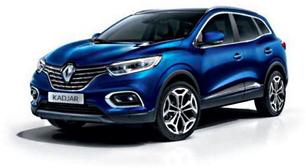
Yes, car spaces are small, or almost non existent, but the people that live there are as full-sized as people elsewhere and they often carry around just as much gear. What you need is a big, little car and the Renault Kadjar is that – a small SUV which is actually bigger than most.
The Kadjar is also French, and that’s appealing to us city folk because even though there are millions of us living in one square metre we like to think of ourselves as different, as individuals, cosmopolitan, metropolitan.
So the Kadjar looks perfect then, right?
Well, it’s good yes… in some ways, but after reading this you might prefer its Japanese cousin, the Nissan Qashqai. Let me explain...
If you’re a Subaru fan chances are the Wilderness will float your boat. It’s an appealing mix of on-road refinement and more than satisfactory capability on bush tracks.
The Wilderness engine-and-CVT combination helps to make this Subaru well refined and highly responsive on-road and it benefits from punchier low-rev output in off-road scenarios.
Subaru has made a habit of producing practical vehicles and this new addition to the upgraded Outback line-up doesn’t disappoint.
Does anyone need a Wilderness version of the Outback? Probably not. Will anyone want a Wilderness edition Outback? I reckon a lot of Outback fans would fall over themselves to get their hands on one of these.
The Renault Kadjar Intens ticks a lot of the urban boxes. It’s small, which is good for navigating narrow city streets and parking in tight spaces, but it’s also spacious and practical. The Kadjar is fuel efficient for a four-cylinder petrol engine and it has that sophisticated French styling.
The Intens is expensive, though, and unless you absolutely have to have leather seats, a glass roof, and the Bose stereo I’d go for the mid-range Zen grade and save yourself $5K but still have all the same safety tech. That said the Intens has auto parking as standard which is a nice convenience for the city.
Safety could be better. The AEB system doesn’t have pedestrian and cyclist detection, rear cross traffic alert, or reverse emergency braking.
Finally, the dual-clutch automatic and 1.3-litre turbo-petrol engine while a fuel efficient combination, isn’t all that easy to live with and can make driving a less-than-smooth experience. The Nissan Qashqai’s combination of CVT auto and four-cylinder naturally aspirated engine is better suited to the urban jungle - something to think about there.
Now the scores, the Kadjar Intens gets the same mark for daily driving and its urban talents – it could be smoother to drive, but there’s still lots to like.
The most obvious design tweaks include a glare-reducing bonnet decal, the new grille and bumper, substantial durable plastic cladding on each side, and some tailgate trim and lighting variations away from standard Outbacks.
There’s gold edging here and there around the Wilderness exterior (fog lights etc) and it’s eye-catching, but this vehicle attracts some bemused looks.
While it’s based on the mid-spec Outback AWD Premium, the Wilderness stands apart because of its taller stance (with an extra 20mm ground clearance over standard Outbacks) and chunkier overall look.
For numbers nerds, the Wilderness is 4880mm long (with a 2745mm wheelbase), 1880mm wide, 1735mm high and has a listed kerb weight of 1781kg.
Its wheel tracks (1575mm front / 1600mm rear) are 10mm narrower in both cases than those of standard Outbacks.
Inside, the Wilderness has water-repellent upholstery with embossed Wilderness logos on the headrests, Wilderness tags on the seats, orange stitching throughout and all-weather floor mats.
All in all, it looks stylish, inside and out, but it’s also ready to play in the dirt.
People talk about French design being good. Well if you want to see just how good take a look at the Nissan Qashqai, because the Kadjar is fundamentally the same SUV with Renault’s design spin applied.
Yep, as I mentioned about 15 seconds ago, Renault and Nissan are part of an alliance that allows them to share the same cars, but each brand has room to ‘make it their own’ with styling that delivers a very different look, inside and out.
Now, the Qashqai is not an ugly car, but I think the Kadjar is more stylish and premium looking in the same way the larger Renault Koleos SUV is gorgeous compared to the relatively straight-laced Nissan X-Trail it’s based on.
There’s no doubt the Kadjar is a Renault thanks to the giant diamond logo on the plunging grille. I like the way the front bumper rises up into the bonnet like it’s all one piece, but I’m not completely sold on the rear of the car which looks a bit like its shirt is tucked into the back of its pants, which makes no sense unless you look at the images.
Still, the tail-lights have a prestige feel and the Kadjar model name spelled out across the tailgate is a confident statement, also adopted recently by other brands such as Volkswagen (T-Cross) and Ford (Puma).
Telling the Intens apart from the other two grades is fairly easy, it has 19-inch wheels (the others have 17-inch rims), there’s the enormous glass roof, and it also has a chrome effect on the front and rear bumpers, side skirts, and around the fog lights. It’s a more premium look.
That higher-end feel goes into the cabin as well with the Intens’ black leather upholstery and colourful ambient lighting. The touchscreen is tiny, though, and there isn’t a great deal inside that you don’t get in the entry-grade Kadjar’s cabin, which is also almost as stylish.
The Kadjar is classified as a small SUV, which means nothing really when it comes to wondering if it’s going to fit in your garage or in the tiny parking spaces we’re faced with in the city.
So, I’ve mapped it out for you. The Kadjar’s dimensions are, 4449mm long, 2058 mm across (including the wing mirrors), and 1612mm tall.
Another interesting thing – each B-pillar is adorned with a little French flag. I’m not sure if they're a sign of Gallic national pride or to remind everybody that meets the Kadjar that Renaults are French.
Either way, you don’t see this type of thing on other cars and for many buyers the appeal of a Renault is having a car that’s not like everybody else’s.
In terms of practicality the Wilderness doesn’t disappoint. The cabin has a neat and familiar layout with enough soft-touch surfaces, storage space, cupholders and charge points to satisfy most drivers and passengers.
The 12.1-inch horizontal multi-media touchscreen is easy enough to operate, with many cabin functions able to be controlled via on-screen buttons, but some functions (including air-conditioning and auto vehicle hold) can also be adjusted via physical off-screen controls, which is handy.
The seats offer improved lumbar and pelvic support relative to previous Outbacks, there’s more headroom for the driver and passengers and Subaru reckons the rear cargo area opening is more than 50mm higher than standard for easier loading and unloading of gear into the rear.
According to Subaru the Wilderness upholstery is “hydrophobic synthetic leather with an anti-slip embossed finish” which looks good and seems durable enough for a lifetime of weekend road trips with some dirt inadvertently tracked inside for good measure.
Cargo volume is a listed 530 litres (with the rear seat up and in use), and that expands to 1211 litres when the 60/40 split-folding rear seat is down.
You can conceal whatever is in the rear cargo area with the new foldable fabric cargo cover which can be used as a tonneau-style cover, cargo partition, or even to protect the rear load lip. Its rear-most fixing points attach to the inner walls with magnets.
The cargo area has a 12-volt outlet, two shopping bag hooks on each wall, four tie-down points on the floor and a full-size spare wheel stored under that floor.
The Wilderness has new high-strength roof rails which are claimed to offer a static load capacity of 363kg (increased from 318kg).
Subaru has made a habit of producing practical vehicles and this new Outback doesn’t disappoint.
The Kadjar is a big-small SUV, in that it’s longer than many in the same segment at 4.4m with a wheelbase of more than 2.6m, which means more space inside for people and their stuff.
That said, don’t expect limousine legroom, but at 191cm (6'3") tall, I can sit behind my driving position with my knees only just touching the front seat back, which is pretty darn good for a small SUV.
Making life a bit more comfortable back there, too, are directional air vents, two USB charging ports and a 12V power outlet. There are another two USB ports and a 12V up front, too.
Cabin storage is okay. The door pockets in the back are big enough for a 500ml bottle, while there are larger ones in the front, along with two cupholders and another circular hole, which looks like it’s for coins, if anybody still uses those?
The centre console bin is pretty decent in size and so too is the boot which has a cargo capacity of 408 litres with all seats up and 1478 litres with the second row folded flat.
The 2026 Subaru Outback Wilderness has a manufacturer list price of $59,690, before on-road costs.
It’s based on the mid-range Outback AWD Premium but offers a lot on more onboard than that variant including an upgraded turbo engine, 240mm ground clearance (20mm more than the standard Outback), electronic dampers and extra 'X-Mode' off-road functionality.
As well it gets a new bumper and front grille (with SUBARU emblazoned across the front), substantial cladding on each side, water-repellent upholstery with embossed Wilderness logos, all-weather floor mats and some Wilderness-specific trim and lighting on the tailgate.
The Wilderness also gets a 12.1-inch horizontal multi-media touchscreen with wireless Apple CarPlay and Android Auto (and wireless charger), a 12.3-inch digital instrument cluster, heated/powered front seats, heated outboard rear seats, a hands-free powered tailgate, X-Mode off-road mode, roof rails, 18-inch black-finish alloy wheels (with full-sized spare).
Annoyingly, the Wilderness misses out on some features included in its cheaper stablemate, the Outback AWD Touring ($56,990, before on-road costs) – namely active lane-change assist, a 360-degree camera system, 12-speaker Harman Kardon sound, Nappa leather, ventilated seats and a sunroof.
Spend another $3000 over the Wilderness price-tag and that $62,690 (before on-road costs) will put you in the top-spec Wilderness Apex. Its extras (over the Wilderness grade) include sat-nav, and the aforementioned 360-degree view monitor and Harman Kardon audio system.
In terms of value for money, you get a lot a of bang for your buck in this Outback and it more than holds its own against rivals, such as the Ford Everest, Isuzu MU-X and Toyota RAV4.
The Intens is the highest grade of Kadjar you can buy and has a list price of $37,990. As a point of reference, the entry-grade Kadjar with an automatic transmission is $29,990. So, what are you getting for an extra $8K?
Well, the entry-level Kadjar comes with a 7.0-inch touchscreen with Apple CarPlay and Android Auto, cloth seats, dual-zone climate control, privacy glass and 17-inch alloy wheels. The Intens gets 19-inch alloys, leather seats (heated up front), a seven-speaker Bose sound system, leather steering wheel, panoramic sunroof, as well as LED headlights and fog lights.
The Intens also comes standard with auto parking, and even the most determined DIY parkers will appreciate that in the city.
The Intens also has more advanced safety equipment than the entry-grade, although the same tech also comes on the mid-spec Zen for $32,990.
You may already know this, but the Kadjar and the Nissan Qashqai are essentially the same car. Renault and Nissan have an alliance which lets them share technology and as well as entire models.
So, you might want to compare the Kadjar Intens to a Qashqai Ti which lists for $38,790. Other models to check are the Mitsubishi ASX and Toyota C-HR.
There are two direct-injection Boxer engines on offer in the Outback line-up: standard Outbacks get a 2.5-litre naturally-aspirated engine (137kW at 5800rpm and 254Nm at 3700rpm), while the Wilderness and Wilderness Apex get a 2.4-litre turbo-petrol boxer engine, producing 194kW at 5600rpm and 382Nm at 2000-3600rpm.
Both engines are matched to a continuously variable auto transmission (CVT) with eight-speed 'manual' mode. No Outback in the new line-up has a manual gearbox.
The Wilderness’s engine-and-CVT combination helps to make this Subaru well refined and highly responsive on-road and it benefits from punchier low-rev output in off-road scenarios.
While the Renault Kadjar and Nissan Qashqai are essentially the same car, they don’t share the same powertrain. The Kadjar has a smaller but more powerful engine – a 1.3-litre turbo-petrol four-cylinder making 117kW/260Nm.
Shifting gears is a seven-speed dual-clutch auto. There’s no manual available, and all Kadjars are front-wheel drive.
Frankly, the Qashqai four cylinder with less grunt and CVT are a smoother combination. The dual-clutch auto and turbo lag means power delivery and acceleration are delayed, while low-speed gear shifts can be jerky.
Official fuel consumption for the combined (urban/extra-urban) cycle is 9.7L/100km.
Fuel consumption on test was 10.8L/100km (combined) and while a lot of this test was spent on sealed surfaces, we did do unsealed road and rough-track driving.
The Outback has a 63-litre fuel tank so going by our on-test fuel consumption figure, you could reasonably expect a driving range of about 583km from a full tank of premium unleaded petrol.
Renault says after a combination of open and urban roads the Kadjar will have used 6.3L/100km. In my own testing I measured 6.5L/100km at the fuel pump. That’s outstanding.
From the start, this is an enjoyable car to drive. The driver’s seat is eight-way power-adjustable so it’s easy to dial-in your preferred driving position. There’s ample visibility for a vehicle that feels so snug around you and this is a nimble mid-sized SUV with a 11.0m turning circle.
On-road, it is quiet and smooth, and its ride and handling are well controlled, with new dual-pinion electric power steering adding more precision.
The tweaked Wilderness suspension set-up – MacPherson struts at the front and double wishbones at the rear (both with newly tuned electronically-controlled dampers) – yields a comfortable driving experience.
As mentioned, the engine/CVT combination is generally impressive, but if driving based on the CVT’s behaviour is not entirely your cup of tea, you can always use the paddle shifters on the back of the steering wheel to have your fun.
The Outback has always been a solid all-rounder and well suited to light- to medium-duty off-roading and over the years its driver-assist systems have been tweaked and finessed to improve those attributes.
Worth noting, we define light- to medium-duty off-roading as driving on well-maintained gravel tracks or dirt roads in dry weather, or coping with minor corrugations, or muddy potholes on dirt or gravel tracks in wet weather.
This SUV's AWD system is intended to keep you safe on less-than-ideal terrain, such as rain-splattered wet blacktop, loosely gravelled bush tracks or slightly muddy dirt roads, rather than transform the Outback into a rock-crawling beast.
Afterall, this is not a 4WD with low-range gearing, ample ground clearance and aggressive all-terrain tyres.
However, with a skilled, experienced driver at the helm, the Outback is even able to tackle off-roading so difficult it would otherwise seem out of an all-wheel drive’s realm of capability.
The Wilderness edition simply builds on that reputation.
For starters, it has greater ground clearance (240mm) than other Outbacks and so its off-road angles are an improvement, with its 20-degree approach, 21.2-degree ramp-over angle and 23.6-degree departure angle besting its lower-spec stablemates.
Subaru’s X Mode system, with snow/dirt and deep snow/mud modes, adds another level to the Outback’s capability. These modes tweak acceleration, off-road traction-control activity and front and rear axle limited-slip function, among other things, to suit the terrain. Working in conjunction with driver-assist tech such as Hill Descent Control, the Outback handles light- to medium-duty off-roading with no strife whatsoever.
Ride and handling remain fine on unsealed country roads, and the suspension mostly soaks up the more dramatic bush track lumps and bumps.
If you’re looking for a vehicle to tow a 2500kg-plus caravan, boat or horse float then look elsewhere because the Wilderness has 750kg (unbraked trailer) and 2100kg (braked) towing capacities.
In terms of all-around driveability, this Outback has a lot going for it and can stand its ground against the likes of the Toyota RAV4, and even the Ford Everest and Isuzu MU-X.
Renault’s Kadjar may be a better-looking version of Nissan’s Qashqai, but it doesn’t drive as well. This comes down to the engine and transmission Renault has gone with.
There’s turbo lag with that small four-cylinder and this delay is made more pronounced by a dual-clutch transmission that causes the vehicle to lurch during shifts.
This type of shemozzle is not uncommon, the Ford Puma and Nissan Juke behave in the same way with their similar powertrains.
There’s nothing wrong with them, it’s just that for a car that’s probably going to spend its life mainly in the city, the Kadjar won’t provide the smoothest driving experience.
The Qashqai has a CVT automatic and while these transmission aren’t as sporty feeling as a dual-clutch, they’re smooth and good for easy city driving.
The Kadjar does have a comfortable ride and good handling, so if you’re able to get used to the antics of the engine and transmission there’s more to like than not about the way this Renault drives.
The Wilderness has not been tested ANCAP, but it has an extensive suite of safety gear and driver-assist tech.
Standard safety features include nine airbags, AEB (Auto Emergency Braking), driver monitoring (annoying), active lane-change assist, front and side alert assist, emergency lane keep assist, rear cross-traffic alert, lane-departure warning, blind-spot monitor, traffic-sign recognition, adaptive cruise control and more.
For child seats there are top tether points for all three rear seat positions with ISOFIX anchors on the outer two.
The Kadjar hasn’t been given an ANCAP safety rating, but it did score the maximum five stars when tested by its European equivalent Euro NCAP in 2015.
But beware, the Kadjar isn’t equipped with much in the way of advanced safety equipment. Yes, there is AEB on all grades, while the mid-spec Zen and top-of-the-range Intens come with blind spot monitoring and lane departure warning. But that’s about it. No lane keeping assist, or rear cross traffic alert, or adaptive cruise.
There are front and rear parking sensors, which are almost vital in the city, and a reversing camera.
It’s for this reason the score here is so low – charging $38K and not having anywhere near the level of safety tech on a new car that costs much less is disappointing.
For child seats there are three top tether anchor points across the second row and two ISOFIX points.
Under the boot floor is a space saver spare wheel.
The Wilderness is covered by a five-year/unlimited km warranty, five-year/75,000km capped price servicing, and comes with 12 months of roadside assistance.
Servicing is recommended at 12 month/15,000km intervals.
The upfront prepaid service plans are a three-year service plan ($1275.37) and a five-year service plan ($2347.31).
For comparison, the first five years' service for a comparable Toyota RAV4 will set you back $1625.
At time of writing, Subaru Australia has more than 114 authorised dealerships and more than 120 service centres around the country.
The Kadjar is covered by Renault’s five-year/unlimited kilometre warranty.
Service intervals are every 12 months or 30,000km and capped at $399 for the first three services, followed by $789 for the fourth then back to $399.
There’s also up to five years roadside assistance, if you service your Kadjar with Renault.