What's the difference?
The Subaru Outback holds a special place in the hearts of adventurers everywhere. It’s long been regarded by its fans as a genuine mix of decent on-road manners, family-friendly practicality and sound off-road capability. Just right for light-duty off-roading.
Now, Subaru claims, it has made the Outback even better and a new off-road-focussed variant called the all-wheel-drive Wilderness now sits near the top of the line-up.
The Wilderness is equipped with a 2.4-litre turbo-petrol, four-cylinder, horizontally-opposed 'boxer' engine, 240mm of ground clearance, improved approach/departure angles and electronically controlled dampers.
But is this new Outback all it’s cracked up to be? Read on.
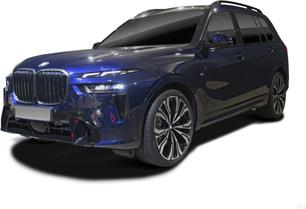
Large family-friendly luxury SUVs tend to be handsome in design but somewhat restrained. Until now. BMW has introduced a major facelift for its flagship SUV, the six- or seven-seat X7. Emphasis on face.
The new X7 adopts the striking but controversial front-end from the new 7 Series sedan, but the big, bold SUV is hiding some rather significant changes under the skin. Aside from a beefier diesel that now comes with mild hybrid tech, there’s also a redesigned cabin, massively upgraded tech, more standard features, oh, and a price increase.
If you’re a Subaru fan chances are the Wilderness will float your boat. It’s an appealing mix of on-road refinement and more than satisfactory capability on bush tracks.
The Wilderness engine-and-CVT combination helps to make this Subaru well refined and highly responsive on-road and it benefits from punchier low-rev output in off-road scenarios.
Subaru has made a habit of producing practical vehicles and this new addition to the upgraded Outback line-up doesn’t disappoint.
Does anyone need a Wilderness version of the Outback? Probably not. Will anyone want a Wilderness edition Outback? I reckon a lot of Outback fans would fall over themselves to get their hands on one of these.
When lined up against its direct rivals, the expensive X7 xDrive40d represents reasonable value for money.
It has a unique and bold look and a sumptuous, visually striking and well-appointed interior that has acres of space for family, friends, or for ferrying frequent flyers to the airport.
That wallop of performance from the big beefy diesel is the cherry on the top. This is how you do a mid-life update.
The most obvious design tweaks include a glare-reducing bonnet decal, the new grille and bumper, substantial durable plastic cladding on each side, and some tailgate trim and lighting variations away from standard Outbacks.
There’s gold edging here and there around the Wilderness exterior (fog lights etc) and it’s eye-catching, but this vehicle attracts some bemused looks.
While it’s based on the mid-spec Outback AWD Premium, the Wilderness stands apart because of its taller stance (with an extra 20mm ground clearance over standard Outbacks) and chunkier overall look.
For numbers nerds, the Wilderness is 4880mm long (with a 2745mm wheelbase), 1880mm wide, 1735mm high and has a listed kerb weight of 1781kg.
Its wheel tracks (1575mm front / 1600mm rear) are 10mm narrower in both cases than those of standard Outbacks.
Inside, the Wilderness has water-repellent upholstery with embossed Wilderness logos on the headrests, Wilderness tags on the seats, orange stitching throughout and all-weather floor mats.
All in all, it looks stylish, inside and out, but it’s also ready to play in the dirt.
There’s quite a bit that’s interesting about the X7’s design. Especially looking at it front on.
BMW certainly took a bold step when it introduced its toothy grille design for the X7 and the 4 Series range.
But the Bavarian brand has made some even braver design moves recently by introducing a blocky front-end with split headlights on its new-gen 7 Series flagship sedan. That look has now found its way onto the face of the updated X7.
As with the 7 Series, it won’t be to everyone’s taste. But you can’t deny it has a lot of presence.
The tail-lights have been tweaked and look good, but the sheer size of the X7 - it’s 5.2 metres long and 1.8 metres tall - means there’s no disguising the fact that it is a big, boxy SUV.
Inside the update ushers in significant design changes. The old dash and cowl is gone in favour of the ‘Curved Display’ that connects the instrument cluster and multimedia.
New slimline air vents, LED backlit ‘X7’ graphics on the passenger side of the dash, and a new gear shift toggle that replaces the old shifter elevate the cabin and give it a much more modern vibe than the old X7 - one that’s in keeping with the excellent iX electric SUV.
In terms of practicality the Wilderness doesn’t disappoint. The cabin has a neat and familiar layout with enough soft-touch surfaces, storage space, cupholders and charge points to satisfy most drivers and passengers.
The 12.1-inch horizontal multi-media touchscreen is easy enough to operate, with many cabin functions able to be controlled via on-screen buttons, but some functions (including air-conditioning and auto vehicle hold) can also be adjusted via physical off-screen controls, which is handy.
The seats offer improved lumbar and pelvic support relative to previous Outbacks, there’s more headroom for the driver and passengers and Subaru reckons the rear cargo area opening is more than 50mm higher than standard for easier loading and unloading of gear into the rear.
According to Subaru the Wilderness upholstery is “hydrophobic synthetic leather with an anti-slip embossed finish” which looks good and seems durable enough for a lifetime of weekend road trips with some dirt inadvertently tracked inside for good measure.
Cargo volume is a listed 530 litres (with the rear seat up and in use), and that expands to 1211 litres when the 60/40 split-folding rear seat is down.
You can conceal whatever is in the rear cargo area with the new foldable fabric cargo cover which can be used as a tonneau-style cover, cargo partition, or even to protect the rear load lip. Its rear-most fixing points attach to the inner walls with magnets.
The cargo area has a 12-volt outlet, two shopping bag hooks on each wall, four tie-down points on the floor and a full-size spare wheel stored under that floor.
The Wilderness has new high-strength roof rails which are claimed to offer a static load capacity of 363kg (increased from 318kg).
Subaru has made a habit of producing practical vehicles and this new Outback doesn’t disappoint.
Regardless of the price point, a three-row SUV needs to be super practical and capable of family duties.
And if you want a BMW X5 but need a lot more space, this is the next logical step.
Let’s start in the front row. As mentioned, the new X7 gains the screen and tech set-up from other new BMW models like the iX and updated 3 Series. The Curved Display combines a 12.3-inch digital instrument cluster with digital speedo and a 14.9-inch multimedia screen.
You can customise the cluster layout and move things around on the multimedia screen, too. The latter is a touchscreen but you can also find what you need via the 'iDrive' controller in the console.
I have had some experience with this system in the iX and while it’s not without its flaws, it is a top notch system. There’s a lot to wrap your head around, but the use of app icons helps. And you can swipe through to your chosen screen.
It took far too long to work out how to find the trip computer, something that should be much easier to access, as well as a couple of other functions. And the climate controls are housed in the digital screen. I would always prefer a separate space with buttons for air-con.
But the graphics and displays - including the excellent head-up display - are excellent.
Other tech you get with the X7 includes the BMW’s 'Digital Key', which is an app that allows iPhone users to lock and unlock their car remotely, and BMW ID driver profile.
If you buy this car, just allow yourself some time to familiarise yourself with all that tech.
Elsewhere up front there’s a lovely new three-spoke steering wheel, and cute touches like the metal air vent toggles, black and metal touches and the choice of inserts.
The front seats are luxurious and comfortable and offer loads of side and thigh support. They have memory functions, too. There’s no shortage of headroom up front, either.
Storage-wise, the door will fit the largest of bottles, as well as other items thanks to generous door bins, while the central lidded box is also sizeable.
What about that second row?
The X7 xDrive40d usually comes standard with seven seats, but our test car was fitted with the $1500 captain’s chair option which drops seating capacity down to six people.
If you need the extra seating this is not the option for you, but it is great for families with bigger kids, and it would make for an excellent airport transfer car.
The seats are unbelievably comfortable and can be adjusted to suit your preference. They also have ISOFIX points and armrests.
Rear seat occupants have access to their own climate controls, air vents, USB ports, cupholders and ample door storage.
There is a massive amount of occupant space as well - stretch those legs out and enjoy it!
One of the X7’s selling points is that it is a genuine three-row SUV. That third row is not just for occasional use for very small children, like so many seven-seat SUVs. That row can be used every day.
Even with my six foot stature, I could easily climb in and out of the third row. That’s made even easier thanks to the mechanical seat functions.
Just hit the lever at the top of the second row seat and the motor moves the seat forward and up to ensure there’s a big enough aperture to get in and out of the rear seats.
You can also raise and lower the third row electronically via buttons on the boot wall - and they stow flush into the boot floor. Neat!
Once in the third row, there’s air vents, USB ports, bottle holders and storage and quite comfortable seats with more than enough leg and head room.
There’s even a third row section of the sunroof, operated from the second row. Lots of clever touches that people who use the third row will appreciate.
The boot has a few cool features, too, including a split tailgate.
You can even sit on the lower section - it can handle a load of up to 250kg - a perfect place to sit and watch the polo.
You can lower the suspension to aid loading larger items, and the X7 comes with a space-saver spare wheel.
Capacity is 300 litres with all seats in place, and I easily fit a pair of smaller suitcases in with that configuration. It increases to 2120L with the two rear rows folded.
The 2026 Subaru Outback Wilderness has a manufacturer list price of $59,690, before on-road costs.
It’s based on the mid-range Outback AWD Premium but offers a lot on more onboard than that variant including an upgraded turbo engine, 240mm ground clearance (20mm more than the standard Outback), electronic dampers and extra 'X-Mode' off-road functionality.
As well it gets a new bumper and front grille (with SUBARU emblazoned across the front), substantial cladding on each side, water-repellent upholstery with embossed Wilderness logos, all-weather floor mats and some Wilderness-specific trim and lighting on the tailgate.
The Wilderness also gets a 12.1-inch horizontal multi-media touchscreen with wireless Apple CarPlay and Android Auto (and wireless charger), a 12.3-inch digital instrument cluster, heated/powered front seats, heated outboard rear seats, a hands-free powered tailgate, X-Mode off-road mode, roof rails, 18-inch black-finish alloy wheels (with full-sized spare).
Annoyingly, the Wilderness misses out on some features included in its cheaper stablemate, the Outback AWD Touring ($56,990, before on-road costs) – namely active lane-change assist, a 360-degree camera system, 12-speaker Harman Kardon sound, Nappa leather, ventilated seats and a sunroof.
Spend another $3000 over the Wilderness price-tag and that $62,690 (before on-road costs) will put you in the top-spec Wilderness Apex. Its extras (over the Wilderness grade) include sat-nav, and the aforementioned 360-degree view monitor and Harman Kardon audio system.
In terms of value for money, you get a lot a of bang for your buck in this Outback and it more than holds its own against rivals, such as the Ford Everest, Isuzu MU-X and Toyota RAV4.
We are way out of Kluger and Sorento territory with the BMW X7. This is a bus for cashed-up families.
The upper-large SUV was introduced in mid-2019, but as part of the mid-life update, BMW has changed up the model grades. There are still two, but the xDrive30d and M50i have been replaced by the diesel-powered xDrive40d M Sport, and the performance-focused V8 petrol-powered M60i.
For the purpose of this review, we drove the 40d M Sport, which gets a power boost over the outgoing 30d - more on that in a bit.
As a result of the significant update, BMW has increased pricing on both grades. For the xDrive40d, it now starts at $174,900, before on-road costs, which represents an increase of more than $30,000 over the old 30d.
If you’re after a bigger dollop of performance, the M60i will cost you $205,900.
While the xDrive40d pricing seems steep, it undercuts a couple of other big luxury diesel SUVs including the Mercedes-Benz GLS400d ($179,500 BOC) and the Toyota LandCruiser-based Lexus LX F Sport ($176,091 BOC).
The most affordable diesel-powered version of the new-generation Range Rover starts from $226,806, so in that regard, the X7 40d is the best value in its class!
As well as the updated powertrain and in-car tech, the X7 xDrive 40d now comes with a hefty standard features list including metallic paint, 22-inch wheels, the M Sport pack, five-zone climate control, Harman Kardon 16-speaker sound system, a drive recorder, comfort seats, ‘Comfort Access’, roof rails, electric sunblinds, panoramic glass sunroof, digital radio, a head-up display, ambient lighting, wireless Apple CarPlay and Android Auto, and leather interior.
Our test car was fitted with a number of options that pushed the price to just under $185,000. The extras included huge 23-inch alloy wheels ($3500), BMW Individual 'Dravit Grey' body paint ($2400), a trailer tow hitch ($2500) and second row captain’s chairs ($1500).
Note that if you opt for that tow hitch, you’ll lose the ability to open the hands-free tailgate with a kick motion.
There are two direct-injection Boxer engines on offer in the Outback line-up: standard Outbacks get a 2.5-litre naturally-aspirated engine (137kW at 5800rpm and 254Nm at 3700rpm), while the Wilderness and Wilderness Apex get a 2.4-litre turbo-petrol boxer engine, producing 194kW at 5600rpm and 382Nm at 2000-3600rpm.
Both engines are matched to a continuously variable auto transmission (CVT) with eight-speed 'manual' mode. No Outback in the new line-up has a manual gearbox.
The Wilderness’s engine-and-CVT combination helps to make this Subaru well refined and highly responsive on-road and it benefits from punchier low-rev output in off-road scenarios.
The X7 xDrive40d is powered by a 3.0-litre, in-line six-cylinder turbo-diesel engine, that gets a boost in power - it pumps out 259kW of power and 720Nm of torque - 64kW/100Nm more than the 30d.
It now also comes with 48-volt mild hybrid tech, which uses an electric motor integrated in the eight-speed automatic transmission.
It drives all four wheels via BMW’s 'xDrive' all-wheel drive system and it is fitted with air suspension for a cushy ride. Towing capacity is rated at 3.5 tonnes braked or 750kg unbraked.
If you are keen on off-roading in the X7, it has a 221mm ground clearance, and a fording depth of 500mm, but maybe best to keep it on the tarmac.
Official fuel consumption for the combined (urban/extra-urban) cycle is 9.7L/100km.
Fuel consumption on test was 10.8L/100km (combined) and while a lot of this test was spent on sealed surfaces, we did do unsealed road and rough-track driving.
The Outback has a 63-litre fuel tank so going by our on-test fuel consumption figure, you could reasonably expect a driving range of about 583km from a full tank of premium unleaded petrol.
According to BMW, the official combined cycle fuel figure for the X7 40d is 8.0 litres per 100 kilometres.
Our fuel figure after nearly a week of mixed city, freeway and country driving was 9.0L/100km, which isn’t too far off the mark.
It has an 80 litre fuel tank and an approximate driving range of 1000km.
From the start, this is an enjoyable car to drive. The driver’s seat is eight-way power-adjustable so it’s easy to dial-in your preferred driving position. There’s ample visibility for a vehicle that feels so snug around you and this is a nimble mid-sized SUV with a 11.0m turning circle.
On-road, it is quiet and smooth, and its ride and handling are well controlled, with new dual-pinion electric power steering adding more precision.
The tweaked Wilderness suspension set-up – MacPherson struts at the front and double wishbones at the rear (both with newly tuned electronically-controlled dampers) – yields a comfortable driving experience.
As mentioned, the engine/CVT combination is generally impressive, but if driving based on the CVT’s behaviour is not entirely your cup of tea, you can always use the paddle shifters on the back of the steering wheel to have your fun.
The Outback has always been a solid all-rounder and well suited to light- to medium-duty off-roading and over the years its driver-assist systems have been tweaked and finessed to improve those attributes.
Worth noting, we define light- to medium-duty off-roading as driving on well-maintained gravel tracks or dirt roads in dry weather, or coping with minor corrugations, or muddy potholes on dirt or gravel tracks in wet weather.
This SUV's AWD system is intended to keep you safe on less-than-ideal terrain, such as rain-splattered wet blacktop, loosely gravelled bush tracks or slightly muddy dirt roads, rather than transform the Outback into a rock-crawling beast.
Afterall, this is not a 4WD with low-range gearing, ample ground clearance and aggressive all-terrain tyres.
However, with a skilled, experienced driver at the helm, the Outback is even able to tackle off-roading so difficult it would otherwise seem out of an all-wheel drive’s realm of capability.
The Wilderness edition simply builds on that reputation.
For starters, it has greater ground clearance (240mm) than other Outbacks and so its off-road angles are an improvement, with its 20-degree approach, 21.2-degree ramp-over angle and 23.6-degree departure angle besting its lower-spec stablemates.
Subaru’s X Mode system, with snow/dirt and deep snow/mud modes, adds another level to the Outback’s capability. These modes tweak acceleration, off-road traction-control activity and front and rear axle limited-slip function, among other things, to suit the terrain. Working in conjunction with driver-assist tech such as Hill Descent Control, the Outback handles light- to medium-duty off-roading with no strife whatsoever.
Ride and handling remain fine on unsealed country roads, and the suspension mostly soaks up the more dramatic bush track lumps and bumps.
If you’re looking for a vehicle to tow a 2500kg-plus caravan, boat or horse float then look elsewhere because the Wilderness has 750kg (unbraked trailer) and 2100kg (braked) towing capacities.
In terms of all-around driveability, this Outback has a lot going for it and can stand its ground against the likes of the Toyota RAV4, and even the Ford Everest and Isuzu MU-X.
With a big plush SUV like this, you’d expect a comfortable ride. And for the most part, the X7 delivers that, while offering more than a bit of grunt, as well.
The X7’s height ensures a high driving position, and there’s plenty of glass for decent visibility.
Propelling a 2.5-tonne SUV could be a struggle for a lesser engine, but the meaty diesel offers ample torque and the mild hybrid set-up helps to reduce initial turbo lag significantly - that means it is responsive from a standing start.
I wouldn't have thought a vehicle of this size and shape was capable of a 5.9-second 0-100km/h time, but here we are.
As a result of all that torque and power, overtaking is a breeze - providing there is enough room on the other side of the road for both cars to fit.
That size and heft have an impact on cornering and dynamics. You simply can’t carve through tight corners in this car, but with that said, it’s more entertaining than you’d think.
Steering feel is weighted on the heavier side and it’s as sharp as it needs to be in a car like this. It would be weird if the steering was too pointy.
Ride quality is top notch - as it should be - and while the massive optional 23-inch wheels and low profile tyres mean you’ll notice potholes and the like, it largely soaks up imperfections with ease.
That level of refinement extends to the hushed ride, too. The cabin is a quiet and serene place to spend time - but not quite to the same degree as a 7 Series.
Parking in tight spots is a challenge, and manoeuvring in narrow streets could take a while, too. But you could tell that just by looking at the X7.
The Wilderness has not been tested ANCAP, but it has an extensive suite of safety gear and driver-assist tech.
Standard safety features include nine airbags, AEB (Auto Emergency Braking), driver monitoring (annoying), active lane-change assist, front and side alert assist, emergency lane keep assist, rear cross-traffic alert, lane-departure warning, blind-spot monitor, traffic-sign recognition, adaptive cruise control and more.
For child seats there are top tether points for all three rear seat positions with ISOFIX anchors on the outer two.
The X7 has size on its side when it comes to occupant protection, but it also comes with a decent level of safety gear as standard.
Features include auto emergency braking (AEB) with pedestrian and cyclist detection, a safe exit assist function to avoid 'dooring', and an advanced lane keeping aid, ‘Parking Assistant Professional’, ‘Trailer Assistant’, and hill descent control.
The X7 is yet to be crash tested by the local safety authority, ANCAP, or by Euro NCAP.
The Wilderness is covered by a five-year/unlimited km warranty, five-year/75,000km capped price servicing, and comes with 12 months of roadside assistance.
Servicing is recommended at 12 month/15,000km intervals.
The upfront prepaid service plans are a three-year service plan ($1275.37) and a five-year service plan ($2347.31).
For comparison, the first five years' service for a comparable Toyota RAV4 will set you back $1625.
At time of writing, Subaru Australia has more than 114 authorised dealerships and more than 120 service centres around the country.
After copping a bit of flack from motoring media and buyers, BMW finally increased its warranty terms last year from three years to an industry standard five-year, unlimited kilometre warranty on its vehicles, including the X7.
Rather than a set servicing schedule, BMW offers condition-based servicing which is when the vehicle’s computer alerts the owner that it requires a service.
BMW doesn’t offer capped-price servicing, but does have a pre-paid 'Service Inclusive Package' with terms ranging from three years/40,000km to five years/80,000km and beyond.
A five-year basic package for the X7 costs $2800, which is not too bad considering the positioning of this model.