What's the difference?
Yep, it’s yet another new brand. And, yes, it’s from China.
You can be forgiven for not keeping up with the influx of new car brands in recent years, even as a professional I can find it challenging at times. But that’s why we’re here, to help you determine which brands to pay attention to and which ones you can probably ignore.
So which one is Jaecoo?
Well, the good news for the brand is that it comes from one of China’s biggest and most successful car companies, Chery, which has been a leading exporter for more than two decades, so it has a reasonable understanding of international markets.
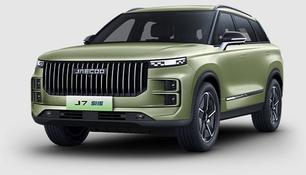
Jaecoo is designed to be a separate, stand-alone brand from Chery, and in Australia will be sold at specific Omoda-Jaecoo dealerships (as the Omoda 5 is also spun-off into yet another ‘new’ brand). The Jaecoo J7 we’re driving here is its first model, a mid-size SUV that will compete directly against the likes of the BYD Sealion 6, Toyota RAV4, Hyundai Tucson and more.
Because despite management referring to Jaecoo as a “luxury” brand and calling the J7 a “premium SUV” that’s all within the context of the Chery universe. Jaecoo is simply a more premium alternative to Chery, not a true luxury brand that will challenge the likes of Lexus, Mercedes-Benz and the rest on quality and, as you’ll soon see, price.
We’ve already sampled the entry-level J7 2WD but now we’re getting to experience the 4WD and range-topping SHS, which stands for Super Hybrid System, but is better known as a plug-in hybrid. The SHS is the model we spent the most time in and that’s what we’ll focus on in this review.
Chery/Jaecoo executives say that what it calls ‘new elites’ - people that are “moving up in the world” and are looking for a “fashionable” and “cool” car - are the target market. But as we’ll explain, the market for the J7 is likely to be much broader than just the fashionable elite and cool kids.
For 15 years the Mitsubishi ASX has been one of the most popular SUVs in Australia. Well into its life cycle, it maintained strong sales thanks to keen pricing and a reputation for reliability.
The second-generation ASX is finally here, but it’s a very different proposition to the original.
For starters, the new model is a twin of French brand Renault’s Captur small SUV. That model is not currently sold here, so Mitsubishi has clear air, for now.
Secondly, it’s no longer cheap. Pricing puts this new model into the high-$30,000 section of the segment, but it also gains modern tech and specs.
Whether buyers care that the ASX has gone upmarket remains to be seen. But we attended the Australian launch to see if French flair has improved the ASX formula.
Based on our initial drive I certainly think the J7, especially the SHS Summit, does make a pretty compelling case to be on the consideration list for anyone looking to buy a mid-size hybrid SUV - plug-in or not.
It has a polished design, loads of tech and a fuel-efficient powertrain that provides adequate performance. But the real selling point is the price, which undercuts its key rivals to ensure it has your attention, especially in these days of increasingly expensive family vehicles.
And while the J7 certainly has appeal to design-oriented buyers and people that want something ‘cool’ or just different, the value it offers gives it mainstream appeal.
Note: CarsGuide attended this event as a guest of the manufacturer, with accommodation and meals provided.
There is no question the new ASX is a much better car to drive than the model it replaces. This one is actually fun behind the wheel. The tech represents a massive upgrade, so too does the interior design and practicality. The fact is, it’s a much more expensive car than the old ASX. It is a European built and designed small SUV with loads more tech and features so when you consider that, the pricing makes more sense.
Regardless of the previous model, this new ASX impresses. It’s not perfect - the LS is missing too many items, no hybrid, slightly firm ride - but it’s now a genuine rival for higher quality rivals in the small SUV segment. If the ASX is in your price bracket, it might be time to add it to the consideration list.
Design is an interesting subject to discuss with the J7, as it manages to simultaneously have a bold and distinctive look from some angles and yet has clearly been inspired by some other, more famous, premium brands from others.
To be blunt, from certain angles - namely the side profile and rear three-quarter - the J7 could be mistaken for a Range Rover Evoque at a distance. Obviously taking inspiration from rivals is nothing new in the car industry and the Jaecoo designers have also managed to give the J7 its own look when you get a bit closer and notice the details.
The most noticeable of these is the ‘waterfall-like’ grille, that the brand says symbolises “the life force of nature”, but also gives it a front profile that can’t be mistaken for anything else. Especially with the prominent ‘Jaecoo’ badge large and proudly placed in the middle of the grille - leaving you in no doubt what this is.
Overall, I’d call the exterior look of the J7 cohesive and leaving a more premium impression that what we’ve seen with Chery.
Inside, Jaecoo has followed the modern trend of going digital, with a small digital instrument display and then a larger central touchscreen. It provides a clean, modern look that leaves a good impression.
The Jaecoo designers also focused their attention on the touchpoints, elements like the door handles and arm rests, to try and give them a more premium feel. The trims used inside are also a cut above what we’ve experienced on other Chery models, and while not at a true luxury level, do stand out for what is a mainstream SUV.
One other major element of the SHS interior design worth mentioning is the central console, between the front seats. That’s because it’s unique in the SHS, offering a completely different layout to the petrol-powered models. The SHS moves the gear selector to the steering column, freeing up more small item storage space and cup holders, as well as a split-opening central storage box (instead of a rear-hinged one).
The look of the new ASX is not a huge surprise given it’s based on the second-generation Renault Captur that launched in 2021. Actually the ASX we get is the mid-life facelift for the ASX/Captur twins in Europe, so the design has been refreshed.
At 4238mm long, 1797mm wide, 1585mm tall and with a 2639mm wheelbase, the new ASX is 127mm shorter, 13mm narrower, and 55mm lower than the original, but the wheelbase is only 31mm shorter.
It has a round almost bubble like quality to the exterior design, and not in a bad way. The redesigned front end has Mitsubishi flavour thanks to the ‘Dynamic Shield’ front-end signature, while the sleek headlights and black and chrome grille give off an almost menacing look.
C-shaped tail-lights at the rear flank a massive ‘Mitsubishi’ badge and the lower cladding ensure there’s no doubt this is an SUV.
It’s a handsome car and should get some attention on the road.
Inside, it’s not the last word on interior design, but it’s well laid out and functional. It’s definitely another massive leap over the old model.
At the launch there were no LS grades to drive, but the Aspire comes with cool grey cloth trim and roofliner that adds a nice contrast to the darker plastics and finishes. It’s more vibrant than the top-spec Exceed which has an all-black interior with leather-appointed seats.
The top two grades feature a floating console where the gear shifter is housed (a standard shifter in LS, and notch-like ‘eShifter’ in Aspire and Exceed), while the big multimedia screen dominates the dash.
From a space perspective the J7 offers up reasonable room for an SUV of this size, but falls short of the class-leaders in a few key areas. The front seats are nice and comfortable, and while the rear seats are well-appointed (with air-con vents and USB inputs) space is adequate rather than generous.
The same can be said about the boot, at least on the SHS grade. It’s on the smaller side for an SUV of this size, measuring 500 litres, compared to 542 litres offered by the RAV4 and 574 litres in the Sealion 6. And it’s even more disappointing when you factor in the lack of a spare wheel, with only a tyre repair kit under the floor.
Thankfully the 4WD offers the same space (500L) but gets a full-size spare, while the 2WD models have a claimed 584L and a temporary spare.
As for the technology, the decision to go for the one big central screen for all infotainment provides a hi-tech, clean look but it does lead to some obvious compromises.
Namely, the lack of any physical buttons (save for the hazards, unlocking and EV function) is disappointing from a user experience perspective. As many brands have found, screens have a ‘wow factor’ and save on the cost of buttons but are more challenging to operate when you’re on the move and that’s the case with the J7.
Obviously having Apple CarPlay or Android Auto makes for a familiar experience, but if you have to dive into the extensive Jaecoo-specific menus it can become difficult and distracting.
This is an area the ASX excels in.
Up front there are loads of storage options. Multiple nooks for mobile phones, keys and other items, and the Aspire and Exceed get a wireless charging pad and extra storage under the shifter.
The central bin isn’t massive but doesn’t need to be with all the other cubbies, and there is ample room for large and tall bottles in the door bins.
A pair of USB-C ports and a 12V port up front handle electronics.
Thankfully there are physical controls for climate control at the base of the multimedia screen. The other functions housed in the screen like vehicle information and connectivity options are logically laid out and the system is not overly complicated.
Opting for the Aspire or Exceed means you get the brilliant Google Built-in, which is exactly what it sounds like. It’s essentially the Google operating system but for your multimedia screen so you have in-built Google Maps, Play and Assistant. Log in to your Google account and all your favourite places show up on Maps, and you can also log into Spotify and the like. It's a great set-up.
The seats are supportive and well bolstered. Much nicer than the old ASX’s overly cushioned seats.
The second row has more space than you’d expect looking at the car. It’s not cavernous by any stretch, but clever touches like scalloped out front seatbacks and roofliner ensure decent leg, toe and headroom, even with the sunroof in the Exceed. However, three adults in the rear isn’t super comfortable - we tried. Kids should be fine.
Amenities include more USB-C ports, rear air vents (very rare in this category), storage for small bottles in the door, phone holders in the door arm rests, dual map pockets, but no central armrest, which is no great loss.
That rear pew is comfy and more supportive than the old ASX. And it has a neat party trick. You can slide the entire row (via the base) forwards by up to 16cm, making for more cargo space in the boot. It also folds 60/40 split and when the boot floor is in its highest setting the seats fold flat, aiding loading.
Yet another clever feature is the split level boot. It features under-floor storage that adds a handy 183 litres to the cargo capacity.
With all seats in place Mitsubishi says the cargo space is 484 litres, which is 23 per cent more than the old model. If you slide the rear seat forward as far as it goes that increases that figure to 616L. And if the second row is folded flat the capacity is 1596L.
Interestingly, despite having space for one under the bottom boot floor, a spare wheel (even a temporary one) is not a standard feature. Instead the ASX comes with a tyre repair kit and offers a temporary spare wheel as part of its accessories offering for $750. If you’ve got the space for a spare wheel, why not make it standard? Especially when Mitsubishi is a popular brand in regional and rural areas.
The J7 line-up will consist of four grades initially, the 2WD Core, 2WD Track, AWD Ridge and SHS Summit, with the choice of two powertrains.
The range will begin at just $34,990 drive-away for the 2WD Core and $37,990 drive-away for the 2WD Track. These are powered by a 137kW/275Nm 1.6-litre turbocharged four-cylinder petrol engine paired to a seven-speed dual-clutch transmission and powering the front wheels.
The AWD Ridge is priced from $42,990 and has the same 1.6-litre engine, with the same performance but obviously powering all four wheels. The range is topped by the SHS Summit, priced from $47,990 drive-away.
For context, the Toyota RAV4 Hybrid (which isn’t a plug-in) is priced between $42,260 and $51,410, while the BYD Sealion 6 PHEV starts at $48,890 - so it’s clear where Jaecoo is hoping to woo buyers from.
Standard equipment on the J7 Core includes 18-inch alloy wheels, LED headlights, LED daytime running lights, a 10.2-inch digital instrument display and a 13.2-inch infotainment touchscreen, which incorporates wireless Apple CarPlay and Android Auto. The Track trim level adds a power tailgate, front parking sensors, 360-degree surround-view monitor, heated front seats, ambient lighting, dual-zone climate control, plus a wireless smartphone charger and an eight-speaker Sony sound system.
Stepping up to the AWD Ridge brings torque vectoring all-wheel drive, 19-inch alloy wheels, a full-size spare, a panoramic sunroof, heated and ventilated front seats, in-built dashcam and a 14.8-inch infotainment touchscreen.
The SHS Summit matches much of the specification of the Ridge, but gets unique 19-inch ‘aero’ alloy wheels, a head-up display and perforated synthetic leather seats.
All models are equipped with ‘Hello Jaecoo’, the brand’s voice-activated assistant.
So, let’s get straight to the big news. This new ASX has gone up in price in a big way. The previous entry point was a touch under $27,000 before on-road costs for the GS auto.
The new model now starts at $37,740 BOC, which is about the same price as the flagship grade of the previous-generation ASX.
There are three grades - LS, Aspire and Exceed. Like for like the LS is $7K dearer than the old LS. The Aspire is $42,690 and the Exceed tops out at $46,490.
Yes, this is a significant change in price and positioning for the ASX. But the only relationship this car has to the previous model is its name. If Mitsubishi gave it a different name, the pricing announcement may not have attracted so much attention.
This pricing shifts the Spanish-built ASX into a new sub-section of the mainstream small SUV segment, away from other cheapies like the Suzuki Vitara, MG ZS and GWM Haval Jolion. It’s now closer to the likes of the Honda HR-V, Nissan Qashqai and Subaru Crosstrek.
The previous model was dated in every area, but it really lagged when it comes to in-car and safety tech. This new model addresses that.
In terms of standard gear, the list is decent without being jaw dropping.
The LS comes with a 10.4-inch multimedia screen with wireless Apple CarPlay and Android Auto, DAB digital radio, Bluetooth, six-speaker audio, digital driver display, two USB-C ports, proximity key, keyless entry and start, single-zone climate control, power and heated door mirrors, cloth seats and 17-inch alloy wheels.
Aspire and up gain the Google built-in platform that includes integrated Google Maps, Play and Assistant, as well as in-house sat-nav, three drive modes (Comfort, Sport, Perso), auto-dimming rear-view mirror, wireless device charger, privacy glass, 18-inch alloy wheels and power-folding mirrors.
The flagship Exceed adds a panoramic sunroof, two-tone paint, leather-appointed seats, heated front seats and power adjust for the driver’s seat.
There are no options aside from accessories.
The J7 range has a choice of two powertrains, an internal combustion engine and the plug-in hybrid.
The 2WD and AWD are powered by the same 1.6-litre turbocharged four-cylinder petrol engine that makes 137kW and 275Nm. It’s paired to a seven-speed dual-clutch transmission, with the only major difference between the two models (obviously) being the driven wheels.
The SHS combines a newly-developed 1.5-litre four-cylinder turbocharged petrol engine, which makes 105kW, with a 150kW electric motor and a single-speed transmission.
Despite the electric motor, the SHS isn’t what you’d call ‘fast’ with a 0-100km/h time of 8.5 seconds, which the 2WD can reportedly better by taking just 8.1 seconds.
For now, all grades of the new ASX use the same 1.3-litre four-cylinder turbocharged petrol engine offering up 113kW of power and 270Nm of torque. That’s up on the old 2.0-litre naturally aspirated unit’s 110kW/197Nm.
This is paired with a seven-speed dual-clutch transmission driving the front wheels only, so there’s no all-wheel-drive version.
Mitsubishi is looking into the mild hybrid and full hybrid versions that are offered in Europe but not confirmation on those as yet.
The SHS is equipped with an 18.3kWh lithium-iron-phosphate battery that provides a claimed 90km of electric-only driving range and helps the J7 achieve a claimed fuel consumption figure of just 1.0L/100km.
Jaecoo also quotes an EV-only range of up to 106km, but that is on the NEDC cycle, which is not as relevant for real-world driving than the WLTP test cycle that returns the lower figure. Even with the lesser number, 90km of EV-only driving will be more than enough for most people to do their daily commutes.
Jaecoo claims the SHS has a theoretical driving range of 1200km, thanks to its 60-litre fuel tank. However, to achieve that economy you need to run the J7 in its hybrid state, so somewhere closer to 1000km is more realistic - if you have a really light right foot.
As for the petrol-only models, the 2WD uses a claimed 7.0L/100km and the AWD 7.8L/100km.
The new ASX consumes 6.4 litres of fuel per 100 kilometres on the combined cycle and emits 142 grams per kilometre of CO2.
That’s a decent figure for sure, but not quite as frugal as the 1.3-litre Nissan Qashqai, which manages 5.8-6.1L/100km.
The ASX drinks 91 RON fuel and has a 48-litre tank which makes for a theoretical driving range of about 750km.
This is one area where the entire Chinese car industry, not just Chery/Jaecoo, have a ways to go to become not only competitive but genuinely stand out. Dynamically the J7 is average, not bad, just very ‘mid’ as the kids say. It doesn’t do anything particularly badly, but nor does it do anything particularly well.
The steering is nice and light, which will be good for navigating traffic and car parks, the ride lacks control but isn’t uncomfortable and the performance of the SHS powertrain is smooth but not spectacular, at least from a performance perspective.
This might sound like a ‘motoring journalist’ argument, but we’ve seen in the past when brands, specifically Hyundai and Kia, hired local experts to fine-tune the ride and handling of vehicles it resulted in a better experience and helped translate into sales.
With some more fine-tuning to improve the ride, and therefore the comfort, the J7 could be near the top of the class not only in terms of value but also the driving experience.
Look, it’s fair to say the original ASX was not a driver’s car. Reliable? Yes. Spacious? Absolutely. Great value? You bet. But fun to drive? Not so much.
So it’s good news then that the new-gen ASX is much more engaging to drive. I quite enjoyed the current-gen Renault Captur the last time I drove it, and the underpinnings of the ASX are the facelifted version of that Captur.
The 1.3-litre turbo-petrol unit might not be ultra quick off the mark, but it is sprightly and really comes alive when you’re at speed. It also has a decent engine note.
I've recently driven another Renault model with basically the same powertrain but it suffered from dreadful lag - a combination of a turbocharger and a dual-clutch transmission.
I had expected the same of the ASX, but there’s little lag to speak of. And the transmission is much smoother in this application. It doesn’t hold gears or do anything DCTs are known for, which is a lovely surprise.
Steering is sharp enough and the feel can be adjusted in the settings. Aspire and Exceed grades come with Comfort, Sport and Perso mode, which is for personalisation.
Ride quality is fine on smooth roads but big pot holes and other bumps are felt in the cabin. It is a European car, so no surprise that it’s been tuned for a more European experience. It’s not so firm it’ll dampen the drive experience, but it could be a touch more supple.
On that, the ASX has not undergone a local ride and handling tuning program like the one its larger Outlander stablemate has benefited from.
That doesn’t mean you can’t have fun in the ASX - you can. It handles high-speed bends on country roads surprisingly well, with more grip than you’d expect. There’s a little body roll but nothing dramatic.
More time behind the wheel is needed, but the tight chassis means the ASX likes a corner.
The cabin has better insulation than the outgoing model but it’s still not the most hushed small SUV money can buy. But it’s another element that’s far from a dealbreaker.
Safety across the range includes autonomous emergency braking (AEB), adaptive cruise control and lane departure warning. However, notably the 2WD Core is equipped with seven airbags, but the Track, Ridge and SHS models all have an additional driver’s knee airbag, something to be mindful of if you’re on a budget.
However, having active safety systems, and having active safety systems that are well-calibrated and usable are different things, especially given the sub-par experience we had with the Chery Tiggo 4 Pro and its erratic lane keeping assist.
Thankfully, part of the more premium Jaecoo experience is a smoother, better calibrated safety system. The lane keeping was much more capable of holding the J7 in the centre of the lane, providing a more seamless driving experience.
The driver attention system also seemed well calibrated, capable of tracking eye movement through sunglasses, and didn’t seem as hyperactive as many of these systems can be.
However, given the complex nature of the central infotainment screen, there is a chance you’ll set the attention alert off if you have to start looking through the various menus. That’s obviously a good thing, to keep your eyes on the road, but adding some physical buttons for the air-con and stereo would feel like a better, safer solution.
The J7 hasn’t been crash tested by ANCAP but Chery’s previous models have received five stars, so anything less would be a shock result given the premium positioning of the brand. Chery knows which boxes ANCAP likes ticked, so don't be surprised if it gets top marks from the safety body.
The new ASX is yet to be assessed for crash safety by ANCAP, but Mitsubishi is anticipating a four-star rating to match its European score.
It comes with six airbags, but no front centre bag for side collisions. It also gets a reversing camera and front parking sensors.
All the expected advanced driver assistance systems (ADAS) are present like auto emergency braking, lane departure warning and prevention, emergency lane assist, traffic sign recognition and a less invasive driver attention alert than is found in some of Mitsubishi’s other models.
The base LS misses out on features like blind-spot warning, rear cross-traffic alert, and adaptive cruise control (it has old-school cruise control) as well as front parking sensors. At least some of these could have been standard.
One neat feature is the personalised driver profile that allows you to determine what ADAS features you want active each time you get behind the wheel.
The launch cars we drove were missing an ADAS feature that will be included on all customer cars, so we will reserve judgement on the effectiveness of the safety suite. However, it doesn’t appear that they are too overzealous.
Jaecoo is giving would-be buyers every reason to take a chance on a new name. The J7 will be covered by an eight-year warranty, which again, adds to the premium experience as that’s an extra year to what Chery offers.
Jaecoo is also offering eight years of capped-price servicing and roadside assistance for J7 buyers. The vehicle will require annual services, but you’ll be paying $3372 to keep the SHS maintained those first eight years.
Naturally, the less-complex 2WD and 4WD models are slightly cheaper, with the 2WD servicing tallying $2952 and the 4WD setting you back $3332.
Mitsubishi's standard warranty is five years or 100,000km, but if you service your car exclusively at a Mitsubishi dealer, it extends to an impressive 10 years or 200,000km.
You’ll also get 10 years of roadside assistance and capped-price servicing. The servicing schedule is every 12 months or 15,000km.
Service pricing starts from $349, but bigger services every four years or 60,000km will cost circa-$1000. The average price of a service across the 10 years is $568, or the total overall is $5686.
Mitsubishi has an extensive network of 185 dealers across Australia and many in regional areas. So service coverage is among the best in the country.