What's the difference?
The ZST is essentially an upgraded version of MG's popular small SUV, the ZS.
The ZST sees some tweaks to the overall design and some added standard safety features. So, if you like the original, there's a good chance you'll like the ZST and I've been driving the top-grade Essence variant with my family of three.
The ZST Essence has some stiff competition from similarly specified rivals like the GWM Haval Jolion Lux and Chery Omoda 5 EX offering affordable packages and similar driving experiences. So, what makes the ZST stand out?
The world is full of shock brand announcements.
Remember the time Coke suddenly changed its cola recipe? Or when Apple decided to take on Nokia with iPhone? Nobody saw those coming.
We all know how the latter turned out and even the former eventually became a marketing masterstroke.
Now here's another super-surprise – a German electric luxury SUV that’s actually comparatively inexpensive. And not stingily equipped. Yep, we’re talking about the iX1.
Based on the really rather impressive third-generation X1, it decisively undercuts similarly-specified rivals from Mercedes-Benz (EQA, EQB) and Genesis (GV60).
But is the Bavarian EV SUV worth paying that little bit extra for against (only very slightly) cheaper alternatives like the Hyundai Ioniq 5, Kia EV6, Tesla Model Y, Polestar 2 and Volvo XC40 Recharge?
Let’s see.
Will the MG ZST Essence fit a small family? Absolutely, and all but the middle seat passenger will be comfortable but there are areas open for improvement. Like it's safety, laggy tech and adding a few extra items in the back seat.
Yet, it still offers a good host of features and an attractive package for a reasonable price tag. Unfortunately, my son missed having the basic amenities but did like the sun roof.
BMW is a true EV pioneer, as the 2014 i3 and subsequent models prove. There’s never been one that we didn’t like. The only problem was that all were expensive. And at times, prohibitively so.
Astoundingly, the iX1 breaks that cycle, comparatively speaking, while impressing us with its design, quality, packaging, dynamics and equipment levels.
As it stands, the xDrive30 is one of the most convincing and best-value medium-sized luxury SUV EVs on the market right now.
Who’d have thought it from a BMW?
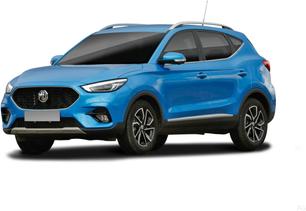
Being the newer and shinier version of the ZS, the ZST presents as a nice little package with its full suite of LED exterior lights, shiny chrome accents and its well-shaped body.
The front is distinctively different from its design muse with a darkened grille, and redesigned fog lights that feature new air intake vents. Other highlights include the 17-inch two-tone alloy wheels with sporty red brake calipers lurking behind them.
The interior is pleasant with a massive sunroof creating a light-filled space and giving the illusion that the cabin is larger than it is.
The synthetic leather upholstery and trims seem robust and perfect for families, but also feel quite plasticky under hand. The red badge embossing on the headrests is lovely, though.
The dashboard is well-proportioned and headlined by an upgraded 10.1-inch touchscreen multimedia system and fully digital instrument cluster.
The gearshift feels a tad too skinny and tall for the general aesthetic but the circular air-vents add some cute personality.
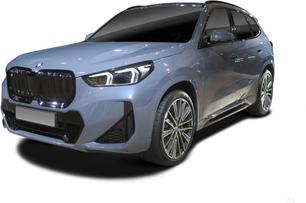
Arguably the prettiest new BMW SUV you can buy today, the well-proportioned iX1 is nearly impossible to spot over its almost-identical ICE (U11) X1 siblings.
Besides the badging, look for some blue trim bits and pieces inside and out, along with additional digital touchpoints inside.
And while both ride on the same all-new platform that’s resulted in a substantially larger body compared to previous X1 generations, the EV version seems a bit more slammed.
Dimensionally, the iX1 mirrors today’s X1 at 4500mm long and 1845mm wide, and still sits on the same 2692mm wheelbase, but is 26mm shorter at 1616mm tall and offers 35mm less ground clearance at 170mm.
Result? These plus a bunch of aero enhancements mean the slipperiest iX1 manages a Cd of just 0.26, according to BMW.
And, inevitably, the extra size equals more space inside.
Practicality is hurt by a lack of individual storage options and a back seat that has only two USB-A ports for its amenities.
The cabin space is spacious, though, and both rows have a decent amount of leg- and headroom despite the massive sunroof.
The steering wheel features height but not reach adjustment and to accommodate I have to sit much closer to the wheel than normal thanks to my poor little T-Rex arms.
Individual storage is the best up front with a small middle console and glove box, two cupholders and two drink bottle holders. The doors also feature large storage bins, which is great to keep the cockpit feeling neat.
The rear row gets two map pockets and a small storage bin in each door. There is also a (very) shallow storage nook at the back of the middle console… think a packet of gum or small wallet size.
My seven-year old isn't as comfortable in the rear because it lacks directional air vents, reading lights and a fold-down armrest. All items which will hinder an adult's comfort, too.
The boot space is a good size at 359L but you can bump it to 1187L with the rear seats folded, the backrest featuring a 60/40 split.
The height of the floor is adjustable and when set in the lowest position creates a deep well to tuck larger items, like luggage, into.
The hard cargo cover can be awkward to shift around or store but is otherwise out of the way when it counts.
Other amenities accentuate the premium-feeling the Essence is going for with the heated front seats and electric drivers seat offering well-padded comfort but on longer journeys, I miss having adjustable lumbar support.
The rear seats aren't as comfortable as the front only because the synthetic leather feels slippery, which is accentuated when you hit corners!
In terms of technology, you get two USB-A ports in each row but the front also gets a 12-volt port. You miss out on fast and wireless charging options.
The multimedia system looks great but can be sluggish to respond and the apps can be slow to load but I like the built-in satellite navigation.
The upgraded sound system has six speakers instead of four but the sound quality is a bit tinny with music and calls.
It was simple to connect to the wired Apple CarPlay. It also has Android Auto, Bluetooth connectivity and AM/FM radio.
BMW also says the iX1’s cabin is almost as roomy in some ways as the larger X3.
Large doors allow for easy entry and egress, onto sumptuous front seats that provide exceptional comfort and support even on longer journeys.
Surrounded by an expansive feeling of space, the interior feels light and airy, as well as fresh, inviting and premium looking – something previous-gen X1s were rarely accused of being.
We’re talking on-brand stuff here, beginning with the excellent driving position, ahead of a crisp and attractive dash that’s pleasing to behold. Push-button starting and a small toggle lever operates the transmission.
An ever-so-slightly curved (towards the driver in the best-BMW old-school way) rectangular binnacle houses two digital displays – a 10.25-inch one ahead of the driver offering an array of configurable electronic dials, as well as a 10.7-inch multimedia touchscreen.
BMW pioneered the multimedia controller more than 20 years ago with iDrive, and this descendent of that system reveals all that expertise gained by being intuitive to operate and quick to respond to commands once familiarised. Which shouldn’t take too long.
It’s all very-EV centric, as the industry inexorably moves to total electrification, but there were a couple of voice-command errors in the iX1, revealing that such systems are still far from perfect. BMW does provide audio volume and climate hard buttons, thankfully, so the basics are looked after.
Speaking of which, the iX1 offers decent levels of vision out, superb ventilation and ample storage in the doors, on the dash and between the front seats. And, as we’ve noted previously in BMWs, the upright smartphone charger is a clever idea. Keeps it in position and is handy to glance at.
Out back, backrest comfort and support is A-OK, and even with the optional sunroof, our test iX1 provided sufficient space for taller bodies, while expected items like ventilation grilles, USB ports and cupholders are fitted.
Note that, though the 40/20/40-split backrests recline slightly, they do not slide as per in the ICE X1, as this is a desirable option.
Nor is the cargo capacity as good in the iX1, due to the inevitable space demanded by that rear-axle-mounted electric motor and battery pack. For the record, ranges from 490 litres to 1495L instead of 540-1527L. Plus, there’s no spare tyre, with just a tyre repair kit fitted.
These aside, the iX1’s spacious and inviting interior remains one of the compact SUV segment’s best.
There are four variants for the ZST and our test vehicle is the top-spec Essence model, priced at $33,990 drive-away.
Our example's 'Pebble Black' finish is an included colour but other paintwork options can cost an extra $700.
The price point positions it right in the middle of its rivals with the Omoda 5 costing $35,990 drive-away and the Jolion sliding into the most affordable spot at $30,990 drive-away.
To highlight the value-for-money comparison, the Kia Seltos Sport+ FWD model costs $38,790 drive-away and then you start creeping up into the $40K bracket for similarly specified small SUVs.
The ZST Essence is the top-grade and it has a decent number of premium features for its price tag, like a panoramic sunroof, synthetic leather upholstery, heated front seats and an electric driver's seat, keyless entry, keyless start and a full suite of exterior LED lights.
Other standard features include wired Apple CarPlay and Android Auto, 10.1-inch touchscreen multimedia system, digital instrument cluster, one-zone air-conditioning, built-in satellite navigation, 360-degree camera system and an upgraded sound system with six speakers.
For now, only a single iX1 grade is available, dubbed xDrive30, starting from $84,900 (all prices are before on-road costs).
Most buyers seem to be choosing the no-cost-extra racier 'M Sport' pack over the more-conservatively presented 'xLine'.
Both come complete with double-the-usual AC charging capability (22kW), twin-motor all-wheel drive, a 67kWh battery, variable-ratio steering and adaptive dampers as standard.
In contrast, the Mercedes EQB 350 4Matic equivalent starts from over $107,000 (though a less-expensive single-motor front-drive version comes in from nearly $89,000), and both with a slower 11kW charger. Genesis’ advanced GV60, meanwhile, kicks off from nearly $108K.
We cannot remember BMW ever going so hard on comparative value in Australia, though how it responds to the sensational (though admittedly smaller) Volvo EX30’s $59,990 ask remains to be seen.
Anyway, the iX1 is no bare-bones special.
Besides the aforementioned twin electric motors, AWD, 22kW AC charger and (non-driver-configurable) adaptive dampers, there are goodies like keyless entry/start, a digital key with ultra-wide-band tech, a 10.7-inch multimedia touchscreen, a digital instrumentation cluster, ‘Hey, BMW!’ voice control, a head-up display, sat-nav with augmented reality view, dual-zone climate control, ‘Veganza’ artificial leather, a reversing camera, digital radio, Apple CarPlay/Android Auto connectivity, wireless phone charging, a powered tailgate, roof rails and 19-inch alloy wheels.
On the safety front, you’ll find driver-assist tech like autonomous emergency braking (AEB), lane-support systems, adaptive cruise control, adaptive LED headlights and automatic parking assist. More on those in the safety section below.
Need more but want to think less? BMW’s new and simplified option packs bundles key features like a panoramic sunroof, metallic paint (normally $1500 on its own), Harman Kardon audio upgrade, lumbar massaging front seats and alternative interior trims in a reasonably-priced $4700 'Enhancement Pack'.
There are several others bundles available, too, as well as a handy 22kW BMW AC Wallbox from $1199, not including installation, that cuts down home-charging from over 33 hours using the regular mains to around 3.5 hours.
And don’t worry, BMW diehards. You can still spend tens of thousands of dollars more via the company’s endlessly extensive options list. The Germans aren’t foolish.
Unlike in the iX3’s Hyundai, Kia or Genesis rivals, which use a pure EV skateboard platform and offer no internal combustion engine (ICE) alternatives on this architecture, there is no V2L Vehicle-to-Load capability. In other words, you cannot charge appliances or power your home in an electrical blackout scenario.
The Essence variant has a 1.3-litre, three-cylinder turbo-petrol engine with a maximum power output of 115kW and 230Nm of torque.
It's a front-wheel drive and features a six-speed auto transmission. Overall, it has enough power to keep up with traffic on the open road but you have to be firm with the accelerator to keep your speed consistent.
The iX1 boasts BMW’s fifth-generation EV drive system, known as eDrive 5.0 (M170SF).
Being an xDrive30, there are two electric motors fitted – one on each axle to provide all-wheel drive. Both are electrically excited synchronous motor set-ups.
Drive is predominantly to the front wheels via a single-speed reduction gear transmission, unless extra traction is required, in which case the rear motor kicks in to power the back axle.
Combined with the aid of an overboost function, they deliver 230kW of power and 494Nm of torque, for a 0-100km/h sprint time of 5.6 seconds, on the way to a 180km/h top speed.
Tipping the scales at 2010kg, the xDrive30 provides a power-to-weight ratio of 114kW per tonne, which is a healthy number.
Suspension is via MacPherson-style struts up front and an independent three-link design out back.
If you care, towing limits are 1200kg braked and 750kg unbraked, with a 570kg maximum payload.
The official combined cycle fuel figure is 7.3L/100km and my real-world average came in at 7.7L. That is after a good mix of urban and open-road driving, so the usage is good.
Based on the combined fuel cycle and the relatively small 45L fuel tank, expect a driving range of around 616km.
BMW says the xDrive30 consumes an average of 18.3kWh/100km.
On the launch drive program, the vehicle displayed 21.3kWh/100km. That included some spirited highway and mountain-road driving conditions.
Fitted with a 67kWh lithium-ion battery pack with a useable 65kWh, the iX1 offers an ADR 81/02-rated range of 400km.
This means a relatively common 50kW DC public charger with a CCS Combo 2 socket will need about 65 minutes to replenish the battery from 10 to 80 per cent or about half an hour with a 150kW charger.
If neither are available, you'll require about 34 hours to charge to 100 per cent maximum using the normal household powerpoint plug. Or, as mentioned earlier, a 22kW AC Wallbox cuts that down to about 3.5 hours.
Each iX1 includes a three-year subscription with Chargefox.
The ZST Essence has an okay amount of power relative to the car's small size.
It's an adequate cruiser when I ferry just my husband and son around, but feels a full load of luggage and people.
The steering is responsive and it's an easy car to manoeuvre in tight car parks or city streets, which is great. The visibility is pretty good despite the chunkier pillars and you feel confident when checking your blind-spots.
While the suspension is fairly forgiving and ride comfort is decent, you will still notice the bumps, especially when seated in the back.
The cabin suffers from some wind and road noise and at higher speeds we had to find we raise our voices a bit to be heard. Around town, you don't notice it.
This is just a personal preference but the brake and accelerator pedals are skinnier and more centrally positioned than I prefer. You get used to it, though.
The ZST is pretty easy to park and it's great that you have a 360-degree camera system but the image quality can be grainy. You get rear parking sensors, too, but miss out on ones at the front.
One of the best things about the iX1 xDrive30 is that it has just enough EV smoothness, refinement and speed to feel special, yet still drives and behaves as a BMW should.
Which hasn't always been the case with previous-gen X1s.
It helps that, from the driver’s seat, everything falls into place: the bracing seats, thoughtfully positioned relative to all controls; and the overall sporty/quality ambience that puts you into the brand mindset.
Select Drive, and the iX1 leaps away sweetly and silently, accompanied by an electric motor whir that's quite pleasing. At speed, acceleration is instant for fast overtaking and there’s plenty more in reserve if you really need to hustle along.
For a 2.0-tonne compact SUV, the steering is remarkably responsive, providing nimble yet secure handling. Maybe it’s all the low-slung weight and near-50:50 weight distribution, but the iX1 displays impressive cornering and road grip. It’s an enjoyable drive.
Initially, novices might find the brakes a bit sudden, but they’re actually pretty progressive once you get used to them, and they feel and stop with a more natural pedal feel than many hybrids we’ve experienced. Again, BMW has tuned the xDrive30 to feel inclusive.
Speaking of the stoppers, there are no paddle shifters to control the amount of single-pedal off-accelerator braking as per many other EVs, but putting the transmission from ‘D’ to ‘B’ brings a decent level of deceleration if not a full stop – as if you’re lighting resting your foot on the pedal. We’d like the option of a heavier self-braking function, though.
The launch program avoided city roads and heavy traffic, but we still found plenty of bad, pot-holed surfaces to favourably judge the adaptive dampers’ ability to help soak up the bumps.
While not super-soft or supple, the suspension is cushy enough for a comfy ride. And certainly better than many past BMW SUVs.
A bit too much road and tyre noise intrusion aside, the xDrive30 is dynamically very sorted indeed.
Which, when you consider all the other positive aspects of the iX1, you end up with a BMW offering an impressively broad band of capabilities.
It’s rapid, nimble and reactive to driver inputs, as you’d expect an SUV from this brand to be, without the compromise of harshness or discomfort.
What it’s like around town in a peak-hour crawl, or how far you can really get from a fully-charged battery, is something we’ll find out when we can conduct a full road test, so please watch this space.
Until then, as it stands, things are looking promising indeed for the xDrive30. Especially factoring in the value pricing.
The ZST Essence has a good suite of safety features that now come standard like rear cross-traffic alert and blind-spot monitoring.
Other standard features include tyre pressure monitoring, LED daytime running lights, forward collision warning, lane departure alert, adaptive cruise control, seatbelt reminders, a 360-degree camera system and rear parking sensors.
The ZST only features six airbags, while many of its rivals sport seven, including the newer front centre airbag. The ZST variant scored four- from a possible five-star ANCAP safety rating in 2017 testing.
It's important to note that the tested ZS model did not have AEB or lane support systems at the time of testing, these were introduced from the 2020 model year onwards and the ZST has both.
There are ISOFIX child seat mounts on the rear outboard seats and three top tether anchor points but two child seats will fit best. There is enough room for front occupants when a 0-4 rearward facing child seat is installed.
ANCAP awarded the X1 petrol versions a five-star rating in 2022, based on the European NCAP result. No separate iX1 figure is as-yet available.
The iX1 comes with many of the latest driver-assist safety tech features, including AEB with day/night pedestrian and cyclist detection. This system is operational from 5.0km/h.
You'll also find front and rear cross-traffic alert, secondary collision avoidance braking, as well as a blind-spot monitor, lane-departure warning and swerve-assist systems, speed assist tech like adaptive cruise control with full-stop/go functionality, stability and traction controls, anti-lock brakes with brake-assist and a drowsy driver alert.
The lane support systems start from 60km/h and the driver monitoring system kicks in from 70km/h.
Along with dual-front airbags, the front-seat occupants have side chest and side pelvis airbag protection, as well as an airbag between them to help mitigate lateral-impact injuries while outboard rear-seat occupants have side head airbags (also called curtain airbags) coverage. The total airbag count is seven.
ISOFIX child-seat latches are fitted to outboard rear seat positions, while a trio of top tethers for straps are included across the back bench.
The ZST Essence comes with a seven-year/unlimited km warranty, which is on par with coverage offered by a growing number of its rivals.
There is a seven-year or up to 70,000km servicing program for a total cost of $2339 or an average of $334 per service, which is very competitive for the class.
Servicing intervals are at every 12 months or 10,000km, whichever occurs first, but could be annoying if you travel a lot.
Last year, BMW introduced a five-year/unlimited kilometre warranty with all its products, finally catching up with the industry warranty average after a protracted period of just a three-year coverage.
While there’s no capped-price servicing, you can pre-purchase a number of service bundles, to help save a bit more money further down the track.
There's a choice of 'Basic' or 'Plus' packages, in four or six-year (both with unlimited kilometre) programs, known as 'Service Inclusive'. They cost $1263/$4784 and $1800/$5784, respectively. 'Plus' covers brake pads/discs and wiper blade rubbers.
Note, however, that roadside assistance remains at three years.
Keep in mind, too, that BMW vehicles have a self-diagnosis feature that varies the service intervals according to how they’re used as well as wear and tear.
Our advice is to keep making an appointment annually or at about every 10,000km, just to be on the safe side.