What's the difference?
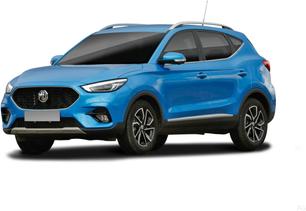
The ZST is essentially an upgraded version of MG's popular small SUV, the ZS.
The ZST sees some tweaks to the overall design and some added standard safety features. So, if you like the original, there's a good chance you'll like the ZST and I've been driving the top-grade Essence variant with my family of three.
The ZST Essence has some stiff competition from similarly specified rivals like the GWM Haval Jolion Lux and Chery Omoda 5 EX offering affordable packages and similar driving experiences. So, what makes the ZST stand out?
Audi’s littlest and most affordable SUV, the Q2, has been updated with new looks and tech, but something else has snuck in with it. Or should I say roared in? It’s the SQ2, with a whopping 300 horsepower and a snarling bark.
So, this review has something for everybody. It’s for those who want to know what’s new for the Q2 in this latest update - those thinking of buying a cool-looking little SUV from Audi - and for those who want to wake their neighbours up and frighten their friends.
Ready? Let’s go.
Will the MG ZST Essence fit a small family? Absolutely, and all but the middle seat passenger will be comfortable but there are areas open for improvement. Like it's safety, laggy tech and adding a few extra items in the back seat.
Yet, it still offers a good host of features and an attractive package for a reasonable price tag. Unfortunately, my son missed having the basic amenities but did like the sun roof.
The Q2 is good value and great to drive – especially the SQ2. The exterior looks new, but the cabin feels older than the larger Q3, and most other Audi models.
More standard advanced safety tech would make the Q2 even more appealing, as would a five-year, unlimited-kilometre warranty. While we’re at it, a hybrid variant would make enormous sense.
So, a great car, but Audi could offer more to make it an even better proposition for buyers.
Being the newer and shinier version of the ZS, the ZST presents as a nice little package with its full suite of LED exterior lights, shiny chrome accents and its well-shaped body.
The front is distinctively different from its design muse with a darkened grille, and redesigned fog lights that feature new air intake vents. Other highlights include the 17-inch two-tone alloy wheels with sporty red brake calipers lurking behind them.
The interior is pleasant with a massive sunroof creating a light-filled space and giving the illusion that the cabin is larger than it is.
The synthetic leather upholstery and trims seem robust and perfect for families, but also feel quite plasticky under hand. The red badge embossing on the headrests is lovely, though.
The dashboard is well-proportioned and headlined by an upgraded 10.1-inch touchscreen multimedia system and fully digital instrument cluster.
The gearshift feels a tad too skinny and tall for the general aesthetic but the circular air-vents add some cute personality.
This updated Q2 looks almost identical to the previous one and really the only changes are subtle styling tweaks to the front and back of the car.
The front air vents (they aren’t real air vents on the Q2, but they are on the SQ2) are now larger and pointier and the top of the grille is lower. Around the back, the bumper now has a similar design to the front, with those pointy polygons set wide apart.
It’s an angular little SUV, full of sharp-edged shapes like some kind of acoustical wall in an auditorium.
The SQ2 just looks more aggro, with its metallic-trimmed air vents and beefy quad exhaust.
The new colour is called Apple Green and it’s not really like any colour on the road – well not since 1951, anyway when this hue was hugely popular on everything from cars to telephones. It’s also very close to Disney’s “Go Away” green – look it up and then ask yourself if you should be driving a car that’s kind of invisible to the human eye.
I digress. Other colours in the range include Brilliant Black, Turbo Blue, Glacier White, Floret Silver, Tango Red, Manhattan Grey and Navarra Blue.
Inside, the cabins are the same as before, apart from the larger, sleeker media display, and there are some new trim materials, too. The 35 TFSI has silver inlays with a diamond paint finish, while the 40TFSI has aluminium door sills.
The Q2 has beautiful quilted Nappa leather upholstery, which goes beyond just covering the seats and to the centre console, doors and armrests.
All options offer well laid out and premium feeling cabins, but the disappointing part is that it's an older Audi design, which started out in the third-generation A3, launched in 2013, and still exists on the Q2, even though most Audi models, including the Q3, have the new interior design. This would bug me if I was thinking about buying a Q2.
Have you thought about a Q3? It’s not that much more in price, and it’s a tad bigger, obviously.
The Q2 is tiny, at 4208mm end to end, 1794mm wide and 1537mm tall. The SQ2 is longer at 4216mm long, 1802mm wide and 1524mm tall.
Practicality is hurt by a lack of individual storage options and a back seat that has only two USB-A ports for its amenities.
The cabin space is spacious, though, and both rows have a decent amount of leg- and headroom despite the massive sunroof.
The steering wheel features height but not reach adjustment and to accommodate I have to sit much closer to the wheel than normal thanks to my poor little T-Rex arms.
Individual storage is the best up front with a small middle console and glove box, two cupholders and two drink bottle holders. The doors also feature large storage bins, which is great to keep the cockpit feeling neat.
The rear row gets two map pockets and a small storage bin in each door. There is also a (very) shallow storage nook at the back of the middle console… think a packet of gum or small wallet size.
My seven-year old isn't as comfortable in the rear because it lacks directional air vents, reading lights and a fold-down armrest. All items which will hinder an adult's comfort, too.
The boot space is a good size at 359L but you can bump it to 1187L with the rear seats folded, the backrest featuring a 60/40 split.
The height of the floor is adjustable and when set in the lowest position creates a deep well to tuck larger items, like luggage, into.
The hard cargo cover can be awkward to shift around or store but is otherwise out of the way when it counts.
Other amenities accentuate the premium-feeling the Essence is going for with the heated front seats and electric drivers seat offering well-padded comfort but on longer journeys, I miss having adjustable lumbar support.
The rear seats aren't as comfortable as the front only because the synthetic leather feels slippery, which is accentuated when you hit corners!
In terms of technology, you get two USB-A ports in each row but the front also gets a 12-volt port. You miss out on fast and wireless charging options.
The multimedia system looks great but can be sluggish to respond and the apps can be slow to load but I like the built-in satellite navigation.
The upgraded sound system has six speakers instead of four but the sound quality is a bit tinny with music and calls.
It was simple to connect to the wired Apple CarPlay. It also has Android Auto, Bluetooth connectivity and AM/FM radio.
The Q2 is basically a current model Audi A3, but more practical. I’ve lived with the A3 Sedan and Sportback and while rear legroom is just as confined in those as it is in the Q2 (I’m 191cm and need to squish my knees behind my driving position) getting in and out is easier in the SUV, with its elevated ride height and taller door apertures.
The easier access helps enormously when helping kids into their child seats. In an A3 I need to kneel on the footpath to be at the right level to put my son into the car, but not with the Q2.
The boot space of the Q2 is 405 litres (VDA) for the front-wheel-drive 35 TFSI and for the SQ2 it’s 355 litres. That not bad, and the large hatch makes for a big opening, which is more practical than a sedan’s boot.
Inside, the cabin isn’t enormous, but rear headroom is good, thanks to the fairly high roof.
Cabin storage isn’t terrific, although the front door pockets are big and there are two cupholders up front.
Only the SQ2 has USB ports in the back for rear passengers, but all Q2s have two USB ports up front for charging and media – plus all have wireless charging for phones.
There are four variants for the ZST and our test vehicle is the top-spec Essence model, priced at $33,990 drive-away.
Our example's 'Pebble Black' finish is an included colour but other paintwork options can cost an extra $700.
The price point positions it right in the middle of its rivals with the Omoda 5 costing $35,990 drive-away and the Jolion sliding into the most affordable spot at $30,990 drive-away.
To highlight the value-for-money comparison, the Kia Seltos Sport+ FWD model costs $38,790 drive-away and then you start creeping up into the $40K bracket for similarly specified small SUVs.
The ZST Essence is the top-grade and it has a decent number of premium features for its price tag, like a panoramic sunroof, synthetic leather upholstery, heated front seats and an electric driver's seat, keyless entry, keyless start and a full suite of exterior LED lights.
Other standard features include wired Apple CarPlay and Android Auto, 10.1-inch touchscreen multimedia system, digital instrument cluster, one-zone air-conditioning, built-in satellite navigation, 360-degree camera system and an upgraded sound system with six speakers.
The Q2 entry grade is the 35 TFSI and it lists for $42,900, while the 40 TFSI quattro S line is $49,900. The SQ2 is the king of the range and lists at $64,400.
The SQ2 has never been to Australia before, and we’ll get to its standard features in a moment.
Aussies have been able to buy a 35 TFSI or 40 TFSI since the Q2 arrived in 2017, but now both have been updated with new styling and features. The good news is the prices have only gone up by a few hundred bucks, compared to the old Q2.
Standard on the 35 TFSI are LED headlights and taillights, LED DRLs, leather seats and steering wheel, dual-zone climate control, Apple CarPlay and Android Auto, eight-speaker stereo with digital radio, front and rear parking sensors and a rear-view camera.
That was all standard on the previous 35 TFSI, but here’s what’s new: an 8.3-inch media screen (the old one was seven inches); a proximity key with push button start (great news); wireless phone charging (brilliant), heated exterior mirrors (more helpful than you’d think), ambient interior lighting (aww… pretty); and 18-inch alloys (heck yes).
The 40 TFSI quattro S line adds sports front seats, drive-mode selection, a power tailgate, and paddle shifters. The previous one had all that, too, but this new one has the sporty S line exterior body kit (the previous car was just called Sport not S line).
Now, the 45 TFSI quattro S line may appear not to get much more than the 35 TFSI, but the extra money is getting you more grunt and an awesome all-wheel-drive system – the 35 TFSI is front-wheel-drive only. If you love driving and can’t afford the SQ2, then $7K extra for the 45 TFSI is absolutely worth it.
If you have saved all your pennies and the SQ2 is what you’re zeroing in on, then here’s what you get: Metallic/pearl effect paint, 19-inch alloys, matrix LED headlights with dynamic indicators, the S body kit with quad exhaust, sports suspension, Nappa leather upholstery, heated front seats, 10-colour ambient lighting, stainless-steel pedals, auto parking, a fully digital instrument cluster, and a 14-speaker Bang & Olufsen stereo.
Of course, you get an incredible high-output four-cylinder engine, too, but we’ll get to that in a moment.
The Essence variant has a 1.3-litre, three-cylinder turbo-petrol engine with a maximum power output of 115kW and 230Nm of torque.
It's a front-wheel drive and features a six-speed auto transmission. Overall, it has enough power to keep up with traffic on the open road but you have to be firm with the accelerator to keep your speed consistent.
There are three grades and each has a different engine.
The 35 TFSI has a new 1.5-litre four-cylinder turbo-petrol engine making 110kW and 250Nm; the 40 TFSI has a 2.0-litre turbo-petrol four making 140kW and 320 Nm; and the SQ2 has a 2.0-litre turbo-petrol as well, but it puts out a very impressive 221kW and 400Nm.
The 35 TFSI is front-wheel drive, while the 45 TFSI quattro S line and SQ2 are both all-wheel drive.
All have a seven-speed dual clutch automatic transmission – nope you can’t get a manual. There are also no diesel engines in the line-up.
I drove all three cars and, from an engine perspective, it’s like turning the ‘Smile Dial’ up from Mona Lisa in the 35 TFSI, to Jim Carrey in the SQ2, with Chrissy Teigen in between.
The official combined cycle fuel figure is 7.3L/100km and my real-world average came in at 7.7L. That is after a good mix of urban and open-road driving, so the usage is good.
Based on the combined fuel cycle and the relatively small 45L fuel tank, expect a driving range of around 616km.
Audi engines are superbly modern and efficient – even its monster V10 can shut down cylinders to save fuel, and so can the new 1.5-litre four-cylinder engine in the 35 TFSI. Audi says that over a combination of urban and open roads, the 35 TFSI should use 5.2L/100km.
The 40 TFSI is thirstier at 7L/100km, but the SQ2 demands a bit more at 7.7L/100km. Still, not bad.
What’s not good is the lack of a hybrid, PHEV or EV variant of the Q2. I mean the car is small and ideal for the city, and therefore a perfect candidate for an electric version. Not having a hybrid or EV is why the Q2 model range doesn’t score well for its overall fuel economy.
The ZST Essence has an okay amount of power relative to the car's small size.
It's an adequate cruiser when I ferry just my husband and son around, but feels a full load of luggage and people.
The steering is responsive and it's an easy car to manoeuvre in tight car parks or city streets, which is great. The visibility is pretty good despite the chunkier pillars and you feel confident when checking your blind-spots.
While the suspension is fairly forgiving and ride comfort is decent, you will still notice the bumps, especially when seated in the back.
The cabin suffers from some wind and road noise and at higher speeds we had to find we raise our voices a bit to be heard. Around town, you don't notice it.
This is just a personal preference but the brake and accelerator pedals are skinnier and more centrally positioned than I prefer. You get used to it, though.
The ZST is pretty easy to park and it's great that you have a 360-degree camera system but the image quality can be grainy. You get rear parking sensors, too, but miss out on ones at the front.
When it comes to the driving part, Audi can almost do no wrong – everything the company makes, whether it’s low powered or rip-your-face-off fast, has all the ingredients for engaging driving.
The Q2 range is no different. The entry-grade 35 TFSI has the least grunt and, with its front wheels pulling the car along, it’s the only one in the family that’s not blessed with all-wheel drive, but unless you’re doing laps at a track you’re not going to be wanting more power.
I drove the 35 TFSI for more than 100km on the launch, through the country and into the city, and in all situations, from overtaking on highways to merging and slow traffic, the most affordable Q2 performed well. That 1.5-litre engine is responsive enough and the dual-clutch transmission changes swiftly and smoothly.
Superb steering and good visibility (although that rear three-quarter view is slightly obstructed by the back pillar) makes the 35 TFSI easy to drive.
The 45 TFSI is a good mid-point between the 35 TFSI and the SQ2 and comes with a very noticeable bump in oomph, while the extra traction from the all-wheel drive is a reassuring addition.
The SQ2 isn’t the hardcore beast you might think it is – this thing would be super easy to live with daily. Yes, it has firm sports suspension, but it’s not overly hard, and that engine, which nudges almost 300 horsepower, doesn’t feel like a Rottweiler on the end of a leash. If anything, it’s a Blue Heeler that loves to run and run, but is happy to take it easy and get fat.
The SQ2 is my pick of the bunch, and not just because it’s quick, agile, and has an intimidating growl. It’s also comfortable and luxurious, with sumptuous leather seats.
The ZST Essence has a good suite of safety features that now come standard like rear cross-traffic alert and blind-spot monitoring.
Other standard features include tyre pressure monitoring, LED daytime running lights, forward collision warning, lane departure alert, adaptive cruise control, seatbelt reminders, a 360-degree camera system and rear parking sensors.
The ZST only features six airbags, while many of its rivals sport seven, including the newer front centre airbag. The ZST variant scored four- from a possible five-star ANCAP safety rating in 2017 testing.
It's important to note that the tested ZS model did not have AEB or lane support systems at the time of testing, these were introduced from the 2020 model year onwards and the ZST has both.
There are ISOFIX child seat mounts on the rear outboard seats and three top tether anchor points but two child seats will fit best. There is enough room for front occupants when a 0-4 rearward facing child seat is installed.
The Q2 was given the maximum five-star ANCAP rating when it was tested in 2016, but by 2021 standards it is light on advanced safety tech.
Yes, AEB with pedestrian and cyclist detection is standard on all Q2s and the SQ2, and so is blind-spot warning, but there’s no rear cross traffic alert or reverse AEB, while lane-keeping assistance is only standard on the SQ2, along with adaptive cruise control.
For a car that will most likely be purchased by younger people, it doesn’t seem right that they’re not being protected as well they would be in more expensive Audi models.
For child seats, there are two ISOFIX points and three top-tether anchor mounts.
A space-saver spare is under the boot floor.
The ZST Essence comes with a seven-year/unlimited km warranty, which is on par with coverage offered by a growing number of its rivals.
There is a seven-year or up to 70,000km servicing program for a total cost of $2339 or an average of $334 per service, which is very competitive for the class.
Servicing intervals are at every 12 months or 10,000km, whichever occurs first, but could be annoying if you travel a lot.
The pressure for Audi to move to a five-year warranty must be hugely intense, with Mercedes-Benz offering one, along with pretty much every other mainstream brand. But for now, Audi will only cover the Q2 for three years/unlimited kilometres.
As for servicing, Audi offers a five-year plan for the Q2 costing $2280 and covering every 12-month/15000km service over that time. For the SQ2, the cost is only a fraction higher at $2540.