What's the difference?
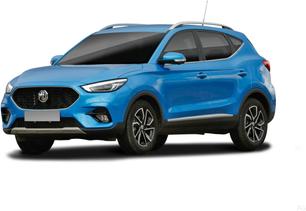
The ZST is essentially an upgraded version of MG's popular small SUV, the ZS.
The ZST sees some tweaks to the overall design and some added standard safety features. So, if you like the original, there's a good chance you'll like the ZST and I've been driving the top-grade Essence variant with my family of three.
The ZST Essence has some stiff competition from similarly specified rivals like the GWM Haval Jolion Lux and Chery Omoda 5 EX offering affordable packages and similar driving experiences. So, what makes the ZST stand out?
The new-generation Mazda CX-5 is here, promising to be bigger, better and bolder, with fresh styling, sharper handling and more technology. But in a market where hybrid power is becoming increasingly hard to ignore, has Mazda left the CX-5 at a disadvantage? I’ve spent a week with the Evolve grade to find out for you.
Will the MG ZST Essence fit a small family? Absolutely, and all but the middle seat passenger will be comfortable but there are areas open for improvement. Like it's safety, laggy tech and adding a few extra items in the back seat.
Yet, it still offers a good host of features and an attractive package for a reasonable price tag. Unfortunately, my son missed having the basic amenities but did like the sun roof.
The Mazda CX-5 Evolve kicks some goals and with its comfortable on-road handling, robust safety equipment and practical interior, it’s still a solid choice for families looking for a mid-sized SUV. The only thing it’s missing is a hybrid powertrain, which would make this already well-rounded package even more compelling.
Being the newer and shinier version of the ZS, the ZST presents as a nice little package with its full suite of LED exterior lights, shiny chrome accents and its well-shaped body.
The front is distinctively different from its design muse with a darkened grille, and redesigned fog lights that feature new air intake vents. Other highlights include the 17-inch two-tone alloy wheels with sporty red brake calipers lurking behind them.
The interior is pleasant with a massive sunroof creating a light-filled space and giving the illusion that the cabin is larger than it is.
The synthetic leather upholstery and trims seem robust and perfect for families, but also feel quite plasticky under hand. The red badge embossing on the headrests is lovely, though.
The dashboard is well-proportioned and headlined by an upgraded 10.1-inch touchscreen multimedia system and fully digital instrument cluster.
The gearshift feels a tad too skinny and tall for the general aesthetic but the circular air-vents add some cute personality.
The next-generation Mazda CX-5 is bigger than before, but it retains the sleek body lines and understated styling that have made it such a handsome SUV. The wider front end and repositioned grille give it a more purposeful look than the outgoing model, while the 17-inch alloy wheels keep things suitably restrained.
Inside, the cabin doesn’t feel too basic despite the cloth upholstery. There are plenty of soft-touch materials, a pleasant dashboard and some new technology, including the 12.9-inch multimedia display. You lose most of the physical buttons, though, so there’s a little less of that traditional Mazda tactility.
The fabric seats are cosy and the extra interior space is definitely noticeable. Overall, there is still an understated elegance to the CX-5’s cabin.
Practicality is hurt by a lack of individual storage options and a back seat that has only two USB-A ports for its amenities.
The cabin space is spacious, though, and both rows have a decent amount of leg- and headroom despite the massive sunroof.
The steering wheel features height but not reach adjustment and to accommodate I have to sit much closer to the wheel than normal thanks to my poor little T-Rex arms.
Individual storage is the best up front with a small middle console and glove box, two cupholders and two drink bottle holders. The doors also feature large storage bins, which is great to keep the cockpit feeling neat.
The rear row gets two map pockets and a small storage bin in each door. There is also a (very) shallow storage nook at the back of the middle console… think a packet of gum or small wallet size.
My seven-year old isn't as comfortable in the rear because it lacks directional air vents, reading lights and a fold-down armrest. All items which will hinder an adult's comfort, too.
The boot space is a good size at 359L but you can bump it to 1187L with the rear seats folded, the backrest featuring a 60/40 split.
The height of the floor is adjustable and when set in the lowest position creates a deep well to tuck larger items, like luggage, into.
The hard cargo cover can be awkward to shift around or store but is otherwise out of the way when it counts.
Other amenities accentuate the premium-feeling the Essence is going for with the heated front seats and electric drivers seat offering well-padded comfort but on longer journeys, I miss having adjustable lumbar support.
The rear seats aren't as comfortable as the front only because the synthetic leather feels slippery, which is accentuated when you hit corners!
In terms of technology, you get two USB-A ports in each row but the front also gets a 12-volt port. You miss out on fast and wireless charging options.
The multimedia system looks great but can be sluggish to respond and the apps can be slow to load but I like the built-in satellite navigation.
The upgraded sound system has six speakers instead of four but the sound quality is a bit tinny with music and calls.
It was simple to connect to the wired Apple CarPlay. It also has Android Auto, Bluetooth connectivity and AM/FM radio.
The front seats are a particularly comfortable place to spend time, with wide seat bases and plenty of elbow room. Getting in and out is easy thanks to the wide door apertures and 205mm of ground clearance and there’s enough space to settle in for a longer journey.
There’s also plenty of useful storage up front, including a large glove box, dual-opening centre console, cupholders and bottle holders, plus a dedicated phone tray with wireless charging. You get a 12-volt socket and two USB-C ports for keeping everything else topped up.
The 12.9-inch multimedia screen replaces Mazda’s familiar rotary selector with touchscreen operation, which I find easier to use. The updated operating system takes a little while to get your head around and there’s no native sat nav, but otherwise it feels functional and fresh for the new-generation model. Wireless Apple CarPlay and Android Auto are standard, with CarPlay maintaining a solid connection throughout my week.
The extra size of this next-generation model is more noticeable in the back, where improved leg- and headroom is good news for taller adults on longer trips. The rear doors open to almost 90 degrees, making it easier to access the ISOFIX child-seat mounts and three top-tether anchor points.
There’s not a huge amount of extra family-focused kit back in the rear row, but you do get directional air vents, storage bins in each door and a centre armrest with cupholders. My nine-year-old was comfortable, although he did point out the lack of a charging port during a road trip.
And, as a parent, I had one other gripe: keeping the fabric seats clean from my kid’s shoes in rainy weather. Let’s just say some seat covers might be a worthwhile investment.
The boot offers up to 466L with all seats in use. That’s not the largest capacity in the class, but it was more than enough for my little family of three this week. I like the level loading floor, although the boot itself is quite tall, which can make lifting heavier items in and out a little awkward.
I’m also pleased to see a spare tyre, even if it is only a space-saver. And while a powered tailgate would be handy, at this price point I don’t think you’ll really miss it... until you’re standing there with your hands full!
There are four variants for the ZST and our test vehicle is the top-spec Essence model, priced at $33,990 drive-away.
Our example's 'Pebble Black' finish is an included colour but other paintwork options can cost an extra $700.
The price point positions it right in the middle of its rivals with the Omoda 5 costing $35,990 drive-away and the Jolion sliding into the most affordable spot at $30,990 drive-away.
To highlight the value-for-money comparison, the Kia Seltos Sport+ FWD model costs $38,790 drive-away and then you start creeping up into the $40K bracket for similarly specified small SUVs.
The ZST Essence is the top-grade and it has a decent number of premium features for its price tag, like a panoramic sunroof, synthetic leather upholstery, heated front seats and an electric driver's seat, keyless entry, keyless start and a full suite of exterior LED lights.
Other standard features include wired Apple CarPlay and Android Auto, 10.1-inch touchscreen multimedia system, digital instrument cluster, one-zone air-conditioning, built-in satellite navigation, 360-degree camera system and an upgraded sound system with six speakers.
There are five variants available for the third-generation Mazda CX-5, and we’re in the second-from-base Evolve grade for this review. It has a competitive $42,990, before on-road costs price, which puts it neatly among its key rivals. The Hyundai Tucson Hybrid starts at $42,850, while the Kia Sportage SX+ petrol begins at $45,580 and the Toyota RAV4 GX 2WD Hybrid at $45,990, all before on-road costs.
On price alone, the CX-5 looks well placed. But there’s one notable difference - all three rivals offer hybrid powertrains in their respective ranges, while the CX-5 currently does not. And as hybrid power becomes increasingly common in this segment, that omission could prove harder for Mazda to overlook.
The Evolve grade enjoys some solid features though, including:
The Essence variant has a 1.3-litre, three-cylinder turbo-petrol engine with a maximum power output of 115kW and 230Nm of torque.
It's a front-wheel drive and features a six-speed auto transmission. Overall, it has enough power to keep up with traffic on the open road but you have to be firm with the accelerator to keep your speed consistent.
The CX-5 is all-wheel drive and powered by a 2.5-litre four-cylinder petrol engine producing 132kW of power and 242Nm of torque. It has a braked towing capacity of up to 1800kg, giving you the option of some light towing on the weekends, while the six-speed automatic transmission shifts smoothly through its gears.
But there’s no escaping the fact that most of its key rivals now offer hybrid powertrains, and you can feel the absence of one here. The CX-5’s petrol engine is perfectly capable, but it doesn’t have the same efficiency advantage that many buyers in this segment are increasingly looking for.
The official combined cycle fuel figure is 7.3L/100km and my real-world average came in at 7.7L. That is after a good mix of urban and open-road driving, so the usage is good.
Based on the combined fuel cycle and the relatively small 45L fuel tank, expect a driving range of around 616km.
The CX-5 has a 58-litre fuel tank and claimed combined cycle (urban/extra-urban) fuel consumption of 7.4L/100km, giving it a theoretical driving range of up to 783km. That’s a solid range for a family-sized SUV and means you won’t be constantly thinking about your next fuel stop.
My real-world fuel use settled at 7.8L/100km after a week of longer highway stints and urban trawls, so it’s not too far off Mazda’s official number.
Still, this is where I’d like to see a hybrid powertrain join the CX-5 range. The fuel economy is reasonable, but with so many rivals now offering hybrid options, Mazda is starting to leave some efficiency gains on the table.
The ZST Essence has an okay amount of power relative to the car's small size.
It's an adequate cruiser when I ferry just my husband and son around, but feels a full load of luggage and people.
The steering is responsive and it's an easy car to manoeuvre in tight car parks or city streets, which is great. The visibility is pretty good despite the chunkier pillars and you feel confident when checking your blind-spots.
While the suspension is fairly forgiving and ride comfort is decent, you will still notice the bumps, especially when seated in the back.
The cabin suffers from some wind and road noise and at higher speeds we had to find we raise our voices a bit to be heard. Around town, you don't notice it.
This is just a personal preference but the brake and accelerator pedals are skinnier and more centrally positioned than I prefer. You get used to it, though.
The ZST is pretty easy to park and it's great that you have a 360-degree camera system but the image quality can be grainy. You get rear parking sensors, too, but miss out on ones at the front.
The CX-5 feels composed around town, with power delivered smoothly for everyday driving. But when you need to punch it off the mark, there’s some noticeable lag, and you have to work the engine harder to find the power when tackling a steeper hill at higher speeds. It’s capable enough, but it can feel like you’re asking a little more of it than you should.
The suspension has a firm edge to it, but I like how responsive the steering feels. The CX-5 is genuinely enjoyable through corners, with a dynamic feel and very little body roll.
The cabin is also impressively quiet, with minimal road or wind noise creeping in at higher speeds. Visibility is good through the front and sides, although the A-pillar can get in the way at times.
The reversing camera provides a clear view, while front and rear parking sensors make manoeuvring easier. Overall, it’s not a difficult SUV to park, despite its larger dimensions.
The ZST Essence has a good suite of safety features that now come standard like rear cross-traffic alert and blind-spot monitoring.
Other standard features include tyre pressure monitoring, LED daytime running lights, forward collision warning, lane departure alert, adaptive cruise control, seatbelt reminders, a 360-degree camera system and rear parking sensors.
The ZST only features six airbags, while many of its rivals sport seven, including the newer front centre airbag. The ZST variant scored four- from a possible five-star ANCAP safety rating in 2017 testing.
It's important to note that the tested ZS model did not have AEB or lane support systems at the time of testing, these were introduced from the 2020 model year onwards and the ZST has both.
There are ISOFIX child seat mounts on the rear outboard seats and three top tether anchor points but two child seats will fit best. There is enough room for front occupants when a 0-4 rearward facing child seat is installed.
The Mazda CX-5 has a maximum five-star ANCAP safety rating from testing conducted in 2025, with strong results across all four assessment categories.
It scored 90 per cent for adult occupant protection, 91 per cent for child occupant protection, 93 per cent for vulnerable road user protection and 87 per cent for its safety assist systems.
Other equipment include:
The ZST Essence comes with a seven-year/unlimited km warranty, which is on par with coverage offered by a growing number of its rivals.
There is a seven-year or up to 70,000km servicing program for a total cost of $2339 or an average of $334 per service, which is very competitive for the class.
Servicing intervals are at every 12 months or 10,000km, whichever occurs first, but could be annoying if you travel a lot.
The CX-5 is covered by Mazda’s five-year, unlimited-kilometre warranty, which also includes five years of roadside assistance. It’s a solid offering, although longer warranty terms are becoming increasingly common in this segment.
Servicing is reasonably priced at around $440 per service over seven years, and the intervals are well spaced at every 12 months or 15,000km, whichever comes first. That should make ongoing ownership relatively straightforward for families.