What's the difference?
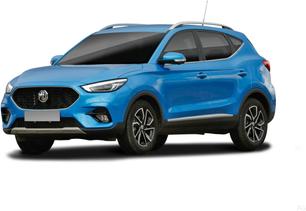
The ZST is essentially an upgraded version of MG's popular small SUV, the ZS.
The ZST sees some tweaks to the overall design and some added standard safety features. So, if you like the original, there's a good chance you'll like the ZST and I've been driving the top-grade Essence variant with my family of three.
The ZST Essence has some stiff competition from similarly specified rivals like the GWM Haval Jolion Lux and Chery Omoda 5 EX offering affordable packages and similar driving experiences. So, what makes the ZST stand out?
The Mitsubishi Pajero Sport is one of the quiet-achieving top-sellers in the Australian 4WD market and now 2WD five- and seven-seater variants have been added to further expand the popular SUV wagon line-up.
With sub-$50,000 price-tags being touted, is a 2WD Pajero Sport worth your consideration?
We had a seven-seater variant for a week to see how it stacks up against its 2WD rivals and its own 4WD stablemates.
Read on.
Will the MG ZST Essence fit a small family? Absolutely, and all but the middle seat passenger will be comfortable but there are areas open for improvement. Like it's safety, laggy tech and adding a few extra items in the back seat.
Yet, it still offers a good host of features and an attractive package for a reasonable price tag. Unfortunately, my son missed having the basic amenities but did like the sun roof.
The Mitsubishi Pajero Sport GLS 2WD seven-seater is a well-built and well-priced family-friendly wagon.
It's nice to drive, has a rather comfortable interior and – bonus – the vehicle on which it's based has proven credibility as a no-nonsense and highly functional touring vehicle.
But in 2WD guise it's missing something: namely Super Select II, which accounts for a considerable chunk of the 4WD Pajero Sport’s appeal – so the absence of that in this 2WD version is a significant negative, in my books.
The not-so-subtle point I’m trying to make? Sure, the 2WD Pajero Sport is a few grand cheaper than its 4WD stablemate and it's a solid value-for-money buy as is, but I reckon paying the extra cash to get your hands on a Pajero Sport that's equipped with Super-Select II is the better bet.
Being the newer and shinier version of the ZS, the ZST presents as a nice little package with its full suite of LED exterior lights, shiny chrome accents and its well-shaped body.
The front is distinctively different from its design muse with a darkened grille, and redesigned fog lights that feature new air intake vents. Other highlights include the 17-inch two-tone alloy wheels with sporty red brake calipers lurking behind them.
The interior is pleasant with a massive sunroof creating a light-filled space and giving the illusion that the cabin is larger than it is.
The synthetic leather upholstery and trims seem robust and perfect for families, but also feel quite plasticky under hand. The red badge embossing on the headrests is lovely, though.
The dashboard is well-proportioned and headlined by an upgraded 10.1-inch touchscreen multimedia system and fully digital instrument cluster.
The gearshift feels a tad too skinny and tall for the general aesthetic but the circular air-vents add some cute personality.
The Pajero Sport is 4825mm long (with a 2800mm wheelbase), 1815mm wide and 1835mm high. It has an official kerb weight of 1980kg.
I don’t mind the styling of the Pajero Sport. It doesn’t look as bulky as many of its rivals and it manages to have a rather contemporary, but comfortably middle of the road, presence.
If you’re that concerned about keeping up appearances, perhaps take a look at a Pajero Sport in the metal, drive it, imagine yourself living with it day to day, then make up your own mind whether you think it suits you or not.
Easy.
Practicality is hurt by a lack of individual storage options and a back seat that has only two USB-A ports for its amenities.
The cabin space is spacious, though, and both rows have a decent amount of leg- and headroom despite the massive sunroof.
The steering wheel features height but not reach adjustment and to accommodate I have to sit much closer to the wheel than normal thanks to my poor little T-Rex arms.
Individual storage is the best up front with a small middle console and glove box, two cupholders and two drink bottle holders. The doors also feature large storage bins, which is great to keep the cockpit feeling neat.
The rear row gets two map pockets and a small storage bin in each door. There is also a (very) shallow storage nook at the back of the middle console… think a packet of gum or small wallet size.
My seven-year old isn't as comfortable in the rear because it lacks directional air vents, reading lights and a fold-down armrest. All items which will hinder an adult's comfort, too.
The boot space is a good size at 359L but you can bump it to 1187L with the rear seats folded, the backrest featuring a 60/40 split.
The height of the floor is adjustable and when set in the lowest position creates a deep well to tuck larger items, like luggage, into.
The hard cargo cover can be awkward to shift around or store but is otherwise out of the way when it counts.
Other amenities accentuate the premium-feeling the Essence is going for with the heated front seats and electric drivers seat offering well-padded comfort but on longer journeys, I miss having adjustable lumbar support.
The rear seats aren't as comfortable as the front only because the synthetic leather feels slippery, which is accentuated when you hit corners!
In terms of technology, you get two USB-A ports in each row but the front also gets a 12-volt port. You miss out on fast and wireless charging options.
The multimedia system looks great but can be sluggish to respond and the apps can be slow to load but I like the built-in satellite navigation.
The upgraded sound system has six speakers instead of four but the sound quality is a bit tinny with music and calls.
It was simple to connect to the wired Apple CarPlay. It also has Android Auto, Bluetooth connectivity and AM/FM radio.
The interior has a practical and familiar feel about it. Sure, it’s a bit on the basic side of things – with cloth seats and rubber floor mats – and it certainly lacks the plethora of soft-touch surfaces some of its more expensive rivals may have, but this interior’s life-friendly sense is a bigger positive for it than any posh addition could be.
The front seats are rather supportive, with a real snug feel to them, and are manually adjustable, which is fine with me.
The reach- and height-adjustable steering wheel has paddle shifters for when your driving takes on more of a sense of urgency.
The dash and 8.0-inch touchscreen media unit has an integrated sense to it. And this cabin’s all-pervasive sense of familiarity continues here with all of the buttons and dials easy to spot on the fly and, more importantly, operate without fumbling around for them.
Driver and front passenger have access to media and aircon controls, among others, as well as cup-holders in between the front seats, a bottle holder in each of the doors, and small spots here and there for your wallet, keys etc.
The second row is suitably comfortable and I sat behind my driving position and there was plenty of head and leg room. It’d be much squeezier for those of us who stand at six-feet (182cm) or beyond.
Second-row passengers have access to a fold-down arm-rest with cup holders, air vents and there are USB charge points and a power socket in the rear of the centre-console.
The seat-backs have map pockets and the doors each have a bottle holder.
The second row is equipped with three child-seat top-tether points, and two ISOFIX points. It is a 60:40 split-fold configuration.
Passengers in the third-row seat have access to cup-holders and air vents, but that’s little compensation because the space back here is on the wrong side of tight.
The third row is a 50:50 split-fold configuration.
In terms of packability, the rear cargo area’s volume is listed as 131 litres when all three rows are being used as seating; 502 litres when two rows are in use; and 1488 when the second and third rows are stowed away.
Annoyingly, the third row is a real bugger to stow away and doesn’t fold flat into the floor. Maybe I’m missing a trick but this third-row strife was a source of more than a bit of frustration for the photographer and I – and we’re both experienced vehicle-based travellers.
The rear cargo area is equipped with power sockets and tie-down points. There is a shallow underfloor storage box back there as well.
There are four variants for the ZST and our test vehicle is the top-spec Essence model, priced at $33,990 drive-away.
Our example's 'Pebble Black' finish is an included colour but other paintwork options can cost an extra $700.
The price point positions it right in the middle of its rivals with the Omoda 5 costing $35,990 drive-away and the Jolion sliding into the most affordable spot at $30,990 drive-away.
To highlight the value-for-money comparison, the Kia Seltos Sport+ FWD model costs $38,790 drive-away and then you start creeping up into the $40K bracket for similarly specified small SUVs.
The ZST Essence is the top-grade and it has a decent number of premium features for its price tag, like a panoramic sunroof, synthetic leather upholstery, heated front seats and an electric driver's seat, keyless entry, keyless start and a full suite of exterior LED lights.
Other standard features include wired Apple CarPlay and Android Auto, 10.1-inch touchscreen multimedia system, digital instrument cluster, one-zone air-conditioning, built-in satellite navigation, 360-degree camera system and an upgraded sound system with six speakers.
Our test vehicle – a Mitsubishi Pajero Sport GLS 2WD seven-seater – has a manufacturer suggested retail price of $49,190 (before on-road costs).
But our wagon had a stack of accessories, which included alloy front protection bar ($3879), towbar kit ($1386), towball cover ($7), rear cargo liner ($205), and carpet mat set ($230). That total accessories cost of $5707 (price includes recommended dealer fitment cost) brings this vehicle’s as-tested price to $54,897.
There is a 2WD GLX spec, a five-seater, which is slightly cheaper than our test vehicle, with an MSRP of $44,440.
The standard features list on the GLS is generous and includes an 8.0-inch touchscreen multimedia unit (with Apple CarPlay, Android Auto, and satellite navigation), dual-zone climate control air conditioning, a power tailgate, privacy glass, automatic rain-sensing wipers and dusk-sensing headlights and, of course, seven seats.
I’ve mentioned the accessories above – and there are lot more of a variety of those available from Mitsubishi as well as from Australia’s bloody awesome aftermarket industry – so let’s get cracking with the yarn proper.
The Essence variant has a 1.3-litre, three-cylinder turbo-petrol engine with a maximum power output of 115kW and 230Nm of torque.
It's a front-wheel drive and features a six-speed auto transmission. Overall, it has enough power to keep up with traffic on the open road but you have to be firm with the accelerator to keep your speed consistent.
The Pajero Sport has a 2.4-litre, four-cylinder turbo-diesel engine, which produces 133kW at 3500rpm and 430Nm at 2500rpm, and it has an eight-speed automatic transmission.
This 2WD variant does not have Mitsubishi’s impressive Super-Select II 4WD system, of which I’m a big fan, and that absence is a substantial negative against it, I reckon. But more about that very soon…
The official combined cycle fuel figure is 7.3L/100km and my real-world average came in at 7.7L. That is after a good mix of urban and open-road driving, so the usage is good.
Based on the combined fuel cycle and the relatively small 45L fuel tank, expect a driving range of around 616km.
The 2WD Pajero Sport has an offical fuel consumption of 8.0L/100km on a combined cycle.
On our test, which included a stint of dirt-road driving, we recorded fuel consumption from fill to fill of 9.2L/100km.
It has a 68-litre fuel tank so, with that sort of fuel-consumption figure, you can reasonably expect a driving range of approximately 690km from a full tank, but that’s factoring in a safe-distance buffer of 50km.
The ZST Essence has an okay amount of power relative to the car's small size.
It's an adequate cruiser when I ferry just my husband and son around, but feels a full load of luggage and people.
The steering is responsive and it's an easy car to manoeuvre in tight car parks or city streets, which is great. The visibility is pretty good despite the chunkier pillars and you feel confident when checking your blind-spots.
While the suspension is fairly forgiving and ride comfort is decent, you will still notice the bumps, especially when seated in the back.
The cabin suffers from some wind and road noise and at higher speeds we had to find we raise our voices a bit to be heard. Around town, you don't notice it.
This is just a personal preference but the brake and accelerator pedals are skinnier and more centrally positioned than I prefer. You get used to it, though.
The ZST is pretty easy to park and it's great that you have a 360-degree camera system but the image quality can be grainy. You get rear parking sensors, too, but miss out on ones at the front.
This is mostly a smooth driving wagon while tackling daily duties on the blacktop and with some highway stretches thrown into the mix.
Steering has a nice weight to it and the Pajero Sport is a nimble, highly manoeuvrable SUV, with a turning circle of 11.2m, even if it does start to reveal more than a bit of body-roll through more aggressive driving. No surprise and no worries – this is an SUV after all, not a sports car.
Also, worth noting is the fact that our test vehicle’s alloy bullbar made it heavier at the front end thus affecting its handling somewhat.
Throttle response is sharp and the 2WD Pajero Sport retains the line-up’s punchy turbo-diesel engine and teamed with the eight-speed auto it makes for a quietly effective, rarely stressed working partnership, rather than an energetic match-up.
The suspension set-up here – double wishbones with coil springs and stabiliser bar at the front, and three-link, coil springs and stabiliser bar at the rear – yields a very firm ride and one which can tend towards jarring if you’re traversing chopped-up back-country bitumen or really anything beyond bitumen that's in good nick.
The tyres – Toyo Open Country A32 (265/60R18) – are well-suited to bitumen, not so much to off-roading, which is perfectly reasonable for this 2WD vehicle. Also, this rubber is on the correct side of quiet.
As mentioned earlier, Mitsubishi’s Super-Select II 4WD system is missing from this variant, obviously, as this is a 2WD. And that’s a crying shame because even if you never venture off the road, Super-Select II is very handy. In Pajero Sports equipped with it, you can drive in 4H (4WD high range) even on bitumen or any high-traction surface because 4H in this vehicle means that – and I’m directly quoting Mitsubishi’s offical system explanation here – “all wheels are driven via the transfer case with an open centre differential, this means all four wheels will send power to the ground while still operating independently of one another”.
If you drove like that in most other 4WDs – at speed in 4H on bitumen or the like – you’d risk transmission wind-up, but there’s no danger of that in a 4WD Pajero Sport because its centre diff is open, not locked, when 4H is engaged.
This gives the driver increased traction and so better control and that means it’s a safer all-round driving experience for everyone involved.
Unfortunately, none of those benefits are available in this 2WD variant.
Having said all of that, this Pajero Sport is very drivable, functional and still manages to retain respectable, if not high, levels of refinement.
The ZST Essence has a good suite of safety features that now come standard like rear cross-traffic alert and blind-spot monitoring.
Other standard features include tyre pressure monitoring, LED daytime running lights, forward collision warning, lane departure alert, adaptive cruise control, seatbelt reminders, a 360-degree camera system and rear parking sensors.
The ZST only features six airbags, while many of its rivals sport seven, including the newer front centre airbag. The ZST variant scored four- from a possible five-star ANCAP safety rating in 2017 testing.
It's important to note that the tested ZS model did not have AEB or lane support systems at the time of testing, these were introduced from the 2020 model year onwards and the ZST has both.
There are ISOFIX child seat mounts on the rear outboard seats and three top tether anchor points but two child seats will fit best. There is enough room for front occupants when a 0-4 rearward facing child seat is installed.
The Pajero Sport has a five-star ANCAP safety rating based on testing in October, 2015.
Safety gear includes seven airbags (driver’s knee, driver and passenger front, driver and passenger front sides, and curtains) and this Pajero Sport’s suite of active safety and driver-assist tech includes AEB, adaptive cruise control, trailer stability assist, rear view camera and rear parking sensors, but it somehow misses out on blind spot warning and rear cross-traffic alert.
The ZST Essence comes with a seven-year/unlimited km warranty, which is on par with coverage offered by a growing number of its rivals.
There is a seven-year or up to 70,000km servicing program for a total cost of $2339 or an average of $334 per service, which is very competitive for the class.
Servicing intervals are at every 12 months or 10,000km, whichever occurs first, but could be annoying if you travel a lot.
Pajero Sport 2WD is eligible for Mitsubishi's so-called "10/10 Diamond Advantage" package, which includes a 10-year/200,000km warranty and 10 year/150,000km capped price servicing. But you need to ensure you get the vehicle serviced at an authorised Mitsubishi dealer to take advantage of the 10-year warranty plan.
Each capped price servicing extends free roadside assistance by another 12 months.
The servicing schedule and costs per service are: $399 (at 12months/15,000), $399 (24 months/30,000km), $499 (36 months/45,000km), $699 (48 months/60,000km), $499 (60 months/75,000km), $699 (72 months/90,000km), $499 (84 months/105,000km), $999 (96 months/120,000km), $599 (108 months/135,000km), and $699 (120 months/150,000km).