What's the difference?
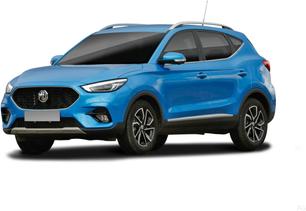
The ZST is essentially an upgraded version of MG's popular small SUV, the ZS.
The ZST sees some tweaks to the overall design and some added standard safety features. So, if you like the original, there's a good chance you'll like the ZST and I've been driving the top-grade Essence variant with my family of three.
The ZST Essence has some stiff competition from similarly specified rivals like the GWM Haval Jolion Lux and Chery Omoda 5 EX offering affordable packages and similar driving experiences. So, what makes the ZST stand out?
SUV wagons based on their ute stablemates are by no means a new thing – just look to Toyota Fortuner (based on HiLux), Ford Everest (based on the Ranger) and Isuzu’s MU-X (based on the D-Max) for evidence of that.
But the strategy is not always a successful one and these ute-based wagons have already gone through a stage or two of tweaking and refining in an attempt by car makers to shed some of the lingering ute-related niggles (such as work-focused suspension tunes) and improve the final products so they're better suited to a life of work and play.
The 2018 Trailblazer (formerly known as Colorado7, and based on the Colorado ute) is another clear sign that these wagons are indeed getting better, but are those improvements good enough to attract the cash of an otherwise ute-fixated public?
Will the MG ZST Essence fit a small family? Absolutely, and all but the middle seat passenger will be comfortable but there are areas open for improvement. Like it's safety, laggy tech and adding a few extra items in the back seat.
Yet, it still offers a good host of features and an attractive package for a reasonable price tag. Unfortunately, my son missed having the basic amenities but did like the sun roof.
The Trailblazer is a solid all-rounder and deserves the consideration of those in the market for a decent seven-seater 4WD. It does everything well without ever really excelling at any one thing.
Is it fantastic? No. Is it a game-changer? No. Does it represent pretty good value for money in the grand scheme of things? Yep.
The pick of the bunch for me is the LTZ – solid, off-road capable, and suburbs-friendly with just a hint of leather-appointed class. In the LTZ, you get everything worthwhile in the Trailblazer mob and if you’re a family man you won’t feel the need to fork out an extra $1000 for the Z71’s try-hard window dressing.
The Trailblazer is a mostly comfortable SUV wagon, stacked with features and is well worth your consideration if the Isuzu MU-X, Pajero Sport and Toyota Fortuner don’t float your boat.
Being the newer and shinier version of the ZS, the ZST presents as a nice little package with its full suite of LED exterior lights, shiny chrome accents and its well-shaped body.
The front is distinctively different from its design muse with a darkened grille, and redesigned fog lights that feature new air intake vents. Other highlights include the 17-inch two-tone alloy wheels with sporty red brake calipers lurking behind them.
The interior is pleasant with a massive sunroof creating a light-filled space and giving the illusion that the cabin is larger than it is.
The synthetic leather upholstery and trims seem robust and perfect for families, but also feel quite plasticky under hand. The red badge embossing on the headrests is lovely, though.
The dashboard is well-proportioned and headlined by an upgraded 10.1-inch touchscreen multimedia system and fully digital instrument cluster.
The gearshift feels a tad too skinny and tall for the general aesthetic but the circular air-vents add some cute personality.
The Trailblazer is a solid-looking wagon – all clean, tight lines from front to back – and overall it has a real squat and substantial presence. If we’re going to get all ‘fancy Dan’ with our hyperbole: chrome-accented daytime running headlights swoop back along the chunky body to slick LED tail-lights. If we’re sticking to basics: the Trailblazer looks good.
Inside, the tweaked interior has a tidy if rather basic feel to it – but that’s not a bad thing in a wagon that will have to cop dirt and dropped ice creams amid the general chaos of day-to-day life.
The leather-trim seats add a touch of class to otherwise family friendly dimensions and environment.
Practicality is hurt by a lack of individual storage options and a back seat that has only two USB-A ports for its amenities.
The cabin space is spacious, though, and both rows have a decent amount of leg- and headroom despite the massive sunroof.
The steering wheel features height but not reach adjustment and to accommodate I have to sit much closer to the wheel than normal thanks to my poor little T-Rex arms.
Individual storage is the best up front with a small middle console and glove box, two cupholders and two drink bottle holders. The doors also feature large storage bins, which is great to keep the cockpit feeling neat.
The rear row gets two map pockets and a small storage bin in each door. There is also a (very) shallow storage nook at the back of the middle console… think a packet of gum or small wallet size.
My seven-year old isn't as comfortable in the rear because it lacks directional air vents, reading lights and a fold-down armrest. All items which will hinder an adult's comfort, too.
The boot space is a good size at 359L but you can bump it to 1187L with the rear seats folded, the backrest featuring a 60/40 split.
The height of the floor is adjustable and when set in the lowest position creates a deep well to tuck larger items, like luggage, into.
The hard cargo cover can be awkward to shift around or store but is otherwise out of the way when it counts.
Other amenities accentuate the premium-feeling the Essence is going for with the heated front seats and electric drivers seat offering well-padded comfort but on longer journeys, I miss having adjustable lumbar support.
The rear seats aren't as comfortable as the front only because the synthetic leather feels slippery, which is accentuated when you hit corners!
In terms of technology, you get two USB-A ports in each row but the front also gets a 12-volt port. You miss out on fast and wireless charging options.
The multimedia system looks great but can be sluggish to respond and the apps can be slow to load but I like the built-in satellite navigation.
The upgraded sound system has six speakers instead of four but the sound quality is a bit tinny with music and calls.
It was simple to connect to the wired Apple CarPlay. It also has Android Auto, Bluetooth connectivity and AM/FM radio.
Climbing in is easy enough with a sturdy "overhead assist handle" for all comers and goers.
All of the Trailblazer’s seats are mostly comfortable except they are quite flat and hard, which may prove a hindrance over longer trips. The driver’s seat is six-way electrically-adjustable and there is little in the way of lumbar support.
The second row will better suit two passengers than three for long-distance comfort but there is enough room all round – head, shoulders and legs – to avoid most complaints, for a little while anyway.
Third-row passengers will need to be children or those of a shorter stature to cope with the ‘back of the bus’ squeeze – and even then trips should be kept to shorter distances to avoid an in-car riot. It’s not a terrible place to be, in the third row of this thing, but it’s not ideal either – pretty much in keeping with the rear-row offerings of its rivals.
Back up the front again and the dash design is clear, user-friendly and easy to get used to with day-in, day-out use.
There is a fair bit of storage space in the cabin but some of it is awkward to access and actually use. The glove box is big enough to cope with one or two handfuls of bits and pieces. There is a sunglass holder up near the rear-view mirror.
Passengers in the back also get air vents and manual aircon control.
There are two cup holders in front of the small centre console housing the USB port which, when used, eats into that available space.
All doors have a moulded bottle bulge, which wouldn’t cop our CarsGuide water bottle without forceful encouragement.
The second-row passengers get a fold-down centre arm-rest/cup holder when there’s no one sitting in the middle. Passengers in the back also get air vents and manual aircon control.
With all seats up, if you pack to the roof, there is 235 litres of cargo space at the very rear; with the 50/50 split-folding third-row seats folded down, there is 878 litres; with the second-row (60/40 split-fold and tumble) and the third-row seats down, there is 1830 litres of cargo space. There is a retractable cargo blind stowed away under the floor at the rear.
With the second-row seats folded forward, it is easy enough to get into the third-row seats; no contortionist moves required.
There are two 12-volt outlets in the centre dash; one at the back of the centre console (for second-row passengers); and one in the rear cargo area.
Up top, the roof rails are rated to carry 100kg.
There are four variants for the ZST and our test vehicle is the top-spec Essence model, priced at $33,990 drive-away.
Our example's 'Pebble Black' finish is an included colour but other paintwork options can cost an extra $700.
The price point positions it right in the middle of its rivals with the Omoda 5 costing $35,990 drive-away and the Jolion sliding into the most affordable spot at $30,990 drive-away.
To highlight the value-for-money comparison, the Kia Seltos Sport+ FWD model costs $38,790 drive-away and then you start creeping up into the $40K bracket for similarly specified small SUVs.
The ZST Essence is the top-grade and it has a decent number of premium features for its price tag, like a panoramic sunroof, synthetic leather upholstery, heated front seats and an electric driver's seat, keyless entry, keyless start and a full suite of exterior LED lights.
Other standard features include wired Apple CarPlay and Android Auto, 10.1-inch touchscreen multimedia system, digital instrument cluster, one-zone air-conditioning, built-in satellite navigation, 360-degree camera system and an upgraded sound system with six speakers.
The Trailblazer is available in three spec levels, each with a market-competitive price: base-spec LT (from $47,990, excluding on-road costs), LTZ (which we tested; from $52,490) and the limited-edition Z71 (from $53,490).
But those prices soon start to climb when you add in accessories such as all-weather floor mats ($130 for a pair), boot lip protector ($80) and a rigid cargo barrier ($960). Our test vehicle had a Power Blue (prestige paint) colour on the exterior, at a cost of $550.
All models have the 2.8-litre turbo-diesel engine and six-speed automatic transmission. The 4WD system is a dual-range part-time shift-on-the-fly set-up.
The LT’s standard features include cloth seat covers, 17-inch alloy wheels, a seven-inch touchscreen to go with its Holden MyLink infotainment system, Apple Car Play and Android Auto, Bluetooth connectivity, front fog lamps, signature daytime running lights, side steps, limited slip diff, rear parking sensors and a rear-view camera.
The LTZ gets all of that (although its touchscreen is eight inches) and more: integrated satnav, blind spot alert, forward collision alert and heated front seats and leather-appointed seat trim. It has 18-inch alloy wheels.
The Z71 has all of that gear as well as a distinctive sports look, replete with black bonnet, black mirrors, black exterior door handles, Z71 leather-appointed trim and 18-inch black alloy wheels.
The Essence variant has a 1.3-litre, three-cylinder turbo-petrol engine with a maximum power output of 115kW and 230Nm of torque.
It's a front-wheel drive and features a six-speed auto transmission. Overall, it has enough power to keep up with traffic on the open road but you have to be firm with the accelerator to keep your speed consistent.
The 2.8-litre turbo-diesel engine punches out 147kW at 3600rpm and its big-gun 500Nm at 2000rpm and is well-matched to a six-speed automatic transmission. This Trailblazer is, on paper, a very good tow vehicle with so much torque available and from down so low.
Its towing capacity is 3000kg (braked), but I’d prefer to see how it fared in a real-world tow test before I pass judgement.
The official combined cycle fuel figure is 7.3L/100km and my real-world average came in at 7.7L. That is after a good mix of urban and open-road driving, so the usage is good.
Based on the combined fuel cycle and the relatively small 45L fuel tank, expect a driving range of around 616km.
Claimed fuel economy is 8.6L/100km (combined). We recorded 9.6L/100km fuel consumption after 200km of mixed driving, including about 30km of gravel tracks, and 10km of hard off-roading. As mentioned earlier, it has a 76-litre fuel tank.
The ZST Essence has an okay amount of power relative to the car's small size.
It's an adequate cruiser when I ferry just my husband and son around, but feels a full load of luggage and people.
The steering is responsive and it's an easy car to manoeuvre in tight car parks or city streets, which is great. The visibility is pretty good despite the chunkier pillars and you feel confident when checking your blind-spots.
While the suspension is fairly forgiving and ride comfort is decent, you will still notice the bumps, especially when seated in the back.
The cabin suffers from some wind and road noise and at higher speeds we had to find we raise our voices a bit to be heard. Around town, you don't notice it.
This is just a personal preference but the brake and accelerator pedals are skinnier and more centrally positioned than I prefer. You get used to it, though.
The ZST is pretty easy to park and it's great that you have a 360-degree camera system but the image quality can be grainy. You get rear parking sensors, too, but miss out on ones at the front.
The LTZ is 4887mm long (with a 2845mm wheelbase), 1902mm wide (excl mirrors), and 1846mm high. It has a kerb weight of 2203kg.
Its turning circle is 12m but it feels like more of a cumbersome beast when trying to manoeuvre in the bush or in the city, though not enough so for that characteristic to be any sort of deal-breaker.
The tilt-adjustable, electrically assisted steering lacks any reach-adjustment, which is annoying, but it can still be counted on to deliver a precise feel – light at low speeds, heavier at high speeds – when pushing the Trailblazer along at a fair clip on open roads or in and out of corners.
Acceleration seems livelier now; there is more off-the-mark oomph for take-offs and safe, smooth overtaking, even on long gradual climbs, than before. The torquey engine and six-speed auto – with its smooth changes and gear-holding when appropriate – make for a high-achieving combo.
Ride and handling seem better than in Colorado7 guise although the tweaked suspension – Aussie-tuned coil-spring front and coil-spring live-axle rear – and Bridgestone Dueler H/Ts tyres* may account for some of that. However, we did feel some body-roll while driving along back roads, unlike the last time we were in a Trailblazer LTZ. (*The Trailblazer has a full-sized 18-inch spare.)
The locally tuned suspension is, at times, a bit too firm; when we hit heavy bumps and deep potholes on rough gravel tracks several times, we were unsettled because the Trailblazer’s suspension bashed its way over and through.
NVH levels on open-road bitumen can still tend towards the rougher side of things with diesel engine clatter, tyre roar and wind rush clattering a tune on your ear drums.
We completed a series of emergency braking scenarios – on bitumen and dirt – and the Trailblazer’s disc brakes – 300mm at the front and 318mm at the rear – helped rip us into a controlled stop.
Off-road, we had a ball because the beefy Trailblazer seems a much better fit for gravel-track fast blasts and slow-going bush driving than it does for any jaunts in the stop-start city.
Our drive loop included a decent bit of four-wheel driving – coastal sand, bush tracks peppered with rocks of all shapes and sizes, and shallow mud in a dried-out dam. Drive modes can be switched via the centre console dial between 2H, 4H and 4L; high range modes are actually represented by an ‘up’ arrow on the dial; low range is a ‘down’ arrow. Bonus: the Trailblazer’s 500Nm of torque is readily available from way down low.
The Trailblazer has a limited slip diff, 218mm of ground clearance and a wading depth of 600mm, which was never tested as our usual creek crossings were so bone-dry they were more like puddles. Approach, departure and ramp-over angles are 28, 25, 22 respectively.
Its armoury of off-road tech – auto hill-start assist, hill-descent control and more – make it almost unstoppable, straight out of the showroom, for anything demanded of it on a light- to medium-difficulty adventure weekend.
Its 76-litre fuel tank, however, hinders any claim it has to off-road touring potential.
The Trailblazer has 3000kg towing capacity (braked); 750kg unbraked.
Note: Holden has persisted with a system which, when you open a door, the front windows automatically slide down a bit, an action aimed at reducing air pressure when you close the doors. It remains annoying but we still weren’t annoyed enough to actually bother to check the owner’s manual for a possible hack to switch it off.
The ZST Essence has a good suite of safety features that now come standard like rear cross-traffic alert and blind-spot monitoring.
Other standard features include tyre pressure monitoring, LED daytime running lights, forward collision warning, lane departure alert, adaptive cruise control, seatbelt reminders, a 360-degree camera system and rear parking sensors.
The ZST only features six airbags, while many of its rivals sport seven, including the newer front centre airbag. The ZST variant scored four- from a possible five-star ANCAP safety rating in 2017 testing.
It's important to note that the tested ZS model did not have AEB or lane support systems at the time of testing, these were introduced from the 2020 model year onwards and the ZST has both.
There are ISOFIX child seat mounts on the rear outboard seats and three top tether anchor points but two child seats will fit best. There is enough room for front occupants when a 0-4 rearward facing child seat is installed.
The Trailblazer range has a five-star ANCAP rating. The LTZ has seven airbags, and electronic stability control (ABS, EBD etc), rear view camera, front park assist, rear parking sensors, forward collision alert, blind-spot alert, lane-departure warning, rear cross-traffic alert, a tyre-pressure monitoring system and trailer sway control.
The second row has three child restraint anchor points and one ISOFIX child restraint anchor point.
The ZST Essence comes with a seven-year/unlimited km warranty, which is on par with coverage offered by a growing number of its rivals.
There is a seven-year or up to 70,000km servicing program for a total cost of $2339 or an average of $334 per service, which is very competitive for the class.
Servicing intervals are at every 12 months or 10,000km, whichever occurs first, but could be annoying if you travel a lot.
The Trailblazer comes with a three-year/100,000km warranty. Lifetime capped price servicing includes a free inspection at one month, then $299 (at nine months/15,000km), $399 (18 months/30,000km), $479 (27 months/45,000km), $479 (36 months/60,000km) and so on.
(At time of writing, the LT was being offered for $45,990 driveway with a seven-year/175,000 warranty.)
Potential problems might include cumulative driveline wear and tear from people towing heavy loads (horse floats, boats etc).