What's the difference?
There are a lot of big numbers surrounding the BMW iX3, the German brand’s new-from-the-ground-up EV that acts as the flagbearer for its future-facing Neue Klasse (or New Class) architecture, designed to distil all the ingredients that make a BMW a BMW, and then electrify for them for the post-ICE (internal combustion engine) era.
But the one that really stood out? 805. That’s how many kilometres of driving range the iX3 will deliver, though admittedly in its most efficient and least exciting driving modes. That is bonkers, right?
It’s worth pointing out the first BMW i3, which only launched a decade-or-so ago, delivered more like 150km on what would have been the WLTP cycle, if it had existed then. Talk about leaps and bounds.
A good start for the newest BMW EV, then. But what else does the iX3 have to offer?
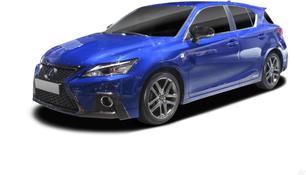
There are two ways to look at the Lexus CT200h; as either the cheapest model in the Japanese company’s range, or as a planet-saving hybrid.
Either way, the four-door, five-seat CT200h hatch – which has been updated for 2018 – differs from the rest of the Japanese luxury brand’s lineup for a number of different reasons.
The thing that really grabs you from behind the wheel of a car like this is just how far EVs have come. The fact you can get a ridiculous range and have a really, really good time on the right twisting road is a pretty good deal and solidifies the fact EVs like this one are the future.
Note: CarsGuide attended this event as a guest of the manufacturer, with travel, accommodation and meals provided.
Note: The author, Andrew Chesterton, is a co-owner of Smart As Media, a content agency and media distribution service with a number of automotive brands among its clients. When producing content for CarsGuide, he does so in accordance with the CarsGuide Editorial Guidelines and Code of Ethics, and the views and opinions expressed in this article are solely those of the author.
The cheapest Lexus of them all isn’t chasing badge snobs with the CT200h as blatantly as Mercedes-Benz, BMW and Audi do with their entry level cars… but it’s perhaps not quite the Lexus you’d expect it to be.
It has a lovely front-of-cabin, for example, but there’s a lot of last-gen Prius in plain sight in the rear of the cabin.
The hybrid powertrain, too, is noble in concept, but the day-to-day reality is that it’s not as nice to drive, especially town to town, as a regular petrol-powered car of similar size.
The foot brake, silly multimedia joystick and odd gearshifter also spoilt the party a bit.
Empty nesters who are looking for a nice city runaround with a tinge of greenwash about it will love it… and if the current Prius is anything to go by, the next CT will be a very good thing indeed.
It's hard to talk about the design of the BMW iX3 without spending some time at the front end. This is a bold, bold take on a BMW grille, and one that is entirely devoid of chrome or metallic lashings.
That’s not to say it’s boring. The iX3 has a light theme that runs inside and outside, the latter of which is called the Iconic Glow exterior package, which replaces the physical embellishments with white lighting that frames the kidney grille and the other inserts. It looks very cool and very modern.
In the cabin, the lighting theme continues, this time under the dash inserts that illuminate from within. But that’s not what really draws your eye.
That honour goes to the Panoramic Vision, which replaces the traditional driver’s screen with a pillar-to-pillar display that stretches the width of the cabin and displays all your key driving info. It seems like a strange thing to get your head around but it felt natural almost immediately, with everything you might need (including a g-meter in its sportiest mode) on display.
Also new is the funky and chunky BMW steering wheel, which reminds me a little of one of those double-sided lizards, in that it can be hard at times to figure out which way is up, and which features 'Shy Tech' (features and controls stay out of sight until the driver or passenger needs them).
All in all, I like the space. There are just enough traditional-feeling elements mixed with new tech to make it feel futuristic and familiar.
There are some light external revisions for the latest update of the compact Lexus CT200h. New grey 17-inch alloys are unique to the Sport Luxury, along with a black roof treatment, new L-shaped LED driving lamps that match new-design LED tail-lamps, while Lexus designers have also added its new spindle grille to the brand’s smallest model.
It manages to be inoffensive, but it doesn't really reflect the brand's latest design language of 'real world concept cars' like the NX and the LC ranges.
Inside, a couple of new leather colour options are available for the CT200h, while the addition of the wide-format 10.3-inch screen to the top of the centre console is the single largest change. Interestingly, the steering wheel controls appear to have regressed a little from the previous model, no doubt brought about by the addition of the new driver aids.
The BMW iX3 is 4782mm in length, 1895mm in width, 1635mm in height and it rides on a 2897mm wheelbase.
It doesn't feel huge, but there's certainly enough space in the back seat for me. At 175 centimetres I have enough knee and headroom sitting behind my own driving position, plus you can adjust the angles of the rear backrest to get a little more comfy.
But while the front seat feels very modern, the rear is more a traditional back seat experience. Back seat riders get their own air vents and temperature controls, twin USB-C charge ports and a pull-down divider with twin cupholders, but that's about it.
The auto-opening boot reveals a 520-litre luggage space (1750 with the seats folded), all of which is unencumbered by charging cables and the like, which are housed in the 58-litre frunk.
Towing and electric vehicles are never the greatest of matches, such is the drain on the battery, but the iX3 can be fitted with a standard tow ball, unlocking a braked trailer capacity of 2000kg.
The CT200h basically replicates a small hatchback in terms of interior size. It'll seat five, but if you try to put three adults across the back, they won't be particularly happy about it.
The roofline is quite low and the car’s waistline is high, which makes the glasshouse feel small. Room in the front is adequate, but only just for taller drivers; the sunroof, as fitted to our test example, takes away a good chunk of headroom, despite the CT200h standing just 5mm lower than a Corolla overall.
The seats themselves, too, are mounted just a touch high to be comfortable for taller drivers, while rear seaters will complain bitterly about being stuck behind my (184cm) driving position. However, my more diminutive wife pronounced herself very comfortable behind the wheel and in the passenger seat.
A nice, small steering wheel sits in front of a single-dial dash that sports two digital screens either side. The left-hand screen changes when you change the drive mode dial between Eco, Normal, and Sport. And there's also a full EV mode button in handy reach.
Two cupholders are line astern between driver and passenger, although storage is at a premium thanks to the size of the car. Climate and multimedia controls - and even an old-school CD player – flow right through underneath the centre console, which steals away valuable space. There are no extras like wireless charging bays, nor is there Apple CarPlay or Android Auto.
There are bottle holders in the door, but don't try and stash anything that's over one litre in size because it just won't fit.
It's quite an austere proposition for rear-seat passengers, with no bottle holders in the doors, no cup-holders and no charging points. There are fixed vents under the front seats and on the right side of the rear area, so it's not a complete desert, and there are ISOFIX mounts for two child seats in the rear.
Another practicality issue that's unique to the CT200h is the gear shifter. It operates as a spring-loaded joystick, and unless you're watching the dash indicator, it can be tricky to know which gear you're in. Other car makers have actually recalled cars with this style of transmission stick, and it's certainly something that you have to get used to.
Likewise, the old-school foot brake is certainly an anachronism in something like a Lexus.
Based on the previous generation Prius, the nickel-metal hydride battery for the CT is hidden underneath the rear seat, so it doesn't steal away too much boot room. However, the boot floor is still quite high, and the area is rather small at 375 litres with the seats up. There is 985 litres available when you drop the seats, but the aperture is short and narrow, so larger items will be a squeeze. There is a space-saver spare nestled away underneath the boot floor, too.
Another practicality note in the negative column is Lexus's insistence on the odd joystick control for its multimedia system. It's simply not very good. It’s imprecise when compared to a touchscreen, the action and feel of our test unit was very much less than premium, and it’s just awkward and clumsy to use. The CT is not the only Lexus to use it, but we wish the company would just see the light and ditch it all together.
There are two iX3 options for now. Or at least there will be when the 40 model joins this 50 xDrive in a couple of months. Happily, aside from the smaller battery and single motor in the 40, the feature list is identical.
In terms of pure spec, the 50 xDrive gets a lot. It’s only colours, interiors and alloys to choose as extras.
The tech is the highlight, though. There’s a big, crisp central screen, with wireless Apple CarPlay and Android Auto, but the showpiece is what BMW calls its Panoramic Vision, which swaps the traditional driver’s screen and gauges for a vast display that stretches the entire width of the cabin.
What cost for all that, you ask? Probably less than you think. The 50 xDrive is $109,900, before on-road costs, and for that you get a massive drive battery, lots of range and plenty of dual-motor punch. But the bang-for-buck bargain will be the incoming 40 eDrive, which will arrive at a LCT-busting $89,900, MSRP.
EXTERIOR:
INTERIOR:
TECH:
The 1.8-litre petrol-electric CT200h comes in three different flavours – the Luxury, the F-Sport as tested here, and the Sport Luxury. The range now kicks off at $40,900 (up $2150) and peaks at $56,900 with the Sport Luxury (up $810).
The F-Sport may be a little lacking in the actual ‘sport’ department, but it’s is pretty flush with flash kit, including not one but three motors (one petrol and two electric), auto lights and wipers, a wide 10.3-inch multimedia system, leather seats, dual-zone climate control and new 17-inch alloys.
At $50,400 plus on-roads, the F-Sport has jumped in price by $1960, but it’s gained a host of new gear, including a new driver aid system that adds auto emergency braking (AEB), pedestrian-detecting pre-collision warning system, lane departure warning with steering assistance and adaptive cruise control.
There are also LED headlights and taillights, as well as revised styling for the front and rear bumpers.
The CT will be cross-shopped against other premium tiddlers like the Mercedes-Benz A-Class, Audi’s A3 and the BMW 1 series. Comparing it like-for-like in the hybrid category, there’s the top spec Toyota Prius i-Tech, while Nissan’s Leaf could theoretically be lumped in both on price and on environmental grounds.
We’ll focus on the 50 xDrive, as that’s the one we’ve driven, and because the powertrain is a peach. Its twin-motor all-wheel drive set-up delivers a total 345kW and 645Nm, which is a lot. And because there is no traditional transmission to step through, and because all that oomph arrives at once, it feels plenty punchy indeed.
BMW says the sprint to 100km/h takes 4.9 seconds, and we believe them. Top speed is a claimed 210km/h.
The 1.8-litre twin-cam petrol engine makes a relatively low 73kW and 142Nm, while a 60kW, 207Nm electric motor that’s also connected to the front wheels chips in its share.
Combined, the system produces 100kW, while the torque figure translates to around the 150Nm mark. That juicy 207Nm doesn’t come into play, sadly, given that the petrol engine – which is built to run cooler than a traditional Otto cycle engine, and therefore more efficiently – does most of the work.
Throw in a transaxle for the electric motor and a power inverter, and things are getting complex. However, if the Prius is any indication, the CT200h’s drivetrain is durable and relatively serviceable, with batteries estimated to last ten years or longer.
As we mentioned at the top of this review, this is another big plus for the iX3. Its massive 108.7kWh net NMC battery delivers a maximum driving range of 805km, which is frankly ridiculous. To get it, you need to engage Efficiency Max, which dulls the drive experience, but that is an impressive number all the same. Engage the sportier settings and the figure drops to more like 650km-plus.
Charging is 22kW AC and an impressive 400kW DC – or 300kW in the upcoming 40 model — which means a 10 to 80 per cent charge in 21 minutes when plugged into the fastest of chargers.
BMW says to expect 15.1-17.1kWh/100km in terms of energy usage on the WLTP cycle.
Here’s the odd thing – over 220km of largely highway driving, I couldn’t get the CT200h under a dash-indicated 10.4 litres/100km, against a claimed combined fuel economy figure of 4.4L/100km.
I topped the tank off with 18 litres of fuel, which works out at a closer 8.8L/100km… but it still ain’t anything like 4.4.
Another owner I spoke to, though, said he regularly records high fives with his CT200h in mixed conditions.
It runs a 45-litre tank that’ll happily take 95 RON fuel.
BMW spent a lot of time describing this car as being of revolutionary importance to the brand. It was designed as an EV from its inception, but is also the flag bearer for the New Class gen of cars, and so it has all sorts of features and tech that will roll out across the rest of the BMW range.
Does it feel overly revolutionary from behind the wheel? Not really. I mean, it drives forwards and backwards, and turns around corners when you move the wheel, all of which is to be expected.
But it does mostly feel very BMW, which I think is what they meant. The Jekyll-Hyde nature of the iX3 becomes apparent the moment you engage its sportiest driving modes and flatten your foot. This is proper push-you-back-in-your-seat acceleration that feels slightly more violent than the iX3's claimed zero-to-100km/h time suggests.
Then there's the flip side of that coin. Engage Efficiency Max and you can seemingly drive forever (or at least more than 800km), sipping battery juice and riding in peace, quiet and comfort.
But at its core, and no matter the drive mode, it feels like a BMW. Crucial to that is a thing the brand calls the Heart of Joy, which sounds utterly sci-fi but really is a computer brain that works on traction and power to make sure you never lose grip.
If you've ever been in a car where the traction control light is flashing on a dash, you'll know what usually happens is it cuts engine power until you find grip, and it gives you power again, then cuts it, then gives it to you as required to find the grip, and it can give you that kind of jerky, stop-starty kind of feeling.
The iX3 doesn't do that. Instead, it plays with traction and is far more subtle without ever cutting power, and gives you the feeling of being able to tip into a corner and then power out without ever feeling like you're going to lose grip, or power.
The bigger electric motor is at the rear axle, which delivers most of your performance unless you need extra grip. So, when you are powering out of a bend, it feels a lot like a rear-wheel drive car and really well sorted from behind the wheel.
If that's the driver's side of the equation, the other side of it is pretty good, too. We took to the town at city speeds, and it was super comfortable, quiet and absorbed most of the road imperfections pretty easily.
Interestingly, the suspension isn't high-tech. There's nothing adaptive about it, and there's no air cushioning or anything like that. But it feels well tuned, and is pretty comfortable, even on dodgier road surfaces, while still delivering a sense of connection.
My favorite kind of mid-size SUVs are ones that have that dual nature. Something that has space for the family and all of their things, but also something that can be a fair bit of fun on the right twisting road, and this one absolutely nails that brief. It is a hoot to drive on twisty stuff.
Downsides? Well, you can't entirely disguise more than two tonnes of weight. If you're going downhill, especially on a twistier road, you can feel the weight around you, especially when you go to pull up in a hurry, despite the strong-biting brakes.
The other thing is the steering, which is direct and lovely but quite light. It doesn't have that meaty heft some BMWs offer, and as a result, it can be interesting to place the vehicle. You can find yourself a bit further over in the lane, or further away from an apex than you're expecting, because your light inputs have really shifted the vehicle.
But BMW has nailed the brief here. Do keep an eye out for the cheaper one that's coming, though. It could be a bang-for-bucks, rear-drive bargain.
If you've ever driven a Prius, then you'll be very familiar with the way that the CT drives. Based around a 73kW Atkinson cycle petrol engine which focuses on fuel efficiency rather than outright power, a 60kW electric motor (the pair combine to produce 100kW in total), a nickel-metal hydride battery array and a CVT gearbox, the CT200h – like the Prius – is a bit different to a regular hatch.
Under light throttle, the CT is quiet and moves along quite well, and you can even use full Electric Vehicle mode at speeds under 45km/h for a brief amount of time, (slightly less than two kilometres), and with a very gentle right foot.
The battery array is recharged via the petrol motor as well as regenerative braking (where heat energy is captured and directed back to the electric system) – but unlike a petrol-electric plug-in hybrid, there’s no way to stick a 240v cable into the CT to top up the battery.
It has the unusual whines and odd noises that you would associate with a partly electric car, but the petrol motor sounds just like a regular old four-pot petrol unit, and it’s running most of the time.
One issue with the drive of a hybrid is its ability, or the lack thereof, to get off the line in any sort of hurry. You really have to mash the throttle to get going, which takes some getting used to. There’s also some hesitation and un-Lexus like thumps from the drivetrain if you confuse it by almost stopping then taking off again.
The CT200h’s biggest bugbear is that the fourth generation Prius exists. Built on a more sophisticated newer-generation platform and with a more refined drivetrain, the new Prius is a great insight into how good the next CT will be – and what the shortcomings of the current one currently are.
The CT works well in high-traffic city environs, where a light throttle foot helps get the best out of the unusual drivetrain. Lots of lag from rest is an annoyance, as is an excess of CVT whine under hard efforts, but the CT200h pootles around town very well.
Its small size does play against it when it comes to keeping out road noise at freeway speeds, though the CT is superior to most other similarly sized cars in this regard. As an aside, its build quality is nothing short of amazing, with minimalist panel gaps, a tight interior and lashings of paint on every surface.
The iX3 is fitted with all the active safety stuff you might imagine – things like active lane keeping, dynamic cruise control and more cameras than were used to film The Odyssey. Happily, only the driver attention monitor chirped me on my test drive, and usually when I had my head turned to the far side of the Panoramic Vision display.
It also has a self-parking function you might actually use, given how quick it is to pick a spot then park in it.
There are eight airbags and three top tethers across the rear for child seats (as well as ISOFIX anchors on the two outer positions. But the big news is that its maximum five-star rating was achieved under ANCAP’s super-strict 2026 protocols, which is something few, if any, cars on sale in Australia can claim.
Part of the update for 2018 is the addition of several driver aid systems, including AEB across the range, lane departure control with steering and adaptive cruise control.
The F-Sport also has reversing camera and eight airbags as standard, ensuring the maximum five-star ANCAP safety score it managed in 2017.
BMW offers a five-year, unlimited kilometre warranty, which is about right for the traditional premium players, but off the pace elsewhere. The traction battery is then covered for eight years or 160,000km.
The service intervals are condition based, rather than timed, and BMW sells a pre-paid package for the iX3 which is $1614 for four years, or $2420 for six years.
You can upgrade either to what BMW calls Service Inclusive Plus, which includes high-wear stuff like brake discs and pads and it is $5535 for four years or $6615 for six years.
There are around 50 BMW dealers across Australia covering mainly cities and key regional centres.
Lexus sells the CT with an unusual four-year/100,000km warranty, which includes roadside service coverage. The battery pack has an eight-year/160,000km warranty, while Lexus would like to see you back for a service every 12,500km or 12 months.
It’s not just about a warranty or a service interval with Lexus, though. For decades now, its customer service record has topped all industry measures, and everyone we know who has bought a Lexus with their own money has raved about the quality of the service received.
As well, it’s a level of service that’s provided across the range. It’s a tangible benefit of buying a CT200h.