What's the difference?
There are a lot of big numbers surrounding the BMW iX3, the German brand’s new-from-the-ground-up EV that acts as the flagbearer for its future-facing Neue Klasse (or New Class) architecture, designed to distil all the ingredients that make a BMW a BMW, and then electrify for them for the post-ICE (internal combustion engine) era.
But the one that really stood out? 805. That’s how many kilometres of driving range the iX3 will deliver, though admittedly in its most efficient and least exciting driving modes. That is bonkers, right?
It’s worth pointing out the first BMW i3, which only launched a decade-or-so ago, delivered more like 150km on what would have been the WLTP cycle, if it had existed then. Talk about leaps and bounds.
A good start for the newest BMW EV, then. But what else does the iX3 have to offer?
Lamborghini is a brand built on madness, excess and eye-searing design. Its cars don’t have to make sense, and indeed its owners probably prefer it if they don’t - they have other vehicles to use for the real world.
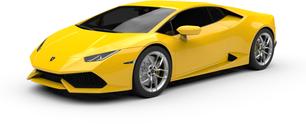
So, the existence of the new Lamborghini Huracan Sterrato, the world’s first 'All-terrain Supercar', a V10-engined mad machine built to drive sideways at high speed on dirt, should not come as a surprise.
And yet it really does, because there’s never been anything like it before (yes, Porsche has built the 911 Dakar, but it’s more of a sand-dune-climbing, desert-crossing motorsport tribute), for the very good reason that no one ever considered it would be a good idea.
It also sounds just a touch intimidating, the kind of driving experience that would require pro rally driver skills to survive, so it was with some trepidation that we headed to Palm Springs, USA, to test out the new Huracan Sterrato.
The thing that really grabs you from behind the wheel of a car like this is just how far EVs have come. The fact you can get a ridiculous range and have a really, really good time on the right twisting road is a pretty good deal and solidifies the fact EVs like this one are the future.
Note: CarsGuide attended this event as a guest of the manufacturer, with travel, accommodation and meals provided.
Note: The author, Andrew Chesterton, is a co-owner of Smart As Media, a content agency and media distribution service with a number of automotive brands among its clients. When producing content for CarsGuide, he does so in accordance with the CarsGuide Editorial Guidelines and Code of Ethics, and the views and opinions expressed in this article are solely those of the author.
Not just a spectacularly stupid idea made real, the Lamborghini Sterrato is by far the best, or at least most hilarious, of the many Huracan variants the company has produced.
It makes you feel like a hero, even when you’re going sideways on dirt like a nutter. It could just be my new favourite supercar.
Note: CarsGuide attended this event as a guest of the manufacturer, with travel, accommodation and meals provided.
It's hard to talk about the design of the BMW iX3 without spending some time at the front end. This is a bold, bold take on a BMW grille, and one that is entirely devoid of chrome or metallic lashings.
That’s not to say it’s boring. The iX3 has a light theme that runs inside and outside, the latter of which is called the Iconic Glow exterior package, which replaces the physical embellishments with white lighting that frames the kidney grille and the other inserts. It looks very cool and very modern.
In the cabin, the lighting theme continues, this time under the dash inserts that illuminate from within. But that’s not what really draws your eye.
That honour goes to the Panoramic Vision, which replaces the traditional driver’s screen with a pillar-to-pillar display that stretches the width of the cabin and displays all your key driving info. It seems like a strange thing to get your head around but it felt natural almost immediately, with everything you might need (including a g-meter in its sportiest mode) on display.
Also new is the funky and chunky BMW steering wheel, which reminds me a little of one of those double-sided lizards, in that it can be hard at times to figure out which way is up, and which features 'Shy Tech' (features and controls stay out of sight until the driver or passenger needs them).
All in all, I like the space. There are just enough traditional-feeling elements mixed with new tech to make it feel futuristic and familiar.
Oh yes, it’s pretty interesting, all right, because it breaks new dusty ground for Lamborghini, and its Huracan in particular.
To cope with its intended use, the Sterrato has been raised 44mm higher than the ground-hugging normal version and it’s also had giant, bolt-on style guards attached to make it look a bit wilder.
Also quite noticeable is the huge roof scoop - which renders rear vision from the driver’s seat a complete zero, they may as well throw the mirror away - which has to be there to help the V10 engine breathe.
The side air intakes through which air usually gets to the mid-mounted power plant have been blocked up, because they would have sucked in too much dirt and gravel.
I’m happy to report the silly looking rally style headlights stuck to the Huracan’s shark nose are optional, although again, no doubt every buyer has gone for them, because they stand out in a crowd.
The Huracan Sterrato has no problem doing that on its own, of course, because it already looks extremely aggressive, and its knobbly, all-terrain tyres finish off that style flourish.
The BMW iX3 is 4782mm in length, 1895mm in width, 1635mm in height and it rides on a 2897mm wheelbase.
It doesn't feel huge, but there's certainly enough space in the back seat for me. At 175 centimetres I have enough knee and headroom sitting behind my own driving position, plus you can adjust the angles of the rear backrest to get a little more comfy.
But while the front seat feels very modern, the rear is more a traditional back seat experience. Back seat riders get their own air vents and temperature controls, twin USB-C charge ports and a pull-down divider with twin cupholders, but that's about it.
The auto-opening boot reveals a 520-litre luggage space (1750 with the seats folded), all of which is unencumbered by charging cables and the like, which are housed in the 58-litre frunk.
Towing and electric vehicles are never the greatest of matches, such is the drain on the battery, but the iX3 can be fitted with a standard tow ball, unlocking a braked trailer capacity of 2000kg.
Next question, please. You don’t get cupholders, there’s not really anywhere to put your phone and the cabin generally feels as roomy as a phone box that’s been through the wash and shrunk quite badly.
There’s a frunk that can barely hold two small backpacks and that’s about it. If you want practical space, buy an Urus. The Huracan Sterrato is not a practical car, but that’s not part of its design brief.
There are two iX3 options for now. Or at least there will be when the 40 model joins this 50 xDrive in a couple of months. Happily, aside from the smaller battery and single motor in the 40, the feature list is identical.
In terms of pure spec, the 50 xDrive gets a lot. It’s only colours, interiors and alloys to choose as extras.
The tech is the highlight, though. There’s a big, crisp central screen, with wireless Apple CarPlay and Android Auto, but the showpiece is what BMW calls its Panoramic Vision, which swaps the traditional driver’s screen and gauges for a vast display that stretches the entire width of the cabin.
What cost for all that, you ask? Probably less than you think. The 50 xDrive is $109,900, before on-road costs, and for that you get a massive drive battery, lots of range and plenty of dual-motor punch. But the bang-for-buck bargain will be the incoming 40 eDrive, which will arrive at a LCT-busting $89,900, MSRP.
EXTERIOR:
INTERIOR:
TECH:
Well, considering every Lamborghini Huracan Sterrato will almost certainly go up in value and become a collector’s item you’d have to consider them good value, at least in investment terms.
On the other hand, any car with a price tag of $503,949, before on-road costs, sits somewhat adjacent to the word “value”.
That large number has not put enthusiasts off, however, with all 1499 of the limited-run Sterrato Huracans already sold, and a long list of people with their names down hoping that someone gets scared and changes their mind, apparently.
Our vehicle came with two built-in cameras, which you could operate through the touchscreen to record Tik Tok-length videos of your driving.
This is almost certainly a cost option, but no one could tell us exactly, and all of the cars are already sold, no doubt to people who ticked every single option box.
Oh, and you do get aluminium floor mats. Nice.
We’ll focus on the 50 xDrive, as that’s the one we’ve driven, and because the powertrain is a peach. Its twin-motor all-wheel drive set-up delivers a total 345kW and 645Nm, which is a lot. And because there is no traditional transmission to step through, and because all that oomph arrives at once, it feels plenty punchy indeed.
BMW says the sprint to 100km/h takes 4.9 seconds, and we believe them. Top speed is a claimed 210km/h.
The Sterrato is powered by a Lamborghini engine that’s on its way into the history books, a 5.2-litre V10 that will die with this, the last variant of the Huracan.
Its replacement will be powered by a V8 hybrid, which will no doubt be more powerful but simply will not sound as amazing.
The version in the Sterrato has been detuned slightly, partly because of the breathing issues - you just can’t get as much air into an engine when it’s driving through its own self-propelled dust storm - and because of its all-terrain tyres, the first ever to be speed rated to 260km/h.
It still makes an impressive, and very loud, 449kW (602hp) and 560Nm, however. I’d describe it as “more than enough”.
That monster engine is matched with a seven-speed dual-clutch automatic and a very, very clever all-wheel drive system.
As we mentioned at the top of this review, this is another big plus for the iX3. Its massive 108.7kWh net NMC battery delivers a maximum driving range of 805km, which is frankly ridiculous. To get it, you need to engage Efficiency Max, which dulls the drive experience, but that is an impressive number all the same. Engage the sportier settings and the figure drops to more like 650km-plus.
Charging is 22kW AC and an impressive 400kW DC – or 300kW in the upcoming 40 model — which means a 10 to 80 per cent charge in 21 minutes when plugged into the fastest of chargers.
BMW says to expect 15.1-17.1kWh/100km in terms of energy usage on the WLTP cycle.
So, Lamborghini claims the Huracan Sterrato will deliver a fuel "economy" figure of 14.9 litres per 100km, which seems like a lot, until you consider it probably won't get anywhere near that, if you drive it the way you're supposed to, particularly foot flat and wheels spinning on dirt.
Again, fuel economy is not a core value for this car, nor its buyers.
An 80-litre tank means a theoretical range of around 480km.
BMW spent a lot of time describing this car as being of revolutionary importance to the brand. It was designed as an EV from its inception, but is also the flag bearer for the New Class gen of cars, and so it has all sorts of features and tech that will roll out across the rest of the BMW range.
Does it feel overly revolutionary from behind the wheel? Not really. I mean, it drives forwards and backwards, and turns around corners when you move the wheel, all of which is to be expected.
But it does mostly feel very BMW, which I think is what they meant. The Jekyll-Hyde nature of the iX3 becomes apparent the moment you engage its sportiest driving modes and flatten your foot. This is proper push-you-back-in-your-seat acceleration that feels slightly more violent than the iX3's claimed zero-to-100km/h time suggests.
Then there's the flip side of that coin. Engage Efficiency Max and you can seemingly drive forever (or at least more than 800km), sipping battery juice and riding in peace, quiet and comfort.
But at its core, and no matter the drive mode, it feels like a BMW. Crucial to that is a thing the brand calls the Heart of Joy, which sounds utterly sci-fi but really is a computer brain that works on traction and power to make sure you never lose grip.
If you've ever been in a car where the traction control light is flashing on a dash, you'll know what usually happens is it cuts engine power until you find grip, and it gives you power again, then cuts it, then gives it to you as required to find the grip, and it can give you that kind of jerky, stop-starty kind of feeling.
The iX3 doesn't do that. Instead, it plays with traction and is far more subtle without ever cutting power, and gives you the feeling of being able to tip into a corner and then power out without ever feeling like you're going to lose grip, or power.
The bigger electric motor is at the rear axle, which delivers most of your performance unless you need extra grip. So, when you are powering out of a bend, it feels a lot like a rear-wheel drive car and really well sorted from behind the wheel.
If that's the driver's side of the equation, the other side of it is pretty good, too. We took to the town at city speeds, and it was super comfortable, quiet and absorbed most of the road imperfections pretty easily.
Interestingly, the suspension isn't high-tech. There's nothing adaptive about it, and there's no air cushioning or anything like that. But it feels well tuned, and is pretty comfortable, even on dodgier road surfaces, while still delivering a sense of connection.
My favorite kind of mid-size SUVs are ones that have that dual nature. Something that has space for the family and all of their things, but also something that can be a fair bit of fun on the right twisting road, and this one absolutely nails that brief. It is a hoot to drive on twisty stuff.
Downsides? Well, you can't entirely disguise more than two tonnes of weight. If you're going downhill, especially on a twistier road, you can feel the weight around you, especially when you go to pull up in a hurry, despite the strong-biting brakes.
The other thing is the steering, which is direct and lovely but quite light. It doesn't have that meaty heft some BMWs offer, and as a result, it can be interesting to place the vehicle. You can find yourself a bit further over in the lane, or further away from an apex than you're expecting, because your light inputs have really shifted the vehicle.
But BMW has nailed the brief here. Do keep an eye out for the cheaper one that's coming, though. It could be a bang-for-bucks, rear-drive bargain.
I could give you the short version of what it was like to drive the Lamborghini Huracan Sterrato at speed on a specially prepared dirt race track, which would be to say that I have never, ever had so much fun in a car, but that would be selling it short.
While the Sterrato is clearly built to do one insensible thing brilliantly, while somehow not imperilling the life of its driver, what is most incredible about it is how good it is at everything else, as well.
To create this Huracan, Lamborghini had to increase the ride height significantly, soften up the suspension and increase its amount of travel.
It also had to ask Bridgestone nicely to produce a tyre unlike anything the world has ever seen, an all-terrain tread capable of dealing with dirt and gravel and yet also grippy enough to be used on a sealed race track, or to carve up your favourite mountain pass.
It also had to be capable of being speed rated to 260km/h, or about 100km/h faster than any all-terrain tyre Bridgestone has ever produced before.
Looking at the unique Dueler All-Terrain AT002s, with their chunky tread, you would assume that the Sterrato is going to be noisy, slippery and possibly a little rough on public roads, but that’s not the case at all.
This Huracan rides more smoothly - largely thanks to those suspension tweaks - and more quietly than its forebears, and it’s actually more practical around town as well, thanks to the ride height. So, no more flinching at speed bumps.
The tyres also provide proper supercar levels of grip on public roads, even those dusted with a bit of desert sand.
There’s a bit of squirm at the rear and under hard braking, but overall the experience is typically Lamborghini Huracan wonderful, all playing out to a soundtrack that is beyond beautiful from that howling V10.
The first part of our track experience at the Chuckwallah Raceway was also familiarly fantastic, the Huracan ripping around the sealed track at astonishing speed; it certainly doesn’t feel detuned.
Lamborghini had gone to the trouble of mirroring the sealed circuit with a specially constructed dirt track in the infield, so that 50 per cent of our lap would be spent sideways in ankle deep, dust, sand and rocks, much of it through long, long bends, with the occasional chicane set up specially for Scando flicking action.
Now, I am not, by any means, an expert at drifting, nor an accomplished rally driver, so I was, to put it mildly, shit scared of getting this half-million-dollar, limited-edition, 449kW monster on to the dirt section.
I feared I would spin around, or flip upside down, or find some other way to embarrass myself, but what happened when I got there was beyond inexplicable, and beyond joy.
This car is so clever, so easy to drive, so beautifully balanced, that it can turn a total newb into Colin McRae. His name comes to me because the whole experience reminded me of driving a rallying video game, it felt unreal, and yet overpoweringly visceral at the same time.
I could start a drift with the slightest flex of the throttle, then balance the car as it pivoted around a bend before nailing the throttle and haring off to the next fantastic drifting opportunity.
When we got back on the sealed stuff, the car would shake like mad, at 200km/h, as the dust attempted to get its way out of the wheels, but that just added to the excitement.
The secret wasn’t that I’d somehow become a better driver, it was what Lamborghini engineers call, accurately, “the hero maker”.
It’s a software and hardware package called LDVI, or 'Lamborghini Dinamica Veicolo Integrata', which, when you put the Sterrato in 'Rally' mode, uses many sensors combined with torque vectoring and selective braking to keep you going where you want to go, with minimal intervention.
Or at least minimal intervention that you can feel, which makes you feel like a hero.
I kind of understand how it works, but I totally relate to how it makes you feel. Like a genius. And you’d pay $500K for that, surely?
The iX3 is fitted with all the active safety stuff you might imagine – things like active lane keeping, dynamic cruise control and more cameras than were used to film The Odyssey. Happily, only the driver attention monitor chirped me on my test drive, and usually when I had my head turned to the far side of the Panoramic Vision display.
It also has a self-parking function you might actually use, given how quick it is to pick a spot then park in it.
There are eight airbags and three top tethers across the rear for child seats (as well as ISOFIX anchors on the two outer positions. But the big news is that its maximum five-star rating was achieved under ANCAP’s super-strict 2026 protocols, which is something few, if any, cars on sale in Australia can claim.
In a V10-engined supercar you’re meant to drive on dirt? You’ve come to the wrong place.
Okay, so there’s no crash rating, and there won’t be, but you do get AEB, driver, passenger, and side airbags along with knee airbags as well as front and rear-specific collapsible areas, reinforcement bars in the doors. Oh, and Electronic Stability Control.
BMW offers a five-year, unlimited kilometre warranty, which is about right for the traditional premium players, but off the pace elsewhere. The traction battery is then covered for eight years or 160,000km.
The service intervals are condition based, rather than timed, and BMW sells a pre-paid package for the iX3 which is $1614 for four years, or $2420 for six years.
You can upgrade either to what BMW calls Service Inclusive Plus, which includes high-wear stuff like brake discs and pads and it is $5535 for four years or $6615 for six years.
There are around 50 BMW dealers across Australia covering mainly cities and key regional centres.
The Huracan Sterrato comes with a Lamborghini warranty good for three years with unlimited kilometres.
It also comes with 24/7 roadside assist for an unspecified amount of time. It is also offered with pre-paid scheduled maintenance service for three or five years.