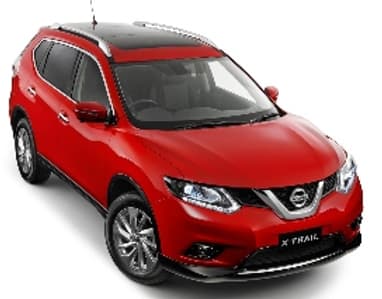
Nissan X-TRAIL 2014 Problems

Are you having problems with your 2014 Nissan X-TRAIL? Let our team of motoring experts keep you up to date with all of the latest 2014 Nissan X-TRAIL issues & faults. We have gathered all of the most frequently asked questions and problems relating to the 2014 Nissan X-TRAIL in one spot to help you decide if it's a smart buy.

Nissan X-Trail 2014: Shuddering when accelerating.
Answered by David Morley · 21 Mar 2020

I would always approach a car’s manufacturer in a case like this, if only because 90,000km is not, in my estimation, an acceptable distance for a transmission to last before it needs total replacement. That said, I wouldn’t hold my breath in this case because the vehicle is well and truly out of warranty.

The other people I’d be talking to would be the RACV. The club will be very concerned to hear that a car it inspected has had such a major malfunction and may have some consumer advice of its own. Then again, if the inspection was a full 18 months ago, then again, I don’t like your chances. But it’s got to be worth a shot.

The other thing that bothers me is that the vehicle is an ex-fleet car, probably a rental car, so despite a full service history, that has to rate as a chequered past. The other part of the problem is that the mechanical layout of the X-Trail makes some repairs very time-consuming, and that’s a great way to jack up the price of any repair work. If it does turn out that you’re on your own, a second-hand gearbox from a wrecked X-Trail might be a better bet than a brand-new one.

Best medium SUV for rough roads?
Answered by Paul Gover · 03 Nov 2014

For your main requirements, I'd avoid all four of your shortlisted models and go for a Subaru Forester or Outback. They are more car-like but will still handle the rough roads.

Shuddering and vibration in a 2014 Nissan X-Trail
Answered by David Morley · 02 May 2025

If you mean shuddering and vibration when you take off from rest, then you’re possibly experiencing the same problem that many owners of this model Nissan have already reported. The problem is caused by wear in the CVT transmission which is allowing the steel drive belt to slip. As the belt slips and grips and then slips again, the driver experiences less-than-smooth acceleration.

The safety recalls (which were actually technical service bulletins) you’re referring to all occurred within the North American market and haven’t been extended to Australian X-Trails (that I know of). Unfortunately, US consumer law is quite different from ours and consumers have very different rights and obligations.

It would be worth having the car assessed and then approaching Nissan Australia’s customer service department to see if there’s any help on offer. But given the age of the vehicle, I wouldn’t be holding my breath. That said, I totally understand your point of view, and 11 years is probably not a suitable lifespan for a modern automatic transmission, given we’ve been making cars for more than 130 years, and Nissan (in one form or another) for the last 90 of those.

Best used 7-seater under $15k?
Answered by Graham Smith · 15 Jan 2016

The three cars you name all have merit, none has any major issue to be concerned about and all fit your needs, but you will have to shop around to find them within your age and budget limits.

X-Trail surging problem
Answered by Graham Smith · 24 Jun 2016

The transmission you've got is a CVT type auto, and I would suggest it's got a problem, possibly the computer that controls it. Take it back and demand they properly assess it.

The CVT transmission in the X-Trail has caused plenty of owners problems over the years. Jerking or shuddering is usually down to one of two things: Either the metal belt inside the transmission which provides the drive is worn and is slipping, or; the transmissions valve body is faulty and needs replacement. Either way, it’s a fairly major repair.

But what you haven’t told me for certain is that your car is, indeed, a CVT-equipped example. In the off-chance that your car has the much rarer conventional manual transmission, then the problem is more likely to be something wrong with the engine that is causing the problem at a particular engine speed (2000rpm in your case). Changing the plugs is a decent first step, but in the longer term, you’ll have more success by having the vehicle scanned and seeing what fault codes are thrown up by the car’s computer.

Nissan X-Trail 2014: Excessive vibration
Answered by Graham Smith · 07 Dec 2018

It sounds like a problem with the Continuously Variable Transmission, and I would suggest you have it serviced and the transmission oil changed.

What type of petrol should I use in my 2014 Nissan X-Trail?
Answered by David Morley · 04 Nov 2022

The engines in the 2014 X-Trail were tuned by Nissan to run perfectly on 91 RON unleaded petrol. That means that if you use the more expensive Premium ULP available (95 or 98 RON) you’ll basically be wasting money. That’s because an engine that isn’t tuned for the Premium brew won’t run any better or use less fuel on PULP.

The other bit of good news is that your vehicle is also compatible with ethanol-blended petrol. That means, you can fill up from the E5 or E10 pump at the service-station and maybe save a few cents per litre in the process.

Used Nissan X-Trail review: 2014-2022
By David Morley · 09 Jun 2026
Although the original Nissan X-Trail was one of the first mid-sized SUVs to really gain popularity and set the tone for what was to come, by the time the third-generation X-Trail arrived in 2014, it was a bit of a me-too product. Code named the T32 model, the third-gen X-Trail was offered as a five or seven-seater, in either front or all-wheel drive and with a choice of two petrol four-cylinder engines. Those consisted of a 2.0-litre with 106kW and a 2.5-litre with 126kW.Both engines were available in five-seat form, but if you wanted seven seats or all-wheel drive, you needed to stump up for the bigger engine. At that point, you went from the 2.0-litre’s six-speed manual transmission to a continuously variable transmission (CVT).There was also a turbo-diesel X-Trail with 96kW and a choice of either front or all-wheel drive. The diesel was strictly a five-seater. The specification was a bit confusing, too, because the front-drive turbo-diesel X-Trail used a CVT while the all-wheel-drive diesel got a six-speed manual exclusively.The all-wheel-drive platform did not have a second set of lower ratios, and, in fact, worked as a front-wheel drive for most of the time. When the computer detected any slip, power would be sent to the rear axle, although for slippery surfaces, the driver could lock the vehicle into all-wheel drive at speeds up to 40km/h.Thousands of Australians would agree that the X-Trail is a good thing with decent dynamics and good packaging. The boxy body means it’s quite big inside, although the seven-seat variant is pretty tight on space in the third row. For smaller kids, this mightn’t make much difference, but teenagers are not going to be happy in the X-Trail’s third row. The front seats, however, are very good.Some of the interior plastics are clearly built down to a price, and hard usage (such as that meted out by young families) can leave the interior looking pretty tatty in short order.In driving terms, the X-Trail is decently refined although there is a bit of road noise to contend with. The turbo-diesel can feel a bit lethargic off idle, and the bigger petrol engine is the superior unit in the line-up.Overall, though, any fall-off in the X-Trail’s popularity over the years is almost certainly down to increased competition from other makes rather than any perceived problem with the X-Trail formula.Fundamentally, the X-Trail T32 is a solid and dependable car. But there’s one major flaw that many newish cars also suffer from. It doesn’t affect manual-transmission examples of the X-Trail, but those fitted with the CVT have an inbuilt fault, it seems.Indeed, the main reliability issue associated with the X-Trail is the CVT as fitted to 2.5-litre petrol versions as well as the front-drive variant of the turbo-diesel.Beyond that, the engines don’t seem to give trouble and since the vehicle is not an off-roader, you shouldn’t be faced with trashed examples.Let’s talk CVTs. In the Nissan’s case, the problem manifests as a vehicle that is slow to select Reverse or Drive, as well as showing signs of juddering or shuddering at low speeds and a light throttle.The cause is a bit harder to define, but Nissan dealers were removing the CVT’s cover and looking inside the unit to determine whether the steel drive belts had been slipping and showing signs of wear. If wear was detected, the best fix was a new CVT, but sometimes replacement of the unit’s valve body (which controls the CVT’s behaviour) was deemed sufficient.But we’ve also heard that some dealers were also flushing the CVT’s cooler, suggesting that the belt wear may have involved the belts shedding small metallic particles and contaminating the cooler. If that’s the case, it’s also conceivable that those same metallic particles could enter and cause damage to other parts of the CVT.Either way, you need to know for absolute certain that any CVT X-Trail you’re looking at has a full and complete service history.This version of the X-Trail has been almost free of safety recalls, but there are a couple to check for.The first was for cars built in 2014 that could have had a fuel pressure sensor that was not properly attached to the fuel system. If the sensor loosened over time, it could potentially cause a fuel leak under the bonnet.The second recall was for a batch of gas struts on the tailgate of X-Trails built between 2014 and 2016. A lack of the correct rust-proofing on these struts meant they could fail and would not support the weight of the tailgate when it was opened.A Nissan dealer will be able to check the VIN of your car and tell you whether it was affected and if it has been fixed or not. For more information, check out https://www.vehiclerecalls.gov.au/.Apart from that couple of recalls on early cars, there’s not much to separate one year’s production from another’s. With that in mind, buy on condition and kilometres travelled rather than a specific build date. And make sure any prospect has that all-important intact and complete service history.Nissan’s engines have long been considered pretty tough customers and able to go the distance. But that doesn’t change the cloud hanging over the CVT in many X-Trails. So, the best one to buy is an X-Trail with fewer, rather than more, kilometres.You do see high-milage examples for sale with upwards of 300,000km on board, but they’re the exception rather than the rule. That said, that’s probably because even the earliest T32 X-Trail is still only 12 years old, rather than any refusal to clock up more kilometres. Even so, finding a car with closer to 160,000km showing is probably the better bet.As with many second-hand cars, the price difference between the base-model and the flasher versions largely disappears over time. So, buying the up-spec variant now won’t cost much extra, but will get you better standard equipment levels and, potentially, safety. With that in mind, aim for the Ti version which had lane departure and lane-keeping assistance that lesser versions didn’t get until later in life.Very early T32s with 250,000km showing can be had for as little as $6000 to $8000. We reckon, however, that there’s a smaller risk in paying closer to high-teens for a 2016 or 2017 all-wheel-drive version with about 120,000km on the odometer.Nissan has a dealer network of 180 making it the fifth largest network in the country. Both regional and urban centres are pretty well served by that network, too. There’s also an army of independent workshops that specialise in Nissans, largely thanks to the great reputation the brand has forged in motorsport.Bricks and mortar parts stores and online sellers ensure that spare parts and replacement items are easy to source.It’s hard to know precisely how many T32 X-Trails Nissan sold in Australia over its eight-year model run. But it’s a fact that Nissan sold almost 18,000 of the things in the T32’s first full year on sale (2015). You still see plenty getting around as daily transport, too, so even though the competition got tougher as the years passed, the Nissan was still on a lot of people’s short lists. That’s why there are literally hundreds for sale second-hand today.
Read the article
Used Nissan X-Trail review: 2007-2014
By Graham Smith · 03 Nov 2017
With the X-Trail riding on a wave of popularity Nissan chose to tweak the compact SUV rather than re-invent it when it launched the new T31 model in 2007.As a result, the T31 looked very similar to the outgoing model, unless you got up close and saw the changes in detail.If you did that you would have seen it was longer, wider and taller, with more interior space, but it was also heavier.The 2.5-litre petrol engine was carried over with minor retuning, but the growing demand for diesel engines saw a turbo-diesel engine added to the range.In search of improved fuel consumption a Continuously Variable Transmission (CVT) became the automatic transmission option on the petrol engine.To meet the changing wants of SUV buyers, as more and more switched to the high-riding wagons, was the addition to the X-Trail range of a front-wheel drive model.By the time the T31 X-Trail was launched in 2007 the switch to SUVs, particularly compact models like the X-Trail, was in full swing.This new breed of buyers appreciated the practicality and versatility of a wagon, they liked the visibility of the high driving position, and while they weren’t necessarily going off road, they found the safety of all-wheel drive appealing.But they wanted more, hence the introduction of a turbo-diesel engine for better fuel economy, and a front-wheel drive model for those who had no desire at all to go off-roading.The T31 was launched with a revised model range, which was made up of ST, ST-L, and Ti with petrol engines, and the TS and TL with turbo-diesel engines.Entry to the T31 X-Trail club was through the ST, which boasted an extensive list of standard features, among them air-conditioning, a tilt-adjustable steering column, CD player and four-speaker sound, remote/keyless central locking, cruise control, variable intermittent wipers, a leather-wrapped steering wheel, power windows and mirrors, a rear wiper and washer, roof rails, a vanity mirror, cloth trim, and a trip computer. Metallic paint was optional.A step up to the ST-L added 17-inch alloy wheels, six speakers, climate control for the air-conditioning, an in-dash CD stacker, MP3 compatibility, front fog lights, and chrome exterior highlights.On top of all that, the Ti also came with power front seats, leather trim, and a sunroof.The diesel-powered TS was similarly equipped to the ST-L, the TL similar to the Ti.The spare wheel was full-sized until 2012 when a space saver spare was introduced.Bluetooth was added in 2009 allowing an iPhone or Android device to be connected.A MY10 update saw the ST-L get heated front seats and leather trim, the Ti got 18-inch alloy wheels, a DVD player, parking sensors, a reversing camera, and sat-nav.Another update in MY11 saw the release of front-wheel drive only versions of the ST and ST-L. At the same time Ti buyers were treated to automatic xenon headlamps, rain-sensing wipers, and keyless entry and drive away.The spare wheel was full-sized until 2012 when a space saver spare was introduced.There was no touch screen, or park assist system.The cabin had accommodation for five in a roomy and comfortable environment.Gone was the annoying centre-mounted speedo and other gauges that so many criticized in the T30; in its place was a more conventional dash in front of the driver.There were plenty of storage options, including the centre console, a cooled glovebox, door pockets in the front doors, and cupholders in the front and rear.The boot was a generous 633 litres with the rear seat in position, and 1651 litres when the split-fold rear seat was folded flat.The 2.5-litre four-cylinder petrol engine carried over from the earlier model, but had lower noise, vibration and harshness levels, better fuel economy, and its mid-range response was improved.With VVT variable valve timing the double overhead camshaft engine put out 125kW (167 horsepower) at its power peak, and maximum torque of 226Nm.The engine was a willing performer with solid mid-range performance, but with extra weight to haul around its zip was dulled a little compared to the T30.To meet the growing demand for diesel engines a 2.0-litre four-cylinder turbo-diesel engine was added to the range in 2008.At its peaks it produced 127kW (170 horsepower), and 336 Nm of torque, and delivered the fuel-consumption savings motorists were looking for along with the smooth drivability that comes with a good level of pulling power.Those buyers who chose the petrol engine had the choice of a six-speed manual gearbox or a CVT auto, the latter with six preset ratios to make it feel more like a conventional automatic.With a little more weight to haul around the petrol engine isn’t the zippiest performer.The turbo-diesel came with a choice of a six-speed manual gearbox or a conventional six-speed automatic transmission.Final drive was courtesy of an improved version of Nissan’s acclaimed 'All-Mode' system, which offered three modes of operation; front-wheel drive, automatic, or 4WD lock for off-road driving up to 40 km/h. Hill start and descent assistance features were added to the system.To meet the demand for a high-riding wagon from buyers not wanting to go off road in their SUVs Nissan added front-wheel drive versions of the ST and ST-L to the range in 2011.The ride is comfortable with good damping and body control on road and off.With its independent MacPherson strut front suspension and coil springs in the rear suspension, handling is balanced and assured in most situations.The steering is light and responsive, and the turning circle is tight enough to make maneuvering easy.Both engines, even the diesel, are acceptably quiet, and there’s little road noise to bother those inside.With a little more weight to haul around the petrol engine isn’t the zippiest performer, and the diesel is better with good response and drivability thanks to its torque.With a comprehensive array of safety features ANCAP rated the T31 at four stars out of a possible five.Passive safety features included front airbags for the driver and front seat passenger, side front airbags, head airbags, and seat belt pre-tensioners.It was also well equipped with active safety features, including ABS braking, BAS emergency brake assistance, EBD (Electronic Brakeforce Distribution), and ESP electronic stability control.Lap sash seat belts on all five seats facilitate the fitment of a child seat, and ISOFIX baby car seat mounting points are fitted.The earliest of the T31 X-Trails will now have done on average between 150,000 and 250,000 km, which means they need to be approached with caution and require thorough checking before being purchased.Owners report they the reliability is good and they give little trouble, but any car of the age and odometer reading of those early cars needs careful assessment of its condition.Check under the car for damage from off-road excursions. The X-Trail is quite a competent off-road performer, but its ground clearance limits it to light off-roading rather than rock climbing.Buy the car in the best condition, with the lowest odometer reading, and a complete service history.Nissan recommends servicing every 10,000km or six months. If the service book doesn’t show a car has been serviced as recommended, be skeptical.Regular oil changes, using 5W-30 oil, are the key to long and reliable engine life.Capped price servicing didn’t apply to the T31, but service costs are not excessive, and any competent mechanic can do it.Anyone opting for the CVT auto should road test a car before making their decision, as they’re a different beast to drive and you need to get used its idiosyncrasies, one being the constant whirring noise.There were some issues with the CVT in early T31 X-Trails due to a bearing that was overloaded and prone to failure, and Nissan replaced many transmissions. Listen for odd metallic noises coming from the gearbox during your road test.Another problem reported on a number of diesel models is the failure of he DPF (Diesel Particulate Filter). They’re expensive to replace if you have to.The engines use a timing chain, which means there is no requirement for regular replacement.When new, the X-Trail carried a warranty of three years/ 100,000km.MORE: If anything crops up, you’ll probably find it on our Nissan X-Trail problems.Michael Liagourdis: My 2012 Nissan X-Trail Ti 4WD auto has 93,000km on the clock and has been trouble free. It’s great cruising on the highway, and it is impressive off-road. The 2.5-litre petrol engine is both fuel-efficient and smooth. Overall it’s a fun vehicle and a pleasure to drive.Ken Collins: I have a 2012 X-Trail and I love it. I’m tall, but it’s easy to get in and out, it’s great on petrol, has a ton of power, and is great to drive, especially long distances.Ross Weldon: I have been an X-Trail owner for 13 years; the latest is a 2012 ST-L. I wanted a good highway cruiser that could go off-road when required, and the X-Trail fills the bill perfectly. It is easy to enter and exit, has one of the biggest cargo areas in their class, and the fit and finish is spot on.Rigby Gilbert: My 2008 TS diesel manual is my second X-Trail. It has now done 160,000km and is still running as well as ever. The first was a petrol model, but I find the diesel relaxing to drive when towing and the fuel consumption when towing improved.Ian & Rae Singleton: We bought our 2011 X-Trail manual because we wanted easy access in and out of the car. It’s done 43,000km, none off-road, and it has been very reliable, easy to drive and gets good fuel economy on the open road. There’s nothing glamorous about it, but it’s a good, reliable and simple SUV.Roomy, practical family wagon that’s at home on the road and off.
Read the article
Disclaimer: You acknowledge and agree that all answers are provided as a general guide only and should not be relied upon as bespoke advice. Carsguide is not liable for the accuracy of any information provided in the answers.
Have a new question for the CarsGuide team?
More than 9,000 questions asked and answered.
Complete guide to Nissan X-TRAIL 2014
Complete guide to Nissan X-TRAIL 2014 CarsGuide Logo
Reviews, price, specs and more