What's the difference?
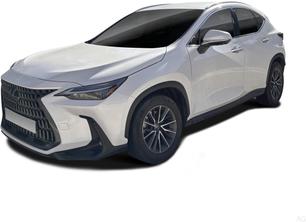
The Lexus NX 450h+ F Sport is a well-specified and plush-looking medium SUV that has a plug-in hybrid powertrain - a first for the brand.
On paper, it seems to tick the boxes for size, luxury and efficiency but we've been testing the flagship grade to see if it's a winning combo in real life.
It is hard to oversell just how important this new Seltos is to Kia in Australia.
Our new-car slug fest has never been more competitive – and that's saying something, considering how many brands were duking it out here before China rode into town on its mob of shockingly affordable horses.
A handful of years ago, you might list things like the Toyota Corolla Cross, Nissan Qashqai, Honda HR-V or Hyundai Kona as key Seltos rivals. These days you can throw in the GWM Haval Jolion, Chery Tiggo 4, Jaecoo J5, MG ZS, Mazda CX-30, GAC Emzoom, and probably a couple more that I’ve forgotten about, all competing for your hard-earned dollar.
In short, competition is fierce. And Kia needs this to work. In fact, it wants the new and all-hybrid Seltos to be its second best-selling model in Australia.
But has the brand done enough to stake a claim on the small SUV segment?
The Lexus NX450h+ F Sport is a gorgeous mid-size SUV that combines great specs and a fairly efficient plug-in hybrid powertrain. It’s a comfortable and easy ride which should appeal to a wide range of driving styles. It also looks good parked at the kerbside of a city street and with it ticking most of the boxes, it may become your new best friend.
Sure, it can feel expensive compared to some of its Chinese rivals, but there is a lot to like about this all-new Kia Seltos. It is a small SUV that really doesn't feel that small. Plus, it is a hoot to drive on the right twisting road, and that is not something you can say about all vehicles in this category.
Is that enough to win back shoppers who are buying only with their wallets? Only time will tell.
Note: CarsGuide attended this event as a guest of the manufacturer with accommodation and meals provided.
Note: The author, Andrew Chesterton, is a co-owner of Smart As Media, a content agency and media distribution service with a number of automotive brands among its clients. When producing content for CarsGuide, he does so in accordance with the CarsGuide Editorial Guidelines and Code of Ethics, and the views and opinions expressed in this article are solely those of the author.
The NX simple looks like a scaled-down version of its larger RX cousin, so if you like that you’ll like what the NX.
It looks sweeter, though, with its smaller proportions being only 4660mm long and 1670mm high but there’s enough sharp pleating in the panelling and rear LED lights to give it a sporty edge. It’s a design that should appeal to a wide range of people.
The interior helps the NX compete against some of its flashier rivals, but the BMW X3's interior beats it hands down with the wow factor. Still, the dual-toned leather upholstery and fabrics of our test model scream understated luxury.
The perforated leather of the seats is supple underhand, but even the robust synthetic leather on the backs of the seats and some door panelling feels like the real stuff most of the time.
The dashboard components – like the air vents, displays and accents – are well integrated and seem well-built. The cockpit is intimate and plush overall, and it always reminds you that you're in the cabin of a luxury vehicle.
Kia has been on something of a tear with its designs lately, and I reckon the Seltos continues that form. While our roads are filled to bursting with amorphous, anonymous blobs, the Seltos taps into the brand’s broader EV design language to deliver a small SUV with detail, shape and sharpness in its look.
Is it too busy in places? Probably. But it’s also not boring, which is a step in the right direction.
The top-spec GT-Line looks the best of the bunch, with its unique front-end treatment and 3D-effect grille. But honestly they all look pretty sharp, helped by the decision to integrate the lights into the front grille, giving a sense of width and presence to what is still a small SUV. At the back, that impression of width continues, with a thin LED line that frames the boot.
I’m not as sold on the cabin experience, though. The decision to fit the same twin-screen multimedia display to all models was the right one – otherwise it would look miles off the pace compared to the everything-and-the-kitchen-sink Chinese brands – but it still doesn’t feel overly special in places, and especially in the cheaper grades.
I do love the two-tone interior treatment, and I praise the button Gods that Kia continues to include physical buttons in its cabins, rather than have everything controlled through the screen.
The cabin of the NX is spacious where it needs to be for four adults to be comfortable on a longer journey, and features enough equipment to satisfy most.
Access is best at the front because of the wider door apertures and while still easy enough to get in and out of from the back, the rear wheel arch cuts into the aperture a bit.
The front seats are very comfortable with thick padding, tall side bolsters that lock you into place in a turn as well as heating and cooling functions.
The back seats are almost as comfortable as the front! However, the outboard seats offer the best under-thigh support. It is a shame that they miss out on heat functions for its grade level, though.
Storage is fairly good for the class, with lots of small item cubbies up front like a sunglasses holder, a mini drawer next to the drivers' knee and a dedicated phone holder and two cupholders. The large glove box (that can hold more than just a manual) and mid-size middle console shoulder most of the storage burden, though.
In the back you get a couple of map pockets, small storage bins and two cupholders. which is most than enough for this size of SUV.
The boot offers an impressive 520L of capacity and a level loading space makes it an easy car to slide larger gear in and out of. The little storage compartment under the floor is handy for charging cables and the hands-free powered tailgate is always handy to have.
The technology is a nice mix of easy-to-use and high-end with a responsive touchscreen on the 14-inch multimedia display. The system has built-in sat nav, wireless Apple CarPlay and Android Auto. The CarPlay was simple to set up and has maintained a steady connection with my iPhone this week.
Charging options are decent with two USB-C ports and a 12-volt socket per row, as well as a wireless charging pad up front.
This new Kia Seltos has grown in every meaningful dimension, with length now 4430mm (was 4385mm) and width now 1830mm (was 1800mm), although height is now 1600mm (was 1630mm). And that means more room for people and stuff, with Kia’s small SUV pushing closer towards mid-size SUV territory.
The brand reports increases in head, leg and shoulder room as a result, and it’s true that the backseat definitely feels spacious for an SUV in this category. I'm 175 centimetres and I had plenty of room to stretch out.
There are also twin cup holders in the pull-down seat divider, and USB-C connection points in the rear of the front seats. The back seat also reclines slightly so you can get a bit more comfy.
Boot space has also improved, now 483 litres VDA with the rear seats in place, and growing to 1441L with them folded. The boot also has an adjustable floor so you can store taller items if you need to.
Most models in the Seltos line-up get a space-saver spare wheel, but not the GT-Line, which is stuck with a repair kit.
With a price hike of almost $6K, our flagship NX sits at $95,900 before on-road costs, but it's still slightly more affordable than its top-grade plug-in hybrid rivals.
The Volvo XC60 Ultra is priced from $101,390 and the outgoing BMW X3 xDrive30e sits at $102,500.
In the flagship variant, the standard features list is well-rounded to include both practical and luxury equipment. There are electric front seats with heating and cooling, an F Sport steering wheel with heating and touch controls, a sunroof, rear privacy glass, and a power-adjustable steering column.
Other items include a powered tailgate with a kick-to-open function, dual-zone climate control with a humidity sensor, parking assist, keyless entry/start, a digital key, Lexus Connected services app, a digital rearview mirror and 20-inch alloy wheels.
The technology looks gorgeous with the 14-inch touchscreen multimedia display taking centre stage with built-in satellite navigation, Bluetooth and wireless Apple CarPlay and Android Auto.
You also get a 10-speaker Lexus premium sound system, which has AM/FM radio, MP3 and WMA (Windows Media Audio) compatibility. There are four USB-C ports (2/2), a 12-volt socket and a wireless charging pad.
So while our test model misses out on some of the items you might expect to see for a top-model grade – like three-zone climate control and heated rear outboard seats – it still feels well-specified.
Despite all this new competition in Australia, the new Seltos’ price tag has gone up, not down. The new four-grade range kicks off with the Seltos S, which is now $37,990 before on-road costs, and a fair climb from the old model’s $31,250 starting point.
In Kia’s defence, the old range began with a petrol-only engine, while this new model introduces hybrid power range-wide. And there are drive-away deals across the range at the moment.
In the world of legacy makers, the pricing looks sharp enough – it is cheaper than a Toyota Corolla Cross ($39,990 drive-away versus $41,652 drive-away), for example – but in a brave new world of Chinese brands, you can definitely get more for less.
The new Seltos range then climbs to $40,150 before on roads for the S Plus Safety Pack, which adds some active safety stuff missing from the entry-level car, before stepping to $41,910 for the Sport, $44,970 for the Sport+ and $49,870 for the GT-Line with front-wheel drive, and $52,870 for the GT-Line with a second electric motor and all-wheel drive.
Standard equipment in the S includes:
There’s no wireless charge pad, however, which kind of defeats the purpose of the latter.
Step up to the Sport and you’ll find 18-inch alloys and a gloss black treatment on the grille and mirrors, and a boost in standard safety.
The Sport+ feels like a bit of a sweet spot as it adds:
Finally, the GT-Line flagship is available in two- or all-wheel drive, and it gets a pretty stacked equipment list:
It’s also the only trim that gets wireless charging and a powered boot.
The fact that a wireless charging pad only appears in the $50k-plus model is wild, as is the fact that every model below the GT-Line has at least part cloth seats.
But the GT-Line is also the only one to make do with tyre repair kit, rather than the temporary spare all other grades feature. And trust me, temp spares are way better than a repair kit should you get a flat.
The NX450h+ F Sport is the first attempt at a plug-in hybrid powertrain for Lexus. It pairs a 2.5-litre four-cylinder petrol engine with two electric motors, one located at each end of the car for all-wheel drive. Together they produce up to 227kW of power, but Lexus doesn’t quote the combined torque figure (cheeky).
The flagship model can do a 0-100km/h sprint in 6.3 seconds and features a smooth continuously variable transmission.
Overall, it moves quickly and the shift between the electric and engine components is barely noticeable.
The Seltos' hybrid powertrain pairs a 1.6-litre petrol engine and six-speed dual-clutch transmission with one (S, Sport, Sport+ GT-Line FWD) or two (GT-Line AWD) electric motors.
Most model grades are front-wheel drive with a front-mounted electric motor, making a total of 112KW and 265Nm. Only the GT-Line all-wheel drive adds a rear electric motor, upping the grunt to 126kW, but keeping the torque the same at 265Nm.
Kia doesn’t quote a zero-to-100km/h time, but it’s not fast.
In an interesting touch behind the wheel, though, the flappy paddles that would normally control the gearbox actually control the level of regenerative braking on offer, just like you might find in an EV. However, if you activate Sport mode, they go back to changing the gears.
The flagship NX has a smallish 18.1kWh lithium-ion battery and a Type 2 charging port but no CCS enhancement, which means you can’t hook it up to a fast DC charger.
On a standard AC 240-volt domestic plug port, you can charge this from 0-100% in around 7hrs 30mins. You get a great electric-only NEDC-rated driving range of up to 87km and that means you really only have to charge it every other day, which I appreciated.
The official combined fuel cycle usage is 1.3L/100km, but you won’t really see that in the real world. After doing some longer trips mixed in with city slicking, my average real-world usage popped out at 6.5L/100km, and I averaged 20.2kWh/100km when in pure EV mode. They’re not the best hybrid figures I’ve seen for the class, but they're not too bad either.
The new Seltos drinks the cheapest 91 Ron or even E10 fuel, which is good news when prices at the pump are through the roof.
In terms of efficiency, the brand reckons between 5.1 and 5.4 litres per 100 kilometres in most of the models on the WLTP cycle. The all-wheel-drive GT-Line ups that to 5.8L.
We were averaging between 6.5 and 6.9 litres in the AWD trim, but we were also definitely not trying to drive efficiently.
There’s a 38-litre fuel tank, which – using the brand’s best claim – should deliver a total driving range of around 750km.
This NX feels like it has lots of power in reserve when you put your foot down and never struggles going up big hills. When it’s in pure EV mode, it’s very quiet but there’s no big fanfare when this kicks over to the traditional engine. You barely notice it until you’re on the open road travelling at higher speeds, and that’s when the engine starts to sound more growly like its non-hybrid siblings.
The steering is forgiving without feeling too light and around town, the NX is nimble and sure of itself. The suspension is on the firmer side, so you’ll hear and feel the bigger bumps, but it never feels rough.
Visibility is decent with the largish windows, and the pillars that aren’t too wide from my driving position. I do like having the digital rearview mirror, though, because when you have a big car seat or tall adult in the back seat, the vision back there is hindered.
It’s pretty hard to find a modern car that’s terrible to park, especially in the mid-size SUV segment, and the NX is no different. Even in a small car space, you still have good clearance around you, which hopefully translates to less dings from neighbouring cars!
The 360-degree view camera system is top notch with its quality, and I like that the car disappears and you can see the ground underneath.
I feel a bit like a broken record here, but there is a stark difference between something that feels tuned and tested for our tastes and conditions, and something that doesn't, and few are doing it better than Kia and Hyundai at the moment, despite the two sister brands taking very different approaches.
For Kia, it means testing on the ground in Australia in the pursuit of a balance between comfort and composure, with a sprinkling of driving fun thrown in for good measure.
And so it is in the new Seltos, which, on paper, has absolutely no right to be as fun as it is on the right twisting road. It has the power outputs of an electric leaf blower, its run to 100km/h feels more like a walk, and its 'Sport' mode drive setting changes very little.
And yet, get the Seltos flowing through the right twisting section, and it is a genuine good time. The ride and steering feel natural and connected, and the body control encourages you to carry more and more speed through corners, too.
The trade-off is a slightly firmer ride over some of our bumpier streets, and really sharp road imperfections can send the occasional crash through the cabin. But for the most part, the Seltos glides along comfortably and smoothly.
Ok, so it's less fun on overtaking manoeuvres, where flat-footed acceleration starts perky before fading as you climb further up the speedo. But such is life.
It is also clever feeling in the way it delivers its power, too. Most Seltos owners will be in and around the city, and the little Kia does its best acceleration work between zero and 40km/h, where the electric motor boost removes any lag, giving you near-instant, EV-like shove off the line.
There are a couple of downsides to the driving experience, though.
The first is road noise. On certain surfaces, particularly coarse-chip bitumen, there's a fair bit of tyre roar that makes its way into the cabin. It's not a deal-breaker, but it's certainly noticeable.
The second is the powertrain itself. While the electric assistance makes it feel responsive around town, it's still a relatively small petrol engine with modest outputs, and you do notice that when asking for urgent acceleration. Thankfully, the Seltos benefits from a conventional dual-clutch automatic rather than a continuously variable transmission (CVT), which would drone endlessly if fitted here.
The NX comes with a maximum five-star ANCAP safety rating from testing done in 2022 and scored very highly across its individual assessment scores; 91 per cent for adult protection, 89 per cent for child protection, 83 per cent for vulnerable road user, and 92 per cent for its safety assist systems.
Eight airbags are standard which includes a front centre airbag and driver's knee airbag.
Other safety equipment includes emergency steering assist, blind-spot monitoring, lane departure alert, lane-keeping aid, emergency lane keeping, traffic sign recognition, safe exit assist, rear cross-traffic alert, LED daytime running lights, LED cornering lights, tyre pressure monitoring, and an emergency call button.
The only safety item which can feel intrusive when driving is the adaptive cruise control as it has a feature that scans for bends in the road and will slow the car down in anticipation of them. On paper, this isn’t a bad thing but in practice, it was sporadic when it activated and sometimes slowed the car dramatically on bends you wouldn’t even call bends!
AEB with car, pedestrian, cyclist, motorcyclist, backover and intersection turning assist is standard and operates from 5.0 - 80km/h (up to 180km/h for car detection).
There are two ISOFIX child seat mounts and three top-tether anchor points in the rear row. The seat isn't wide enough to accommodate three child seats side by side, so two will fit best.
Interestingly, Kia is aiming for a two-stage ANCAP rating here, with the entry-level S likely to get four stars, and the rest shooting for the full five.
The brand didn’t go into much detail, but it didn't take a detective to figure out it was trying to get the starting price of the Seltos as low as possible, and so stripping out some active safety tech allowed them to do it.
Now normally I’m not a fan of tiered safety equipment – cashed-up buyers shouldn't be safer than those shopping at the entry level – but I’m beginning to get on board, and I wish more brands would do it across more trims.
Remember, we’re not talking about airbags or crash cells. We’re talking the chimes and bongs that most people turn off as soon as they start the car. So you’re effectively paying for something you either don’t use, or get annoyed by when you do. And your car is no more or less safe in a crash.
Where Kia has gone wrong, in my opinion, is that while the entry-level S still gets all the airbags, including a centre bag, along with a reverse camera, front and rear parking sensors and autonomous emergency braking with pedestrian and cyclist detection, it also gets the bing-and-bong repeat offenders, like lane keeping assist, a driver-facing camera and the overspeed warning.
Adding the Safety Pack gives you a surround-view camera, blind-spot monitoring, autonomous braking reverse when parking, and side parking sensors, which largely mirrors the safety offering across the rest of the range.
The NX is offered with a five-year/unlimited-kilometre warranty, which is on par with its European rivals.
It comes with a five-year capped price servicing program, where services are competitively priced at $595 each.
Servicing intervals are reasonable at every 12 months or 15,000km, whichever occurs first.
Kia’s seven-year/unlimited kilometre warranty is on board here, as is capped-price servicing. The brand says intervals have been increased to 12 months and 15,000km for the new Seltos, but there are a couple of whopping services in the program, like a $900 hit at 60,000km, or an $850 whack at 90,000km. All up, five years of ownership should cost you around $2600, while the full seven is more like $3800.