What's the difference?
For Lexus, 2025 was a year of celebration. It marked not only its 35th anniversary in Australia but was also the year when total sales surpassed 200,000 since its local launch and electrified powertrains took a record share of more than 76 per cent of the fleet.
In other words, three out of four Lexus vehicles sold were either HEV (Hybrid), PHEV (Plug-in Hybrid) or BEV (Battery) with the most popular model for more than a decade being the mid-size NX which represents more than 40 per cent of the Japanese marque's sales. The NX was also calendar year 2025’s top seller in Australia's ‘Medium SUV over $60K’ segment in which it competes against a bewildering number of rivals.
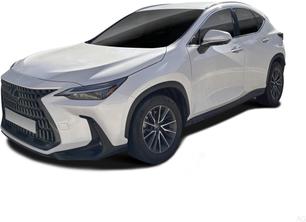
Clearly, the NX has hit a sweet spot with prestige SUV buyers, with the vast majority choosing HEV or PHEV powertrains. We were recently handed the keys to one of the latest NX offerings to find out why this stylish five-seater has such enduring appeal for couples, families, weekend travellers and business professionals.
Can you believe that the Nissan X-Trail is 25 years old this year?
It’s safe to say that, over four generations, the Toyota RAV4 rival has been mostly good, though sometimes frustrating. The CVT autos from 2008 onwards have let the side down with dreary performance and questionable durability.
That said, the latest generation has also been the best of the lot, thanks in no small part to 'e-Power' and 'e-4orce' (translation: extended-range electric vehicle hybrid all-wheel drive, or EREV AWD) availability. A terrific allrounder.
Now, for 2026, Nissan has allegedly facelifted the X-Trail range.
Keep on reading to find out what’s changed, and whether the presumably-improved e-Power remains at the pointy end of the 35-strong mid-sized SUV segment.
The NX 450h+ Luxury combines high build quality and upmarket looks with plug-in hybrid convenience/performance/economy and numerous luxury appointments. It’s a competent all-rounder that's difficult to fault and clearly meets the needs of many prestige mid-size SUV buyers.
For its silver anniversary, the X-Trail in e-Power guise remains better than ever. And the flagship Ti-L makes a convincing, value-packed, well-equipped and enjoyable to drive luxury medium SUV alternative for the family. Its only glaring fault is the omission of a full-sized spare wheel.
But other than that, given the Nissan’s warranty, reputation and the fact that it's still so functional, economical, gutsy and easy to live with, the e-Power remains one of our favourite mid-size SUVs. Our choice would be the Ti, though, chiefly because of its comfier 19-inch wheels.
The exterior is a sculptured blend of sharp creases and flowing curves which create a sporty and sophisticated appearance that clearly appeals to many buyers.
The interior looks and feels about as spacious and airy as you could realistically expect in a mid-sized SUV, which is enhanced with the roof open and sunshine pouring in.
The boldly contrasting two-tone grey and camel interior trim in our test vehicle adds to its visual appeal although we suspect such a bold colour choice could also be a stain magnet in everyday use, particularly for young families with lots of sticky kids’ stuff onboard.
For its 2026 facelift, the T33 X-Trail Series II gains a fussy new grille design, different LED lighting elements, reprofiled bumpers front and rear, new colours and restyled alloy wheels.
But, essentially, it looks very similar to the previous model that was released locally back in 2022. Meaning this is a good-looking machine.
Proportionally, as with all previous iterations, today’s X-Trail blurs the fine line between SUV and crossover-wagon in silhouette – much more so than the latest Subaru Outback (that’s classed in the category above) manages.
Dimensionally, it’s bang in the middle of its class: 4690mm long, 2065mm wide (mirrors out) and 1725mm tall with a 2705mm wheelbase. Note, the e-Power rides lower, with 187mm instead of 205mm of ground clearance.
Stepping inside, the X-Trail’s interior presentation is conservative and perhaps dated to some eyes, with its separate central touchscreen and instrumentation displays. But, precisely because of this, it is neither compromised nor frustrating to understand or operate, like the worst of the inexplicably minimalistic single-screen applications beloved by most Chinese brands today. Physical buttons abound. This Nissan is for everyday people and the cabin design reflects this.
Its compact dimensions of 4660mm length, 1865mm width and 1660mm height make the usual driving chores in congested urban settings, particularly tight inner-city streets and parking spaces, much easier than a full-size SUV.
With its 2050kg kerb weight and 2540kg GVM, it has a load capacity of 490kg of which up to 75kg can be carried on the roof rails using approved racks.
While almost half a tonne of load capacity may seem ample, keep in mind that the combined weight of five large adults could reach that limit before you could start loading their luggage.
It’s also rated to tow up to 1000kg of braked trailer, which would be ideal for hauling small trailers with a recreational focus like fold-out campers, jet-skis, trail bikes etc. However, Lexus does not publish a GCM figure, so for weekend escapees we don’t know how much it can legally carry and tow at the same time.
There’s more than adequate space for the driver and front passenger, along with storage that includes a bottle-holder and bin in each door, overhead glasses holder and a single glove box.
The centre console has two cupholders and a deep box with padded lid that doubles as a comfy elbow rest. You’ll also find a quartet of USB ports, a 12V socket and wireless phone charging pad.
The rear bench seat is surprisingly accommodating for tall people, given I’m 186cm and when seated behind the driver’s seat set in my position I still have sufficient knee clearance and headroom.
However, with three up, those in the centre must compete for shoulder space plus have their feet either side of the transmission tunnel and knees together between the front seat backrests. So, three adults is okay for short trips but should be capped at two for longer drives.
Rear passenger storage includes a bottle-holder and bin in each door, pockets on both front seat backrests and two cupholders with the centre seat backrest folded forward. The rear of the centre console has adjustable air vents, rear seat heating controls, another 12V socket and a pair of USB ports.
The power tailgate can open by waving your foot under the rear bumper (useful when hands are full) to gain access to the rear luggage area, which provides numerous internal hooks for securing cargo straps or nets plus underfloor storage for the charging cables and more.
This luggage area offers up to 520 litres (more than half a cubic metre) of load volume with the rear seat upright. It expands into what is effectively a small van when the rear seat is folded flat, which can carry everything from a mountain bike to flatpack furniture.
Large and rectangular, the X-Trail is sized and packaged to be used. Nowhere is this more obvious than using the wide doors, with the rear pair opening at almost a 90-degree angle to facilitate entry/egress.
Climb inside, and – as with all three previous-gen versions – there is an abundance of space for heads, legs and shoulders. Occupants sit up fairly high, with easy views afforded by a big windscreen and deep side windows.
Except that Nissan now uses much-better looking and feeling plastics than back then. Nobody is going to mistake the Ti-L for a Lexus, but quality and finish is beyond reproach. No squeaks or rattles to report here.
Aided by a fine driving position, the dash is pleasant to look at and simple to use. A new steering wheel, up-spec digital graphics and updated camera views help keep things relatively fresh.
Yet it is the basics that make this interface so sound. Clear and obvious switchgear for the very effective climate controls (and other vehicle functions) that feel good to the touch, logical menus within the responsive touchscreen, an enjoyably strong audio experience, wireless Apple CarPlay that never dropped out and a sense of no-nonsense solidity. Nissan’s been making cars for almost a century and it’s in the little things that show up big time here.
Likewise, 700km-plus in the front seats over a variety of road conditions reveal appreciable comfort and support. Factor in plentiful storage and sufficient all-round vision, and the X-Trail’s interior is difficult to criticise unless you’re nit-picking. A fiddly gear lever and a one-pedal braking button that’s a bit of a stretch for the driver are about it.
The back-seat area is as fine as we’ve experienced in any mid-sized SUV rival, with the Nissan dutifully ticking all the required spec boxes: USB ports, rear-facing air vents, cupholders within a 40/20/40-folding, sliding and reclining backrests and – in this Ti-L – separate climate control access. And don’t forget how usefully huge those rear doors are.
Further back, the X-Trail’s wagon-esque shape comes into play with a long, wide and flat load area, measuring in at 575 litres VDA (10L fewer than the petrol versions), extending to 1298L in two-seater mode.
But there are two points of contention.
Firstly, given the length of the load area, there are no remote-release handles for the backrests, so the user must use the side doors to lower them. This is an annoyance.
Secondly, and this is more serious, is the lack of spare wheel, period, in the e-Power models like ours. The space is taken up by some of the hybrid tech, resulting in a tyre repair kit instead. Regular readers will know our disdain for such compromises, as these cannot patch up larger punctures, ruin the tyre in smaller ones and are costly to replace. It’s such a rubbish solution.
Our advice is to seek an aftermarket space-saver wheel and jack kit, which do not cost much more than replacing just one ruined tyre and spent repair kit. When will this foolishness end? If Toyota can manage a spare in their RAV4 hybrid, others can as well.
A sour note to finish on an otherwise noteworthy interior experience.
Our test vehicle is the NX 450h+ Luxury (launched late 2025) which sits one rung below the premium 450h+ F Sport on the model ladder. Even though they share the same PHEV all-wheel drive (AWD) underpinnings, the Luxury’s emphasis on providing more affordable luxury at the highest level is reflected in its list price of $84,500, before on-road costs, which is $11,500 less than its F-Sport sibling. Our example is finished in optional 'Graphite Black' prestige paint available at extra cost.
As you’d expect there are plenty of items on the standard equipment list including 18-inch alloy wheels with 235/60 R18 tyres and an inflator/repair kit (no spare), heated door mirrors, tilt-and-slide moonroof, a rear spoiler, roof rails and LED headlights/DRLs to name a few.
Step inside using the smart entry and start function and drivers are treated to luxuries like front seat heating/ventilation with 12-way power adjustment (eight-way passenger), a heated steering wheel with paddle shifters and power height/reach adjustment, digital multi-information display, an electric parking brake, traffic sign recognition, tyre pressure monitoring and active parking aids.
There’s also outer rear seat heating, dual-zone climate control, wireless phone charging, multiple USB ports, 10-speaker premium sound, a 14-inch multimedia touchscreen with multiple connectivity including wireless Apple CarPlay/Android Auto and lots more.
Before we get started, here's a myth-busting fun fact.
That original 2001 T30 X-Trail in base ST manual grade cost over $60,000 (all prices are before on road costs) in today’s money. As all SUVs did back then, because Australia needed to protect our car-manufacturing industry with tariffs on imports like the Nissan. But, sadly, not any more.
Great news for today’s consumers though, since currently the most-expensive X-Trail – the Ti-L e-Power tested here from $58,215, before on-road costs – costs less than its cheapest predecessor of a quarter of a century ago adjusted for inflation.
And, naturally, today’s T33 generation comes with massively more features.
The Series II facelift brings improved 360-degree monitor functionality, including a new spooky-sounding ‘Skeleton Hood’ view of the road directly ahead, as well as the standardisation of the larger 12.3-inch touchscreen.
Additionally, service intervals have been extended, bolstering an already impressive available aftersales care package, while Nissan’s 'Connected Car' services app, offering remote-access, vehicle maintenance updates and alerts among other benefits, has been introduced. But it’s only free for the first three years. There’s also a decent wedge of advanced driver assist systems (ADAS) tech on all grades. More on those later on.
As before, there are four X-Trail grades for 2026, using largely the same nomenclature since 2001, and they’re probably easiest to tell apart externally by their (restyled) alloy wheels: ST, ST-L, Ti and Ti-L.
All come standard with Nissan’s PR25DD 2.5-litre four-cylinder petrol engine that, incredibly, has roots going all the way back to the 2001 original. In car parlance that’s known as 'proven' technology.
Now, the two cheapest X-Trails, the ST and ST-L from just over $38,140 and $42,540 respectively, come in either 2WD (front-wheel drive) or unique seven-seat AWD option, for $3000 extra, while the Ti and Ti-L petrol AWDs revert to being a five-seater-only configuration.
Actually, so are all of the EREV hybrid versions, which start from $48,915 for the ST-L e-Power, offering two electric motors – one on each axle – for AWD, raising prices by up to $4000, depending on specification.
But, as you’ll find out if you keep reading, we think going e-Power is worthwhile, as this behaves more like an electric vehicle (EV) than most hybrids, without needing to plug it in.
The Ti-L e-Power you see here scores most of the usual luxury trappings, like Nappa leather, Bose audio, tri-zone climate control, a panoramic sunroof, electric/heated front seats, absolutely brilliant adaptive LED headlights, a head-up display, automatic entry/locking, a powered tailgate and 20-inch alloys.
Even though it’s the most expensive X-Trail today, it remains fiercely competitive against most of its hybrid-only opponents from Japan and South Korea, like RAV4, Hyundai Tucson, Kia Sportage and Subaru Forester.
China’s hybrid AWD and plug-in hybrid electric vehicle (PHEV) AWD alternative mid-sized SUVs are cheaper than all of the above, though all are yet to be proven in the longer term.
The sophisticated PHEV drivetrain with electronic AWD comprises a 2.5-litre four-cylinder petrol engine that delivers 136kW of power and 227Nm of torque to the front wheels through a Continuously Variable Transmission (CVT).
There’s also electric motors front and rear, fed by an 18.1kWh lithium-ion traction battery that can provide limited electric-only driving range.
The front electric motor, which assists with driving the front wheels through the CVT, produces 134kW/270Nm while a smaller one exclusively drives the rear wheels with 40kW/121Nm. Although the combined output from these three power sources is 310kW, Lexus claims a total system output of only 227kW to optimise efficiency and reliability.
The petrol engine and electric motor outputs are electronically synchronised and traction is continuously monitored to automatically vary the amount of power being sent to the front or rear wheels to optimise stability and traction in all conditions.
There’s also a choice of drive modes comprising 'Normal', 'Sport' and 'Eco' and paddles on the steering wheel allow manual shifting of the CVT 'ratios' for a more engaging drive, or to increase the regenerative braking effect (like using lower ratios on descents etc).
Several operational modes can also be selected including electric-only driving (we covered 60km on one full charge and 56km on another) and two modes of hybrid driving, plus battery charging while driving courtesy of the petrol engine which during our test charged the battery from near zero to 100 per cent in 56km.
There’s also external plug-in charging of course. At home we used the three-pin domestic wall socket compatible 10A charger/AC Type 2 cable supplied with the vehicle, which took about six hours (at a tiny 2.3kW) to charge from 35-100 per cent.
The X-Trail e-Power system is not a traditional hybrid set-up.
Instead of having an electric motor(s) and small battery assist an internal combustion engine (ICE) that does the driving (as per a Toyota hybrid), this one’s the other-way round: an ICE solely charging a larger battery that feeds an electric motor(s) that powers the driven wheels. No plugging in required. This is the essence of an EREV. The Holden Volt famously relied on such a system nearly 15 years ago.
In the X-Trail e-Power’s case, a 1.5-litre, three-cylinder, turbo-petrol engine making 106kW of power and 250Nm of torque is mated to a 2.1kWh battery, inverter and an electric motor on each axle (front: 150kW/330Nm - rear: 100kW/195Nm), for a combined 157kW and 525Nm, distributed to all four wheels.
That’s a lot more than the 135kW and 244Nm that the regular 2.5-litre four-cylinder petrol engine and CVT set-up can muster.
Lexus claims average combined consumption of only 1.3L/100km, achieved in ideal lab conditions which is largely irrelevant. When we stopped to refuel after 424km of real-world testing, which included our usual mix of suburban, city and highway driving and switching between the different modes (including 116km of electric-only driving), the dash display was showing 5.7L/100km.
That was close to our own figure of 5.4 calculated from fuel bowser and tripmeter readings, so based on our test consumption and depending on the mix of drive modes used, you could expect a realistic driving range of up to 1000km from its 55-litre tank which prefers 95RON premium petrol.
Requiring 95 RON premium unleaded petrol, the e-Power drinks from the more-expensive bowser. It also comes with a capless filler, saving clean hands from handling dirty caps. How European of this Japanese SUV!
Nissan reckons the e-Power averages 6.1 litres per 100 kilometres, which translates to 139 grams/km of carbon dioxide emissions. The Urban rating is just 6.4L/100km and Extra Urban returns 6.0L/100km.
In contrast, the petrol CVT AWD’s corresponding numbers are 7.8L, 10L and 6.5L, respectively.
Out in the real world, over 700km of at-times very demanding driving, we managed a tad under 6.9L/100km – which is what the trip computer also calculated – while, driven more frugally – it dropped to under 5.5L/100km.
That’s impressive stuff, meaning you can expect around 800km between refills even if you don’t care about fuel economy, and over 1000km if you do.
The cabin is what you might call ‘cosy’ for tall people like me (186cm) but there’s still adequate room to find a comfortable driving position.
The ride quality is noticeably firm, which contributes to its sporty feel. The steering is nicely weighted with good response and braking is reassuringly strong.
Acceleration in full-electric and hybrid modes is brisk but not exceptional and about what you’d expect from this powertrain, which engages the rear electric motor for standing starts and other situations to ensure all-wheel drive traction is being deployed when you need it most.
We sampled the different drive modes, with 'Sport' providing a more engaging feel (particularly when manual shifting using the paddle shifters), 'Eco' producing a more subdued response to optimise range and the default 'Normal' providing a pleasant compromise.
Even so, despite its technical wizardry and generous choice of driver preferences, we reckon most daily driving owners would simply plug-in and charge each night, start off in electric-only mode and if needed continue in ‘Normal’ hybrid mode.
So, what's the X-Trail e-Power like?
Well, as it turns out, it marries really well with the Ti-L flagship, because it is a smooth, refined and sophisticated powertrain experience.
It's an EV first, and even though the petrol engine fires up and charges the battery regularly, pausing the electric dream for a few moments, it isn't noisy or buzzy, blending in with the general road, tyre and wind noise at speed. The ICE’s intervention is seamless, though it does rev away at a pre-set constant speed. That varies according to load and conditions, at between 2400rpm and 4800rpm.
That’s the theory. In practice, the X-Trail e-Power’s performance is one of its greatest attributes.
As with all good EVs, this one’s silky smooth and quiet as it zips away from standstill, whooshing forward with a determined, even lively, attitude. Turn the (cumbersome) driver selector to 'Sport' mode and the throttle response reacts accordingly, for rapid point-to-point performance. Give the 1900kg Nissan it’s head on a long empty road, and this thing can be downright fast. Hauling around 83kW per tonne, we recorded a 0-100km/h sprint time of seven seconds flat.
And here’s the thing. When the battery starts running low, there’s no shortfall in performance as you find in many PHEVs that feel neutered at this point, since the peaky little engine is feeding electricity back into the battery that drives the motors. It’s all so effortless.
Speaking of recharging, a single-pedal function provides a noticeable amount of braking off-throttle, collecting that otherwise wasted energy back into the system. It won’t bring the car to a full stop, though, and is not adjustable as per many rivals’ paddle-shifter-actuated systems. Maybe a suggestion for the next-gen model.
Underneath is a Renault/Nissan/Mitsubishi Alliance platform, complete with struts up front and a multi-link rear suspension set-up, imbuing the X-Trail with a solid, dynamic European flavour. The steering is light yet nicely weighted, for a sense of connection and balance.
It isn’t quite as agile through fast corners as, say, a Mazda equivalent might be, as the e-Power is a bit too top-heavy to be considered sporty and athletic, but there’s control and grip for days. No doubt the Ti-L’s 20-inch Michelin Primacy tyres help here. And, at highway speeds in teeming rain, the AWD grip feels reassuring.
Speaking of big wheels, the ride is surprisingly okay. Firm but never unyielding or crashy over bumps, the electrified Nissan is comfortable enough. The Ti e-Power’s smaller 19-inch rubber reveals a more supple and isolated ride experience, and without any dynamic degradation, so that’s what we’d choose. And they’d be less prone to occasional tyre drone to boot.
Finally, there’s the X-Trail’s overall suitability to Australian roads from an ADAS point of view. Working away in the background, the Ti-L’s driver-assist tech does not bombard you with unsolicited buzzes or sudden jolts of the wheel. Once, the auto emergency braking (AEB) did gently activate at speed through a heavily-trafficked curve, and the lane-departure light regularly blinks discreetly away, but never to a bothersome, distracting degree. And meanwhile, some Chinese companies question the need for Australian road tuning. Fail.
Overall, then, the latest X-Trail e-Power remains enjoyable and even enriching vehicle to live with, being both a mainstream family car and grand touring SUV. In this context, the sub-$60K pricing seems like a bargain. This Nissan deserves to sell better.
The NX has a maximum five-star ANCAP rating (awarded 2022), eight airbags and a suite of active safety features including AEB with pedestrian and daytime cyclist/motorcycle detection, steering assist, lane-keeping, safe exit assist, rear cross traffic alert, blind-spot monitoring, traffic sign recognition, LED DRLs, tyre pressure warning and lots more. The rear seat is equipped with two ISOFIX child seat anchorages and three top tethers.
Based on the related but smaller Qashqai SUV’s results, the previous X-Trail managed a maximum five-star ANCAP crash-test rating back in 2021, and Nissan expects the 2026 model to do the same.
All grades feature Nissan’s 'Pro-Pilot' driver-assistance systems, including AEB front and rear with pedestrian and cyclist detection, blind-spot monitoring, lane-keep systems, adaptive cruise control, a driver fatigue monitor, auto high beam, traffic sign recognition and seven airbags. Note the latter includes curtain airbags that reach all outboard occupants.
The previous X-Trail’s AEB kicks in from 5.0-130km/h, pedestrian and cyclist AEB from 5.0-80km/h and the lane support systems operate between 60-250km/h.
Also fitted are ISOFIX child-seat latches to the outboard rear seats, along with a trio of top tether anchorage points.
Comes standard with a five years/unlimited km warranty. Same applies to the lithium-ion traction battery, which is eligible for additional warranty coverage of up to five years (so 10 years in total) based on annual inspections.
Scheduled servicing is every 12 months/15,000km, whichever occurs first. Capped pricing, which applies to the first five scheduled services up to five years/75,000km, totals $3225 or an average of $645 per service.
At the time of publishing, Nissan offers a 10-year, 300,000km conditional warranty if you choose to service your car at an authorised Nissan dealer. That's up from the brand’s regular five-year, unlimited kilometres and it leads the industry now.
Nissan has also extended X-Trail service intervals from 10,000km to 15,000km annually, while offering capped-price servicing as well as roadside assistance for the first five years.
The first five annual services cost $399 each, then are $565, $392, $562, $470 and $725 for years six to 10, respectively.
Finally, as of January this year, there were 177 Nissan dealer outlets throughout Australia.