What's the difference?
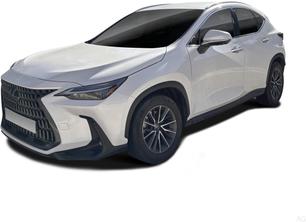
The Lexus NX 450h+ F Sport is a well-specified and plush-looking medium SUV that has a plug-in hybrid powertrain - a first for the brand.
On paper, it seems to tick the boxes for size, luxury and efficiency but we've been testing the flagship grade to see if it's a winning combo in real life.
There’s no shortage of models to choose from if you’re after a family-friendly medium SUV. The problem is, it might take a while to get your hands on one, with lengthy wait times for some of the best sellers due to current delays caused by a global parts shortage and supply chain dramas.
But there are a handful of models with healthy stock in dealerships right now and available for immediate delivery. One of them is the Renault Koleos.
It's coming to the end of its life cycle and lacks the shine of some of its fresher rivals, but it’s a lot of car for the money.
We spent a week with the limited edition Koleos Black Edition to see if it is worth a trip to your Renault dealer, or if you should sit tight and wait for one of its newer rivals.
The Lexus NX450h+ F Sport is a gorgeous mid-size SUV that combines great specs and a fairly efficient plug-in hybrid powertrain. It’s a comfortable and easy ride which should appeal to a wide range of driving styles. It also looks good parked at the kerbside of a city street and with it ticking most of the boxes, it may become your new best friend.
To be fair to Renault, when the second-generation Koleos launched in 2016, it was a competitive offering. The problem is, a bunch of medium SUV rivals have been replaced in that time and some of them - Toyota RAV4, Kia Sportage, Mazda CX-5 and Hyundai Tucson, to name a few - are high-quality offerings with an engaging drive and the latest tech and in-car features.
Unfortunately, that leaves the Koleos towards the rear of the medium SUV pack.
It offers solid value-for-money, handles reasonably well and is still one the best-looking SUVs on the road. But beyond that, the Koleos can’t keep pace with those top-notch rivals.
The NX simple looks like a scaled-down version of its larger RX cousin, so if you like that you’ll like what the NX.
It looks sweeter, though, with its smaller proportions being only 4660mm long and 1670mm high but there’s enough sharp pleating in the panelling and rear LED lights to give it a sporty edge. It’s a design that should appeal to a wide range of people.
The interior helps the NX compete against some of its flashier rivals, but the BMW X3's interior beats it hands down with the wow factor. Still, the dual-toned leather upholstery and fabrics of our test model scream understated luxury.
The perforated leather of the seats is supple underhand, but even the robust synthetic leather on the backs of the seats and some door panelling feels like the real stuff most of the time.
The dashboard components – like the air vents, displays and accents – are well integrated and seem well-built. The cockpit is intimate and plush overall, and it always reminds you that you're in the cabin of a luxury vehicle.
An area that Renault has excelled at in the past decade has been exterior design. Under the stewardship of design chief Laurens van den Acker, Renault has transformed from somewhat quirky to modern and sleek.
The Koleos is getting on in years, having arrived in 2016, but it’s still a handsome SUV. A 2020 facelift sharpened its looks further and we reckon it’s one of the best-looking models in the medium-SUV segment.
Piano black inserts around the gear shifter are a nice touch, but the fake carbon-fibre inserts look and feel cheap. It’s all a bit generic.
But the appealing contrast yellow stitching on the seats, gear shifter housing, doors, centre armrest and more breaks up the grey with a little pop of colour.
The cabin of the NX is spacious where it needs to be for four adults to be comfortable on a longer journey, and features enough equipment to satisfy most.
Access is best at the front because of the wider door apertures and while still easy enough to get in and out of from the back, the rear wheel arch cuts into the aperture a bit.
The front seats are very comfortable with thick padding, tall side bolsters that lock you into place in a turn as well as heating and cooling functions.
The back seats are almost as comfortable as the front! However, the outboard seats offer the best under-thigh support. It is a shame that they miss out on heat functions for its grade level, though.
Storage is fairly good for the class, with lots of small item cubbies up front like a sunglasses holder, a mini drawer next to the drivers' knee and a dedicated phone holder and two cupholders. The large glove box (that can hold more than just a manual) and mid-size middle console shoulder most of the storage burden, though.
In the back you get a couple of map pockets, small storage bins and two cupholders. which is most than enough for this size of SUV.
The boot offers an impressive 520L of capacity and a level loading space makes it an easy car to slide larger gear in and out of. The little storage compartment under the floor is handy for charging cables and the hands-free powered tailgate is always handy to have.
The technology is a nice mix of easy-to-use and high-end with a responsive touchscreen on the 14-inch multimedia display. The system has built-in sat nav, wireless Apple CarPlay and Android Auto. The CarPlay was simple to set up and has maintained a steady connection with my iPhone this week.
Charging options are decent with two USB-C ports and a 12-volt socket per row, as well as a wireless charging pad up front.
It might lack the up-to-date styling of those rivals, but the Koleos is practical and spacious inside and great for family duties.
As with the outgoing fourth-generation Nissan X-Trail, the Koleos is one of the larger offerings in the medium SUV segment, and it’s evident when sitting in the front or rear seating row.
Rearward visibility could be better, with a small rear screen and thick C- and D-pillars impeding vision and creating a blind spot.
The front seats are well supported and comfortable and while the driver’s side is power adjustable, the front passenger seat is manually adjustable.
It has a deep central storage bin with a hidden shelf for coins and more. The Koleos features a sizeable glovebox and good bottle storage in the doors, with room for other items.
There’s a weird fixed cup holder in the centre console. It’s not adjustable and there’s room for two very narrow cups and two larger, but not wide, cups. It’s strange. Interior designers could have used that space better.
The CVT's position indicators are located to the left of the shifter and are thus obscured, so you have to rely on the instrument cluster display to confirm what gear you want.
The steering wheel looks and feels good, but the controls aren’t super logical. There are old school switches in the console to activate the cruise control and speed limiter, but then to adjust and reset the speed you have to hit buttons on the wheel that are not clearly marked.
The audio controls are housed on a panel-like stalk to the right side of the steering column, which isn’t ideal. These make more sense if they’re housed on the wheel itself.
Along with a number of cars we have sampled recently, the Koleos has split analogue and digital controls for the air conditioning. Just integrate it in the screen or have traditional controls - not both!
It has a part-digital instrument cluster which is fine, but there’s no head-up display.
Renault’s 'R-Link' multimedia set-up in the Koleos is old, with dated graphics and a small screen, but the menu layout is clear and logical.
The Koleos lacks wireless phone charging and it makes do with wired Apple CarPlay and Android Auto. The quality of the Bluetooth and CarPlay phone audio is poor and sounds tinny.
The proximity key that locks and unlocks the vehicle remotely when you walk towards or away from it works every single time. Many of these systems from other brands are patchy at best but the Renault system is faultless.
The rear seats recline and fold manually 60/40. They’re also surprisingly comfortable. There’s enough bucketing to sink in a bit, and the seats are set high up so kids can easily see out windows.
Space is ample in the second row, with loads of head, leg, toe and knee room, even behind my six-foot (183cm) driving position.
The rear pew has ISOFIX points on the outboard seats, lower air vents, a 12-volt outlet, map pockets, a centre folding armrest with two cupholders, but no USB ports. You have to make do with the two ports at the front.
Open the power tailgate and you’ll find a decent 458-litre boot with all seats in place (maximum 1690L), which is off the pace of its cousin, the Nissan X-Trail (565L), as well as the Toyota RAV4 (580L) and Hyundai Tucson (539L).
A 17-inch steel spare wheel is housed under the boot floor which might explain the lower boot capacity, and there are handy tie-down hooks, a couple of smaller storage nooks and a solid cargo blind.
With a price hike of almost $6K, our flagship NX sits at $95,900 before on-road costs, but it's still slightly more affordable than its top-grade plug-in hybrid rivals.
The Volvo XC60 Ultra is priced from $101,390 and the outgoing BMW X3 xDrive30e sits at $102,500.
In the flagship variant, the standard features list is well-rounded to include both practical and luxury equipment. There are electric front seats with heating and cooling, an F Sport steering wheel with heating and touch controls, a sunroof, rear privacy glass, and a power-adjustable steering column.
Other items include a powered tailgate with a kick-to-open function, dual-zone climate control with a humidity sensor, parking assist, keyless entry/start, a digital key, Lexus Connected services app, a digital rearview mirror and 20-inch alloy wheels.
The technology looks gorgeous with the 14-inch touchscreen multimedia display taking centre stage with built-in satellite navigation, Bluetooth and wireless Apple CarPlay and Android Auto.
You also get a 10-speaker Lexus premium sound system, which has AM/FM radio, MP3 and WMA (Windows Media Audio) compatibility. There are four USB-C ports (2/2), a 12-volt socket and a wireless charging pad.
So while our test model misses out on some of the items you might expect to see for a top-model grade – like three-zone climate control and heated rear outboard seats – it still feels well-specified.
A European badge doesn’t always mean you pay more than say, Korean or Japanese offerings, and Renault is an example of that.
The Koleos line-up, for now, starts from $33,590, before on-road costs, for the two-wheel drive Life and tops out at $46,390 for the Intens all-wheel drive.
But after July 1, 2022, prices will increase across the Renault line-up, with the Koleos set to range from $35,000 to $47,500.
There’s only one petrol engine option since the diesel was dropped in 2019 and each variant is paired with a continuously variable transmission (CVT) driving either the front or all four wheels.
That pre-July pricing is competitive against its rivals, undercutting the opening price of automatic versions of the Hyundai Tucson, Kia Sportage, Mazda CX-5, Mitsubishi Outlander, Subaru Forester, Toyota RAV4, and more.
Our test car, the Koleos Black Edition, is priced at $40,090 (rising to $40,500 from July 1) and is based on the specification of the mid-range Zen front-wheel drive (FWD). It is limited to 400 units in Australia.
Renault is one of a number of car makers to offer a black-themed model in recent times, alongside Kia, Mitsubishi, Toyota, SsangYong, and others.
The Black Edition adds dark flourishes like 19-inch dark-grey alloy wheels, gloss black roof rails and door mirrors, sidesteps, French flags on the B-pillar (even though it’s built in South Korea) and a choice of three exterior metallic paint colours including black (of course), grey or white.
It also gets a hands-free powered tailgate, black synthetic leather upholstery with yellow stitching, matt carbon-look inserts, an 8.7-inch multimedia portrait touchscreen and ‘Limited’ badging on the chrome door sills.
That’s on top of features that are standard on the Zen, like a proximity key, push-button start, dusk-sensing headlights, rain-sensing wipers, auto-dimming rear-view mirror, auto-folding exterior mirrors, an electrically adjustable driver’s seat, heated front seats, a reclining rear seat, dual-zone air-conditioning, and heated and cooled front cupholder.
The multimedia system houses sat nav and comes with wired Apple CarPlay and Android Auto, Bluetooth, digital radio and an eight-speaker audio system.
There’s more details on the safety front below, and many rivals come with more modern in-car tech but there’s no question the Koleos offers very good value-for-money.
The NX450h+ F Sport is the first attempt at a plug-in hybrid powertrain for Lexus. It pairs a 2.5-litre four-cylinder petrol engine with two electric motors, one located at each end of the car for all-wheel drive. Together they produce up to 227kW of power, but Lexus doesn’t quote the combined torque figure (cheeky).
The flagship model can do a 0-100km/h sprint in 6.3 seconds and features a smooth continuously variable transmission.
Overall, it moves quickly and the shift between the electric and engine components is barely noticeable.
The Koleos shares its powertrain with the X-Trail. That means it uses a Euro 5-rated 2.5-litre four-cylinder, naturally aspirated petrol engine delivering 126kW of power at 6000rpm and 226Nm of torque at 4400rpm.
It is paired with a CVT and drives with the front, or all four wheels, depending on the grade.
The Koleos has a braked towing capacity of 2000kg.
The flagship NX has a smallish 18.1kWh lithium-ion battery and a Type 2 charging port but no CCS enhancement, which means you can’t hook it up to a fast DC charger.
On a standard AC 240-volt domestic plug port, you can charge this from 0-100% in around 7hrs 30mins. You get a great electric-only NEDC-rated driving range of up to 87km and that means you really only have to charge it every other day, which I appreciated.
The official combined fuel cycle usage is 1.3L/100km, but you won’t really see that in the real world. After doing some longer trips mixed in with city slicking, my average real-world usage popped out at 6.5L/100km, and I averaged 20.2kWh/100km when in pure EV mode. They’re not the best hybrid figures I’ve seen for the class, but they're not too bad either.
According to Renault, the combined fuel consumption figure for the FWD Koleos is 8.1 litres per 100 kilometres. The AWD Koleos sips 8.3L.
After a week of mixed urban, freeway and semi-rural driving, we recorded 11.3L/100km.
Koleos uses 91 RON petrol, has a 60-litre fuel tank and emits 188g/km of CO2 emissions.
This NX feels like it has lots of power in reserve when you put your foot down and never struggles going up big hills. When it’s in pure EV mode, it’s very quiet but there’s no big fanfare when this kicks over to the traditional engine. You barely notice it until you’re on the open road travelling at higher speeds, and that’s when the engine starts to sound more growly like its non-hybrid siblings.
The steering is forgiving without feeling too light and around town, the NX is nimble and sure of itself. The suspension is on the firmer side, so you’ll hear and feel the bigger bumps, but it never feels rough.
Visibility is decent with the largish windows, and the pillars that aren’t too wide from my driving position. I do like having the digital rearview mirror, though, because when you have a big car seat or tall adult in the back seat, the vision back there is hindered.
It’s pretty hard to find a modern car that’s terrible to park, especially in the mid-size SUV segment, and the NX is no different. Even in a small car space, you still have good clearance around you, which hopefully translates to less dings from neighbouring cars!
The 360-degree view camera system is top notch with its quality, and I like that the car disappears and you can see the ground underneath.
The drive experience is a mixed bag with some highlights and lowlights.
The ageing 2.5-litre engine is responsive enough from a standing start - it has a 0-100km/h time of 9.5 seconds - but it lacks any real punch and becomes breathless the second you encounter a hill.
It is noisy and revs hard when pushed, with the CVT drone not making for a particularly pleasant aural experience. You’ll hear a fair bit of road and tyre noise in the cabin, too.
The steering is dull and feels quite artificial, but the brakes feel strong.
Unless you’re on a perfectly smooth road surface, the ride is a little busy and the damper tune fails to adequately soften corrugations, potholes and speed bumps.
It is, however, a more capable handler than expected. The chassis is well sorted, and aside from feeling top heavy with body roll when cornering, it has decent grip and displayed impressive roadholding characteristics, even on a sweeping bend with a loose shoulder surface.
There was a little understeer detected turning into a particularly tight bend.
It can’t match the dynamism of the Kia Sportage or Mazda CX-5, but it does engage the driver to some extent.
The NX comes with a maximum five-star ANCAP safety rating from testing done in 2022 and scored very highly across its individual assessment scores; 91 per cent for adult protection, 89 per cent for child protection, 83 per cent for vulnerable road user, and 92 per cent for its safety assist systems.
Eight airbags are standard which includes a front centre airbag and driver's knee airbag.
Other safety equipment includes emergency steering assist, blind-spot monitoring, lane departure alert, lane-keeping aid, emergency lane keeping, traffic sign recognition, safe exit assist, rear cross-traffic alert, LED daytime running lights, LED cornering lights, tyre pressure monitoring, and an emergency call button.
The only safety item which can feel intrusive when driving is the adaptive cruise control as it has a feature that scans for bends in the road and will slow the car down in anticipation of them. On paper, this isn’t a bad thing but in practice, it was sporadic when it activated and sometimes slowed the car dramatically on bends you wouldn’t even call bends!
AEB with car, pedestrian, cyclist, motorcyclist, backover and intersection turning assist is standard and operates from 5.0 - 80km/h (up to 180km/h for car detection).
There are two ISOFIX child seat mounts and three top-tether anchor points in the rear row. The seat isn't wide enough to accommodate three child seats side by side, so two will fit best.
The Koleos was awarded a five-star ANCAP crash safety rating back in 2017.
It comes as standard with six airbags, auto emergency braking, forward collision warning, lane departure warning, blind spot monitoring, cruise control, a reversing camera, front and rear parking sensors, and a tyre pressure monitor.
It lacks some of the more modern active driver aids that are offered as standard in rivals, like an active lane-keeping system that helps ensure the vehicle doesn’t cross line markings. The Koleos makes do with an audible warning that, oddly, sounds like a whoopie cushion when activated.
The cruise control is not adaptive, instead it’s the old school version that doesn’t detect vehicles ahead and lower its speed accordingly.
Having more up-to-date safety gear would improve the Koleos’ appeal.
The NX is offered with a five-year/unlimited-kilometre warranty, which is on par with its European rivals.
It comes with a five-year capped price servicing program, where services are competitively priced at $595 each.
Servicing intervals are reasonable at every 12 months or 15,000km, whichever occurs first.
The Koleos is covered by Renault’s five-year/unlimited kilometre warranty, which is stadatd in the meainstream market, now.
It is available with a five-year capped-price servicing plan, with each service costing $429, except year four which will set you back $999.
The servicing schedule is every 12 months or 30,000km, whichever occurs first.