What's the difference?
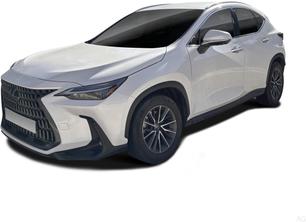
The Lexus NX 450h+ F Sport is a well-specified and plush-looking medium SUV that has a plug-in hybrid powertrain - a first for the brand.
On paper, it seems to tick the boxes for size, luxury and efficiency but we've been testing the flagship grade to see if it's a winning combo in real life.
We’ve waited more than two years and it’s finally here.
Cupra has introduced the updated version of its most popular car in Australia, the Formentor.
A spicy small SUV rival to the likes of the Mini Countryman, BMW X2 and Audi Q3, among others, this design-led small SUV is now offered in more flavours than ever before.
It’s our first time testing out this updated Formentor on local soil, so read on to see how it stacks up.
The Lexus NX450h+ F Sport is a gorgeous mid-size SUV that combines great specs and a fairly efficient plug-in hybrid powertrain. It’s a comfortable and easy ride which should appeal to a wide range of driving styles. It also looks good parked at the kerbside of a city street and with it ticking most of the boxes, it may become your new best friend.
It’s clear that Cupra has listened to feedback as this updated Formentor addresses many key criticisms of the pre-update car. Overall it makes it easier to live with and to recommend than before.
Although the VZe's updated PHEV powertrain offers double the amount of electric range, the V forms as a sweet spot of the line-up as it offers all the power and equipment you'd ever need. It's hard to look past the top-spec VZx though as power is a drug.
Note: CarsGuide attended this event as a guest of the manufacturer, with travel, accommodation and meals provided.
The NX simple looks like a scaled-down version of its larger RX cousin, so if you like that you’ll like what the NX.
It looks sweeter, though, with its smaller proportions being only 4660mm long and 1670mm high but there’s enough sharp pleating in the panelling and rear LED lights to give it a sporty edge. It’s a design that should appeal to a wide range of people.
The interior helps the NX compete against some of its flashier rivals, but the BMW X3's interior beats it hands down with the wow factor. Still, the dual-toned leather upholstery and fabrics of our test model scream understated luxury.
The perforated leather of the seats is supple underhand, but even the robust synthetic leather on the backs of the seats and some door panelling feels like the real stuff most of the time.
The dashboard components – like the air vents, displays and accents – are well integrated and seem well-built. The cockpit is intimate and plush overall, and it always reminds you that you're in the cabin of a luxury vehicle.
As with many updates, the Formentor has received some mild changes to the exterior design. A lot of it centres around the new, shark-like front end which brings it in line with the Leon, Terramar and Tavascan.
I’ve always been a fan of the Formentor’s slightly raised but still hunkered-down hot hatch-look. The body lines and wheel-arch flares also lean into the dynamic aesthetic.
The VZx trim looks particularly sexy with its 19-inch black and copper forged alloy wheels and the black quad exhaust tips.
I cannot wait for the VZ5 to arrive as it’s set to receive even larger 20-inch alloy wheels and more prominent quad exhaust tips that are stacked and finished in copper.
Inside it’s fairly similar to before but a highlight is the larger 12.9-inch touchscreen multimedia system. It suits the dashboard nicely while not looking too big.
There are still the pronounced, hexagonal air vents up front, plus the ambient lighting strip that wraps all the way from door to door. It’s a cool look.
If you’re keen on the ultra-sporty look, you can option Sabelt front bucket seats with carbon-fibre backs as part of the Extreme package in the VZe and VZx. It’s worth noting that this removes the front centre airbag though.
The cabin of the NX is spacious where it needs to be for four adults to be comfortable on a longer journey, and features enough equipment to satisfy most.
Access is best at the front because of the wider door apertures and while still easy enough to get in and out of from the back, the rear wheel arch cuts into the aperture a bit.
The front seats are very comfortable with thick padding, tall side bolsters that lock you into place in a turn as well as heating and cooling functions.
The back seats are almost as comfortable as the front! However, the outboard seats offer the best under-thigh support. It is a shame that they miss out on heat functions for its grade level, though.
Storage is fairly good for the class, with lots of small item cubbies up front like a sunglasses holder, a mini drawer next to the drivers' knee and a dedicated phone holder and two cupholders. The large glove box (that can hold more than just a manual) and mid-size middle console shoulder most of the storage burden, though.
In the back you get a couple of map pockets, small storage bins and two cupholders. which is most than enough for this size of SUV.
The boot offers an impressive 520L of capacity and a level loading space makes it an easy car to slide larger gear in and out of. The little storage compartment under the floor is handy for charging cables and the hands-free powered tailgate is always handy to have.
The technology is a nice mix of easy-to-use and high-end with a responsive touchscreen on the 14-inch multimedia display. The system has built-in sat nav, wireless Apple CarPlay and Android Auto. The CarPlay was simple to set up and has maintained a steady connection with my iPhone this week.
Charging options are decent with two USB-C ports and a 12-volt socket per row, as well as a wireless charging pad up front.
The standard seats in the Formentor have a sporty design but are still supportive and comfortable. The driver’s seat offers electric adjustment and memory as standard, while both front seats are heated.
The optional Sabelt front bucket seats hug you tighter which is nice if you plan to driving on twisting roads. It’s cool that they retain the electric adjustment and heating as this is rare in ultra-sporty seats.
Looking ahead, this steering wheel is one of my favourites on offer from any brand currently. The rim isn’t too thick or thin, plus there are plenty of physical buttons and dials. It makes it a joy to interact with.
This update has made the steering wheel-mounted engine start-stop and drive mode buttons standard across the line-up. It makes the less sporty trims feel a touch more special.
The 10.25-inch digital instrument cluster is still standard across the line-up and offers plenty of configurable options. You can set it up exactly how you'd like.
Moving across, there’s the aforementioned 12.9-inch touchscreen multimedia system. It operates on updated software which makes navigating key menus much easier.
Some key climate control functions remain at the bottom of the touchscreen which is a little easier to interact with on the move. Ideally a physical button cluster would be better but you can’t have everything.
Another key change with this update is the touch sliders under the touchscreen are finally illuminated, allowing you to see what you’re pressing at night. This should have been standard since launch.
Storage up front is adequate for a car of this size. There’s a wireless charger that’s not ventilated, two USB-C ports, a strange cupholder set-up with essentially 1.5 cupholders, a centre console box with a lid that ratchets, as well as a glovebox on the passenger side.
It’s clear the focus of the Formentor’s cabin is up front but space in the second row is a better than you’d think. At a leggy 182cm I have decent leg and headroom behind my own driving position, but toeroom is particularly good, allowing you to slide your feet comfortably under the seat ahead.
What isn’t so nice is the front seats are rather bulky, particularly the optional Sabelt bucket seats. They block your view ahead, requiring you to either lean over or look out the side window.
Second-row amenities include a third zone of climate control with air vents on the back of the centre console, as well as two USB-C ports and a fold-down armrest with cupholders.
There are ISOFIX points on the two outboard seats, as well as top-tether child seat anchorages across all three rear seats.
All versions of the Formentor now receive a hands-free power tailgate which is handy if you’ve got your hands full. It opens and closes with a kick under the rear bumper.
Boot space depends on the trim level. The S offers 450L, the V and VZx have 420L and the VZe only offers 345L with the rear seats upright. The latter is poor due to the placement of the high-voltage battery.
With the rear seats folded there’s between 1300-1400L of boot space, depending on the trim level.
Boot-related amenities include a light and some hooks. It’s great to see a space-saver spare wheel as standard across all variants besides the VZe. This is once again due to the high-voltage battery.
You even retain a space-saver spare wheel if you opt for the Extreme package in the VZx, though it has a note stating you cannot put it on the front as it physically won’t fit over the larger front brakes.
If you get a puncture on the front, you need to swap a wheel from the rear onto the front, then put the space-saver spare on the rear. You should technically be doing this anyway as space-saver spare wheels aren’t meant to go on the front in cars that are primarily front-wheel drive, like the Formentor.
With a price hike of almost $6K, our flagship NX sits at $95,900 before on-road costs, but it's still slightly more affordable than its top-grade plug-in hybrid rivals.
The Volvo XC60 Ultra is priced from $101,390 and the outgoing BMW X3 xDrive30e sits at $102,500.
In the flagship variant, the standard features list is well-rounded to include both practical and luxury equipment. There are electric front seats with heating and cooling, an F Sport steering wheel with heating and touch controls, a sunroof, rear privacy glass, and a power-adjustable steering column.
Other items include a powered tailgate with a kick-to-open function, dual-zone climate control with a humidity sensor, parking assist, keyless entry/start, a digital key, Lexus Connected services app, a digital rearview mirror and 20-inch alloy wheels.
The technology looks gorgeous with the 14-inch touchscreen multimedia display taking centre stage with built-in satellite navigation, Bluetooth and wireless Apple CarPlay and Android Auto.
You also get a 10-speaker Lexus premium sound system, which has AM/FM radio, MP3 and WMA (Windows Media Audio) compatibility. There are four USB-C ports (2/2), a 12-volt socket and a wireless charging pad.
So while our test model misses out on some of the items you might expect to see for a top-model grade – like three-zone climate control and heated rear outboard seats – it still feels well-specified.
New with this update is an entry-level, mild-hybrid trim called the S. It’s priced from $49,990 before on-road costs.
However, all the variants that carried over received a price increase of at least $4000. The Formentor V now starts at $57,490 before on-road costs, the VZe now costs $68,990 and the VZx costs $69,990.
At the top of the line-up is the forthcoming, limited-production VZ5 which is due towards the end of 2026. It’s priced from $94,990 before on-road costs, which makes it the most expensive Cupra ever offered in Australia.
All Formentors now receive a larger 12.9-inch touchscreen multimedia system as standard, as well as a hands-free power tailgate and heated sports bucket front seats.
Stepping up to the V, which was previously the entry-level model, you get a more powerful engine with all-wheel drive, as well as 19-inch black and copper alloy wheels.
The VZe, which is the plug-in hybrid (PHEV) trim, gains a 12-speaker Sennheiser sound system, leather-appointed upholstery and adaptive suspension. The latter was previously standard across the line-up.
Lastly the VZx gets 19-inch black and copper forged alloy wheels, black quad exhaust tips and a trick torque-splitting rear differential that allows for a Drift mode.
The entire line-up can be optioned with a panoramic glass sunroof for an additional $2000.
The Formentor S and V can be optioned with the Leather & Sound package for $2200 which brings Nappa leather-appointed upholstery, power adjustment and memory for the passenger seat, as well as a 12-speaker Sennheiser sound system.
Lastly, the Formentor VZe and VZx can be optioned with the Extreme package for $6500 and $7000, respectively. It brings matrix LED headlights, Sabelt Cup bucket front seats, then four-piston Brembo front brakes in the VZe and six-piston Akebono front brakes in the VZx.
The NX450h+ F Sport is the first attempt at a plug-in hybrid powertrain for Lexus. It pairs a 2.5-litre four-cylinder petrol engine with two electric motors, one located at each end of the car for all-wheel drive. Together they produce up to 227kW of power, but Lexus doesn’t quote the combined torque figure (cheeky).
The flagship model can do a 0-100km/h sprint in 6.3 seconds and features a smooth continuously variable transmission.
Overall, it moves quickly and the shift between the electric and engine components is barely noticeable.
At launch all versions of the updated Formentor feature turbocharged four-cylinder petrol engines of varying sizes and power outputs, as well as dual-clutch automatic transmissions.
This will change when the flagship VZ5 with its turbocharged five-cylinder from the Audi RS3 arrives later this year.
The entry-level Formentor S is powered by a 1.5-litre turbo four-cylinder with 48V mild-hybrid assistance and total system outputs of 110kW and 250Nm. It has a seven-speed dual-clutch and is front-wheel drive.
The Formentor V gets a 2.0-litre turbo four-cylinder that produces 150kW and 320Nm. This is 10kW more than before. It has a seven-speed dual-clutch and is all-wheel drive.
The Formentor VZe has a 1.5-litre turbo four-cylinder and an electric motor with total system outputs of 200kW and 400Nm. This is 20kW more than before. It has a six-speed dual-clutch and is front-wheel drive.
Lastly the Fomentor VZx has a 2.0-litre turbo four-cylinder that produces 245kW and 420Nm. This is 17kW and 20Nm more than before. It has a seven-speed dual-clutch and is all-wheel drive.
The flagship NX has a smallish 18.1kWh lithium-ion battery and a Type 2 charging port but no CCS enhancement, which means you can’t hook it up to a fast DC charger.
On a standard AC 240-volt domestic plug port, you can charge this from 0-100% in around 7hrs 30mins. You get a great electric-only NEDC-rated driving range of up to 87km and that means you really only have to charge it every other day, which I appreciated.
The official combined fuel cycle usage is 1.3L/100km, but you won’t really see that in the real world. After doing some longer trips mixed in with city slicking, my average real-world usage popped out at 6.5L/100km, and I averaged 20.2kWh/100km when in pure EV mode. They’re not the best hybrid figures I’ve seen for the class, but they're not too bad either.
One of the biggest changes with this update is the Formentor VZe’s PHEV system.
It now features a larger 20kWh lithium-ion battery pack that allows up to 114km of electric driving, according to WLTP testing. This is roughly double the amount of the pre-update car.
This battery now also offers DC fast charging at rates up to 50kW, plus the AC charging rate has increased to 11kW (it was previously 3.6kW).
Cupra claims the updated Formentor VZe consumes an average of 1.7L/100km, which is 0.2L/100km better than the pre-update car. However, this will depend greatly on whether you charge the battery.
Elsewhere in the line-up, the entry-level Formentor S with its mild-hybrid system has a claimed combined fuel consumption of 5.5L/100km.
The Formentor V is claimed to consume 7.0L/100km and the VZx is claimed to consume 8.3L/100km (8.5L/100km with the Extreme package).
The Formentor V and VZx have 55L fuel tanks, the S has a 50L fuel tank and the VZe has a 40L fuel tank. All require a minimum of 95 RON premium unleaded petrol, while the VZx requires a minimum of 98 RON premium unleaded petrol.
This NX feels like it has lots of power in reserve when you put your foot down and never struggles going up big hills. When it’s in pure EV mode, it’s very quiet but there’s no big fanfare when this kicks over to the traditional engine. You barely notice it until you’re on the open road travelling at higher speeds, and that’s when the engine starts to sound more growly like its non-hybrid siblings.
The steering is forgiving without feeling too light and around town, the NX is nimble and sure of itself. The suspension is on the firmer side, so you’ll hear and feel the bigger bumps, but it never feels rough.
Visibility is decent with the largish windows, and the pillars that aren’t too wide from my driving position. I do like having the digital rearview mirror, though, because when you have a big car seat or tall adult in the back seat, the vision back there is hindered.
It’s pretty hard to find a modern car that’s terrible to park, especially in the mid-size SUV segment, and the NX is no different. Even in a small car space, you still have good clearance around you, which hopefully translates to less dings from neighbouring cars!
The 360-degree view camera system is top notch with its quality, and I like that the car disappears and you can see the ground underneath.
The entry-level Formentor S’s mild-hybrid powertrain has modest outputs of 110kW and 250Nm and around town there’s enough juice on tap.
However, once you get out on the open road the ceiling of this powertrain reveals itself quickly, requiring it to dive back through the gears ruthlessly in order to keep up the pace. This is less of a problem if you’ve already got the car in a sporty drive mode.
The small electric motor that’s fed by the 48V mild-hybrid battery provides a minor boost off the mark, but it mainly smooths out the low-speed hesitancy from the dual-clutch automatic.
Moving up, the Formentor V’s turbo-petrol engine firms as the sweet spot of the line-up if you’re not after the ballistic craziness of the VZx. With the extra power and torque it’s a little less stressed than the S, plus you have the security of all-wheel grip.
The Formentor VZe’s PHEV powertrain is noticeably different from behind the wheel. Extra electric range aside, the electric motor is still packaged within the dual-clutch transmission although unlike the pre-update model, you can no longer feel the car shifting between gears.
There’s plenty of power available and depending on the battery charge the car can turn the engine off and on even at highway speeds. You can’t actually feel it happening, you only see the tacho rise and fall.
Lastly, the VZx is a missile. It feels incredibly unstressed in everyday driving and with a subtle flex of the right foot it gets moving with haste.
Like some Volkswagen Group products, the Formentor can hold a higher gear in its standard drive mode, taking a beat to kick down a gear if required. Thankfully peak torque is available down low in the rev range across the line-up.
Compared to the pre-update model, the VZx now gains a trick torque-splitting rear differential and a ‘Drift’ mode. We had the chance to sample the old and new cars back-to-back on a wet skid pan and the difference is night and day.
The pre-update model has terminal understeer no matter how much you coax it, however the updated Formentor VZx is incredibly tail-happy. You can do smile-inducing four-wheel drifts with ease, plus it will stop itself from going over the edge and spinning out.
Obviously this is something that you can only use on private roads and it isn’t something that you’d use everyday. It’s a cool novelty feature to try if you get the chance.
As standard there is progressive steering across the line-up which ramps up the resistance the more you turn the wheel. In practice this makes the Formentor a fun and agile car to drive, even around town.
A subtle change with this update is the entry-level Formentor S and V now receive a standard passive damper set-up, whereas the VZe and VZx have adaptive dampers. The latter was previously standard across the line-up and it allows you to configure the ride from comfort soft to sporty firm.
While it’s nice to have the configurability, the ride on the standard passive dampers is still beautifully compliant. It’s a little more comfort-oriented than I’d expect from a Cupra but I don’t hate this in the less-powerful variants.
In terms of noise, vibration and harshness (NVH), this is the Formentor’s downfall. Like many European cars, there is a lot of road and tyre noise on the open road, especially on coarse-chip roads.
Surprisingly some of the cars on the launch were already starting to develop random rattles around the cabin. This isn’t great as all the cars were brand new with around 1000km on the odometer.
The NX comes with a maximum five-star ANCAP safety rating from testing done in 2022 and scored very highly across its individual assessment scores; 91 per cent for adult protection, 89 per cent for child protection, 83 per cent for vulnerable road user, and 92 per cent for its safety assist systems.
Eight airbags are standard which includes a front centre airbag and driver's knee airbag.
Other safety equipment includes emergency steering assist, blind-spot monitoring, lane departure alert, lane-keeping aid, emergency lane keeping, traffic sign recognition, safe exit assist, rear cross-traffic alert, LED daytime running lights, LED cornering lights, tyre pressure monitoring, and an emergency call button.
The only safety item which can feel intrusive when driving is the adaptive cruise control as it has a feature that scans for bends in the road and will slow the car down in anticipation of them. On paper, this isn’t a bad thing but in practice, it was sporadic when it activated and sometimes slowed the car dramatically on bends you wouldn’t even call bends!
AEB with car, pedestrian, cyclist, motorcyclist, backover and intersection turning assist is standard and operates from 5.0 - 80km/h (up to 180km/h for car detection).
There are two ISOFIX child seat mounts and three top-tether anchor points in the rear row. The seat isn't wide enough to accommodate three child seats side by side, so two will fit best.
The Cupra Formentor originally received a five-star ANCAP safety rating in 2021 and this has been renewed for the updated model based on testing conducted by Euro NCAP in 2025.
It’s worth noting that this doesn’t apply to variants equipped with the Extreme Package, as well as the VZ5, as it removes the centre front airbag.
All models receive 10 airbags including rear-side and front-centre airbags as standard, plus autonomous emergency braking (AEB), adaptive cruise control with lane centring, a surround-view camera, as well as a parking assist.
New with this update is traffic sign recognition with intelligent speed limit assist which can, thankfully, be permanently switched off.
There’s also a driver attention monitoring system with a camera built into the rear-view mirror.
You can turn this off by using the central touchscreen but it defaults back on every time you turn the car on.
The NX is offered with a five-year/unlimited-kilometre warranty, which is on par with its European rivals.
It comes with a five-year capped price servicing program, where services are competitively priced at $595 each.
Servicing intervals are reasonable at every 12 months or 15,000km, whichever occurs first.
The Formentor, like all other Cupras, is covered by a five-year, unlimited-kilometre warranty, which is a little lacklustre for a mainstream brand now as many have moved to conditional eight or 10-year terms.
Logbook servicing is required every 12 months or 15,000km, whichever comes first.
There are three- and five-year pre-paid service packages available that are priced at $1090 and $2190, respectively. In the latter case, this means each service averages out to almost $440 which is fairly average for a European car.
Cupra currently has 40 dealers and 28 service centres in Australia. Many of these are located around major cities.