What's the difference?
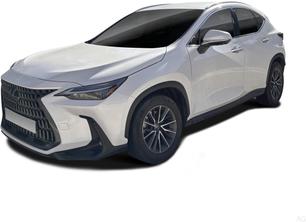
The Lexus NX 450h+ F Sport is a well-specified and plush-looking medium SUV that has a plug-in hybrid powertrain - a first for the brand.
On paper, it seems to tick the boxes for size, luxury and efficiency but we've been testing the flagship grade to see if it's a winning combo in real life.
S FAR as makeovers go, Hollywood has nothing on the transformation of Ford's small SUV.
Based on the Fiesta supermini only sold here in sizzling ST form, but using a stretched and widened version of its platform with heavily reworked underpinnings, the strikingly styled Puma is as charming – beguiling even – as its EcoSport predecessor was awkward. And we're talking about capabilities that are more than merely skin deep here.
We're not alone in our admiration – one respected UK publication awarded the Ford a 'car of the year' gong – and after nearly a month with our range-topping ST-Line V (for Vignale), we can understand why.
But the German-engineered, Romanian-made Puma is also a complicated proposition in Australia that requires some context, because it is certainly not for everyone.
The Lexus NX450h+ F Sport is a gorgeous mid-size SUV that combines great specs and a fairly efficient plug-in hybrid powertrain. It’s a comfortable and easy ride which should appeal to a wide range of driving styles. It also looks good parked at the kerbside of a city street and with it ticking most of the boxes, it may become your new best friend.
If a minimum price and maximum interior space are your priorities, then the Puma is not for you. Especially so in the flagship ST-Line V, which may seem too small and a tad cramped compared to, say, a Seltos, C-HR or ASX.
Where the Ford excels, typically, is in the way it encourages the keen driver while cosseting four occupants (and a surprising amount of their cargo). There's a poise and maturity to the way the Puma moves that puts it on a par with or even beyond some premium compact SUVs. Even the styling is a statement. If the badges (and dashboard) were covered, you might be convinced this cat is actually a Jag.
If all that is more important, then the ST-Line V is for you. The very antithesis, then, of the unassuming and unloved EcoSport the Puma usurps.
The NX simple looks like a scaled-down version of its larger RX cousin, so if you like that you’ll like what the NX.
It looks sweeter, though, with its smaller proportions being only 4660mm long and 1670mm high but there’s enough sharp pleating in the panelling and rear LED lights to give it a sporty edge. It’s a design that should appeal to a wide range of people.
The interior helps the NX compete against some of its flashier rivals, but the BMW X3's interior beats it hands down with the wow factor. Still, the dual-toned leather upholstery and fabrics of our test model scream understated luxury.
The perforated leather of the seats is supple underhand, but even the robust synthetic leather on the backs of the seats and some door panelling feels like the real stuff most of the time.
The dashboard components – like the air vents, displays and accents – are well integrated and seem well-built. The cockpit is intimate and plush overall, and it always reminds you that you're in the cabin of a luxury vehicle.
If you search for the 1998 Puma coupe, you'll see some vague similarities with its modern SUV namesake, especially in their anthropomorphic face. It's in the eyes. There are also hints of Aston Martin (DBX), Porsche (Macan) and – let's face it – Mazda (CX-3).
Yet the real achievement lies in the way Ford has managed to make a 4.2-metre-long by 1.8m wide by 1.6m high crossover look so svelte, with the resulting balanced proportions, flowing lines and taut surfacing giving the Puma quite an athletic visual presence. After the EcoSport failure, head-turning looks were deemed paramount.
The extra girth gained by widening the Fiesta's platform allowed Ford's designers to create a muscular body that could also accommodate a metre-wide tailgate opening, while beneath the cargo floor is an exceptionally deep storage box, bringing better-than-expected practicality to boot.
The cabin of the NX is spacious where it needs to be for four adults to be comfortable on a longer journey, and features enough equipment to satisfy most.
Access is best at the front because of the wider door apertures and while still easy enough to get in and out of from the back, the rear wheel arch cuts into the aperture a bit.
The front seats are very comfortable with thick padding, tall side bolsters that lock you into place in a turn as well as heating and cooling functions.
The back seats are almost as comfortable as the front! However, the outboard seats offer the best under-thigh support. It is a shame that they miss out on heat functions for its grade level, though.
Storage is fairly good for the class, with lots of small item cubbies up front like a sunglasses holder, a mini drawer next to the drivers' knee and a dedicated phone holder and two cupholders. The large glove box (that can hold more than just a manual) and mid-size middle console shoulder most of the storage burden, though.
In the back you get a couple of map pockets, small storage bins and two cupholders. which is most than enough for this size of SUV.
The boot offers an impressive 520L of capacity and a level loading space makes it an easy car to slide larger gear in and out of. The little storage compartment under the floor is handy for charging cables and the hands-free powered tailgate is always handy to have.
The technology is a nice mix of easy-to-use and high-end with a responsive touchscreen on the 14-inch multimedia display. The system has built-in sat nav, wireless Apple CarPlay and Android Auto. The CarPlay was simple to set up and has maintained a steady connection with my iPhone this week.
Charging options are decent with two USB-C ports and a 12-volt socket per row, as well as a wireless charging pad up front.
Compact yet spacious, the ST-Line V's interior has strong as well as weak points.
Let's start with the latter. The most obvious connection with the Fiesta is in the Puma's dashboard, which is largely shared between the two. After all the effort expended on the design and chassis, this is somewhat disappointing. There's nothing wrong essentially with the fascia's aesthetics or functionality – it's just that the look is humdrum and dated. What's needed is something with the visual wow factor as found in the latest Peugeot 2008, especially at this price point.
Yet Ford has at least tried to put some tinsel inside this most expensive version of its smallest SUV.
Stitched perforated leather seat facings, carbon-fibre-look trim and soft vinyl coverings in key touchpoint areas bring an upmarket look and feel, backed up by a now-familiar digital instrumentation layout, a lovely flat-bottomed three-spoke steering wheel, easy and intuitive multimedia interface and a wireless phone charger. That electronic cluster, by the way, changes colour and markings but doesn't have the scope of multimedia displays of, say, Audi's Virtual Cockpit. It's comparatively rudimentary.
Conversely, there's a solidity and quietness as well, offering a level of refinement that's usually found in more-premium Euro alternatives. We weren't expecting that, though of course this is a German Ford product.
Our test car also boasted a vast glass opening sunroof, adding to the opulence. With all this gear, the ST-Line V's cabin is properly appealing.
On the practicality front, entry and egress is pretty good, the driving position is excellent (thanks in no small part to a big amount of adjustability for both the steering column and seats), the front cushions themselves are sumptuously enveloping, while wide door pockets and a big glovebox obviously come in useful. And there's a USB-C outlet in the centre cubby between the seats. How modern.
However, rear vision out is poor, there are no seat warmers and some of the lower-lying plastics are a bit drab.
The back seat isn't really suitable for people over 175cm, as kneeroom is limited and taller scalps may scrape the ceiling with the twin-pane sunroof in situ. The latter also means no overhead grab handles.
But the backrest angle and cushions themselves are fine, even for longer journeys. Just don't expect to squeeze a third adult in the back unless rubbing shoulders won't bug you. Note, too, that the rear cushion does not slide or tilt forward to allow for a lower load area when the backrest is folded down. Pity.
There is a receptacle in both doors for small bottles but no cupholders whatsoever (how can Ford call itself an American company?), or face-level air vents – though the large dash vent outputs do reach the rear. Amenities such as USBs and cupholders are AWOL; and vision out from back there is limited by the high shoulder line. Tough if you're trying to peer out. Sorry, Fido.
The Puma's overall compact footprint and rear packaging clearly suggest that this is aimed at singles, couples, or couples with smaller kids/pets to transport around.
Still, for a small SUV, the cargo area isn't bad at all. The standard floor depth is fairly generous, with a long and flat loading area, but below that is a narrower yet deeper waterproof area, while under that again is a space-saver spare wheel. Clever. Also intelligent is the luggage cover that lifts automatically with the tailgate, as per Mazda's CX-5.
For the record, cargo capacity is rated at 410 litres with the 60/40 split-fold rear seats erect – or 1170L with them folded down flat. These figures far outstrip the CX-3.
To sum the cabin experience… it's far-better than its Fiesta-sourced dashboard may suggest, while the ST-Line V treatment goes a long way in helping justify the premium. That's a win.
With a price hike of almost $6K, our flagship NX sits at $95,900 before on-road costs, but it's still slightly more affordable than its top-grade plug-in hybrid rivals.
The Volvo XC60 Ultra is priced from $101,390 and the outgoing BMW X3 xDrive30e sits at $102,500.
In the flagship variant, the standard features list is well-rounded to include both practical and luxury equipment. There are electric front seats with heating and cooling, an F Sport steering wheel with heating and touch controls, a sunroof, rear privacy glass, and a power-adjustable steering column.
Other items include a powered tailgate with a kick-to-open function, dual-zone climate control with a humidity sensor, parking assist, keyless entry/start, a digital key, Lexus Connected services app, a digital rearview mirror and 20-inch alloy wheels.
The technology looks gorgeous with the 14-inch touchscreen multimedia display taking centre stage with built-in satellite navigation, Bluetooth and wireless Apple CarPlay and Android Auto.
You also get a 10-speaker Lexus premium sound system, which has AM/FM radio, MP3 and WMA (Windows Media Audio) compatibility. There are four USB-C ports (2/2), a 12-volt socket and a wireless charging pad.
So while our test model misses out on some of the items you might expect to see for a top-model grade – like three-zone climate control and heated rear outboard seats – it still feels well-specified.
In Australia, the Puma plays in the burgeoning 'Light SUV' segment, so goes up against the ageing yet athletic Mazda CX-3 as well as Honda's HR-V, along with more recent challengers like the Hyundai Venue, Kia Stonic, Nissan Juke II, Toyota Yaris Cross and Volkswagen T-Cross. All are ready to pounce on the bestselling Hiroshima crossover.
What every one of these baby SUVs have in common is that they're based on B-segment – or supermini – platforms. However, prices and sizes do blur in this corner of the class, with larger small-car-derived rivals from the 'Small SUV' segment above, led by the Mitsubishi ASX, Kia Seltos, Mazda CX-30 and Hyundai Kona, also in the Ford's crosshairs.
Formidable opponents indeed, and just like that, the first big hurdle appears for the Blue Oval hopeful. Puma is Light SUV-sized but Small SUV-priced, with the entry-level grade kicking off from a tenner under $30,000, and before on-road costs. That's even more expensive than the VW.
This instantly eliminates it from many buyers' radars.
In contrast, a CX-3 Neo Sport starts from just $22,890. But that's with a manual gearbox, plain interior and steel wheels, whereas the Puma includes a ripper turbo engine/auto combo, climate control, a smartphone app that allows for remote vehicle location/ locking/unlocking/starting, voice-activated sat nav, wireless smartphone charging, lane-departure warning and assist, traffic-sign recognition, driver impairment monitor, 17-inch alloys and a leather steering wheel.
Along with other goodies like AEB with pedestrian alert, reverse camera, Bluetooth audio and telephony, Apple CarPlay/Android auto, digital radio, live traffic updates, fuel-saving engine stop/start, auto headlights, rain-sensing wipers, adaptive cornering fog lights, powered folding mirrors, push-button start and puddle lamps, the Puma looks and feels up-spec inside. To match most of that stuff in the CX-3 you'll need a Maxx Sport auto from $26,890.
Rising to the $32,340 ST-Line drops the Puma's ride height by just 2mm (to 164mm), but adds firmer suspension, a body kit, glitzier alloys, sports seats, a 12.3-inch digital instrument cluster, flat-bottomed steering wheel, paddle shifters and racier trim for a racier experience, though it loses the climate control for a manual air-con set-up. Strange. This grade might just be the sweet spot in the Ford's range, though it does sit about $1300 higher than the CX-3 sTouring equivalent.
Finally, the subject of this test, the ST-Line V, scores privacy glass, lashings of chrome, keyless entry/start, leather upholstery, climate control, premium audio, a powered tailgate and 18-inch alloys. All for $35,540, it's about on a par with CX-3 Akari, but lacks the latter's powered driver's seat and heated front cushions, among other items. The Mazda also goes one better with a $2000 AWD option from all mid-level grades up, as well as manual availability.
We recommend the $1500 Park Package, which ushers in adaptive cruise control with full stop/go and lane-centring tech, as well as blind-spot detection and auto parking. Premium paint adds $650, a panoramic roof $2000, roof rails $250 and a black roof $500.
Against compelling alternatives costing less, like the high-flying Seltos Sport+, CX-30 G20 Touring and Toyota C-HR Koba, the ST-Line V struggles to make sense on paper. Can the Puma's cabin and driving experience claw back its obvious price disadvantage?
The NX450h+ F Sport is the first attempt at a plug-in hybrid powertrain for Lexus. It pairs a 2.5-litre four-cylinder petrol engine with two electric motors, one located at each end of the car for all-wheel drive. Together they produce up to 227kW of power, but Lexus doesn’t quote the combined torque figure (cheeky).
The flagship model can do a 0-100km/h sprint in 6.3 seconds and features a smooth continuously variable transmission.
Overall, it moves quickly and the shift between the electric and engine components is barely noticeable.
A multiple international engine-of-the-year winner, the compact and lightweight, 999cc 1.0-litre twin-cam three-cylinder turbo petrol unit is the sole choice for now. Driving the front wheels via a seven-speed dual-clutch transmission (DCT), it delivers 92kW of power and 170Nm of torque.
With no all-wheel drive option, there are instead five driving modes – Normal, Sport, Slippery (for snow) and Trail (gravel) applications, working on the traction, stability and transmission algorithms to mimic some of the benefits of AWD. In the ST-Line V, a set of paddle shifters are fitted in lieu of the sadly-absent manual gearbox.
Owners of the previous-shape Fiesta S and EcoSport would be familiar with the 1.0T's smooth and strident performance, though these 2010s models used a completely different type of DCT. This was the highly-publicised Powershift, which consisted of a dry-clutch system, and was prone to a multitude of problems and failures in the petrol-powered auto versions.
In contrast, the Puma adopts a next-generation transmission dubbed 7DCT300; related to the item found in some smaller Mercedes-Benz, Renault and Nissan models, it instead employs a more-robust wet-clutch system with a higher torque threshold, so promises to be far more durable and reliable than the problematic old dry-clutch unit.
The flagship NX has a smallish 18.1kWh lithium-ion battery and a Type 2 charging port but no CCS enhancement, which means you can’t hook it up to a fast DC charger.
On a standard AC 240-volt domestic plug port, you can charge this from 0-100% in around 7hrs 30mins. You get a great electric-only NEDC-rated driving range of up to 87km and that means you really only have to charge it every other day, which I appreciated.
The official combined fuel cycle usage is 1.3L/100km, but you won’t really see that in the real world. After doing some longer trips mixed in with city slicking, my average real-world usage popped out at 6.5L/100km, and I averaged 20.2kWh/100km when in pure EV mode. They’re not the best hybrid figures I’ve seen for the class, but they're not too bad either.
The Puma's official combined average fuel consumption figure is just 5.3 litres per 100km, which works out to 121 grams per kilometre. Fitted with a 42-litre fuel tank, the potential range averages out to almost 800km between refills.
Out in the real world, we managed an exceptional 6.2L/100km, no doubt helped by an ever-eager stop/start system (which, annoyingly, kills the air-con when it extinguishes the engine; we found ourselves constantly pressing that 'off' button as the days wore on). This figure was achieved in motorway-heavy driving scenarios, albeit loaded with holiday gear and with the air-con blaring.
So, we took another, urban-focused test, in lots of slow-moving traffic situations, and averaged a still-solid 8.0L/100km.
Note, that while the Puma requires 95 RON premium unleaded, it's also perfectly happy on – and is even recommended by Ford for – the cheapest petrol currently offered in Australia, 94 RON E10 unleaded. Either way, the ST-Line V is a frugal small SUV.
This NX feels like it has lots of power in reserve when you put your foot down and never struggles going up big hills. When it’s in pure EV mode, it’s very quiet but there’s no big fanfare when this kicks over to the traditional engine. You barely notice it until you’re on the open road travelling at higher speeds, and that’s when the engine starts to sound more growly like its non-hybrid siblings.
The steering is forgiving without feeling too light and around town, the NX is nimble and sure of itself. The suspension is on the firmer side, so you’ll hear and feel the bigger bumps, but it never feels rough.
Visibility is decent with the largish windows, and the pillars that aren’t too wide from my driving position. I do like having the digital rearview mirror, though, because when you have a big car seat or tall adult in the back seat, the vision back there is hindered.
It’s pretty hard to find a modern car that’s terrible to park, especially in the mid-size SUV segment, and the NX is no different. Even in a small car space, you still have good clearance around you, which hopefully translates to less dings from neighbouring cars!
The 360-degree view camera system is top notch with its quality, and I like that the car disappears and you can see the ground underneath.
If the Puma's pricing is complicated, its cabin surprising accommodating and its real-world efficiency particularly parsimonious, then the upward trajectory of pros over cons continues with performance that's downright spirited.
Around town first. A small-displacement engine plus a turbo plus a DCT usually spell interminable spells of lag when all the driver longs for is an instant and measured response to a right foot flexing down onto the throttle.
But the Ford largely sidesteps such pitfalls. Though momentarily hesitant at take-off, the three-pot turbo does then get down to business in no time, with a sustained and satisfying surge of thrust as the revs grow, accompanied by a lusty and raspy thrum that's entirely in keeping with the Puma's track-pants appearance. And it doesn't let up either, with speed building up strongly through the gears, and much more so than the mere 999ccs suggest. Great for overtaking, or taking over a rapidly diminishing gap in the peak-hour derby.
Selecting Sport (a fiddly action that's located too far from the driver for safe eyes-on-the-road operation) lights an even bigger fire in the Puma's belly, with punchier acceleration and a very attentive transmission tune, slicing seamlessly through the seven ratios, leaving you in awe that a heart so small can possess such deep lungs.
Where the Ford really leaves an indelible mark is its enthusiasm to corner just as keenly, armed with brilliantly slick steering and a planted chassis that is set up to both encourage and interact with the driver. Minimal body roll and lots of grip from a quality quartet of Continental tyres ensure the Puma can be punted about like a sporty little hatchback, while the electronic safety tech allowing just enough leeway for lots of fun before they gently reel everything back into line.
We cannot think of a more enjoyable small SUV. And, by the way, those same driver-assist systems provide exceptionally nuanced lane-keep and adaptive cruise-control intervention – certainly they're right up there with the premium SUV brigade.
Given that our Puma wore 215/50R18 rubber, on a 'sports' suspension tune, the ride around town is commendable, with ample cushioning from the rough stuff. There is some tautness to the ride, but it isn't hard or rough; the ST-Line V walks a fine line between urban-agility and surface-decay isolation. In other words, it's commendably relaxing to travel in.
At higher speeds, some road and tyre noises do permeate through inside, and those Dumbo door mirrors do create some wind whoosh, but overall, given how dynamic the chassis is, the Puma feels grown up and sophisticated.
The NX comes with a maximum five-star ANCAP safety rating from testing done in 2022 and scored very highly across its individual assessment scores; 91 per cent for adult protection, 89 per cent for child protection, 83 per cent for vulnerable road user, and 92 per cent for its safety assist systems.
Eight airbags are standard which includes a front centre airbag and driver's knee airbag.
Other safety equipment includes emergency steering assist, blind-spot monitoring, lane departure alert, lane-keeping aid, emergency lane keeping, traffic sign recognition, safe exit assist, rear cross-traffic alert, LED daytime running lights, LED cornering lights, tyre pressure monitoring, and an emergency call button.
The only safety item which can feel intrusive when driving is the adaptive cruise control as it has a feature that scans for bends in the road and will slow the car down in anticipation of them. On paper, this isn’t a bad thing but in practice, it was sporadic when it activated and sometimes slowed the car dramatically on bends you wouldn’t even call bends!
AEB with car, pedestrian, cyclist, motorcyclist, backover and intersection turning assist is standard and operates from 5.0 - 80km/h (up to 180km/h for car detection).
There are two ISOFIX child seat mounts and three top-tether anchor points in the rear row. The seat isn't wide enough to accommodate three child seats side by side, so two will fit best.
Tested under the 2019 Euro NCAP crash-test regime, the Puma scores a top five-star ANCAP rating.
However, this means it does not meet the more stringent frontal offset crash, side impact crash and far-side impact crash-test criteria introduced by ANCAP for 2020 model-year vehicles – despite launching in September of that year.
Safety items include dual front, front-seat side and side curtain airbags (six in total), AEB with pedestrian and cyclist detection (working between 7km/h and 80km/h), lane-departure warning, lane-keep assist, traffic-sign recognition, driver fatigue alert, rear parking sensors, tyre pressure monitors and emergency assistance. These come on top of anti-lock brakes with electronic brake-force distribution and brake assist, stability control and traction control.
As mentioned earlier, adaptive cruise control, active park assistance, front parking sensors and blind-spot detection are part of the $1500 'Park Package'. Do it.
The NX is offered with a five-year/unlimited-kilometre warranty, which is on par with its European rivals.
It comes with a five-year capped price servicing program, where services are competitively priced at $595 each.
Servicing intervals are reasonable at every 12 months or 15,000km, whichever occurs first.
Ford offers the industry-average warranty of five-years/unlimited kilometres. Services intervals are every 12 months or 15,000km.
There is also a capped-price servicing scheme under the 'Ford Service Benefits' banner, with the first four years/60,000km of 'A and B' logbook services pegged at $299 per visit, and then between $320 and $560, for up to 12 years.
There is also a Ford loan car program, SYNC 3 map updates and Motoring Club Membership included during that time frame.