What's the difference?
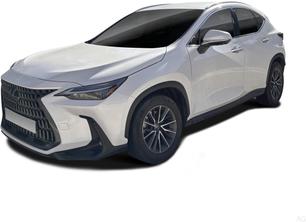
The Lexus NX 450h+ F Sport is a well-specified and plush-looking medium SUV that has a plug-in hybrid powertrain - a first for the brand.
On paper, it seems to tick the boxes for size, luxury and efficiency but we've been testing the flagship grade to see if it's a winning combo in real life.
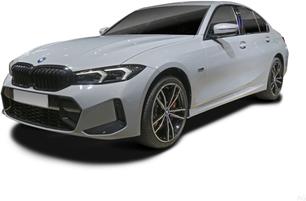
A hybrid BMW 3 Series makes sense now that everything is going electric. And the BMW 330e M Sport is the plug-in hybrid version of the 330i petrol variant. What's not to like, then?
Well, that's what we're here for because this review of the BMW 330e M Sport will reveal everything we've discovered about the car and will help you decide if it really does make sense to make it your next car.
We've covered everything from practicality to on-road performance, features and prices. And yes, we've run a fuel test to see just how efficient this plug-in hybrid is to live with in the real world.
The Lexus NX450h+ F Sport is a gorgeous mid-size SUV that combines great specs and a fairly efficient plug-in hybrid powertrain. It’s a comfortable and easy ride which should appeal to a wide range of driving styles. It also looks good parked at the kerbside of a city street and with it ticking most of the boxes, it may become your new best friend.
The 330e M Sport is an excellent car, but it could be a much better hybrid.
In Australia, where driving distances can be vast, a car that's as comfortable and easy to live with as this one is welcome. But for the electric range to dissipate so quickly, and not recoup again at a fast enough rate without plugging into a charger, is disappointing.
There are other plug-in hybrids, even among the more affordable mainstream brands, which can return charge to the battery incredibly quickly and effectively on the go.
If you are looking to make the step into a hybrid, then perhaps consider a fully electric car. There isn't a battery electric 3 Series on the market in Australia (yet), but BMW does sell the iX1 small SUV for less money than a 330e or the iX3 for a tad more.
Both are pure electric SUVs and have a range of between 400-500km. You'll never need petrol again, which makes a hybrid seem outdated.
The NX simple looks like a scaled-down version of its larger RX cousin, so if you like that you’ll like what the NX.
It looks sweeter, though, with its smaller proportions being only 4660mm long and 1670mm high but there’s enough sharp pleating in the panelling and rear LED lights to give it a sporty edge. It’s a design that should appeal to a wide range of people.
The interior helps the NX compete against some of its flashier rivals, but the BMW X3's interior beats it hands down with the wow factor. Still, the dual-toned leather upholstery and fabrics of our test model scream understated luxury.
The perforated leather of the seats is supple underhand, but even the robust synthetic leather on the backs of the seats and some door panelling feels like the real stuff most of the time.
The dashboard components – like the air vents, displays and accents – are well integrated and seem well-built. The cockpit is intimate and plush overall, and it always reminds you that you're in the cabin of a luxury vehicle.
Once upon a time sedans were all we drove, well mainly. Then SUVs became the style of car most people wanted. In fact, three out of four new cars sold in Australia today are SUVs.
So, I commend you on your choice of not just doing what everybody else does, and you'll be rewarded with better driving dynamics, and ownership of an iconic BMW - the four door, 3 Series.
And even though this is a plug-in hybrid version of the 3 Series it's identical in styling to the petrol variants. Only the light blue border around the BMW roundel is the indication that it's an electric vehicle. That and the charging flap near the left front wheel.
The M Sport pack adds some very sexy features such as the M Sport aerodynamic body kit, the door sills and M Sport seats, but the M Sport Pro Pack our car came with adds a black gloss grille, boot lid spoiler and the snazzy seat belts.
The cabin's double screens are impressive but I miss analogue gauges and found the digital instrument cluster overly busy and led more by cool design than functionality.
The cabin of the NX is spacious where it needs to be for four adults to be comfortable on a longer journey, and features enough equipment to satisfy most.
Access is best at the front because of the wider door apertures and while still easy enough to get in and out of from the back, the rear wheel arch cuts into the aperture a bit.
The front seats are very comfortable with thick padding, tall side bolsters that lock you into place in a turn as well as heating and cooling functions.
The back seats are almost as comfortable as the front! However, the outboard seats offer the best under-thigh support. It is a shame that they miss out on heat functions for its grade level, though.
Storage is fairly good for the class, with lots of small item cubbies up front like a sunglasses holder, a mini drawer next to the drivers' knee and a dedicated phone holder and two cupholders. The large glove box (that can hold more than just a manual) and mid-size middle console shoulder most of the storage burden, though.
In the back you get a couple of map pockets, small storage bins and two cupholders. which is most than enough for this size of SUV.
The boot offers an impressive 520L of capacity and a level loading space makes it an easy car to slide larger gear in and out of. The little storage compartment under the floor is handy for charging cables and the hands-free powered tailgate is always handy to have.
The technology is a nice mix of easy-to-use and high-end with a responsive touchscreen on the 14-inch multimedia display. The system has built-in sat nav, wireless Apple CarPlay and Android Auto. The CarPlay was simple to set up and has maintained a steady connection with my iPhone this week.
Charging options are decent with two USB-C ports and a 12-volt socket per row, as well as a wireless charging pad up front.
People will tell you SUVs are more practical than sedans... and they're right, but not in as many ways as they probably think.
The cabins of sedans and SUVs of the same size are close in terms of space, but the 330e comes with excellent storage - better than many SUVs I've tested, featuring enormous door pockets, and a deep centre console storage bin.
There are four cupholders, too. Two in the fold down armrest in the back and another two up front.
There's also wireless charging up front, plus USB ports for the back passengers. The second row also has its own climate control and directional air vents.
Legroom is excellent in the back and I can sit behind my driving position with plenty of room to spare. Headroom is also excellent thanks to the tall roofline of the 3 Series.
Where a sedan isn't as practical as an SUV is its ride height, which makes getting in and out of the latter easier (although the 330e's doors open very wide) and its boot opening.
SUVs have hatch-like openings and that offers a wider and taller aperture for carrying cargo.
The 330's boot was still big enough to fit our two largest CarsGuide suitcases (see the video), but the location of the battery means cargo capacity has been reduced from 480 litres in a petrol 330i to 375 litres in this 330e.
With a price hike of almost $6K, our flagship NX sits at $95,900 before on-road costs, but it's still slightly more affordable than its top-grade plug-in hybrid rivals.
The Volvo XC60 Ultra is priced from $101,390 and the outgoing BMW X3 xDrive30e sits at $102,500.
In the flagship variant, the standard features list is well-rounded to include both practical and luxury equipment. There are electric front seats with heating and cooling, an F Sport steering wheel with heating and touch controls, a sunroof, rear privacy glass, and a power-adjustable steering column.
Other items include a powered tailgate with a kick-to-open function, dual-zone climate control with a humidity sensor, parking assist, keyless entry/start, a digital key, Lexus Connected services app, a digital rearview mirror and 20-inch alloy wheels.
The technology looks gorgeous with the 14-inch touchscreen multimedia display taking centre stage with built-in satellite navigation, Bluetooth and wireless Apple CarPlay and Android Auto.
You also get a 10-speaker Lexus premium sound system, which has AM/FM radio, MP3 and WMA (Windows Media Audio) compatibility. There are four USB-C ports (2/2), a 12-volt socket and a wireless charging pad.
So while our test model misses out on some of the items you might expect to see for a top-model grade – like three-zone climate control and heated rear outboard seats – it still feels well-specified.
The BMW 330e M Sport lists for $97,400, which is $4000 more than its 330i petrol twin.
The M Sport part of the name is there because the 330e comes standard with the M Sport pack. And that gives you a tough body kit, M Sport suspension, M Sport seats and aluminium trim, as well as M Sport door sills.
The car we tested and the one you can see in the video and images also comes with the 'M Sport Pro Package'. It costs $2800 and adds a boot-lid spoiler, glossy black grille and tail pipes, and M Sport seat belts, among other goodness.
This car also had the optional 'Visibility Package' fitted. It costs $4800 and adds a sunroof and adaptive LED headlights.
There's no direct rival for the 330e in Australia now. Mercedes Benz used to have a C300e, a plug-in version of its C-Class, but retired it locally some time ago.
The standard features of the 330e M Sport are identical to the 330i M Sport.
So, along with that M Sport pack also coming standard on the 330e is a head-up display, a 12.3-inch digital instrument panel, a 14.9-inch media screen with sat nav, Apple CarPlay and Android Auto, three zone-climate control, wireless phone charging, digital radio and power adjustable front seats.
Is it good value? There's a stack of equipment, tech, beautiful M Sport additions and it all feels superbly high quality. But knowing you can have a 330i for less means you're paying more just for the hybrid system. So, let's talk about that...
The NX450h+ F Sport is the first attempt at a plug-in hybrid powertrain for Lexus. It pairs a 2.5-litre four-cylinder petrol engine with two electric motors, one located at each end of the car for all-wheel drive. Together they produce up to 227kW of power, but Lexus doesn’t quote the combined torque figure (cheeky).
The flagship model can do a 0-100km/h sprint in 6.3 seconds and features a smooth continuously variable transmission.
Overall, it moves quickly and the shift between the electric and engine components is barely noticeable.
The 330e M Sport has a 2.0-litre petrol engine and an electric motor. The engine makes 135kW while the motor produces up to 80kW, for a combined dollop of 215kW. Total torque is more than sufficient at 420Nm.
Acceleration to 100km/h from zero feels as quick as the 5.8 seconds BMW claims and that's also about a tenth of a second brisker than the 330i.
The 'XtraBoost' function combines the total output of both the engine and motor briefly providing that great acceleration.
An eight-speed automatic shifts gears smoothly with the drive going to the rear wheels.
I like all this very much - the responsive engine, the fantastic transmission, the extra oomph from the motor and the way it all works together seamlessly. It's just a shame it's not as efficient as some other new plug-in hybrids.
The flagship NX has a smallish 18.1kWh lithium-ion battery and a Type 2 charging port but no CCS enhancement, which means you can’t hook it up to a fast DC charger.
On a standard AC 240-volt domestic plug port, you can charge this from 0-100% in around 7hrs 30mins. You get a great electric-only NEDC-rated driving range of up to 87km and that means you really only have to charge it every other day, which I appreciated.
The official combined fuel cycle usage is 1.3L/100km, but you won’t really see that in the real world. After doing some longer trips mixed in with city slicking, my average real-world usage popped out at 6.5L/100km, and I averaged 20.2kWh/100km when in pure EV mode. They’re not the best hybrid figures I’ve seen for the class, but they're not too bad either.
The 330e M Sport is a plug-in hybrid which must be connected to an external power source regularly to charge its 12kWh battery.
The charging flap is located on the left side of the car near the front passenger door, which worked well for me as I could steer the 330e into my driveway and connect to a powerpoint on the wall using the charging cable provided.
It took me about six hours to charge the battery to 100 per cent from zero and that gives you a maximum 57km of electric driving range.
During my four days with the 330e Sydney's summer temperatures were hitting 34-degeres Celsius and with the climate control keeping the cabin at a hospitable 18C electric range was seriously cut short to about 40km.
I drove the 330e in hybrid mode nearly all the time - this is a hybrid after all. But there is a 'Sport' mode for more grunt and a 'Battery Hold' mode to save the charge for later.
I started with a full charge and a full tank of petrol, and for four days I lived with the 330e as I do with all my test cars.
I didn't aim to get the best fuel economy ever, nor was I wasteful with fuel. My wife and I, plus our two kids, just used it as our family car, doing trips to the beach, endless laps of the supermarket car park looking for a space, a birthday party, the lot.
I drove 154.7km over those four days and charged it on the second day after the battery was drained completely before driving another 70km or so over the next couple of days.
When I filled up after this it needed 7.74 litres to reach full again - it's a small 41 litre tank.
That converts to average fuel consumption of 5.0L/100km, which is bang on double the 2.5L/100km BMW says you should get.
I don't doubt you could get 2.5L/100km, but you'd have to be doing short trips and charging almost every time you weren't driving. And not use the climate control on an icy blast setting.
I've tested other plug-in hybrids that achieved much better mileage and that's because their on-board charging capabilities were excellent.
Some were even able to use the petrol engine to power the motor in reverse and therefore act as a generator to recharge the batteries fully.
The 330e M Sport doesn't do a good job of charging its battery while on the go. Sport mode does recoup charge to the battery, but again, if you're doing a long motorway trip that charge evaporates fast.
I don't think this type of plug-in hybrid is suited well to our country where we don't blink an eye at travelling 100km for Christmas lunch and then drive back again.
Also think about if you ever go on a trip away and don't have access to a power point or public charger. It's happened to me.
This NX feels like it has lots of power in reserve when you put your foot down and never struggles going up big hills. When it’s in pure EV mode, it’s very quiet but there’s no big fanfare when this kicks over to the traditional engine. You barely notice it until you’re on the open road travelling at higher speeds, and that’s when the engine starts to sound more growly like its non-hybrid siblings.
The steering is forgiving without feeling too light and around town, the NX is nimble and sure of itself. The suspension is on the firmer side, so you’ll hear and feel the bigger bumps, but it never feels rough.
Visibility is decent with the largish windows, and the pillars that aren’t too wide from my driving position. I do like having the digital rearview mirror, though, because when you have a big car seat or tall adult in the back seat, the vision back there is hindered.
It’s pretty hard to find a modern car that’s terrible to park, especially in the mid-size SUV segment, and the NX is no different. Even in a small car space, you still have good clearance around you, which hopefully translates to less dings from neighbouring cars!
The 360-degree view camera system is top notch with its quality, and I like that the car disappears and you can see the ground underneath.
The 330e M Sport is outstanding to drive. The driving position is superb, the steering is effortless and accurate, handling is excellent and the ride is beautifully comfortable.
Brake pedal feel is surprisingly good for a hybrid - some have a wooden sensation.
The transition from electric motor to petrol engine is also remarkably smooth.
Acceleration in Sport mode is sudden, with the engine and motor combining their mumbo to move you. There is a 'fake' or synthesised exhaust note in Sport mode, but it sounds convincing.
Speaking of sounds at lower speeds, in fully electric mode the 330e emits a warning tone to alert pedestrians of your presence. It's quite loud in car parks and does actually make people turn around looking for a UFO.
The NX comes with a maximum five-star ANCAP safety rating from testing done in 2022 and scored very highly across its individual assessment scores; 91 per cent for adult protection, 89 per cent for child protection, 83 per cent for vulnerable road user, and 92 per cent for its safety assist systems.
Eight airbags are standard which includes a front centre airbag and driver's knee airbag.
Other safety equipment includes emergency steering assist, blind-spot monitoring, lane departure alert, lane-keeping aid, emergency lane keeping, traffic sign recognition, safe exit assist, rear cross-traffic alert, LED daytime running lights, LED cornering lights, tyre pressure monitoring, and an emergency call button.
The only safety item which can feel intrusive when driving is the adaptive cruise control as it has a feature that scans for bends in the road and will slow the car down in anticipation of them. On paper, this isn’t a bad thing but in practice, it was sporadic when it activated and sometimes slowed the car dramatically on bends you wouldn’t even call bends!
AEB with car, pedestrian, cyclist, motorcyclist, backover and intersection turning assist is standard and operates from 5.0 - 80km/h (up to 180km/h for car detection).
There are two ISOFIX child seat mounts and three top-tether anchor points in the rear row. The seat isn't wide enough to accommodate three child seats side by side, so two will fit best.
The 3 Series was awarded the maximum five-star ANCAP rating when it was tested in 2019. The 330e comes standard with AEB, lane keeping assistance, blind-spot warning and rear cross-traffic alert.
There are excellent cameras front and rear and LED headlights, too.
Adaptive cruise control is also standard on the 330e M Sport.
The NX is offered with a five-year/unlimited-kilometre warranty, which is on par with its European rivals.
It comes with a five-year capped price servicing program, where services are competitively priced at $595 each.
Servicing intervals are reasonable at every 12 months or 15,000km, whichever occurs first.
The 330e M sport is covered by BMW's five-year/unlimited kilometre warranty. The hybrid battery is covered by a six-year/100,000km warranty.
BMW offers a five-year/80,000km service package for the 3 Series for $2150.
Service intervals are condition-based, and the car will let you know when it's time for a check-up.