What's the difference?
Anybody who doubts that Hyundai is gunning for the number one in the world has rocks in their head. Big heavy ones. Korean companies do not settle for anything less than number one. The second-generation Genesis (our first taste here in the Antipodes as the gen-one had its steering wheel on the wrong side) is proof.
What's different about Hyundai's unstoppable rise is the way they're going about it. They've always done their own thing in Korea, reinventing themselves time and again when they strayed off the beaten path.
The Genesis is a gamble for a Korean company in foreign markets whose default setting for luxury is marked, Britain or Germany. If Hyundai gets the Genesis wrong there will be howls of derision, or at best patronising pats on the back - "Nice try, you'll get there one day". But if they get it right...
The large passenger car segment, meaning big sedans and wagons, has taken a huge nosedive in terms of sales and available models over the past decade or so.
The Holden Commodore, Chrysler 300, Kia Stinger and even the Volkswagen Passat? All axed locally.
The Toyota Camry remains a strong fleet and private buyer option (hello Uber). But it leans more towards medium than properly large car proportions, as confirmed by industry statistician, VFacts segmentation.
The only vehicle left now before you start considering premium players is the Skoda Superb. It has just launched locally in new, fourth-generation guise.
Sitting alongside the new Kodiaq as a flagship product for the Czech brand, the Superb continues to now only be offered in a single, fully-loaded Sportline trim level. Thankfully, you still get the option of either a liftback or wagon body style.
Skoda has made a wide array of changes to this new-generation Superb, including plenty of new ‘Simply Clever’ touches, but will Australians actually care about this new version of a dying breed?
@carsguide.com.au Simply Clever? The new 2025 Skoda Superb’s ‘Smart Dials’ are a set of three physical dials that are capable of altering the following: Climate control temperature Air direction Fan speed Seat heating, ventilation Drive mode Sat-nav map zoom Volume P.S. these Smart Dials also feature in the new 2025 Skoda Kodiaq SUV#skoda #superb #sedan #wagon #car #carsguide #fyp ♬ original sound - CarsGuide.com.au
Read along to find out.
The Genesis is not quite a match for cars twice its price but it makes you think what's possible. It doesn't have the dynamic brilliance of a BMW or the self-assured faultless execution of a Mercedes. Lexus ought to be worried, though - why would you have an LS when you could have this? The only answer is 'badge'.
The Genesis is an epoch-making car for the Korean manufacturer. As the company has got better, there are fewer excuses for overlooking it. While the Genesis is pitched into a shrinking market, it's not really meant for the average i30 buyer to buy, but to see.
It's bristling with tech and is not only a halo car but a shot across the bows of both Lexus and the Germans. Attached to that shot is a note: "We're coming for you." In other words, Hyundai got it right.
It’s safe to say the Skoda Superb is well… superb.
This car has consistently been one of my favourites, and that’s not something I say lightly. It's a fantastic package that combines all the best parts of comfort, practicality and driving dynamics.
All of those points stand out as key reasons why, despite the fact Australians are no longer buying passenger cars in substantial numbers, you should consider this over a similarly-sized SUV.
Note: CarsGuide attended this event as a guest of the manufacturer, with travel and meals provided.
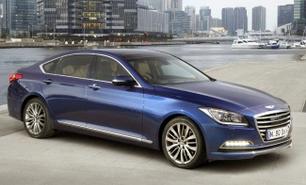
The Genesis is like no other Hyundai. For a start, it's gigantic - it looks easily as big as a BMW 7 Series (it isn't) with the road presence to match. There's a lot of BMW from most directions, but with a sharper approach to the creasing and character of the sheet metal.
Towards the rear it's more BMW 6 Series Gran Coupe and is all the better for it. The style is understated and technocratic.
Inside is also very Germanic, but with a bit more of a Lexus feel
The big wheels from the Ultimate pack help make it look lower and sleeker, too.
Inside is also very Germanic, but with a bit more of a Lexus feel. Our car had the lighter leather which meant that the wood and the metal materials didn't necessarily work well together.
The interior is expertly put together and feels like it will last forever.
The only jarring moment is the gear selector is shared with our long-term Hyundai i30 - it looked a bit cheap in what is otherwise a beautifully executed cabin - it needs more heft.
On Australian-delivered cars there is just one Hyundai badge, sitting proudly on the boot - you get the feeling this was debated long and hard and when the decision was made to go for it, a big one was chosen.
However, the winged Genesis branding takes pride of place everywhere else. When you approach the car at night and the puddle lamps come on, the Genesis logo is projected on to the ground, crisp and clear.
On the outside of the new Skoda Superb its design is more of an evolution than revolution. This is no bad thing because I’ve always been a big fan of the Superb’s exterior design, even more so now because it’s the only one of its kind left.
From a lot of angles this new Superb gives major Holden ZB Commodore vibes, especially the wagon from the rear three-quarter.
While I like the sporty looks and glossy black highlights, I wish Skoda still offered a non-Sportline version of the Superb locally. Globally there are premium L&K versions available with chrome accents, and they look properly premium-pushing.
Inside, the Superb is a classic flagship Skoda through and through. It balances having beautifully high-end finishes with TARDIS-like practicality with ease.
Ahead of the driver there’s a sporty-looking perforated leather steering wheel which has Skoda script written out on the hub, rather than the classic winged arrow Skoda logo.
It’s an interesting look that forms as part of the new corporate design language. I imagine I’ll get used to it after a while, and it's all subjective, but I’m currently not a huge fan.
Looking around the cabin, the interior is dominated by the new 13-inch touchscreen multimedia system that’s high-resolution. It’s mounted high on the dashboard much like an iPad, which mightn’t be to everyone’s taste.
Flanking this new touchscreen is an interesting slotted air vent design that spans the entire dashboard. It’s a really cool look, though it’s finished in glossy black and will likely gather dust easily.
Speaking of black, a lot of the Superb’s interior is finished in black. I wish there were more pops of colour, whether that's with different finishes or textures to create some visual interest.
The only way to describe the Genesis' pricing is aggressive - kicking off at $60,000, it's the most expensive Hyundai money can buy, but with a spec list like this, you won't feel at all short-changed.
Your sixty large buys you a huge cabin with a seventeen speaker stereo, auto headlights and wipers, LED ambient lighting inside and out, dual-zone climate control, keyless entry and start, powered front seats which are heated and cooled, satnav, front and rear parking sensors, and plenty of other bits and pieces.
Our car had the $22,000 Ultimate package, adding 19-inch alloys, blind spot sensor, front and side cameras, around-view display, real leather, more adjustments for the driver's seat, ventilated seats in the front, heated rear seats, panoramic glass sunroof, acoustic glass, heads-up display, powered bootlid and LED foglamps.
The Genesis is like no other Hyundai
You can have a lot of the more useful features in the $11,000 Sensory Pack. It's a good middle ground that, for example, features the excellent heads-up display.
The 9.2-inch screen splits the asymmetric air-conditioning vents. The software is unique to the Genesis and a huge leap forward over the rest of the Hyundai range - classy, smooth graphics, a good responsive screen.
You control the seventeen speaker stereo from here, which kicks out a rich sound and an impressive Bluetooth performance - rear seat passengers can also run the stereo from their armrest. The satnav is detailed and chatty, while the excellent heads-up display shows a configurable information set in strong, clear graphics.
The new Skoda Superb continues to only be offered in flagship Sportline trim level in either liftback or wagon body styles.
Pricing starts at $67,990, before on-road costs, for the liftback and extends to $69,690 before on-roads for the wagon.
While this is a circa-$2500 price rise over the outgoing model, Skoda has packaged in a considerable amount of equipment that was previously locked away in option bundles. As a result, this car is fully loaded.
Outside there are slimmer matrix LED headlights, new design 19-inch alloy wheels, gloss black exterior highlights, dynamic indicators and a hands-free power tailgate.
Inside there are new sport seats with integrated head rests that are also electrically adjustable, heated, ventilated and have a massage function.
Other interior highlights include a heated steering wheel, 10-inch digital instrument cluster, 13-inch touchscreen multimedia system, 12-speaker Canton premium sound system, wireless charging with ventilation, roll-up rear sunshades and heated outboard rear seats.
On the dynamics front, the new Superb picks up 'Dynamic Chassis Control Plus', which is essentially Skoda-speak for adaptive dampers. It’s an updated version which features two independently controlled valves, and allows for 15 stages of configurability. There’s now also progressive steering.
The Genesis is powered by Hyundai's own 3.8-litre V6 developing 232kW and 397Nm, mated to Hyundai's eight-speed automatic transmission.
Despite weighing just under two tonnes, the Genesis completes the dash to 100km/h in 6.5 seconds.
It has a claimed 11.2L/100km on the combined cycle. In what must be a first, we got below that, averaging 10.8L/100km over two weeks. And that's without stop-start fuel-saving to blunt the effect of lot of city driving.
The Genesis is not going to tempt you into a track day, even with rear wheel drive
We'd still like to try the V8 - only available in left-hand drive markets - though.
The new-generation Skoda Superb is still powered by a 2.0-litre turbo-petrol four-cylinder petrol engine, but it has been upgraded.
It produces 195kW of power, which is technically 9.0kW less than the previous-generation version, and 400Nm of torque, which is 50Nm more.
It’s worth noting this engine also features in the new Skoda Octavia RS, as well as the Volkswagen Golf GTI and Tiguan R-Line.
The engine is mated to a seven-speed dual-clutch automatic transmission with drive sent through an all-wheel drive system.
At five metres long, with a ride firmly pitched in the luxury camp, the Genesis is not going to tempt you into a track day, even with rear wheel drive.
Blindfold your passengers and swap them between a Lexus, a BMW and a Genesis and the overwhelming impression they'll get is one of incredible smoothness.
If you're wanting sudden movements, this isn't the car for you
Sitting in the back of the Genesis, it's easily as good as the German and luxury Japanese competition. The seats are hugely comfortable, there's ample head, leg and shoulder room and it feels lot nicer than anything within a bull's roar of its price.
No matter where you sit, it's an incredibly quiet car. The engine is a distant whoosh, the tyre noise muted and there's almost no wind or ambient noise. It's supremely comfortable and the excellent stereo will wash away what little noise does invade.
It certainly feels its weight from the driver's seat, with a competent, soft turn-in, but if you're wanting sudden movements, this isn't the car for you.
The Genesis is an epoch-making car for the Korean manufacturer
On fast flowing roads you can have some fun, but things will get floaty and that will quickly kill that fun. The ride and isolation from the rest of the world is completely worth it.
Starting up the Skoda Superb Sportline you hear the familiar sound of this 2.0L engine, variations of which are used in numerous VW Group models. It’s fairly muted and smooth, which makes the cabin a serene place to be.
Setting off you use the column-mounted gear selector to change gears. It takes a little bit to get used to the new placement, but after a few uses it feels normal. This relocation has also allowed for so much more storage on the centre console.
Around town the Superb’s 2.0-litre turbocharged four-cylinder petrol engine barely makes itself known. The full 400Nm of torque comes on tap from as little as 1650rpm, making this car effortless to drive and almost turbo-diesel-like in practice.
Skoda claims the new Superb can do the 0-100km/h sprint in 5.6 seconds in liftback guise and 5.7 seconds in wagon guise. This is 0.3 seconds faster than the old version.
It barely requires any thought driving in the typical urban sprawl. The car does all the heavy lifting for you.
When it comes to parking, however, there’s no way around the fact this is a long car. You may find yourself needing to do three-point turns in order to navigate tighter urban car parks.
It doesn’t help that the surround-view camera system is surprisingly low-resolution, which is disappointing given the Superb is a flagship vehicle for Skoda. It’s more noticeable because the central touchscreen is incredibly high-resolution.
As standard there’s a seven-speed dual-clutch automatic transmission which has one more ratio than the previous-generation Superb. Though this isn’t necessarily obvious in everyday driving, the dual-clutch is still a classic Volkswagen Group unit, meaning it’s snappy and intuitive.
This car comes with a progressive ratio steering system which increases the amount the wheels physically turn as you feed on more lock with the steering wheel. It helps make the car feel more agile and sporty, while also requiring less effort.
With the updated adaptive dampers you can now configure the system in 15 different ways, which is wild. This spans all the way from beyond ‘Comfort’ through to ‘Sport’.
In ‘Normal’ mode the Superb still errs on the sportier side, which makes sense because the Sportline package is standard. This also brings a 15mm ride height reduction.
Despite feeling sporty as standard, the Superb is never uncomfortable. This is really surprising because there are sizeable 19-inch alloy wheels and low-profile tyres.
Dialling the car through to ‘Comfort’ mode makes the drive pretty much effortless. It’s incredibly comfortable and supple, ironing out virtually any road imperfection you can throw at it.
Unlike other Skoda vehicles with adaptive dampers, this Superb doesn’t get that bouncy cloud-like feeling in ‘Comfort’ mode. Instead, it still feels grounded.
There’s an ‘Eco’ drive mode which unsurprisingly prioritises fuel economy. It makes upshifts happen low down in the rev range, and also shifts the car into neutral when coasting.
Although the car is in ‘Eco’ mode, it doesn’t feel like you’re lacking any oomph. You’ll still be keeping up with urban traffic easily.
Slotting the Superb into ‘Sport’ mode immediately sharpens the throttle response and makes the car feel like it’s hunkering down, ready to attack. The suspension and adaptive dampers noticeably become stiffer, making you jiggle about in the driver’s seat more than in other drive modes.
It’s surprising how Sport makes this huge sedan and wagon feel much smaller than it is. This is likely credit to how dynamic the Volkswagen Group has made its 'MQB Evo' platform.
Thanks in part to the all-wheel drive system, this car is an absolute beast out in the twisties. You can take corners with a lot of heat and still feel incredibly in control.
Once again, the car does a lot of the heavy lifting, allowing you to focus on what’s going on with the road ahead. It’s very smile-inducing.
While this car is dynamic and thrilling to drive, it’s worth noting it’s no full-fat RS model. You reach a ceiling with the turbo-petrol’s outputs when accelerating hard, but there’s still plenty to play with. Only proper performance car nerds will care about this.
Out on the open road, the Superb becomes a great long-distance tourer. It feels like I could drive from Melbourne to Adelaide in one hit without stopping.
At higher speeds, however, there is a bit of road and tyre noise. This is common in European vehicles, but still ruins the ambience of the cabin if you don’t like listening to music behind the wheel.
More concerning, though, is the virtually brand-new Superbs we sampled at this media launch were already starting to develop noticeable rattles in the door cards. Underwhelming in a circa $70K car.
Nine airbags, traction and stability control, lane departure warning, forward collision control, ABS, brake force assist and distribution and traction and stability control bring the ANCAP count to five stars.
The Sensory and Ultimate packs add blind spot sensors and around view cameras.
The new-generation Skoda Superb hasn’t been tested by ANCAP just yet, though Euro NCAP gave the car a maximum five-star rating. The two safety authorities have harmonised testing protocols so it’s likely the rating will eventually be carried across.
In terms of standard equipment, the Superb has 10 airbags, an upgraded autonomous emergency braking (AEB) system, blind-spot monitoring, front and rear cross-traffic alert, lane-keep assist, lane centering, adaptive cruise control, traffic sign recognition, driver fatigue detection, a surround-view camera, front and rear parking sensors and a semi-autonomous park assist.
There are ISOFIX points on the outboard rear seats, as well as top-tether child seat anchorages on all three rear seats.