What's the difference?
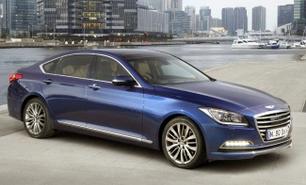
Anybody who doubts that Hyundai is gunning for the number one in the world has rocks in their head. Big heavy ones. Korean companies do not settle for anything less than number one. The second-generation Genesis (our first taste here in the Antipodes as the gen-one had its steering wheel on the wrong side) is proof.
What's different about Hyundai's unstoppable rise is the way they're going about it. They've always done their own thing in Korea, reinventing themselves time and again when they strayed off the beaten path.
The Genesis is a gamble for a Korean company in foreign markets whose default setting for luxury is marked, Britain or Germany. If Hyundai gets the Genesis wrong there will be howls of derision, or at best patronising pats on the back - "Nice try, you'll get there one day". But if they get it right...
Once upon a time, people would dream about owning a Mercedes-Benz 450SLC – the C107 sports/luxury coupe flagship of the 1970s.
Sexy, stylish, secure and incredibly solid, it embodied the brand’s ‘Engineered Like No Other Car' mantra of the era.
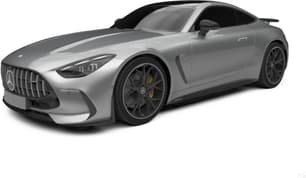
Today’s all-new, second-generation, C192 AMG GT Coupe is something of an indirect descendant of this sort of thinking, changing tack from its supercar-esque 2014 C190 predecessor, with more space, more seats, more sensibility and, conversely, even more steak and sizzle from its glorious V8.
A modern-day SLC? The Porsche 911, Aston Martin DB12, Maserati GranTurismo and Bentley Continental GT’s worst nightmare? Or something else entirely?
These questions and more are answered below.
The Genesis is not quite a match for cars twice its price but it makes you think what's possible. It doesn't have the dynamic brilliance of a BMW or the self-assured faultless execution of a Mercedes. Lexus ought to be worried, though - why would you have an LS when you could have this? The only answer is 'badge'.
The Genesis is an epoch-making car for the Korean manufacturer. As the company has got better, there are fewer excuses for overlooking it. While the Genesis is pitched into a shrinking market, it's not really meant for the average i30 buyer to buy, but to see.
It's bristling with tech and is not only a halo car but a shot across the bows of both Lexus and the Germans. Attached to that shot is a note: "We're coming for you." In other words, Hyundai got it right.
The GT63 4Matic+ is a breathtaking example of everything that Mercedes-Benz and AMG are.
Ferociously fast, incredibly agile and superbly sophisticated, it should be on anybody’s shortlist, if that also includes a Porsche, Aston Martin, Maserati or even a Lamborghini. And it’s definitely much more than yesterday’s SLC ever was – for similar money in today’s terms, as it turns out.
But, around Tasmania’s glorious roads at least, the Mercedes-AMG lacks the ride comfort and road noise isolation to be a fully-rounded-out GT, and that’s a disappointment for a brand with such formidable history in making such cars.
The Genesis is like no other Hyundai. For a start, it's gigantic - it looks easily as big as a BMW 7 Series (it isn't) with the road presence to match. There's a lot of BMW from most directions, but with a sharper approach to the creasing and character of the sheet metal.
Towards the rear it's more BMW 6 Series Gran Coupe and is all the better for it. The style is understated and technocratic.
Inside is also very Germanic, but with a bit more of a Lexus feel
The big wheels from the Ultimate pack help make it look lower and sleeker, too.
Inside is also very Germanic, but with a bit more of a Lexus feel. Our car had the lighter leather which meant that the wood and the metal materials didn't necessarily work well together.
The interior is expertly put together and feels like it will last forever.
The only jarring moment is the gear selector is shared with our long-term Hyundai i30 - it looked a bit cheap in what is otherwise a beautifully executed cabin - it needs more heft.
On Australian-delivered cars there is just one Hyundai badge, sitting proudly on the boot - you get the feeling this was debated long and hard and when the decision was made to go for it, a big one was chosen.
However, the winged Genesis branding takes pride of place everywhere else. When you approach the car at night and the puddle lamps come on, the Genesis logo is projected on to the ground, crisp and clear.
This is still clearly a Mercedes AMG GT coupe, like the 2014 C190 original, but a ground-up redesign sees it subtly yet significantly altered.
Some 270kg heavier than before, the larger-in-every-dimension body combines aluminium, steel, magnesium and fibre composite materials for improved rigidity and a lower centre of gravity. Length (4729mm) and wheelbase (2700mm) have been stretched by 177mm and 70mm respectively. Width (1984mm) and height (1352mm) are also up.
The nose treatment is similar to before, especially with the bulgy bonnet and signature vertical slatted grille fitted. These, combined with the LED digital headlight shape effect, is reminiscent of, but far-better executed than, the goofy-looking MG5’s face.
Underneath, it's an all-new platform shared with the SL, with the rear transaxle of the old car replaced by a permanent AWD system, leading from 46:54 front/rear weight distribution to 50:50 as a result.
That aggressive, exaggerated cab-backward/ultra-long bonnet silhouette that visually connected it with the SLS gives way to more-conventional and practical coupe proportions that is striking if not especially original, since they do look quite 911-esque. Along with the longer wheelbase and wider tracks, the result allows for two small rear seats to be fitted, while liftback cargo access remains.
Similarly, in the name of way-more usable interior packaging, Mercedes-AMG says it pushed the driving position nearly 180mm forward compared to the previous GT. Let’s see what that all looks like inside.
The only way to describe the Genesis' pricing is aggressive - kicking off at $60,000, it's the most expensive Hyundai money can buy, but with a spec list like this, you won't feel at all short-changed.
Your sixty large buys you a huge cabin with a seventeen speaker stereo, auto headlights and wipers, LED ambient lighting inside and out, dual-zone climate control, keyless entry and start, powered front seats which are heated and cooled, satnav, front and rear parking sensors, and plenty of other bits and pieces.
Our car had the $22,000 Ultimate package, adding 19-inch alloys, blind spot sensor, front and side cameras, around-view display, real leather, more adjustments for the driver's seat, ventilated seats in the front, heated rear seats, panoramic glass sunroof, acoustic glass, heads-up display, powered bootlid and LED foglamps.
The Genesis is like no other Hyundai
You can have a lot of the more useful features in the $11,000 Sensory Pack. It's a good middle ground that, for example, features the excellent heads-up display.
The 9.2-inch screen splits the asymmetric air-conditioning vents. The software is unique to the Genesis and a huge leap forward over the rest of the Hyundai range - classy, smooth graphics, a good responsive screen.
You control the seventeen speaker stereo from here, which kicks out a rich sound and an impressive Bluetooth performance - rear seat passengers can also run the stereo from their armrest. The satnav is detailed and chatty, while the excellent heads-up display shows a configurable information set in strong, clear graphics.
Starting from $370,400 (all prices are before on-road costs), the Mercedes-AMG GT63 4Matic+ is priced and positioned as something of an eagle amongst some pretty delectable doves, given its combination of four seats, 430kW of power, 800Nm of torque and four-wheel drive.
No rival equivalents can match the Mercedes on paper. The 398kW/610Nm 911 Carrera 4 GTS T-Hybrid offers less power but starts from $400,000-plus. The 410kW/650Nm GranTurismo Trofeo begins at $450K, the 500kW/800Nm DB12 from $455K and the 404kW/470Nm Continental GT from $460K.
Only the 460kW/750Nm BMW M8 Competition comes closest to the Mercedes-AMG, from $380K.
Side note, today’s GT is only slightly more expensive than what the 450SLC was nearly half a century ago when adjusted for inflation.
And, just like with that classic old Benz, it shares much with the brand’s legendary SL convertible stablemate – including, in this case, standard all-wheel drive and active rear-axle steering… aka 4WS to select third and fourth-generation Honda Prelude owners out there.
What else does $400K-plus buy you? As you’d expect, the GT63 4Matic+ comes choc-full of standard equipment, much of it typical of the luxury coupe breed, with leather-covered and electrically operated everything.
How about a front-axle lift system with GPS-enabled memory that automatically raises the GT’s nose to help clear bumps and then remembers to do so next time?
There are climate-controlled AMG sports seats with inflatable bolstering and massaging functionality, a fixed glass roof, a head-up display, augmented-reality satellite navigation, 360-degree surround views, performance telemetry data as part of an extensive multimedia system, an 11.9-inch portrait touchscreen, 11-speaker Burmester audio, a handsfree-powered tailgate, 21-inch alloys and cutting-edge driver-assist safety tech. More on that in the Safety section below.
Then there are the myriad option packs, bumping the GT63’s price up towards $500,000. These include a $2.7K seat trim package; a $10K AMG Night Package that adds darker trim treatments (often where chrome was); an aerodynamics package with fixed spoiler replacing the standard active spoiler; a $2.6K AMG Performance Seat package; a $13K Carbon Fibre package and $13.2K Ceramic Brakes.
Now, while the new GT does ditch the previous model’s unique rear transaxle spaceframe pioneered by the gull-winged SLS of the early 2010s, the resulting longer wheelbase and shorter overhangs do provide less outlandish and more practical design.
Let’s check that out in more detail.
The Genesis is powered by Hyundai's own 3.8-litre V6 developing 232kW and 397Nm, mated to Hyundai's eight-speed automatic transmission.
Despite weighing just under two tonnes, the Genesis completes the dash to 100km/h in 6.5 seconds.
It has a claimed 11.2L/100km on the combined cycle. In what must be a first, we got below that, averaging 10.8L/100km over two weeks. And that's without stop-start fuel-saving to blunt the effect of lot of city driving.
The Genesis is not going to tempt you into a track day, even with rear wheel drive
We'd still like to try the V8 - only available in left-hand drive markets - though.
There’s a plaque signifying which engineer “handcrafted” the GT’s engine – in this case, the famous M177 in 3982cc, 4.0-litre twin-turbo intercooled V8 petrol guise.
Delivering 430kW of power at 6500rpm and 800Nm of torque from 2500-4500rpm, it sends drive to all four wheels via a nine-speed multi-clutch transmission (dubbed MCT in AMG-speak), catapulting the GT63 4Matic+ from 0-100km/h in just 3.2 seconds, on the way to a top speed of 315km/h.
How does it do that?
With AWD, the GT is now nearly 15 per cent heavier than before, but it still manages a punchy 218kW/tonne. Active aerodynamics over, inside and under a more-rigid body structure also helps.
The AMG 4Matic+ AWD system goes from 50/50 front/rear, to 100 per cent rear, variable torque distribution according to conditions and settings, and backed up by an electronic limited-slip differential. Among the many driving settings are Race Start, Drift Mode and good-old Comfort, if it all becomes too much.
Also keeping all that performance in check is a high-performance composite brake setup with improved cooling for faster responses.
Interlinked active roll bars improve body control, the five-link independent suspension features adaptive dampers for a softer ride.
And, as for that 4WS tech, the rear wheels steer opposite to the fronts at up to 100km/h (by some 2.5 degrees) for tighter and tidier handling, or 0.7 degrees in the same direction above 100, for greater stability and road-holding.
Its effect on the way this near-two-tonne coupe zigs and zags around corners is something you need to experience to really appreciate.
At five metres long, with a ride firmly pitched in the luxury camp, the Genesis is not going to tempt you into a track day, even with rear wheel drive.
Blindfold your passengers and swap them between a Lexus, a BMW and a Genesis and the overwhelming impression they'll get is one of incredible smoothness.
If you're wanting sudden movements, this isn't the car for you
Sitting in the back of the Genesis, it's easily as good as the German and luxury Japanese competition. The seats are hugely comfortable, there's ample head, leg and shoulder room and it feels lot nicer than anything within a bull's roar of its price.
No matter where you sit, it's an incredibly quiet car. The engine is a distant whoosh, the tyre noise muted and there's almost no wind or ambient noise. It's supremely comfortable and the excellent stereo will wash away what little noise does invade.
It certainly feels its weight from the driver's seat, with a competent, soft turn-in, but if you're wanting sudden movements, this isn't the car for you.
The Genesis is an epoch-making car for the Korean manufacturer
On fast flowing roads you can have some fun, but things will get floaty and that will quickly kill that fun. The ride and isolation from the rest of the world is completely worth it.
Nobody will drive the GT63 4Matic+ and think, ‘Oh, this is OK’, because its breadth of performance is phenomenal.
No matter which mode you're in, from Comfort through to track-tuned Race, the Mercedes-AMG blends forceful pace and commanding control without ever breaking a sweat.
Flex your right foot and the two-tonne coupe bounds into action like a giant on a mission, striding past posted speed limit signs in nanoseconds and way, way faster than the law will stand if diligence isn’t exercised.
And there’s no point relying on seat-of-your-pants sensations, either, because the chassis below embraces the road with an almost zealous devotion. Which is astounding, given how agile the four-wheel steering-enhanced handling is.
The 63’s super power is exactly that – it dulls your sense of speed. One tester admitted to exceeding 150km/h before noticing. An odd confession considering the sonic boombox that is the bi-turbo V8’s howl.
But jailbait performance is not even the 63’s most lingering joy. That would be its steering perfection, that delivers that rare trifecta of keenness, crispness and communication. The wheel feels eager and alive in your hands, even when powering between tight turns, backed up by sensational grip and control. How can a two-tonne GT handle so sharply?
Warm, dry roads were the order of the day, so we can’t tell you how the 4Matic+ permanent AWD system deals with wet or slippery surfaces, but the slick multi-clutch transmission, seamless torque-vectoring tech and sticky tyres more than cope with the 63’s formidable outputs.
So, that's the gushing part out the way, then.
Despite the adaptive dampers, rigid architecture and exquisitely sophisticated suspension, the ride is simply too stiff in Comfort mode, and downright jittery on some of the Tasmanian roads we tested on, for the 63 to be considered a true luxury grand tourer. It just isn't comfortable, luxurious or supple enough.
Plus, grippy as they are, the 21-inch wheels transmit too much road and tyre noise through to the cabin, meaning that the GT isn't as quiet as you'd hope. Add the aforementioned trim squeaks, and the expected cocooned silence isn’t always there.
The upshot is that the 63 possesses more of a sports car character than a luxury GT character. Great news if you're a 911 type buyer and are seeking a high-performance 2+2 alternative, but a disappointment if comfort and refinement are priorities.
Still, it is impossible not to be deeply moved by this Mercedes-AMG.
Nine airbags, traction and stability control, lane departure warning, forward collision control, ABS, brake force assist and distribution and traction and stability control bring the ANCAP count to five stars.
The Sensory and Ultimate packs add blind spot sensors and around view cameras.
While the GT doesn’t score an ANCAP rating – probably because it’s too expensive to crash test – we’d wager that it would be above-average, given Benz’s track record as a pioneer in this field.
That’d due to the scores of active, passive and driver-assist safety features fitted, from multi-faceted autonomous emergency braking (AEB) and lane-support systems to Mercedes’ PRE-SAFE tech that anticipates a crash and then prepares the car for impact.
More specifically, the GT includes Active Lane Change/Keep Assist, adaptive high beam as part of its megapixel LED set-up, adaptive cruise control, Cross-Traffic Assist, Evasive manoeuvre support, an emergency services call-out system, 360-degree camera views, pedestrian protection bonnet and eight airbags.
In other Mercedes products of today, AEB operating parameters are 7-80km/h for vulnerable road users like pedestrians and cyclists, and from 7-250km/h for vehicle-to-vehicle, while the lane-keep support systems operate between 60-200km/h.
Finally, there are ISOFIX child-seat anchorages in the front passenger seat and two in the rear seats.