What's the difference?
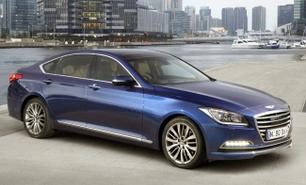
Anybody who doubts that Hyundai is gunning for the number one in the world has rocks in their head. Big heavy ones. Korean companies do not settle for anything less than number one. The second-generation Genesis (our first taste here in the Antipodes as the gen-one had its steering wheel on the wrong side) is proof.
What's different about Hyundai's unstoppable rise is the way they're going about it. They've always done their own thing in Korea, reinventing themselves time and again when they strayed off the beaten path.
The Genesis is a gamble for a Korean company in foreign markets whose default setting for luxury is marked, Britain or Germany. If Hyundai gets the Genesis wrong there will be howls of derision, or at best patronising pats on the back - "Nice try, you'll get there one day". But if they get it right...
It’s finally happened: Rolls-Royce has become so divorced from the everyday world of common folk that it's no longer even sharing the previously agreed meanings of words. Rolls has its own meanings, possibly its own language, which must be spoken with a plum on the tongue.
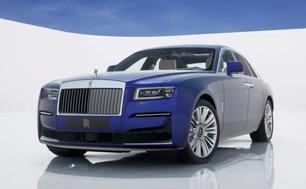
They’ve been heading here for a while. For example, at Rolls, “affordable” means the car we're driving today, the Rolls-Royce Ghost Series II, which is yours for just $680,000 (an indicative price, bumping to $800K for the Black Badge). And “iconic British marque” means, obviously, “BMW bought us in 2003, so there might be some German bits”.
It turns out that “driver-focused” means something different at Rolls-Royce, too. Thanks to a smattering of chassis innovations, Rolls says this updated 2025 Ghost is “the most driver-focused V12 Rolls-Royce ever”. Which is “a side of Ghost’s character that our clients increasingly and enthusiastically embrace”.
Don’t fall for it. The Ghost’s extra focus is not actually very focusy, and its additional dynamism is really only more dynamic in the way that a bed that could corner at all would be more dynamic than a normal bed. None of that matters.
The reason it doesn’t matter is because the Ghost Series II is wonderful. Indeed, it is very nearly perfect. Which is a word that even Rolls won’t quibble over.
The Genesis is not quite a match for cars twice its price but it makes you think what's possible. It doesn't have the dynamic brilliance of a BMW or the self-assured faultless execution of a Mercedes. Lexus ought to be worried, though - why would you have an LS when you could have this? The only answer is 'badge'.
The Genesis is an epoch-making car for the Korean manufacturer. As the company has got better, there are fewer excuses for overlooking it. While the Genesis is pitched into a shrinking market, it's not really meant for the average i30 buyer to buy, but to see.
It's bristling with tech and is not only a halo car but a shot across the bows of both Lexus and the Germans. Attached to that shot is a note: "We're coming for you." In other words, Hyundai got it right.
In a disruptive era when the coachbuilder has pivoted to SUVs like the Cullinan, a sort of London black cab that’s been dipped in opulence, and succeeds despite itself, and the brand’s grand, million-dollar EV, the Spectre, the Ghost is a safe and familiar space.
A beautiful, long, broad, immaculate land boat. It’s a space Rolls inhabits with relish.
The Ghost Series II feels nothing like a track-day option when you’re behind the wheel. But it might do if you were stepping out of a Phantom. Or a Cullinan. Or a Wraith. Especially if you’re stepping out of the back doors.
It’s the perfect driver’s car. As long as all your other cars are also Rolls-Royces.