What's the difference?
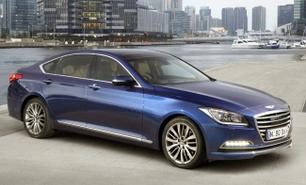
Anybody who doubts that Hyundai is gunning for the number one in the world has rocks in their head. Big heavy ones. Korean companies do not settle for anything less than number one. The second-generation Genesis (our first taste here in the Antipodes as the gen-one had its steering wheel on the wrong side) is proof.
What's different about Hyundai's unstoppable rise is the way they're going about it. They've always done their own thing in Korea, reinventing themselves time and again when they strayed off the beaten path.
The Genesis is a gamble for a Korean company in foreign markets whose default setting for luxury is marked, Britain or Germany. If Hyundai gets the Genesis wrong there will be howls of derision, or at best patronising pats on the back - "Nice try, you'll get there one day". But if they get it right...
It can be easy to dismiss electric cars as an imperfect solution to the world’s problems. But that would be missing one big point - they’re really, really fast.
Carmakers twigged that not everyone was enamoured with the environmental credentials of electric vehicles (EVs), especially luxury brands, and thus pivoted to the new sales tacit of performance and prestige.
Which is why Audi’s current performance flagship vehicle is not a mid-engined V10-powered replacement for the R8, but rather the all-electric RS e-tron GT. And for the new model year they have not only updated the range, bringing (you guessed it) more power, but also added a new hero model - the RS e-tron GT Performance.
It leads a new three-pronged line-up for the four rings brand, with the RS e-tron GT Performance sitting above the RS e-tron GT and the new S e-tron GT; the latter effectively replacing the previous ‘entry-grade’ model known only as the e-tron GT.
These arrive as part of a mid-life update for the model, with some minor styling tweaks (inside and out) along with enhancements to the battery and changes to the specifications.
The new range has just arrived in Australia and Audi will be hoping it can turn around the sales performance, which saw the outgoing e-tron GT and RS e-tron GT find just 84 customers in 2024. That was a decline of 75 per cent on 2023 sales, and nearly 200 less than the closely related Porsche Taycan.
The Genesis is not quite a match for cars twice its price but it makes you think what's possible. It doesn't have the dynamic brilliance of a BMW or the self-assured faultless execution of a Mercedes. Lexus ought to be worried, though - why would you have an LS when you could have this? The only answer is 'badge'.
The Genesis is an epoch-making car for the Korean manufacturer. As the company has got better, there are fewer excuses for overlooking it. While the Genesis is pitched into a shrinking market, it's not really meant for the average i30 buyer to buy, but to see.
It's bristling with tech and is not only a halo car but a shot across the bows of both Lexus and the Germans. Attached to that shot is a note: "We're coming for you." In other words, Hyundai got it right.
While it may be a very different beast to the R8 supercar, it’s hard to argue that the e-tron GT offers performance that isn’t equal to anything Audi has previously produced. The immense acceleration and power, coupled with the brilliant and clever handling make this updated range, especially the RS pair, feel like something special.The fact that it will save you visiting a petrol bowser and might help cut harmful emissions is just a bonus.
Note: CarsGuide attended this event as a guest of the manufacturer, with travel, accommodation and meals provided.