What's the difference?
Ford has given its Ranger ute range a mild facelift. And mild is the word. If you look closely, you might notice some small visual changes, but the real news is under the bonnet where a new entry-level powerplant lives.
And however you look at it, this new engine that addresses the ownership issues experienced by some Ranger buyers since the bi-turbo diesel engine was released back in 2018, was probably overdue.
But the new powerplant comes at a cost; in terms of power and torque, even though the vital towing statistics remain for the Ranger.
The other changes that come with this facelift include some new tech, and the availability of the V6 turbo-diesel (which is unchanged) across the entire Ranger 4X4 dual-cab line-up.
For this review, we’ve concentrated on the new engine as being the major point of difference, and we’ve driven it the base-version XL trim specification. That means this is potentially the lightest variant, and heavier specifications might blunt the performance a little. But overall, this is representative of the new powertrain and represents the biggest point of difference in what is otherwise a very minor facelift.
What’s the closest thing we have to a modern-day Holden Statesman/Caprice?
If, like General Motors, you obliterate Australia’s Own from existence altogether, you’re left with time-honoured rivals also made in this country, like the Ford Fairlane, Chrysler by Chrysler and Toyota’s Crown and Avalon.
But they’re also all in history’s dustbin (well, the American ones, anyway), leaving the humble Camry as the sole living nameplate with any connection to Australian manufacturing.
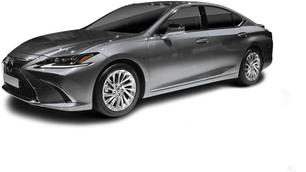
And since the Lexus ES is a close relative, we’re going to take a fresh look at the latest version, with a view of it as a bit of a survivor of a bygone era – where aspirational vehicles were created from normal family sedans.
Just like the Fairlane, Crown and of course, the Caprice.
Launched in mid 2018 but facelifted in 2021, we test the ultimate version of the seventh-generation ES, the 300h Sports Luxury – or SL, if we’re to make yet another tenuous connection to long-gone Holdens.
Let’s go!
Our time with the new Ranger was limited in terms of distance driven and the number of variants we could sample. We were also unable to test the vehicle with a trailer attached, so we’re unsure as to how well the new, lower-powered engine will cope with towing duties.
We do know the new engine is being welcomed by owners and fleets who held concerns over the technical layout of the previous 2.0-litre powerplant, but only time will tell if the reduced performance is seen as being balanced by the technical upgrades.
We can also tell you there’s nothing inherently wrong with the new 2.0L in the context of normal driving on normal roads and its refinement is still an improvement on a lot of its competitors’ offerings.
Note: CarsGuide attended this event as a guest of the manufacturer, with meals provided.
There’s no denying the Sport Luxury is imposing, spacious, plush, chock-full of kit, efficient, speedy and pleasingly relaxing up to a point.
But its interior is also dated and true ride comfort can be elusive beyond smooth roads for this top-of-the-line version to make the grade as a proper luxury sedan. Â
The ES 300h feels more like an aspirational Toyota than a Lexus for the (wealthier) masses, especially after recent triumphs like the latest NX and RX SUVs. The Camry DNA is difficult to disguise, as the amused strangers who sat in our test car uninvited thinking it was their Camry highlights.
Sure, the hybrid is no Chevy V8, but in many other ways, the Sport Luxury seems like the modern successor to the Holden Caprice experience.