What's the difference?
The current Range Rover Sport arrived in 2022, the third-generation version of what has been a super-successful model line for Land Rover, combining sleek looks with top-shelf luxury and a wide range of power and model grade options.
On test here is the P460e Dynamic HSE, a petrol-electric plug-in hybrid sitting in the thick of the upper-luxury five-seat SUV market.
We spent a week behind the wheel to see if it has what it takes to put its nose in front of an impressive bunch of European, more specifically, German rivals.
Would you consider a European-made small SUV with a terrific turbo engine from one of our all-time favourite hot hatches, a reliable torque-converter auto, ample room for five plus luggage, and all from under $40K?
You’d be at the very least a bit curious, right?
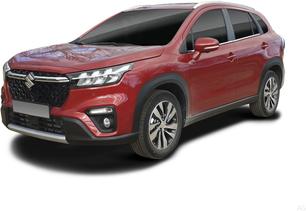
Behold the latest Suzuki S-Cross! Okay. It’s been around the sun nearly a dozen times. And you can clock its age in a couple of key areas.
But this crossover from the class of 2013 is not even close to being the oldest-in-show (stand up, Mitsubishi ASX). And, as our testing revealed, the S-Cross can still teach far newer rivals like the Kia Seltos, Mazda CX-30, Haval Jolion and Subaru Crosstrek a thing or two.
Because thoughtful design is timeless. Time, then, to crack open the S-Cross.
The Range Rover Sport P460e Dynamic HSE is a cool and classy premium five-seat SUV. It’s comfortable, refined, powerful and efficient with excellent safety and thoughtful practicality.
If you’re in the market for a luxurious SUV and your budget sits just under $200K this car should be on your shopping list but we’d recommend careful assessment of its value proposition across standard features and cost-of-ownership relative to its highly credentialled rivals.
Back in the day, you’d hear people say they’d never buy an all-new car, but instead get the last of the old model that would have had all the bugs ironed out.
If this sort of homespun logic makes sense, then maybe the latest S-Cross might just be the perfect SUV car for you.
Not only has it been in production for years, there is nothing fundamentally wrong with it. Indeed, for performance, packaging and ease, it does plenty that's right. Thoughtful design is timeless.
But there are newer alternatives that look way fresher (particularly inside) yet cost the same or less, and offer more, including updated driver-assist safety.
Still, you can do a lot worse than take an S-Cross for a test drive.
Gerry McGovern may have left his role as Jaguar Land Rover Chief Creative Officer (under mysterious circumstances) late last year but his design fingerprints are all over the current Range Rover Sport.
A clean, confident and tightly wrapped exterior reflects his focus for SUVs on large, relatively unadorned surfaces, a high waistline and a curved, sloping nose.
A coefficient of drag (Cd) of just 0.29 also supports his team’s consistent focus on aero efficiency.
The interior treatment gives off a clearly discernible echo of Land Rovers and Range Rovers past with a compact angular hood sitting over the compact digital instrument display and the flat lower dash section enhancing a feeling of simplicity.
Perforated semi-analine leather seat trim (in Ebony on our test car) dials up the luxury feel, as does the sleek 13.1-inch media screen and soft-touch materials across the dashtop as well as in and around the doors.
Worth noting piano black surfaces across the front centre console might look slick in the showroom but in day-to-day life they attract fingerprints like Chopper Read before a police interview.
It took Suzuki not one, not two, but three goes before the stylists succeeded in making the S-Cross look good.
The original was like an early Nissan Dualis clone, but all droopy faced, so they grafted on an aggressively toothy face back in 2016 that only a gargoyle’s mother could love.
At least this latest version – said to have been designed in Italy, no less – no longer looks like Frankenstein’s monster.
Released during 2022, the blockier nose, squared-off profile and restyled posterior are meant to make the S-Cross seem larger than its more-successful (and prettier) Vitara sibling, which uses the same platform, by the way.
Not a bad makeover job as far as big facelifts go, then, especially considering the Suzuki’s windscreen, doors and roof remain as before.
At just shy of 5.0m long, more than 2.2m wide and a bit over 1.8m tall with a 2997mm wheelbase the current Range Rover Sport is a large five-seater.
Its wide-track, high-roof stance and the dash’s away slope means there’s lots of room up front and storage aplenty.
A deep box between the seats is covered by a padded lid and a dual cupholder unit in front of it is able to slide away to reveal another handy space. A wireless charging pad sits in front of the gearshifter.
The top of the centre console forms a flying buttress which leaves another useful storage area underneath.
Generous bins in the doors (neatly outlined by bright metal trims) are big enough to hold large bottles and there are two (upper and lower) glove boxes on the passenger side.
There are also individual front centre armrests swinging down from the inner edge of the front seats, their angle adjusted via a twisting rotary dial.
We’re not convinced by the multimedia package with a relatively complex line-up of screens and functions proving at times a struggle to navigate.
Physical controls for the ventilation system, rather than in-screen adjustment would be a good start.
But what we loved was the heated windscreen which is part of the Cold Climate Pack fitted to the test car. A cold winter morning’s foggy windscreen cleared in an instant is a huge safety plus.
Move to the back, as you’d expect for a car measuring close to three metres between its axles, there’s lots of room.
Sitting behind the driver’s seat set to my 183cm position I have plenty of head, leg and shoulder room.
The rear seat’s breadth means three adults can slide in there quite easily. But the centre position isn’t sculpted and padded like the outer two and a driveline hump in the centre of the floor limits footroom, however power recline functionality (with controls in the doors) adds extra flexibility.
The reason for the non-sculpting in the centre spot is a hefty fold-down centre console housing a lidded storage compartment and a pair of flip-out cupholders.
The door bins are generous, there are hard-shell map pockets on the front seatbacks and adjustable ventilation control at the back of the front centre console sits above the seat heating dials. Nice.
The boot swallows no less than 647 litres with the 40/20/40 split-folding rear seat upright which grows to a healthy 1491L with it folded and there are numerous helpful additions back there including hooks, lighting, a netted pocket, storage cubby and 12-volt power socket. Boot-mounted buttons to release the rear seats are handy, too.
The same control panel contains a height adjustment feature for the electronic air suspension to make loading and unloading easier and Land Rover also deserves a medal for including a full-size spare wheel rather than a space-saver or inflator kit.
In this case that means a monster 23-inch alloy rim shod with the same tyres as the rubber doing the work under the car. Bravo!
Power and connectivity options include two USB-C sockets, a 12-volt outlet and a wireless phone charging pad in the front, another two USB-Cs in the back and a second 12V plug in the boot. So no problems with charging capacity for phones and other devices.
Braked trailer capacity is 3.0 tonnes (750kg unbraked) and one of the Range Rover’s party tricks is the ability to swing the tow bar into place or back out of the way at the touch of a (you guessed it) boot-mounted button. Exposed shins everywhere are grateful.
It might be an old interior, but at least Suzuki got the fundamentals right in the first place, while also bothering to update the electronics for it to at least seem more contemporary.
Basics first. In typical SUV fashion, entry and egress are excellent, via tall and wide doors with corresponding apertures. There’s a pleasing sense of space for taller occupants, especially in terms of leg and head room.
Once sat in the driver’s seat, the mid-last-decade looking dashboard is instantly familiar and completely non-intimidating.
Concise and surprisingly elegant analogue dials (now with an auxiliary digital speedo, at last) sit ahead of the driver, along with a reach-and-height-adjustable steering column that allows for people of all shapes and sizes to find the right position. Deep windows provide extensive vision and let lots of light inside, too.
Finished in what looks like stitched leather and chainmail-inspired inserts, the front seats in this Plus grade are wide enough for comfort yet bolstered enough for some support through corners.
We rate them, though driver-lumbar and front-passenger height adjustments are disappointingly absent.
Years ago, reviews lambasted manufacturers for providing “too many buttons”, but after an endless succession of touchscreens housing most (if not all) audio, climate and vehicle control access, we miss the days of the button-fest.
If you do too, the S-Cross obliges with array of climate-control switches and driver-assist buttons located around the driver for fast and definite access.
On the other hand, while Suzuki’s new 9.0-inch touchscreen does a fine job housing other vital vehicular and multimedia functions, it drops the ball with no volume knob.
The alternative looks like a slide control but relies on clumsy pushing. Fail. Luckily the steering-spoke-sited toggles do the same job far better, at least for the driver.
Kudos, too, for the effective and intuitive multimedia system, that packs a lot in a small-ish space. The excellent surround/aerial-view camera rates a mention, as well as wireless Apple CarPlay that hardly ever drops out.
Nobody is going to mistake the extensive plastic trim and other finishes as premium, but it isn’t horrendous, doesn’t inflict occupants with the cheap off-gas stink often found in bargain-basement brands, and absolutely nothing rattled or squeaked in our time with the Suzuki.
Storage is also impressive, from the large glove box and deep centre bin/armrest to bottle-gobbling pockets on all four doors. Cups are also well-catered for.
However, betraying the S-Cross’ age are the AWOL wireless charging, head-up display (at this price… ), USB-C outlets and configurable instrumentation.
Moving on to the rear seat reveals a family-friendly environment as far as space is concerned, with adequate comfort provided by the (slightly) reclinable backrest and (fixed) cushion. The windows lower all the way down and the folding centre armrest has a cupholder, too.
But while you’ll find a single map pocket and overhead grab handles, there are no USB ports (at all), nor overhead reading lights or rear-facing air vents.
Never mind. At least the rear backrest reclines (a tiny bit) for added comfort, while further back, boot capacity is a useful 430 litres.
The load area is flat and wide and a space saver spare wheel is located underneath the boot floor.
The backrest has a 60/40 split and the floor can be positioned in different locations. Volume jumps to 1230L with the backrests dropped.
If you rate space, practicality and ease above modernity, then, the S-Cross still holds up remarkably well. Just keep in mind that its interior will appear dated compared newer and flashier competition.
Our test car’s Dynamic HSE grade is one rung up the Range Rover Sport ladder with a single grade below and four above.
Then its P460e petrol plug-in hybrid powertrain is one of four choices which also include petrol and diesel mild hybrids.
The combination of the two adds up to $181,018 (a model year update coming in quarter four sees that increase to $188,500), before on-road costs, which puts it in the same size and price league as the Audi SQ7 4.0 TFSI V8 quattro ($174,815), BMW X5 M60i ($177,900), Mercedes-AMG GLE53 AMG 4Matic+ ($179,900) and Porsche Cayenne S E-Hybrid AWD ($187,800) - all prices before on-road costs.
Quite the shopping list of large performance luxury SUVs and you have to be packing in the standard features to keep your head above water in this company.
Aside from the performance and safety tech we’ll get to shortly this Range Rover Sport steps up with 20-way heated and ventilated, electric memory front seats, electrically reclining and heated rear seats, perforated semi-analine leather seat trim, a leather-trimmed steering wheel, illuminated alloy treadplates (with Range Rover script), Satin Chrome gearshift paddles and ‘bright metal’ pedal covers.
There’s also a 12.3-inch digital driver’s display, dual-zone climate control, an electrically adjustable steering column, a 13.1-inch central multimedia touchscreen, high-end Meridian audio (with Android Auto, Apple CarPlay and digital radio), a head-up display, built-in nav, voice recognition and wireless device charging.
To split hairs, I’d expect three- or four-zone climate at this price point but things like the heated power rear seats are a nice inclusion.
All up, a solid standard equipment list but not enough to blow the competition away.
For reference, our test car had been treated to some options in the shape of the Enhanced Black Pack for $8720 (black brake calipers, 23-inch gloss black wheels, privacy glass, Black Exterior Pack and black contrast roof), a sliding panoramic sunroof ($4641), Cold Climate Pack for $1980 (heated steering wheel, heated windscreen and heated washer jets) and adaptive off-road cruise control ($483). Total as-tested price is $196,482, before on-road costs.
As we’ve established, the base S-Cross Turbo front-wheel drive (dubbed 2WD in SUV-speak) starts from $39,990 (all prices are drive-away), while the Plus version tested here costs $42,490 drive-away.
But, just a couple of years back, the pre-facelift S-Cross version kicked off from about $10K less. And, before that, much the same car could be had for mid-$20K.
Suzuki doesn’t make it easy for itself, does it.
At least the S-Cross comes with a decent rollcall of kit, including dual-zone climate control, a 7.0-inch touchscreen, DAB+ digital radio, satellite navigation, wired Apple CarPlay/Android Auto, front fog lights, keyless entry/start, heated front seats, electrically folding and heated exterior mirrors, rear privacy glass and 17-inch alloy wheels.
'Autonomous Emergency Braking' (AEB), lane keep assist, a blind-spot monitor, rear cross-traffic alert, front and rear parking sensors, automatic LED headlights with high beam assist, adaptive cruise control and a reverse camera headline the standard safety items. More on those in the Safety section below.
For a $2500 premium, the S-Cross Turbo Plus ushers in a larger (9.0-inch) touchscreen, wireless Apple CarPlay/Android Auto, a 360-degree surround-view camera, leather trim and polished alloys.
This lines up with the all-wheel drive (AWD) Prestige AllGrip equivalent, though it misses out on the latter’s panoramic sunroof.
Price and equipment-wise, the Plus matches rival mid-grade 2WDs like the Toyota Corolla Cross GXL, Nissan Qashqai ST+, Mazda CX-30 G20 Touring, Kia Seltos Sport+ and Mitsubishi Eclipse Cross Aspire.
Just keep in mind, all are substantially newer generationally than the S-Cross, even though it did go under the scalpel a couple of years back.
The Range Rover Sport Dynamic HSE P460e is powered by a 3.0-litre, turbo-petrol, inline six-cylinder engine sending drive to all four wheels via an eight-speed automatic transmission and four-wheel-drive system including a two-speed transfer box for high- and low-range running off-road.
A permanent magnet synchronous electric motor, positioned between the engine and transmission, is powered by a 38.2kWh lithium-ion battery located under the rear floor.
The motor’s roughly 160kW of peak power contributes to overall outputs of 338kW and 660Nm, the 2.7-tonne SUV claimed to sprint from 0-100km/h in a spritely 5.5 seconds.
Here’s where the S-Cross definitely does not show its age, because Suzuki sure knows how to engineer a great engine. And automatic transmission, too. Take note, rivals.
Of course, we’re talking about the long-lived 'BoosterJet' powertrain, as found in the terrific Swift Sport hot hatch.
In this case, the 1.4-litre twin-cam, direct-injection, turbo-petrol four-cylinder engine delivers 103kW at 5500rpm and 220Nm of torque between 1500-4000rpm. Tipping the scales at 1260kg, this results in a power-to-weight ratio of 82kW per tonne.
Not huge numbers, granted, but this little firecracker certainly punches above its weight in the seamless way performance is served up, helped out by the intelligent spread of ratios from the standard six-speed torque-converter automatic transmission, with paddle shifters included. Sadly, no manual gearbox is available.
Claimed combined cycle (urban/extra-urban) fuel economy for the Range Rover Sport Dynamic HSE P460e is a miserly 1.6L/100km, the 3.0L inline six emitting just 38g/km of CO2 in the process.
It’s important to note that the official number is predicated on the car’s battery being charged consistently.
Land Rover says pure-EV range on the combined WLTP cycle is 118km, noting a real world number of “up to 96km” is more realistic. Maximum electric-only speed is a lofty 140km/h.
Maximum DC charge rate is 50kW which Land Rover says will deliver an 80 per cent charge in 40 minutes. A 7.0kW AC wallbox will take you to 100 per cent in five hours and a 2.3kW domestic socket will have you waiting 15 hours for a full charge. Home and public charging cables are included.
We recharged at a 150kW pylon and as expected the peak rate went to around 45 kW and it took 30 minutes to half fill the battery. Using the supplied home charging cable on a three-pin outlet for a roughly nine-hour stint delivered a 50 per cent battery top-up.
Over around 300km of city, suburban and highway running we spent most of the time in Hybrid mode which leaves it to the powertrain’s brain to switch between pure-electric and internal combustion power, rather than the dedicated EV setting.
Overall result was 6.1L/100km, which is pretty great for a full-size, 2.7-tonne SUV.
A 71.5-litre fuel tank (which requires a minimum 95 RON premium unleaded inside it) equates to a real-world range of around 1170km using our on-test consumption figure.
Suzuki reckons the S-Cross will average 5.9L/100km on the combined cycle, though keep in mind that it requires expensive 95 RON premium unleaded petrol.
As far as carbon dioxide emissions are concerned, that translates to between 138 and 145 grams/km.
We managed about 7.7L/100km – and this included some very spirited performance testing with the air-con always on, against the trip computer’s more-accurate-than-expected 7.4L.
With a 47-litre fuel tank, expect a range of about 790km between refills.
Applying a Sport badge to a 5.0-metre long, roughly 2.7-tonne SUV is a brave call. But there’s no doubt the Range Rover Sport Dynamic HSE P460e is rapid in a straight line.
Zero to 100km/h in 5.5 seconds is quick for a car of this size, and just so you know, it has the ability to storm on to a maximum velocity of 225km/h. It will even hit 140km/h in EV-only mode.
The 3.0-litre, turbo-petrol six feels and sounds suitably brawny without upsetting what is an impressively refined drive.
Throttle response is as smooth as it is urgent, the eight-speed auto is slick as butter and the option of manual shifts via wheel-mounted paddles is welcome when you want to get more involved.
The front seats manage to combine long-distance comfort with firm location and the continuously variable adaptive suspension smooths out imperfections with uncanny ease.
The layout is double wishbones at the front with multi-links at the rear and the Sport’s calibration keeps in planted and balanced in corners despite its high-riding SUV form.
Noise from the enormous 23-inch rims, shod with 285/40 Pirelli Scorpion MS rubber is minimal and we didn’t come close to challenging their grip strength. Road feel through the steering is pretty good, too.
Brakes are big ventilated discs all around (400mm fr / 370mm rr) and they’re well up to the task with regen braking in support at slower speeds.
This test was on-road only, but for the record this car’s approach angle is a maximum 33 degrees, breakover is 24.5 and departure is 30, with a handy wading depth of 900mm.
Despite its substantial footprint the Range Rover Sport is surprisingly easy to park, with sensors, multiple cameras and screens helping to keep things low-stress.
And it's worth noting none of the Range Rover’s advanced driver assistance systems (ADAS) functions intrude beyond their intended purpose in day-to-day driving, which is always welcome.
So, if you’ve read this far down, you might have been pleasantly surprised by the S-Cross' spacious and practical interior, ease of operation and decent equipment levels.
Yet the main event lives under the bonnet.
Let’s start with the performance. Throttle response is instant and lag-free, allowing for strong acceleration right from the get go. No jerkiness, no delays, no hiccups.
On the move, the S-Cross' power delivery continues to impress, feeling smooth and slick across the rev range. The finely-tuned torque-converter auto – rather than a CVT continuously variable transmission or dual-clutch – must surely play a role in this Suzuki's effortlessly consistent performance.
Where the turbo engine really shines, though, is at higher speeds, with ample power and torque still left in reserve for when you need to overtake or pull away in a hurry.
Delightfully muscular yet super creamy to boot, the BoosterJet remains one of the best internal combustion engine choices available in any small or medium-sized SUV, regardless of price and positioning.
If only Suzuki put a little more love into the S-Cross’ dynamics.
As with the AWD model, the S-Cross 2WD features electric rack and pinion steering, while its suspension consists of a MacPherson strut-style design up front and a torsion beam rear-end arrangement.
While easy and precise, with a tight-ish turning circle for easy urban manoeuvrability, the steering feels too light after all that delicious oomph on offer, especially at higher speed.
This is doubly disappointing, because the chassis is quite firmly set-up, meaning the S-Cross offers sharp yet controlled handling that allows it to be hustled quickly and confidently through fast corners.
We suspect the high-quality Michelin 215/55R17 tyres help. And, speaking of rubber, road noise is fairly subdued out on the open road.
Criticisms? Unlike in the AWD version, the 2WD seems a little skittish at speed on gravel. It’s a good thing the well-modulated driver-assist systems are at the ready. Unlike in so many other SUVs, including in MGs and Havals, their intervention isn’t too zealous or ill-judged.
Also, the Suzuki’s ride around town can be a bit stiff, but never harsh, over smaller-frequency bumps and surface irregularities.
Still, our overall impression is that the eager S-Cross feels far newer to drive than its birth date suggests. That turbo powertrain must take the credit for much of that.
The Range Rover Sport has a maximum five-star ANCAP rating from assessment in 2022 although it’s worth noting that rating is based on the performance of its slightly larger Range Rover sibling.
Active (crash avoidance) tech includes auto emergency braking (AEB) with pedestrian and cyclist detection, junction assist and backover detection, all operational from 5.0 to 80km/h, adaptive cruise (with stop & go), lane departure warning and lane keep assist, blind spot monitoring, traffic sign recognition, a 360-degree camera view, rear cross-traffic alert, forward collision warning, driver fatigue monitoring and tyre pressure monitoring as well as front and rear parking sensors.
If a crash is unavoidable there are six airbags onboard - front, front side and side curtain - but no front centre bag or knee airbags for the driver or front passenger.
No active bonnet to help protect impacted pedestrians from striking hard engine parts under the bonnet but standard multi-collision brake minimises the chances of subsequent impacts after an initial crash.
There’s also an event data recorder and for child seats there are three top tether points across the second row with ISOFIX anchors in the outer positions.
While the pre-facelift S-Cross from 2013 to 2022 managed a maximum five-star crash-test score, no ANCAP rating information is available for the current JYB series.
There is a decent amount of safety gear as standard, though, including autonomous emergency braking (AEB), lane departure warning, blind-spot monitoring, rear cross-traffic alert, 'Weaving Alert' (a driver-drowsiness warning prompt), front/rear parking sensors, adaptive cruise control (with full-stop functionality) and auto high beams.
Note that while the adaptive cruise control brings you to a halt, there’s no traffic-follow function as found in newer systems, betraying the S-Cross’ advancing years.
Plus, Suzuki does not supply information about the AEB and other driver-assist tech’s operating parameters.
Also fitted in every S-Cross are seven airbags (dual front, dual front side, curtain and driver’s knee), electronic stability control, anti-lock brakes with electronic brake-force distribution and brake-assist.
The rear seats contain a trio of child-seat tether anchorages, as well as an outboard pair of ISOFIX attachments.
Land Rover covers the Range Rover Sport with a five-year/unlimited kilometre warranty, which is in line with premium competitors like Audi, BMW, Lexus and Mercedes but lags the mainstream market with an increasing number of brands at seven, eight and up to 10 years conditional. The warranty for the hybrid battery is six years/100,000km.
Roadside assistance is included for five years, service is recommended every 12 months/20,000km and a five-year service plan will set you back $3900.
That’s a solid average of $780 per workshop visit, which is marginally more expensive than a BMW X5 M60i ($714) over the same period, but substantially cheaper than the Audi SQ7 ($920) or Porsche Cayenne S ($1135) and less than half the cost of the Merc-AMG GLE53 ($1684).
Land Rover has a long-standing network of 74 dealers across the country including all state and territory capitals as well as key rural and regional centres.
Suzuki offers an industry-average five-year/unlimited kilometre warranty and roadside assistance.
Service intervals are every 12 months or 10,000km, while basic capped-price servicing is available, with pricing ranging from a low of $329 per service up to a high of $539 for the first five years/50,000km. The average of $397 isn't particularly cheap.