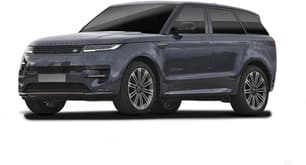
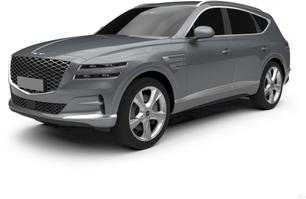
What's the difference?
Breadth of capability. That’s the key phrase the engineers, public relations managers and even the support crew keep using when discussing the all-new Range Rover Sport SV. And with good reason.
There aren’t too many SUVs on the market that can match it for its bandwidth. Within the space of a few hours at the recent launch in Portugal, we hit 233km/h down the front straight at the Portimao race track, carved through country back roads and then drove down a muddy track, across a small creek and then conquered an off-road obstacle course.
Most of its rivals can do some of those things, but none can do all of them.
Range Rovers have always had a Swiss Army knife element to their appeal, but the Sport SV adds a new dimension with its sheer dynamic ability.
The company confidently calls it its most dynamic model yet, which isn’t saying much for a brand that’s history is focused on off-road performance rather than worrying too much about paved roads.
But not only is it clearly the most dynamic Range Rover ever, it’s also now a clear front-runner in the highly-competitive performance SUV market, capable of holding its own against the likes of the Porsche Cayenne Turbo GT, Lamborghini Urus and Aston Martin DBX.
The Genesis GV80 SUV has cultivated a quiet but firm following since its debut but there's a new variant on offer - the coupe.
Offered in one highly-specified grade level for our market, the GV80 3.5T Luxury AWD Coupe proves to be a fierce competitor with luxury and handling for it's European rivals - the BMW X6, Range Rover Velar and Mercedes-Benz GLE Coupe.
However, the price point is starting to creep a little closer to its rivals, which might not be to everyone's fancy.
I've been family testing the GV80 for a week to see if it gets the seal of approval from my little family of three, read on to find out how it went.
Range Rover proudly calls it its “most dynamic” model ever, and based on our first experience that’s most definitely true. Its ability to be genuinely exciting to drive on a race track is nothing short of remarkable for a brand whose history is all about off-road prowess.
On the road it shines just as brightly, with its potent engine and state-of-the-art suspension system working in unison to make for a stunningly dynamic large and luxurious SUV. And then, if you need to cut across a field or scramble up a slippery hill, it will do that too.
Range Rover’s claims of ‘breadth of capability’ is apt but arguably an understatement. I’d stop short of calling the Sport SV the obvious class-leader in the high-end, high-performance SUV market because it’s up against some seriously impressive rivals, but the Range Rover offers a broader range of ability than any of its competitors.
Note: CarsGuide attended this event as a guest of the manufacturer, with travel, accommodation and meals provided.
The Genesis GV80 Coupe is a rare breed – it comes packed to the gills with features, has great ownership benefits and can easily accommodate a large family in comfort.
The fuel economy isn’t great but it looks and acts the part of a true luxury SUV. My husband and son were impressed and enjoyed all of the features it has.
Range Rover is a brand synonymous with big, imposing and off-road capable SUVs, not dynamic and sporty vehicles. But in recent years the Evoque and Velar have added a new layer of style and a sleekness to the brand’s reputation.
The latest generation Sport is still a big and imposing two-tonne SUV, but it’s also definitely sportier to look at and the SV changes only add to that.
It only takes a moment looking at it and it’s clear this is an SUV that means business. The 23-inch wheels fill out the guards, the air-suspension can lower the body to the ground and the aerodynamic package, including the front splitter, make for a purposeful look.
The carbon-fibre bonnet can be finished with the centre section exposed, showing off the weave of the fibres, which is a nice touch, although fake vents on the bonnet and front fenders are a bit disappointing.
At first glance, there’s not a lot that separates the external styling of the Coupe and SUV, at least in the front.
The biggest difference is obviously in the rear and it's here Coupe's design shines. The SUV sibling looks nice but is a little boxy at the rear and features a dicky-looking window. The Coupe's rear is pinched but it’s rather softly done compared to some rivals.
It manages to look sleek and sexy as coupes tend to be without losing any of its large road-side presence.
The 'Storr Green Matte' paintwork on our test car highlights the high-end feel, as does the huge LED external lights and chrome accents.
Head into the cabin and you'll find design elements which accentuate the width of the car – like the long air vent strip that runs the length of the dashboard, a wide centre console and the huge 27-inch OLED technology screen that houses the media system and instrument cluster. Even the touchscreen control panel for climate and seat functions is big.
Our test model has a cream-coloured suede headliner and quilted Nappa leather seats that look plush. Contrasting stitching and the seatbelts are a bright red (or dark orange, depending on who you ask) and the panoramic sunroof adds a bright and cheery element.
The ambient lighting surrounds a lot of the features, like the cupholders and the crystal rotary dials. In fact, when you pop the car into reverse, the light changes from whatever it was to red, which is neat.
As far as luxury cars go, this totally looks the part and while design is very subjective, I love how this looks inside and out. Let us know what you think of it in the comments.
There are two stand-out features in the cabin, beyond the standard high-level of luxury you expect from a Range Rover Sport.
The first is the SV-specific steering wheel with illuminated paddles, which feels solid in your hands. But the second is by far the most interesting, the so-called Body and Soul Seats (BASS), which Range Rover has developed in conjunction with Coventry University.
Available with either genuine leather or ‘ultra fabric’ and a 3D-print knit trim, the seats look great on the outside but it’s what’s inside them that’s special.
There are four audio transducers integrated into the seat back which can vibrate to the beat of whatever audio track you’re listening to. The system uses AI to detect the lower frequencies and then work out which beats to transmit.
This is technology used by musicians, Coldplay’s Chris Martin reportedly wears transducers integrated into a vest when he performs, but Range Rover is confident it will add to the ownership experience.
It’s certainly an interesting technology and a demonstration across different music genres highlights the way the system adapts to individual songs, but it’s hard not to feel like this is more of a gimmick than something an owner will use every day.
If you don’t like listening to music with it, the Body and Soul Seats also work with a ‘Wellness’ setting that features six audio pieces (designed by Coventry University musicians) - calm, soothe, serene, cool, tonic and invigorate.
It’s probably what you need to help settle your heart rate after you unleash the full performance potential of the Sport SV.
In the back seat there’s none of this technology but they do feature heating and ventilation as well as power recline functions. There’s also four-zone climate control, so every occupant can be comfortable.
With all of its features offering comfort and luxury, practicality is pretty high for the GV80 Coupe.
The cabin feels almost cavernous up front for my 168cm height. As mentioned, the seats are very comfortable and there is a stretching function that briefly comes on during a longer journey to ease any fatigue in your lumbar.
The rear row is almost as large as the front and there's a limo-like quality to the legroom that taller individuals will enjoy. The headroom is good for the outboard seats but a taller adult will be hunched when sat in the middle. Keep that for a kid!
Amenities in this row are excellent with the powered outboard seats that feature heat and cooling functions, directional air-vents, climate control and retractable sun-blinds (my son's favourites).
The individual storage is a little less than you might expect for such a large car, especially up front, as all options are on the shallow/small side.
There is a middle console (think of it as a tray), glove box, two cupholders, two drink bottle holders and a phone cubby that can be closed to keep things looking neat.
The rear row sees two map pockets, two cupholders and a storage cubby in the fold-down armrest, as well as some shallow bin storage.
Technology looks stellar, is easy to use and found throughout.
You're spoiled for choice when it comes to charging as there are four USB-C ports, three 12-volt sockets and a wireless charging pad to choose from.
And new for 2025 is the UV-C feature, which sterilises whatever you place inside the middle console. Handy for anyone who wants to disinfect small items, like a phone, keys or wallet.
The multimedia system takes a while to get used to as the tech has been updated but once you do, it’s an easy system. You can access the media system via the touchscreen or the rotary dial. Climate control and seat functions are accessed via the large control panel that sits underneath, which is handy for when you're on the go.
The GV80 Coupe has built-in sat nav, wired Apple CarPlay and Android Auto, as well as, a 12-inch colour head-up display.
Because of the sleek rear shape, the boot space sits at 644L when all seats are in use. It’s large enough for my gear and weekly errands and I like the powered tailgate's proximity feature. As long as you have the key fob, it will open when you stand at the rear. Great for when you have your hands full.
The loading space is level and the rear seat has a 40/20/40 split, which opens up storage options. But underneath the floor, there are heaps of cubbies for extra storage of smaller items and it’s here the tyre mobility and roadside assistance kits are housed.
To be blunt, the Range Rover Sport SV is one of those vehicles that if you have to ask, you can’t afford. Particularly in this case, as the model has launched in a single specification level, the Sport SV Edition One, which is priced from $360,800, plus on-road costs.
That puts it into the same financial category as the likes of the Aston Martin DBX ($356,512), Porsche Cayenne Turbo GT Coupe ($364,700) and Lamborghini Urus ($409,744) - especially when we discuss some of the pricier options.
For that price the Sport SV Edition One comes with exclusive branding on the front splitter, centre console, treadplates and puddle lamps as well as a raft of standard features likely to carry-over to the 2025 model year version.
These include carbon-fibre badges, forged 23-inch alloy wheels, digital LED headlights, a carbon-fibre bonnet, 16-way electronically adjustable front seats, Meridian 'Signature' sound system, 13.1-inch multimedia touchscreen, Apple CarPlay and Android Auto and newly developed ‘Body and Soul Seats’ (more on those later).
But if you’re feeling really sporty, you can upgrade your Sport SV with lightweight carbon fibre wheels and carbon ceramic brakes.
These will cost you a staggering $16,130 and $13,500, respectively, but the wheels measure 23-inches and are the largest fitted to a production car (and are also Australian-made by Carbon Revolution in Geelong).
Unfortunately, for now at least, this is all a moot point because Range Rover Australia has already invited and sold all examples of the Sport SV Edition One, so you'll need to be patient and wait until at least 2025 to have the option to buy one.
The GV80 line-up has seen a model facelift for 2025 and the flagship’s powerful V6 engine now comes standard for all models. There's new tech and some design tweaks, too.
That means the price points are starting to creep a lot closer to their Euro rivals as the 3.5T Luxury AWD Coupe is priced from $136,000, before on-road costs.
However, despite only being offered in one variant for our market, the coupe is is ridiculously well-specified and you don't have to add luxury/enhancement packs at additional costs as you do on some of this car's rivals (I'm looking at you Range Rover).
In comparison, the closest rival, the BMW X6 xDrive40 MHEV, sits at $144,900 MSRP, and then the Range Rover Velar Autobiography comes in at $156,430 MSRP before the most expensive rival, the Mercedes-Benz GLE 450 4Matic Coupe, at $159,900 MSRP.
When I start talking about the GV80 Coupe's standard features I lose breath trying to list them all and you're about to learn why.
For comfort and luxury the Coupe is offered with crystal accents on its dials, Nappa leather upholstery, suede trims, a heated steering wheel and a panoramic sunroof.
The front seats are powered and feature a two-position memory function, lumbar- and side-bolster adjustments, extendable under-thigh supports, heat and ventilation functions... and a massage function.
Rear outboard seats are also powered and can be slide backwards/forwards and recline. They feature heat and ventilation functions as well.
Practical features include a powered tailgate with a proximity opening feature, retractable sun blinds (rear row), tri-zone climate control, keyless entry, push-button start, remote start and parking assist (via key fob), carwash and valet mode, and new for 2025, a biometrics system (fingerprint access for vehicle start and profile selection).
Technology includes a new 27-inch OLED screen that houses the multimedia system and instrument cluster, customisable ambient lighting, wired Apple CarPlay and Android Auto, over-the-air updates, satellite navigation, 12-inch coloured head-up display, digital rear view mirror, four USB-C ports, three 12-volt sockets, a wireless charging pad, Bluetooth connectivity and digital radio.
Phew... told ya there's a lot. Oh, and an 18-speaker Bang & Olufsen sound system. There. Done.
Sadly the wonderfully evocative supercharged V8 engine from the previous generation Range Rover Sport SVR is gone.
But, thankfully, in its place is a more powerful engine that’s exclusive to the Sport SV in the Jaguar Land Rover family.
It’s a 4.4-litre twin-turbo V8 petrol engine with mild-hybrid assistance, which is actually built by BMW and based on the same powertrain as you’ll find in the M5, albeit with some specific Range Rover elements for more off-road capability.
It’s also more powerful than the old supercharged V8, making an impressive 467kW of power and 750Nm of torque, which is a 44kW and 50Nm improvement over the old engine.
It’s paired to an eight-speed automatic transmission, again with a specific SV calibration for improved performance.
And, of course, being a Land Rover, it’s also got a four-wheel drive system with full off-road systems as well as an active locking differential.
The GV80 model facelift sees all variants enjoy a powerful 3.5L twin-turbo petrol V6 engine that produces 279kW of power and 530Nm of torque.
The Coupe is an AWD, features an eight-speed auto transmission and can do a 0-100km/h sprint in just 5.7 seconds.
It also has different terrain modes and a braked trailer towing capacity of 2722kg. Whether you’d use this car for that sort of stuff is another matter.
Despite all the extra power, thanks to the mild-hybrid system it’s more fuel efficient and produces less emissions than the old 5.0-litre V8.
Still, it’s all relative, and as you’d expect from a twin-turbo V8 SUV it’s still thirsty and uses 11.7-12.5-litres per 100km, based on European specifications.
The mild hybrid system uses a crank-integrated starter generator instead of a conventional alternator, providing a boost of up to 20kW and 175Nm of electrical power when needed, with the energy captured during braking and stored in a 48-volt lithium-ion battery.
Aye, here's the rub, as the hefty power comes with a thirsty gullet.
The official combined fuel-cycle consumption figure is a hefty 11.7L/100km and my real-world usage came out at 11.4L/100km after doing a lot of open-road trips this week.
I haven’t held back using the power but it's thirsty compared to its rivals which mostly sport mild-hybrid powertrains.
Based on the large 80L fuel tank and official combined fuel cycle consumption figure this car's theoretical driving range is 684km.
Before driving the Sport SV you need to understand its highly complex suspension system that allows it to be so dynamically capable. Range Rover calls it a '6D Dynamic' system, because it can control the car left and right, up and down and corner to corner.
To achieve this the system uses a combination of hydraulic interlinked dampers, height-adjustable air springs and pitch control, which makes it a semi-active suspension set-up similar to the set-up Formula 1 race cars used to boast.
This allows the Sport SV to sit between 10-25mm lower than the other Sport models and with its clever suspension can actually sit flatter in the corner with less pitch and roll - which is the traditional enemy of high-riding SUVs when it comes to handling.
But the suspension is only part of the story, with the intelligent all-wheel drive, rear-wheel steering, torque vectoring and the active locking rear diff all combining to produce an SUV with incredibly impressive dynamic capability.
Put simply, there’s never been a Range Rover that deserved to be driven on a racetrack. The Sport SV changes that, and thankfully the company let us loose on the challenging Portimao circuit in Portugal to put the SV through its paces.
Range Rover management was quick to stress it doesn’t expect the Sport SV to be a race track regular for its owners, but driving it on track did highlight the extreme potential it offers.
With such a powerful engine it should come as no surprise that the Sport SV hauled down the straight, hitting 233km/h at the end of the long front straight, but with speed still rising which suggests its 290km/h claimed top speed is accurate.
Even from those speeds and with 2560kg of SUV to slow down, with the carbon ceramic brakes it was no trouble whatsoever. Instead the braking was strong and consistent across multiple laps.
The steering is the particular highlight, with the rear-wheel steering helping to turn the Sport SV sharper and more quickly than a big SUV like this should.
But while it impressed on the circuit, we also experienced it on some great winding rural roads across Portugal and this is where it shone even more brightly.
This is an SUV that you’ll genuinely enjoy driving with its ability to carve through corners and blast down anything resembling straight road.
But to ensure it lives up to the Land Rover badge on the front, we also drove it off-road. Nothing too serious at first, just muddy ruts, across some water and over some rocks.
But then we were guided through a course that showed off its articulation potential, which is far greater than the average owner will ever need.
However, to achieve this Range Rover removed the carbon-fibre front splitter, so it’s not the most off-road friendly model the brand offers.
The GV80 Coupe has a deep well of power to dip into and fantastic pick up. The power delivery feels effortless and it’s easy for urban and open-road driving.
The GV80 isn't as dynamic on the road as some of its rivals when it comes to the ‘sporty’ factor and you notice that the most when you hit high winds or tackle a tight turn, as there is some roll, but on the whole it’s a smooth ride. Think of it as more ‘stately’ than sporty.
The cabin is mostly quiet but wind noise can creep in at higher speeds.
The wide windows and high ride mean the visibility is very good and so is the sound quality from the 18-speaker Bang & Olufsen audio system. Every school run is a concert!
The GV80 Coupe is large car and will fill out a parking space but it’s not hard to park because the 360-degree view camera system is so good and the projected parking guidelines add assurance in a tight spot.
There is a remote parking assist feature, where you can move the car remotely from your key fob, which is great for those times someone parks a bit too close and there’s not enough door clearance to get in.
The Sport SV comes generously equipped with safety gear, as you’d expect at this price point. There’s all the usual passive safety, including airbag coverage for all occupants, and plenty of active safety including adaptive cruise control with steering assist, remote park assist and 3D surround cameras - which are used for off-roading as well as parking.
As with the rest of the Range Rover Sport range, it has been awarded a maximum five-star rating from safety agency, ANCAP.
For those concerned with safety, you needn’t worry as the GV80 Coupe has a maximum five-star ANCAP safety rating from testing done in 2021 and scored highly for its adult and child protection scores at 91 per cent and 88 per cent, respectively.
Standard safety features include rear cross-traffic alert, lane departure alert, lane keeping aid, traffic sign recognition, intelligent seatbelt warning, a head-up display, adaptive cruise control, blind spot monitoring, blind-spot view monitor, parking assist pilot, driver attention alert and safe exit warning.
Other features include child occupant alert, leading vehicle departure alert, tyre pressure monitoring, LED DRLs, a 360-degree view camera system and front and rear sensors.
The GV80 Coupe comes with AEB with forward collision warning, car, pedestrian, cyclist and backover detection which is operational from 5.0–200km/h (up to 85km/h for car detection).
The GV80 features 10-airbags, which is great for the class!
There are ISOFIX mounts on the rear outboard seats plus three top tethers and you might get three seats installed if they’re not too big but two will fit best.
If you’re worrying about servicing costs, you’re probably shopping at the wrong end of the market, but as with the range-topping Range Rover model the price of the car is expected to include servicing for the first five years and roadside assistance for the same period.
It’s also covered by a five-year, unlimited kilometre warranty.
As with all Range Rovers the car will tell you when it needs a service depending on driving conditions. For example, if you hit the track or go off-roading it will likely need a visit quicker than if you're just commuting to and from work.
The GV80 Coupe comes with a five-year/unlimited km warranty and complimentary servicing for five-years or 50,000km, whichever occurs first.
There is also complimentary roadside assistance through Assist Australia for five years.
Since this is a turbo, the servicing intervals are a little annoying at every 12 months or 10,000km but it’s rare for a car brand, let alone a luxury one, to offer anything for free. What Genesis offers is a real plus.