What's the difference?
Electric cars. Australia now has quite a few, and to add more confusion to the mix, there are a litany of all-new brands releasing models into this new frontier of the automotive landscape.
Most new electric cars are in Australia’s favourite buying category, the SUV, but there’s also a ute, some odd sedan-y things, and, of course, a handful of hatchbacks.
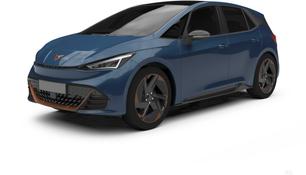
Hailing from Spain, the Cupra Born sets itself apart from the rest for a few reasons though. Firstly, it promises to be a hot hatch, something we haven’t really seen much of yet, and secondly, it has to bear the burden of launching Volkswagen Group’s all-electric MEB platform to the Australian market, but most importantly for Australians keen to hop into their first electric car, it promises to do this while offering a long range at a reasonable price.
Can it really do it all? We attended the Cupra Born’s Australian launch to find out.
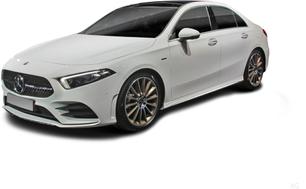
Meet the world’s most aerodynamically efficient passenger car. Mercedes-Benz says the drag co-efficient for this new sedan version of its fourth-generation A-Class is the lowest ever measured for a passenger vehicle.
Which is quite a claim, but you only have to look at it to see how much work has gone into marrying good looks with slippery aero performance.
The A-Class sedan is substantially longer and fractionally taller than its hatchback sibling, but does that mean it’s better, or simply different?
The Cupra Born has so much going for it. An appealing price, long range, and super cool design chief among them.
I think the main thing holding it back will be that it doesn’t quite have the same out-and-out performance people have come to expect from a ‘hot hatch’ in the era of cars like the VW Golf R.
Importantly though, it delivers huge dollops of fun and driver engagement, something that's quite rare in the electric era.
Mercedes-Benz knows its way around a sedan, and this A-Class is a well-equipped, comfortable and efficient city-sized four-door.
But more than that, to my eyes anyway, it’s a perfect example of restrained form matching aero function with beautiful results.
Note: CarsGuide attended this event as a guest of the manufacturer, with travel and meals provided.
To stand out, any new brand should make a statement when it comes to design, and Cupra goes above and beyond to grab people’s attention.
It needs to, because Cupra is faced with the task of standing apart from its Volkswagen Group stablemates, especially the likes of Audi and Skoda.
One look at the Born, and it’s clear the brand has done an admirable job of separating its aggro hatch from the more tame Volkswagen ID.3 with which it shares its underpinnings.
I love its pugnacious face, which is designed to pierce air resistance in a similar fashion to the face of the Kia EV6, complete with its frowny light profile, bronze Cupra typeface, and dimples on the bonnet.
At the side, there’s the choice of almost Tesla-like sweeping aero designs for the standard 19-inch wheel option, or complex 80s rally-inspired wheels for the 20-inch Performance Pack hoops. The square beltline is perhaps the only spot where you can clearly see the Born’s relation to its ID.3 cousin, but I think the contrast flourish on the C-Pillar, which interrupts the roofline and makes it look more coupe-like, is a masterful touch.
This piece also wears a fishscale-like pattern, which is a motif that works its way through the entire car. In fact, the pattern is more than just theme-work for the Born specifically, but a deliberate pattern to interrupt plain plastics, which goes a long way to making sure no matter where you look, there’s a visual appeal to every corner of this car.
The inside continues this thoughtful and genuine ethos. Any area where a normal car would use a fake leather, or even plastic textured to look like leather, has been presented in a completely different way. The driver-focused instrument console, for example, is clad in a padded neoprene material, which is not only honest, but gives the interior a very modern look and feel.
The recycled seat materials offer a similar touch, and are comfortable in their bucket arrangement, too, and the neoprene finish continues here as a contrasting trim.
The colour palette is rich, with vivid blues, deep reds, a light smattering of tame silver rather than chrome, while the Cupra Bronze permeates to the car’s badges and highlights touches throughout.
This tone won’t be for everyone, and if you don’t like it, or the colour schemes, or even the car itself, that’s fine by Cupra. It wants to be controversial, and for a niche set of buyers, and says this contrast is the point of its design choices. If the amount of Borns sold before the car even landed is anything to go by, they’re on to something.
A global carmaker can’t hold its head up in public without a formal design strategy, and Mercedes-Benz uses ‘Sensual Purity’ as a guiding principle in developing the look and feel of its current models. It may sound airy-fairy, but I for one reckon it’s accurate in describing the A-Class sedan.
The overall form is flowing and minimalist, the major exception being a hard character line running down the side of the car from the trailing edge of the angular LED headlights and along the top of the doors to link with the tail-lights.
A rear-biased glasshouse emphasises the length of the bonnet, at the same time delivering a broad, muscular stance with short overhangs front and rear.
Ultra-fine panel gaps, careful sealing around the headlights and curved strakes either side of the bonnet keep the look clean and simple, not to mention super-slippery.
The interior has been styled to within an inch of its life, the dash dominated by the slick twin 10.25-inch widescreen ‘MBUX’ display covering instruments, ventilation, media and vehicle settings.
Five signature, turbine-style air vents (three in the centre, and one at each edge) lift the dash’s visual interest, and the quality of fit and finish is top-shelf.
Thanks to the Born’s VW Group all-electric MEB underpinnings, which are designed to make the most of interior space, the Born is much bigger on the inside than you might assume.
Clever packaging means a tall roof, glasshouse window structure, and a significant amount of adjustability and comfort for the front seats, with the clever digital instrument panel which is distilled to a handful of elements, and rides atop the column itself, so it moves as the driver adjusts it to maintain visibility.
The large touchscreen is oriented toward the driver, and has nice clear easy to use elements, although it is unfortunate the volume, temperature, and fan speed controls are a touch-based panel, and not easy-to-operate dials.
The rear seat offers impressive room, even behind my own seating position, and there’s sufficient headroom for me also, at 182cm tall. The cool recycled trim and comfortable seats continue to the rear row, although this car’s main practicality downside also resides here.
Opting for either pack will remove the rear seat, instead providing you with an odd cutout between the rear seats, and a drop-down armrest with a ski-port behind. Very European.
The boot measures 385 litres (VDA) which is relatively large for a hatchback, and it offers a nice low floor, impressive considering the motor is mounted below on the rear axle, although there’s no additional frunk storage for the Born.
At a bit over 4.5m long, a fraction under 1.8m wide, and close to 1.5m tall the A-Class sedan is 130mm longer and 6.0mm higher than the hatch version.
The A-Class sedan driver is presented with the same sleek widescreen display as found in the hatch, and storage runs to two cupholders in the centre console, a lidded bin/armrest between the seats (including twin USB ports), decent door pockets with room for bottles and a medium-size glove box.
In a swap to the rear, sitting behind the driver’s seat set to my (183cm) position, I enjoyed adequate knee and headroom, although stretching up a to a straight-back position led to a scalp to headlining interface.
In the A 200 a centre fold-down armrest incorporates two cupholders, again there are generous pockets in the doors with room for bottles, and adjustable ventilation outlets are set into the back of the front centre console. Always a plus.
There are three belted positions across the rear, but the adults using them for anything other than short journeys will have to be good friends and flexible. Best for two grown-ups, and three kids will be fine.
One snag is the size of the rear door aperture. Okay for taller people on the way in, but a limb-unfolding gymnastic exercise on exit.
But of course the reason we’re all here is the boot, and the sedan’s extra length translates to an additional 60 litres of luggage space for a total cargo volume of 430 litres (VDA).
Extra space is one thing, but usability is another. The benefit of a hatch is a large opening that allows bulky stuff to find a home, and Merc has pushed the sedan’s boot aperture to just under a metre across and there’s half a metre between the base of the rear window and the lower edge of the boot lid.
That’s made a big difference and access is good, with the rear seats folding 40/20/40 to add extra flexibility and volume. There are also tie-down hooks at each corner of the floor (a luggage net is included) and a netted pocket behind the passenger side wheel tub (with 12-volt outlet).
At the time of writing Mercedes-Benz wasn’t quoting towing specifications, and don’t bother looking for a spare wheel, the tyres are run-flats.
$59,990 is the headline-grabbing price tag worn by the Cupra Born, and if you’ve kept up to date with the latest developments in terms of government incentives across Australia, you might have figured out it works out even cheaper than the before-on-roads price tag in some jurisdictions like Queensland.
This price makes it more affordable than base versions of its most direct competitors, the Tesla Model 3 (rear-wheel drive - $61,300) and the Polestar 2 ($63,900) while at the same time offering more range, at 511 WLTP-certified kilometres.
In fact it's one of the longer-range EVs on offer in Australia right now, which is impressive for a car that, size-wise, is on a playing field with cars like the Nissan Leaf (from $50,990) and GWM Ora (from $43,990).
Oh and there is just one other electric hatch in this kind of ‘hot hatch’ territory, the charming Mini Cooper SE (from $63,250) although opting for the diminutive Mini will mean putting up with just 233km of range.
To keep things simple, there’s only one Cupra Born variant, at least for now. From there, you can opt for one of two packages.
Standard equipment is high, with 19-inch alloy wheels, bucket seats clad in a cool recycled cloth material, LED exterior lights, dual-zone climate, keyless entry with keyless start and exit, a massive 12-inch multimedia touchscreen, a 5.3-inch digital instrument panel, wired Apple CarPlay and Android Auto connectivity, a wireless phone charger, and a 360-degree parking camera.
It is odd the seats are manually adjustable and the phone mirroring is wired at this price, and some may be slightly dismayed at the multimedia system. While it uses slick modern software with a stylish Cupra theme, it’s missing the air of always-online functionality which makes the Model 3 feel so smart, and adds an element of depth to the Polestar 2’s minimalist setup.
One thing which is very deliberate, however, is the omission of fake leather, and next-to-no real leather in the Cupra Born’s interior, even if you choose one of the optional packs. This is because Cupra wants to be more authentic and sustainable with its interior material choices.
The two option packs keep things straightforward. You can choose either the interior package ($2900) which adds a blue theme for the interior, consisting of a partially recycled microsuede seat material with highlights in Cupra’s signature bronze hue, electric adjust, heating, and message functions for the driver and front passenger, as well as a higher-grade Beats audio system.
Meanwhile the performance package ($2600) adds dynamic chassis control with adjustable dampers, larger 20-inch alloy wheels, an ESC-off function for rear-drive antics, and more aggressive Michelin Pilot Sport 4 tyres.
Interestingly, these performance tyres reduce range to 475km for performance package-equipped cars, while both packages render the Born a four-seater due to alterations to the rear bench.
The A-Class sedan is launching with two variants, the A 200 at $49,400, before on-road costs, and an entry-level A 180, arriving in August 2019 at $44,900.
We’ll cover active and passive safety tech in the safety section, but above and beyond that standard equipment for the A 180 runs to 17-inch alloy wheels, ‘Artico’ faux leather upholstery, the ‘MBUX’ widescreen cockpit display (two 10.25-inch digital screens), auto LED headlights and DRLs, keyless entry and start, auto-dimming rearview mirror, climate-control, sat nav, multi-function sports steering wheel, cruise control, rain-sensing wipers, ‘Active Parking Assist’ (with ultrasonic proximity sensors front and rear), tinted glass, plus nine-speaker, 225W audio with digital radio, as well as Apple CarPlay and Android Auto.
The A200 steps up to 18-inch alloy rims, and adds a dual exhaust system, four-way electrical adjustment for the driver’s seat (with lumbar support), a folding rear armrest (with twin cupholders), adaptive high-beam assist, and a wireless device charging bay.
The Cupra Born is interesting, in that it’s a rear-wheel drive hatchback. This provides both fun driving dynamics as well as a hike in efficiency, and in Australia, we get only the most powerful motor setup available.
This is a unit that produces a peak of 170kW under boost mode, and 310Nm of torque. This is approaching Golf GTI levels of power output, to give you an idea, although the Born is also some 400kg heavier, blunting its hot hatch potential somewhat.
Both models are powered by the same 1.3-litre (M282) direct-injection four-cylinder turbo-petrol engine as the hatch, the A180 tuned to deliver 100kW (at 5500rpm) and 200Nm (at 1460rpm), with the A 200 bumping that up to 120kW (at 5500rpm) and 250Nm (at 1620rpm).
Drive goes to the front wheels only via a seven-speed dual-clutch automatic transmission.
The Born’s astounding 511km driving range is afforded by its enormous 82kWh battery, which is more like the size of battery you would see in a much larger vehicle such as a Kia EV6 for example.
Thankfully though it’s not all brute force via capacity, this car is also reasonably energy efficient, with an official rating of 17kWh/100km.
Not all EVs can hit the WLTP numbers due to many variables from wheel size, tyre composition, and even temperature management, but even enthusiastically driving the demo cars on our launch saw numbers between 17 - 23kWh/100km. Nothing outrageous by any means.
Expect a more thorough evaluation of the Born’s range and efficiency when we’re able to test one for a longer period of time at a later date.
When it comes to charging, the Born’s DC charger maxes out at 170kW, allowing a 10-80 per cent top up time of roughly 30 minutes.
Meanwhile its AC inverter tops out at 11kW for a slow charging time of roughly six hours from 10 - 100 per cent.
The Born uses a Euro-standard Type 2 CCS charging connector. Unfortunately, there’s no V2L function this time around.
Claimed fuel economy for the combined (ADR 81/02 - urban, extra-urban) cycle is 5.7L/100km for both models, with a CO2 emissions figure of 130g/km.
Over roughly 250km of open highway driving on the launch program the A 200’s on-board computer coughed up a figure of 6.3L/100km. So, the real-world highway cycle figure is higher than the claimed combined number. Which is a miss, but not a massive one, and fuel-efficiency is still pretty impressive.
Minimum fuel requirement is 95 RON premium unleaded, and you’ll need 43 litres of it (plus a 5.0-litre reserve) to fill the tank.
We’ve come to understand hot hatchbacks in certain terms, and these are defined by lightweight design, firm suspension, and over-sized engines in the front, usually driving the front wheels.
But the Born flips pretty much the whole formula upside down. It’s heavy, rear-wheel drive, not as powerful as perhaps it could be, and has comparatively forgiving suspension.
In fact, the Born has one of the most supple suspension tunes for an electric car in this price bracket, being much more comfortable and adept at absorbing rough conditions than a Model 3 or a Polestar 2 for example.
When it comes to power, it’s instantly responsive, as any EV should be, but in a straight line you won’t be outrunning even a base Model 3, or even a Golf GTI.
Whether it’s truly a hot hatch then will depend on how you define this concept, because so long as you don’t care about straight-line speed, the Cupra Born is an absolute blast.
Unexpectedly, this unusual formula works. The Born is a car with a completely different character to every other EV at this price. Rather than being tight and locked-down, the Born feels much more free and fun, with its ride and particularly its steering combining with the rear-drive push to make for a playful little car, with an organic feel to its feedback.
Again, unlike a lot of electric cars, the Born’s flexible approach to the road results in a car which demands much more from the driver. The traction control computer doesn’t conspire with the electric motors and brakes to sanitise the experience, this car will let you make mistakes within reason.
It’s possible to eke out a cheeky slide if you push it, for example, and the way the weight of the battery shifts the car around is more entertaining than unsettling, like it is in some small electric SUVs.
Even the regenerative braking is comparatively hands-off. It doesn’t have the single-pedal driving experience that some EV adopters are after, instead it will gradually taper speed off, relying on the driver to actually use the blended braking on the brake pedal itself, even when the car is set to the most aggressive ‘B’ mode. Again, this means the driver has to actually drive the car, jabbing the brakes in on sharp corners.
Three things stand out on first meeting with the A-Class sedan – ride comfort, steering feel, and road noise, or rather the lack of it.
The ‘biggest’ compliment you can pay a small car is that it rides like a bigger one, and behind the A 200’s wheel you’d swear the wheelbase was appreciably longer than the 2.7 metres it actually measures.
Over long undulations, even higher frequency bumps and ruts, the A-Class remains stable and composed thanks to a thoroughly sorted (strut front, torsion beam rear) suspension, with beautifully progressive damping a particular highlight.
Electromechanically-assisted steering points accurately and delivers good road feel without any undue vibration. And despite the A-Class launch drive loop covering typically coarse-chip bitumen roads through rural Victoria, overall noise levels remained impressively low.
Acceleration is brisk rather than properly sharp, but in the A 200 there’s more than enough oomph to keep things on the boil for easy highway cruising and overtaking.
With maximum torque available from just above 1600rpm, and a seven-speed dual-clutch auto transmission keeping revs in the sweet spot, the A 200 breezes through the cut and thrust of city traffic, too.
Auto shifts are smooth and quick, with manual changes via the wheel-mounted paddles adding even more direct access to your ratio of choice. And the bonus is no sign of the slow-speed shuntiness sometimes exhibited by dual-clutch autos, especially in twisting, three-point parking manoeuvres.
Special call-out for the cruise control which responds to adjustments quickly (including 10km/h jumps up or down with a firm press of the thumb) and rapidly retards downhill speeds.
Several unbroken hours in the front seat couldn’t generate a twinge of discomfort, the brakes are strong, and over-shoulder visibility is marginally better than in the hatch (not that it’s a weakness in the latter).
Add the sleek and intuitive multimedia system, high-quality audio, plus excellent ergonomics and you have a neatly resolved compact sedan that’s easy to use in the city and suburbs, keeping solid road-tripping ability up its sleeve as well.
Thankfully, there’s no optional extra pricey safety pack in the Cupra Born range, with standard active equipment including adaptive cruise control, auto emergency braking with pedestrian and cyclist detection, blind spot monitoring with rear cross traffic alert, driver attention alert, and a 360-degree parking camera.
There are also front and rear parking sensors, exit warning systems (uses the blind spot system to alert someone not to open their door into traffic), and a suite of seven airbags, including a centre airbag.
The safety suite is capped off with ISOFIX child seat mounting points on the rear seats.
The Born already carries a maximum five-star ANCAP safety rating to a 2023 standard, scoring reasonably highly across all categories.
Think automotive safety and Mercedes-Benz will be one of the first names to pop into your mind, and the A 180 offers in impressive suite of active features including ABS, BA, EBD, stability and traction controls, a reversing camera (with dynamic guidelines), ‘Active Brake Assist’ (Merc-speak for AEB), ‘Adaptive Brake’, ‘Attention Assist’, ‘Blind Spot Assist’, ‘Cross-wind Assist’, ‘Lane Keep Assist’, a tyre pressure warning system, the ‘Pre-Safe’ accident anticipatory system, and ‘Traffic Sign Assist’. The A 200 adds ‘Adaptive Highbeam Assist’.
If all that fails to prevent an impact you’ll be protected by nine airbags (front, pelvis and window for driver and front passenger, side airbags for rear seat occupants and a driver’s knee bag), and the ‘Active Bonnet’ automatically tilts to minimise pedestrian injuries.
The A-Class was awarded a maximum five ANCAP stars in 2018, and for smaller occupants there are three child restraint/baby capsule top tether points across the back seat, with ISOFIX anchors on the two outer positions.
Cupra offers the Born with a five-year and unlimited kilometre warranty, as well as the choice of either a three- or five-year service pack. Interestingly, the three year pack, at $999, is the same price as it is for combustion vehicles in Cupra’s range, while the five-year pack is some $400 cheaper at $1590. Either way, this pack pricing isn’t outrageous when you break it down by annual cost, but many rivals in the electric space are offering free or very cheap servicing over the same period.
Mercedes-Benz covers its passenger car range with a three year/unlimited km warranty, like the other two members of the German ‘Big Three’ (Audi and BMW) .
That lags behind the mainstream market where the majority of players are now at five years/unlimited km, with some at seven years.
On the upside, Mercedes-Benz Road Care assistance is included in the deal for three years.
Service is scheduled for 12 months/25,000km (whichever comes first) with pricing available on an ‘Up-front’ or ‘Pay-as-you-go’ basis.
Pre-payment delivers a $500 saving with the first three A-Class services set at a total of $2050, compared to $2550 PAYG. Fourth and fifth services are also available for pre-purchase.