What's the difference?
Electric cars. Australia now has quite a few, and to add more confusion to the mix, there are a litany of all-new brands releasing models into this new frontier of the automotive landscape.
Most new electric cars are in Australia’s favourite buying category, the SUV, but there’s also a ute, some odd sedan-y things, and, of course, a handful of hatchbacks.
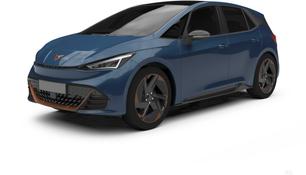
Hailing from Spain, the Cupra Born sets itself apart from the rest for a few reasons though. Firstly, it promises to be a hot hatch, something we haven’t really seen much of yet, and secondly, it has to bear the burden of launching Volkswagen Group’s all-electric MEB platform to the Australian market, but most importantly for Australians keen to hop into their first electric car, it promises to do this while offering a long range at a reasonable price.
Can it really do it all? We attended the Cupra Born’s Australian launch to find out.
Recently CarsGuide had a presence at several major electric vehicle shows in Australia and I can tell you, this car was generating a lot of buzz with prospective buyers.
It’s the just-released Zeekr 7X, a pure-electric, five-door, five-seat SUV priced and specified to challenge established EV players in the premium, mid-size SUV segment.
In this test, we’re behind the wheel of the 7X Performance, the dual-motor AWD flagship topping a three-model line-up including single-motor standard- and long-range RWD variants.
So stay with us as we assess everything from price, features, design and practicality to efficiency, driving dynamics, safety and cost of ownership. Let’s go!
The Cupra Born has so much going for it. An appealing price, long range, and super cool design chief among them.
I think the main thing holding it back will be that it doesn’t quite have the same out-and-out performance people have come to expect from a ‘hot hatch’ in the era of cars like the VW Golf R.
Importantly though, it delivers huge dollops of fun and driver engagement, something that's quite rare in the electric era.
The first thing that comes to mind in summing up the Zeekr 7X Performance is value. So much standard equipment for the money, stunning acceleration, top-shelf safety and a solid ownership package. It’s also practical, comfortable and the design inside and out is sleek. This electric SUV has thrown down a hefty gauntlet in challenging its existing opposition and there’s no doubt if you’re in this part of the market you should take a close look.
To stand out, any new brand should make a statement when it comes to design, and Cupra goes above and beyond to grab people’s attention.
It needs to, because Cupra is faced with the task of standing apart from its Volkswagen Group stablemates, especially the likes of Audi and Skoda.
One look at the Born, and it’s clear the brand has done an admirable job of separating its aggro hatch from the more tame Volkswagen ID.3 with which it shares its underpinnings.
I love its pugnacious face, which is designed to pierce air resistance in a similar fashion to the face of the Kia EV6, complete with its frowny light profile, bronze Cupra typeface, and dimples on the bonnet.
At the side, there’s the choice of almost Tesla-like sweeping aero designs for the standard 19-inch wheel option, or complex 80s rally-inspired wheels for the 20-inch Performance Pack hoops. The square beltline is perhaps the only spot where you can clearly see the Born’s relation to its ID.3 cousin, but I think the contrast flourish on the C-Pillar, which interrupts the roofline and makes it look more coupe-like, is a masterful touch.
This piece also wears a fishscale-like pattern, which is a motif that works its way through the entire car. In fact, the pattern is more than just theme-work for the Born specifically, but a deliberate pattern to interrupt plain plastics, which goes a long way to making sure no matter where you look, there’s a visual appeal to every corner of this car.
The inside continues this thoughtful and genuine ethos. Any area where a normal car would use a fake leather, or even plastic textured to look like leather, has been presented in a completely different way. The driver-focused instrument console, for example, is clad in a padded neoprene material, which is not only honest, but gives the interior a very modern look and feel.
The recycled seat materials offer a similar touch, and are comfortable in their bucket arrangement, too, and the neoprene finish continues here as a contrasting trim.
The colour palette is rich, with vivid blues, deep reds, a light smattering of tame silver rather than chrome, while the Cupra Bronze permeates to the car’s badges and highlights touches throughout.
This tone won’t be for everyone, and if you don’t like it, or the colour schemes, or even the car itself, that’s fine by Cupra. It wants to be controversial, and for a niche set of buyers, and says this contrast is the point of its design choices. If the amount of Borns sold before the car even landed is anything to go by, they’re on to something.
The 7X was developed at the Zeekr Design and Technology centre in Gothenburg, Sweden and arguably its most distinctive design element is the full-width band across the nose with standard LED headlights and DRL strip below.
They’d be matrix units if we were in China and the black band would house Zeekr’s ‘Stargate’ panel capable of displaying words and digital animations. But ANCAP crash-test requirements put the kybosh on that for Australia and it’s been replaced by the black cover. But there’s still room to play with animations on the lights that remain, including musical accompaniment through internal and external speakers.
Other than that, the car’s overall shape and proportions have a touch of Porsche Macan about them with a bulging mid-section and racy 21-inch rims filling the wheel arches.
There’s a slim, tail-light bar across the rear, a concealed wiper and an integrated spoiler on the top of the tailgate contributing to a smooth, clean look. No surprise, drag co-efficient is a slippery 0.25.
Inside, the fuss-free theme continues with a multi-layered dash design dominated by the 16-inch central media screen, compact digital instrument display and split-level centre console. And we’ll get to interacting with it all shortly.
Admirable restraint has been exercised in the simple surfacing and choice of trim materials with enough decoration to add visual interest.
Thanks to the Born’s VW Group all-electric MEB underpinnings, which are designed to make the most of interior space, the Born is much bigger on the inside than you might assume.
Clever packaging means a tall roof, glasshouse window structure, and a significant amount of adjustability and comfort for the front seats, with the clever digital instrument panel which is distilled to a handful of elements, and rides atop the column itself, so it moves as the driver adjusts it to maintain visibility.
The large touchscreen is oriented toward the driver, and has nice clear easy to use elements, although it is unfortunate the volume, temperature, and fan speed controls are a touch-based panel, and not easy-to-operate dials.
The rear seat offers impressive room, even behind my own seating position, and there’s sufficient headroom for me also, at 182cm tall. The cool recycled trim and comfortable seats continue to the rear row, although this car’s main practicality downside also resides here.
Opting for either pack will remove the rear seat, instead providing you with an odd cutout between the rear seats, and a drop-down armrest with a ski-port behind. Very European.
The boot measures 385 litres (VDA) which is relatively large for a hatchback, and it offers a nice low floor, impressive considering the motor is mounted below on the rear axle, although there’s no additional frunk storage for the Born.
So, before even getting in the car it’s worth talking about this Performance grade’s auto-opening doors.
The physical door handles are still present but inoperative (except in an emergency), so it’s a press of a button on the B-pillar, or a swipe card if you prefer, and open sesame.
There’s ‘pinch protection’ for the windows on all side doors and impact avoidance which means it will stop short of denting your neighbour at the car park.
After a week of press-button experience I could easily live without this functionality but my significant other loved it. So, personal preference reigns supreme.
At close to 4.8 metres long, a touch over 1.9m wide and around 1.7m tall (with a 2900mm wheelbase) the 7X is a ‘large’ medium SUV and the interior reflects its generous external dimensions.
There’s plenty of breathing space and a bright open feel thanks in part to the standard panoramic glass roof with power-sliding shade.
In the front, in terms of practicality, there’s a large, deep bin between the seats with a lid that opens from the left and right, another section with two swing-out cupholders and a roll-top lid, plus a big area in the lower console plus generous door bins. And there are handy flip-top boxes in the door armrests.
Worth noting on our test example, opening and closing the sliding cover over the cupholder section generated a groaning noise like oversize nails scraping down a blackboard, which didn’t exactly fit the premium vibe.
The glove box is opened with a button on the dash, which feels overly complicated. But then, in terms of power and connectivity there are twin 50W device charging bays and two USB-C sockets in the lower console.
In a big win for parents loading small kids into car seats, the rear doors open to 90 degrees. Then for storage, you’ve got map pockets on the front seat backs, decent door bins, two cup or bottle holders and a lidded box in the pull-down centre armrest, a small oddments tray at the back of the centre console and a pair of drawers under the seat.
And in the back, in terms of space, sitting behind the driver’s seat set for my 183cm position, I’ve got ample headroom, legroom and more than enough foot room.
There are power window shades, individual ventilation outlets in the B-pillars to manage the climate control for the rear section as well as one USB-A and a USB-C socket in the armrest box.
And then, there’s the Occupant Monitoring System, a camera view of the rear seat which instantly does away with the awkward 180-degree parental head turn from the front seats. A small camera in the B-pillar is activated by a dash-mounted button for a wide-angle, picture-in-picture video image on the main media screen.
And don’t worry, if you’re in the back and don’t appreciate the attention, a simple sliding cover over the lens can block the shot.
With the 60/40 split-folding rear seat upright the 7X boasts 539 litres (VDA) of boot space, which is pretty handy, and that number expands to a hefty 1978L with the back seat down.
There’s a load-through hatch, tie-down anchors, multiple bag hooks, specific lighting, a 12-volt socket and two storage compartments under the floor. The height of the power tailgate is adjustable but there’s no hands-free function.
Braked trailer towing capacity is 2.0 tonnes (750kg unbraked) and it’s worth noting vehicle-to-load functionality (using a specific discharge cable in the main charge port) is onboard.
But there’s no spare tyre of any description, with a repair/inflator kit your only option, which in this market isn’t good enough.
$59,990 is the headline-grabbing price tag worn by the Cupra Born, and if you’ve kept up to date with the latest developments in terms of government incentives across Australia, you might have figured out it works out even cheaper than the before-on-roads price tag in some jurisdictions like Queensland.
This price makes it more affordable than base versions of its most direct competitors, the Tesla Model 3 (rear-wheel drive - $61,300) and the Polestar 2 ($63,900) while at the same time offering more range, at 511 WLTP-certified kilometres.
In fact it's one of the longer-range EVs on offer in Australia right now, which is impressive for a car that, size-wise, is on a playing field with cars like the Nissan Leaf (from $50,990) and GWM Ora (from $43,990).
Oh and there is just one other electric hatch in this kind of ‘hot hatch’ territory, the charming Mini Cooper SE (from $63,250) although opting for the diminutive Mini will mean putting up with just 233km of range.
To keep things simple, there’s only one Cupra Born variant, at least for now. From there, you can opt for one of two packages.
Standard equipment is high, with 19-inch alloy wheels, bucket seats clad in a cool recycled cloth material, LED exterior lights, dual-zone climate, keyless entry with keyless start and exit, a massive 12-inch multimedia touchscreen, a 5.3-inch digital instrument panel, wired Apple CarPlay and Android Auto connectivity, a wireless phone charger, and a 360-degree parking camera.
It is odd the seats are manually adjustable and the phone mirroring is wired at this price, and some may be slightly dismayed at the multimedia system. While it uses slick modern software with a stylish Cupra theme, it’s missing the air of always-online functionality which makes the Model 3 feel so smart, and adds an element of depth to the Polestar 2’s minimalist setup.
One thing which is very deliberate, however, is the omission of fake leather, and next-to-no real leather in the Cupra Born’s interior, even if you choose one of the optional packs. This is because Cupra wants to be more authentic and sustainable with its interior material choices.
The two option packs keep things straightforward. You can choose either the interior package ($2900) which adds a blue theme for the interior, consisting of a partially recycled microsuede seat material with highlights in Cupra’s signature bronze hue, electric adjust, heating, and message functions for the driver and front passenger, as well as a higher-grade Beats audio system.
Meanwhile the performance package ($2600) adds dynamic chassis control with adjustable dampers, larger 20-inch alloy wheels, an ESC-off function for rear-drive antics, and more aggressive Michelin Pilot Sport 4 tyres.
Interestingly, these performance tyres reduce range to 475km for performance package-equipped cars, while both packages render the Born a four-seater due to alterations to the rear bench.
The Zeekr 7X starts at $57,900, before on-road costs, for the Single motor RWD version, rising to $63,900 for the Long range RWD and $72,900 for this Performance model.
At that money the 7X Performance lines up against a diverse group of primo EV SUVs like the Cupra Tavascan, Hyundai Ioniq 5, Kia EV5, MG IM6, Skoda Enyaq, Subaru Solterra, Tesla Model Y, Toyota bZ4X and VW ID.5. Not to mention its corporate Geely twin under the skin, the Polestar 4.
But cost-of-entry is one thing. The number of included features for the price is another and this car is properly loaded.
Aside from the performance and safety tech we’ll get to shortly the highlights are Nappa leather trim, 14-way power-adjustable front seats (with memory, heating, ventilation and massage functions), a leather-trimmed, heated and power-adjustable steering wheel, heated power-reclining (to 10 degrees) rear seats, a rear seat ‘Occupant Monitoring System’ (more on this later), a 16-inch multimedia display, 36-inch head-up display and digital instrument screen.
There’s also 2160-watt, 21-speaker audio, three-zone climate control, Android Auto and Apple CarPlay connectivity, multi-colour ‘Ripple Effect’ interior ambient lighting, all LED exterior lighting, auto door opening, a panoramic glass roof (with power sunshade), a power tailgate, heated and power-folding exterior mirrors, rear privacy glass (plus power sunshades) and 21-inch forged alloy rims.
That’s heaps and there’s even more. Enough to put serious pressure on the competitors mentioned above.
The Cupra Born is interesting, in that it’s a rear-wheel drive hatchback. This provides both fun driving dynamics as well as a hike in efficiency, and in Australia, we get only the most powerful motor setup available.
This is a unit that produces a peak of 170kW under boost mode, and 310Nm of torque. This is approaching Golf GTI levels of power output, to give you an idea, although the Born is also some 400kg heavier, blunting its hot hatch potential somewhat.
The Zeekr 7X Performance is powered by dual electric motors, asynchronous magnet on the front axle and permanent magnet at the rear. Combined power is 475kW with peak torque at a grunty 710Nm.
That amount of muscle is up there at the top of the category with the likes of the MG IM6 Performance (572kW/802Nm), Tesla Model Y Performance (461kW/741Nm) and even the track-ready Hyundai Ioniq 5 N (448kW/740Nm).
The Born’s astounding 511km driving range is afforded by its enormous 82kWh battery, which is more like the size of battery you would see in a much larger vehicle such as a Kia EV6 for example.
Thankfully though it’s not all brute force via capacity, this car is also reasonably energy efficient, with an official rating of 17kWh/100km.
Not all EVs can hit the WLTP numbers due to many variables from wheel size, tyre composition, and even temperature management, but even enthusiastically driving the demo cars on our launch saw numbers between 17 - 23kWh/100km. Nothing outrageous by any means.
Expect a more thorough evaluation of the Born’s range and efficiency when we’re able to test one for a longer period of time at a later date.
When it comes to charging, the Born’s DC charger maxes out at 170kW, allowing a 10-80 per cent top up time of roughly 30 minutes.
Meanwhile its AC inverter tops out at 11kW for a slow charging time of roughly six hours from 10 - 100 per cent.
The Born uses a Euro-standard Type 2 CCS charging connector. Unfortunately, there’s no V2L function this time around.
The 7X boasts an 800V electrical architecture which means it has 420kW charging capability and even though the max public charging output currently available here is 350kW, at that level you can expect the 100kW NMC battery to charge from 10 to 80 per cent in around 13 minutes. AC charging is a handy 22kW for 10-100 per cent charging in four hours.
Claimed (WLTP) range is 543km and on test we saw average energy use of 18.8kWh/100km, which is in the middle of Zeekr’s claim of 17.7-19.9kWh/100km for the combined (urban/extra-urban) cycle and more than acceptable for an EV of this size and weight.
We’ve come to understand hot hatchbacks in certain terms, and these are defined by lightweight design, firm suspension, and over-sized engines in the front, usually driving the front wheels.
But the Born flips pretty much the whole formula upside down. It’s heavy, rear-wheel drive, not as powerful as perhaps it could be, and has comparatively forgiving suspension.
In fact, the Born has one of the most supple suspension tunes for an electric car in this price bracket, being much more comfortable and adept at absorbing rough conditions than a Model 3 or a Polestar 2 for example.
When it comes to power, it’s instantly responsive, as any EV should be, but in a straight line you won’t be outrunning even a base Model 3, or even a Golf GTI.
Whether it’s truly a hot hatch then will depend on how you define this concept, because so long as you don’t care about straight-line speed, the Cupra Born is an absolute blast.
Unexpectedly, this unusual formula works. The Born is a car with a completely different character to every other EV at this price. Rather than being tight and locked-down, the Born feels much more free and fun, with its ride and particularly its steering combining with the rear-drive push to make for a playful little car, with an organic feel to its feedback.
Again, unlike a lot of electric cars, the Born’s flexible approach to the road results in a car which demands much more from the driver. The traction control computer doesn’t conspire with the electric motors and brakes to sanitise the experience, this car will let you make mistakes within reason.
It’s possible to eke out a cheeky slide if you push it, for example, and the way the weight of the battery shifts the car around is more entertaining than unsettling, like it is in some small electric SUVs.
Even the regenerative braking is comparatively hands-off. It doesn’t have the single-pedal driving experience that some EV adopters are after, instead it will gradually taper speed off, relying on the driver to actually use the blended braking on the brake pedal itself, even when the car is set to the most aggressive ‘B’ mode. Again, this means the driver has to actually drive the car, jabbing the brakes in on sharp corners.
So, even at around 2.5 tonnes, with all that power and torque under your right foot, the 7X Performance can rocket from 0-100km/h in a supercar-like 3.8 seconds. It is properly quick.
Suspension is by double wishbones at the front and a five-link set-up at the rear and the hefty body is well-controlled in the main, although you can feel modest lateral movement on quick changes of direction.
The ‘Continuous Control’ air suspension has three settings - Comfort / Standard / Sport - with a distinct difference between them.
In Comfort, small bumps and ruts still make their presence felt, but overall ride compliance is impressive. Hot tip is to avoid the Sport mode unless you’re determined to press on through your favourite set of corners, or (implausibly) line up for a track day.
The 7X rides on Zeekr’s ‘SEA’ (Sustainable Experience Architecture) platform which features an integrated alloy diecast rear section which seemingly makes a ‘solid’ contribution to overall refinement and noise reduction.
Speaking of which, wind noise is close to imperceptible even at freeway speeds, helped in no small part by the car’s slippery drag coefficient.
The accurate speed-sensitive steering delivers good road feel, which isn’t always the case with larger EVs, and the big 21-inch (265/40) Continental EcoContact 7 tyres are pleasingly quiet while gripping with reassuring determination.
Braking is by ventilated discs all around with chunky four-piston calipers up front. There are two levels of regenerative braking and a ‘single-pedal’ setting, although the latter is best treated as a third regen level because it seems reluctant to bring the car to a full stop quickly enough, even in slow-moving traffic.
Important to mention crash-avoidance safety aids like lane-keeping assist and driver fatigue monitoring don’t intrude unduly. There are subtle occasional vibrations through the steering wheel and only when necessary.
You’ve also got a 360-degree overhead view and a good quality reversing camera, both of which are super-handy when manoeuvring. Or if you want some real assistance ‘Automatic Park Assist’ will help you slot the car into the space you’re aiming for, as well.
Ergonomically speaking, while there’s a physical control for audio volume something like exterior mirror adjustment for example is via the combination of a screen slider and a steering wheel control which is fussy. That said, progression through screens and functions for media and car settings is logical and quick thanks in part to a grunty Qualcomm Snapdragon chip platform.
Under the heading of miscellaneous observations, an 11.6m turning circle is useful for a car of this size, the mega audio system cranks (with the driver’s headrest speaker a highlight) and the adaptive cruise works well, picking up acceleration rapidly when pulling out to overtake a slower-moving car in front.
Thankfully, there’s no optional extra pricey safety pack in the Cupra Born range, with standard active equipment including adaptive cruise control, auto emergency braking with pedestrian and cyclist detection, blind spot monitoring with rear cross traffic alert, driver attention alert, and a 360-degree parking camera.
There are also front and rear parking sensors, exit warning systems (uses the blind spot system to alert someone not to open their door into traffic), and a suite of seven airbags, including a centre airbag.
The safety suite is capped off with ISOFIX child seat mounting points on the rear seats.
The Born already carries a maximum five-star ANCAP safety rating to a 2023 standard, scoring reasonably highly across all categories.
While the 7X hasn’t been assessed by ANCAP yet it’s fair to assume a maximum five-star result sooner rather than later, in line with its Euro NCAP score.
And crash-avoidance safety tech is through the roof. Fifteen key ADAS functions including adaptive cruise, auto emergency braking (AEB), blind-spot monitoring, front and rear cross-traffic alert, lane keeping assist, a parking assist system and more. There are 12 hi-def cameras, 12 ultrasonic radars and a millimeter-wave radar on the job.
The airbag count runs to seven, including a front centre bag, and there are three top tethers for child seats across the second row, with ISOFIX anchors on the two outer positions. And a big tick for ‘Post-Impact Braking’ designed to minimise the chances of subsequent collisions after an initial crash.
Suffice it to say the 7X Performance sits on the top safety shelf.
Cupra offers the Born with a five-year and unlimited kilometre warranty, as well as the choice of either a three- or five-year service pack. Interestingly, the three year pack, at $999, is the same price as it is for combustion vehicles in Cupra’s range, while the five-year pack is some $400 cheaper at $1590. Either way, this pack pricing isn’t outrageous when you break it down by annual cost, but many rivals in the electric space are offering free or very cheap servicing over the same period.
The 7X Performance is covered by Zeekr’s five-year/unlimited km warranty, with eight-year/160,000km cover for the drive battery, neither of which are exceptional for the category. But there’s also five-year corrosion and paintwork warranty cover, with roadside assist included for the same period.
Recommended maintenance interval is two years/40,000km with optional health checks in between. Stick to the basic schedule and you’re looking at $1755 over the first five years.
Go for the complimentary first year service plus two other optional health checks and the figure is $2385, or an average of $477 per workshop visit over the same five years. Far from over the top for an EV in this part of the market.
The Zeekr dealer footprint currently takes in multiple sites in Brisbane, Melbourne and Sydney with additional locations in Canberra and Perth as well as The Sunshine Coast and Geelong, for a total of 14.
Some are currently ‘pop-ups’ with the intention to transition them to permanent status, with all dealers able to facilitate servicing (on site or at a separate location).