What's the difference?
Electric cars. Australia now has quite a few, and to add more confusion to the mix, there are a litany of all-new brands releasing models into this new frontier of the automotive landscape.
Most new electric cars are in Australia’s favourite buying category, the SUV, but there’s also a ute, some odd sedan-y things, and, of course, a handful of hatchbacks.
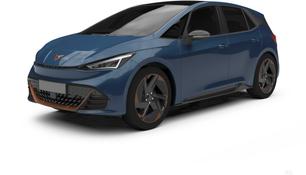
Hailing from Spain, the Cupra Born sets itself apart from the rest for a few reasons though. Firstly, it promises to be a hot hatch, something we haven’t really seen much of yet, and secondly, it has to bear the burden of launching Volkswagen Group’s all-electric MEB platform to the Australian market, but most importantly for Australians keen to hop into their first electric car, it promises to do this while offering a long range at a reasonable price.
Can it really do it all? We attended the Cupra Born’s Australian launch to find out.
Here in 2021, it finally seems like Australia is ready to adopt electric cars, with interest on the rise and many, many new models of various shapes and sizes on the horizon.
Nissan, though, has been quietly chipping away at the EV market with its Leaf, which first launched in Australia way back in 2012 and was then refreshed with a new-gen model in mid-2019.
But even the latest Leaf is beginning to look a little dated compared to the likes of the Kia EV6 and Hyundai Ioniq 5, so what is Nissan to do?
Introduce the new Leaf e+ of course, which features a larger battery for increased driving range, as well as a more potent electric motor for peppier performance.
But is the Nissan Leaf e+ the electric car to buy?
The Cupra Born has so much going for it. An appealing price, long range, and super cool design chief among them.
I think the main thing holding it back will be that it doesn’t quite have the same out-and-out performance people have come to expect from a ‘hot hatch’ in the era of cars like the VW Golf R.
Importantly though, it delivers huge dollops of fun and driver engagement, something that's quite rare in the electric era.
If you’ve never driven an electric car before, the Nissan Leaf e+ is the perfect starting point.
It looks and feels for the most part like a conventional car, and it doesn’t throw any of its tech in your face.
It might sound like a criticism, but the Leaf e+ is easy-to-use and unintimidating, which is refreshing in a world dominated by TikToks, smart watches and cryptocurrency.
With a boosted driving range and a bit better performance, the Nissan Leaf e+ certainly puts a strong case forward as your next – or first – EV.
To stand out, any new brand should make a statement when it comes to design, and Cupra goes above and beyond to grab people’s attention.
It needs to, because Cupra is faced with the task of standing apart from its Volkswagen Group stablemates, especially the likes of Audi and Skoda.
One look at the Born, and it’s clear the brand has done an admirable job of separating its aggro hatch from the more tame Volkswagen ID.3 with which it shares its underpinnings.
I love its pugnacious face, which is designed to pierce air resistance in a similar fashion to the face of the Kia EV6, complete with its frowny light profile, bronze Cupra typeface, and dimples on the bonnet.
At the side, there’s the choice of almost Tesla-like sweeping aero designs for the standard 19-inch wheel option, or complex 80s rally-inspired wheels for the 20-inch Performance Pack hoops. The square beltline is perhaps the only spot where you can clearly see the Born’s relation to its ID.3 cousin, but I think the contrast flourish on the C-Pillar, which interrupts the roofline and makes it look more coupe-like, is a masterful touch.
This piece also wears a fishscale-like pattern, which is a motif that works its way through the entire car. In fact, the pattern is more than just theme-work for the Born specifically, but a deliberate pattern to interrupt plain plastics, which goes a long way to making sure no matter where you look, there’s a visual appeal to every corner of this car.
The inside continues this thoughtful and genuine ethos. Any area where a normal car would use a fake leather, or even plastic textured to look like leather, has been presented in a completely different way. The driver-focused instrument console, for example, is clad in a padded neoprene material, which is not only honest, but gives the interior a very modern look and feel.
The recycled seat materials offer a similar touch, and are comfortable in their bucket arrangement, too, and the neoprene finish continues here as a contrasting trim.
The colour palette is rich, with vivid blues, deep reds, a light smattering of tame silver rather than chrome, while the Cupra Bronze permeates to the car’s badges and highlights touches throughout.
This tone won’t be for everyone, and if you don’t like it, or the colour schemes, or even the car itself, that’s fine by Cupra. It wants to be controversial, and for a niche set of buyers, and says this contrast is the point of its design choices. If the amount of Borns sold before the car even landed is anything to go by, they’re on to something.
If you were expecting all electric cars to look like something out of Star Wars or Blade Runner, you might want to lower your expectations a tiny bit with the Nissan Leaf.
From the outside, the Leaf looks just… fine?
You can tell it’s an electric car because there aren’t big gaps in the front grille to let in air, and the sharp, angular styling helps the Leaf better cut through the air to maximise its driving range.
Step to the side and you’ll see a silhouette of a small hatchback, but spruced up with ‘Zero emissions’ badges and 17-inch wheels with low-rolling-resistance tyres.
The blacked-out C-pillar is kind of cool, and pinches the rear end a bit for a more stylish and even coupe-like roofline.
That roof is finished off with a subtle spoiler that carries down into the half-blacked-out tailgate and sharp tail-lights. There’s also a little diffuser down there and, being an electric car, there are no exhaust outlets to ruin the plastic.
Inside, once again, the Leaf looks just fine.
The biggest thing that really stands the Leaf e+’s cabin apart from a conventional small hatchback is the shifter, which is now a small puck-like thing.
It still functions the same, you pull it towards you and down to chuck the Leaf in drive, it’s just not a gear stick, and is one of the only giveaways that the Leaf is an EV from the inside.
The 8.0-inch touchscreen dominates the centre stack, and it's great to see that, despite the Leaf’s futuristic feel, there are still buttons and switches for the climate controls, rather than being an all-touchscreen affair.
It might sound like I'm a fan of the way the Leaf e+ looks, but it doesn’t really break the mould in terms of styling.
Whether that is a good thing or a bad thing is completely up to you, as some would rather a more traditional looking vehicle, but I’d prefer a bit more zing in the style department.
Thanks to the Born’s VW Group all-electric MEB underpinnings, which are designed to make the most of interior space, the Born is much bigger on the inside than you might assume.
Clever packaging means a tall roof, glasshouse window structure, and a significant amount of adjustability and comfort for the front seats, with the clever digital instrument panel which is distilled to a handful of elements, and rides atop the column itself, so it moves as the driver adjusts it to maintain visibility.
The large touchscreen is oriented toward the driver, and has nice clear easy to use elements, although it is unfortunate the volume, temperature, and fan speed controls are a touch-based panel, and not easy-to-operate dials.
The rear seat offers impressive room, even behind my own seating position, and there’s sufficient headroom for me also, at 182cm tall. The cool recycled trim and comfortable seats continue to the rear row, although this car’s main practicality downside also resides here.
Opting for either pack will remove the rear seat, instead providing you with an odd cutout between the rear seats, and a drop-down armrest with a ski-port behind. Very European.
The boot measures 385 litres (VDA) which is relatively large for a hatchback, and it offers a nice low floor, impressive considering the motor is mounted below on the rear axle, although there’s no additional frunk storage for the Born.
Measuring 4490mm long, 1788mm wide, 1540mm tall and with a 2700mm wheelbase, the Nissan Leaf e+ sizes up nicely against small hatchbacks like the Toyota Corolla, Mazda3 and Hyundai i30.
Up front, there’s no denying the Leaf’s practicality, and the cabin feels light and airy thanks to big and generous windows, even if the A-pillars are a little on the thick side.
However, the seats are positioned a little too high – at least for our tastes – and without a telescoping function on the steering wheel, it can take a bit of time before you find the most comfortable driving position.
Storage options in the front seats include door pockets that will take a big water bottle, two cupholders between the seats, a deep storage cubby under the armrest and a tiny little recess that will fit your wallet and smaller phones.
In the rear seats, space does get a bit tighter, at least for my six-foot-tall frame, but there is still sufficient head and leg-room in the two outboard seats.
The middle position is pretty compromised, however, because of the lithium-ion battery underneath and all the components needed to get juice up to the front wheels, which eats away significantly at the footwell.
In the back, storage options extend to a bottle holder in the doors and map pockets behind the two front seats.
Opening the boot reveals a cavity that will accommodate 405 litres officially, but you might want to be careful not to load the Leaf to the brim.
There’s a Bose sound system device positioned right behind the back seats, which emits a beeping sound when reversing to warn pedestrians you are there, so you’ll have to be careful not to damage it with anything big and heavy.
It’s a bit disappointing to see there are no bag hooks or luggage tie-down points in there, but at least there are storage nets where you can put your charging cables.
Fold the rear-seats down and available volume swells to 1176L, but the seats do not fold flat, making it trickier to transport longer items.
$59,990 is the headline-grabbing price tag worn by the Cupra Born, and if you’ve kept up to date with the latest developments in terms of government incentives across Australia, you might have figured out it works out even cheaper than the before-on-roads price tag in some jurisdictions like Queensland.
This price makes it more affordable than base versions of its most direct competitors, the Tesla Model 3 (rear-wheel drive - $61,300) and the Polestar 2 ($63,900) while at the same time offering more range, at 511 WLTP-certified kilometres.
In fact it's one of the longer-range EVs on offer in Australia right now, which is impressive for a car that, size-wise, is on a playing field with cars like the Nissan Leaf (from $50,990) and GWM Ora (from $43,990).
Oh and there is just one other electric hatch in this kind of ‘hot hatch’ territory, the charming Mini Cooper SE (from $63,250) although opting for the diminutive Mini will mean putting up with just 233km of range.
To keep things simple, there’s only one Cupra Born variant, at least for now. From there, you can opt for one of two packages.
Standard equipment is high, with 19-inch alloy wheels, bucket seats clad in a cool recycled cloth material, LED exterior lights, dual-zone climate, keyless entry with keyless start and exit, a massive 12-inch multimedia touchscreen, a 5.3-inch digital instrument panel, wired Apple CarPlay and Android Auto connectivity, a wireless phone charger, and a 360-degree parking camera.
It is odd the seats are manually adjustable and the phone mirroring is wired at this price, and some may be slightly dismayed at the multimedia system. While it uses slick modern software with a stylish Cupra theme, it’s missing the air of always-online functionality which makes the Model 3 feel so smart, and adds an element of depth to the Polestar 2’s minimalist setup.
One thing which is very deliberate, however, is the omission of fake leather, and next-to-no real leather in the Cupra Born’s interior, even if you choose one of the optional packs. This is because Cupra wants to be more authentic and sustainable with its interior material choices.
The two option packs keep things straightforward. You can choose either the interior package ($2900) which adds a blue theme for the interior, consisting of a partially recycled microsuede seat material with highlights in Cupra’s signature bronze hue, electric adjust, heating, and message functions for the driver and front passenger, as well as a higher-grade Beats audio system.
Meanwhile the performance package ($2600) adds dynamic chassis control with adjustable dampers, larger 20-inch alloy wheels, an ESC-off function for rear-drive antics, and more aggressive Michelin Pilot Sport 4 tyres.
Interestingly, these performance tyres reduce range to 475km for performance package-equipped cars, while both packages render the Born a four-seater due to alterations to the rear bench.
New tech is always going to cost a premium, just look at how the latest flagship smartphones have crept well over $1000!
So, if you’re expecting to pay a little more for an electric car than a petrol or diesel-powered model, you’d be right on the money.
You can get into a base Nissan Leaf for $49,990 before on-road costs, but the new 2021 e+ raises the bar to $60,490. Ouch.
There is quite a long list of equipment to justify the price though, but both Leaf and Leaf e+ actually mirror each other in spec, meaning the $10,500 difference in price is due to the latter’s improved driving range, performance and charging – but more on those in a bit.
As standard, the Leaf and Leaf e+ comes with 17-inch alloy wheels, keyless entry, rear privacy glass, heated front and rear outboard seats, heated steering wheel, and a leather and suede interior trim.
Drivers are also treated to a 7.0-inch multifunction display, which can be customised to show driving range, energy consumption and more.
Handling multimedia duties is an 8.0-inch multimedia touchscreen, with Apple CarPlay and Android Auto functionality, seven-speaker Bose sound system, digital radio and satellite navigation.
There are some noticeable omissions on the spec list, however, which are especially jarring given the Leaf e+’s forward-facing powertrain.
There’s no wireless smartphone charger and there’s no head-up display, plus the park-brake is foot-operated, which is a big disappointment in a new car in 2021.
The Cupra Born is interesting, in that it’s a rear-wheel drive hatchback. This provides both fun driving dynamics as well as a hike in efficiency, and in Australia, we get only the most powerful motor setup available.
This is a unit that produces a peak of 170kW under boost mode, and 310Nm of torque. This is approaching Golf GTI levels of power output, to give you an idea, although the Born is also some 400kg heavier, blunting its hot hatch potential somewhat.
Under the bonnet of the 2021 Nissan Leaf e+, you will find the electric motor and inverter, which drives the front wheels via a single-speed automatic transmission.
The Leaf e+’s electric motor produces 160kW of power and 340Nm of torque, which is a noticeable step up over the standard Leaf’s 110kW/320Nm output.
As a result, the Leaf e+ is quicker in the 0-100km/h sprint, needing just 6.9 seconds, compared to the Leaf’s 7.9s time.
The Born’s astounding 511km driving range is afforded by its enormous 82kWh battery, which is more like the size of battery you would see in a much larger vehicle such as a Kia EV6 for example.
Thankfully though it’s not all brute force via capacity, this car is also reasonably energy efficient, with an official rating of 17kWh/100km.
Not all EVs can hit the WLTP numbers due to many variables from wheel size, tyre composition, and even temperature management, but even enthusiastically driving the demo cars on our launch saw numbers between 17 - 23kWh/100km. Nothing outrageous by any means.
Expect a more thorough evaluation of the Born’s range and efficiency when we’re able to test one for a longer period of time at a later date.
When it comes to charging, the Born’s DC charger maxes out at 170kW, allowing a 10-80 per cent top up time of roughly 30 minutes.
Meanwhile its AC inverter tops out at 11kW for a slow charging time of roughly six hours from 10 - 100 per cent.
The Born uses a Euro-standard Type 2 CCS charging connector. Unfortunately, there’s no V2L function this time around.
Officially, the Nissan Leaf e+ consumes 18kWh per 100km … which we’re betting means absolutely nothing to you.
Translating this into real-world terms, the Leaf e+ will travel about 385km with a full charge.
This is much higher than the 270km afforded in the standard Leaf because the e+ has a much larger 62kWh battery, which is part of the reason it costs so much more.
However, with things like regenerative braking and careful use of the air-conditioning, your mileage can greatly vary.
In our week with the car, I actually managed an average consumption rating of 17.3kWh/100km, bettering the official figure.
Regardless, using a standard household socket will get the Leaf e+ from 30 per cent battery to full in about 11.5 hours, and using a DC fast-charger will cut the 20-80 per cent charge to just 45 minutes.
Do note that the Leaf e+ features the CHAdeMO DC fast-charging ports, which are a little harder to find than the CCS varieties.
The Leaf e+, as well as the Leaf, also now support bi-directional charging, so you can use your car to power your home to charge things like your phone and Nintendo.
We’ve come to understand hot hatchbacks in certain terms, and these are defined by lightweight design, firm suspension, and over-sized engines in the front, usually driving the front wheels.
But the Born flips pretty much the whole formula upside down. It’s heavy, rear-wheel drive, not as powerful as perhaps it could be, and has comparatively forgiving suspension.
In fact, the Born has one of the most supple suspension tunes for an electric car in this price bracket, being much more comfortable and adept at absorbing rough conditions than a Model 3 or a Polestar 2 for example.
When it comes to power, it’s instantly responsive, as any EV should be, but in a straight line you won’t be outrunning even a base Model 3, or even a Golf GTI.
Whether it’s truly a hot hatch then will depend on how you define this concept, because so long as you don’t care about straight-line speed, the Cupra Born is an absolute blast.
Unexpectedly, this unusual formula works. The Born is a car with a completely different character to every other EV at this price. Rather than being tight and locked-down, the Born feels much more free and fun, with its ride and particularly its steering combining with the rear-drive push to make for a playful little car, with an organic feel to its feedback.
Again, unlike a lot of electric cars, the Born’s flexible approach to the road results in a car which demands much more from the driver. The traction control computer doesn’t conspire with the electric motors and brakes to sanitise the experience, this car will let you make mistakes within reason.
It’s possible to eke out a cheeky slide if you push it, for example, and the way the weight of the battery shifts the car around is more entertaining than unsettling, like it is in some small electric SUVs.
Even the regenerative braking is comparatively hands-off. It doesn’t have the single-pedal driving experience that some EV adopters are after, instead it will gradually taper speed off, relying on the driver to actually use the blended braking on the brake pedal itself, even when the car is set to the most aggressive ‘B’ mode. Again, this means the driver has to actually drive the car, jabbing the brakes in on sharp corners.
If you’ve never driven an electric car before, there is a bit of a learning curve. For starters, the torque is available instantaneously, and there isn’t any exhaust or engine noise to contend with.
But don’t worry, because Nissan has made it really easy to just get into the Leaf e+ and go.
Firstly, there is nothing intimidating about the cabin. The layout for all the controls and switches is well thought out, and everything is just where it should be and does what it's meant to do.
This means that, despite having an electric drivetrain, the Leaf e+ feels familiar – and that’s important to some.
Turn the car on, put it in Drive and – just like a regular car – push on the throttle to move. But even though torque is available right away, the Leaf e+ never shoots forward at a mind-blending or uncontrollable pace.
Can you tell the Leaf e+ has a peppier engine than the base offering? It’s hard to say without driving the Leaf and Leaf e+ back-to-back, but Nissan’s new electric hatchback offers spritely enough performance.
What is noticeable is the boost to driving range.
While an extra 110 or so kilometres might not seem like that much in the grand scheme of things, it means you don’t have to worry about plugging in and recharging as often, and it's always nice to look down at the range-remaining display and see a three-digit figure.
In our week with the car, we only charged up once, and there was never a moment where we stressed about running out of juice before getting the car back to base.
And if you really are worried about your range, or are into hypermiling, there is always the Eco mode, or Nissan’s e-Pedal, to play around with.
The former will just dial back performance to add about 15km to the overall range, while the latter allows the Leaf e+ to be operated with just the throttle pedal.
Lift off the right foot, and the Leaf e+’s aggressive regenerative braking will kick in to recoup energy and slow down the car, forcing you to think about and be careful with your inputs.
It might sound like a marketing gimmick, but it really is the best way to drive the Leaf e+ if range is a concern.
The Nissan Leaf e+ isn’t the last word on dynamics by any stretch, turn the wheel and the car will travel where you direct it, but it does so without any great flair or panache.
No, the 2021 Nissan Leaf e+ is a not dynamic wunderkind, but it absolutely nails being a comfortable, familiar and unintimidating step into the world of electric cars.
Thankfully, there’s no optional extra pricey safety pack in the Cupra Born range, with standard active equipment including adaptive cruise control, auto emergency braking with pedestrian and cyclist detection, blind spot monitoring with rear cross traffic alert, driver attention alert, and a 360-degree parking camera.
There are also front and rear parking sensors, exit warning systems (uses the blind spot system to alert someone not to open their door into traffic), and a suite of seven airbags, including a centre airbag.
The safety suite is capped off with ISOFIX child seat mounting points on the rear seats.
The Born already carries a maximum five-star ANCAP safety rating to a 2023 standard, scoring reasonably highly across all categories.
The Nissan Leaf e+ wears a maximum five-star ANCAP safety rating from the testing of the regular Leaf in 2018.
The Leaf scored notably high on the adult and child occupant protection tests, with six airbags as standard.
Advanced safety technology also extends to autonomous emergency braking with pedestrian detection, adaptive cruise control, lane-keep assist, blind-spot monitoring, traffic-sign recognition, high-beam assist, driver-attention alert, tyre pressure monitoring, front- and rear-parking sensors, and rear cross traffic alert.
Our favourite feature, though, is the surround-view monitor, which helps you nail that parallel park without curbing the wheels.
Cupra offers the Born with a five-year and unlimited kilometre warranty, as well as the choice of either a three- or five-year service pack. Interestingly, the three year pack, at $999, is the same price as it is for combustion vehicles in Cupra’s range, while the five-year pack is some $400 cheaper at $1590. Either way, this pack pricing isn’t outrageous when you break it down by annual cost, but many rivals in the electric space are offering free or very cheap servicing over the same period.
Like all new Nissan models sold in Australia in 2021, the Leaf e+ comes with a five-year/unlimited-kilometre warranty, along with five years of roadside assist.
The battery is covered by an eight-year/160,000km assurance period, which ensures three quarters of capacity after that time.
Scheduled service intervals are every 12 months or 20,000km, whichever occurs first, matching the industry standard.
With Nissan’s capped-price-servicing schedule, the Leaf e+ will cost around $1742 to maintain over five years, averaging out to be about $290 per year.
Without the need to change things like oil and sparkplugs, the all-electric Leaf e+ is much cheaper to keep on the road than petrol-powered competitors.