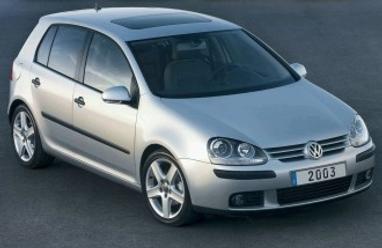
Volkswagen Golf 2008 Problems

Are you having problems with your 2008 Volkswagen Golf? Let our team of motoring experts keep you up to date with all of the latest 2008 Volkswagen Golf issues & faults. We have gathered all of the most frequently asked questions and problems relating to the 2008 Volkswagen Golf in one spot to help you decide if it's a smart buy.

VW recalls 2.6m cars worldwide, over 44,000 in Australia
By Joshua Dowling · 15 Nov 2013
Volkswagen has issued a worldwide recall of 2.6 million vehicles --including more than 44,000 cars in Australia -- for possible fuel leaks, electrical faults and gearbox problems.It is the second significant recall in Australia in five months for the German car maker, which is suspected by industry observers of taking shortcuts in its bid to overtake Toyota to become the world’s biggest car maker by 2018.The recall comes as the Victorian Coroner today announced there was no evidence of a mechanical fault with a Volkswagen Golf involved in a fatal crash in Melbourne in 2011.The car was struck from behind by a truck. The coroner investigated the incident after it was alleged the car lost power suddenly, following similar complaints from other Volkswagen owners.The vehicles in the latest recall include more than 17,000 Tiguan SUVs because "a fuse may blow … thus resulting in failure of one of the two vehicle light circuits".Approximately 16,000 Volkswagen Amarok pick-ups are being recalled because "some Amarok utes with a 2.0-litre turbo diesel engine may be affected by leaks to the fuel pipe within the engine compartment".Furthermore, about 11,000 Volkswagens across various models equipped with the company’s controversial twin-clutch automatic "DSG" gearbox will be recalled because "electric malfunctions could occur in rare cases in the gearbox power supply if synthetic gearbox oil is used".In June 2013 Volkswagen recalled more than 25,000 cars in Australia for gearbox problems after a fortnight of unprecedented pressure from disgruntled customers, following the announcement of the Victorian Corner's investigation.The vehicles affected in the June 2013 recall were built between June 2008 and September 2011 and included the Golf hatchback, the Jetta sedan, the Polo hatchback, the Passat sedan and wagon and the Caddy van.Complaints highlighted in the lead-up to that campaign included cars that conked out or lost power suddenly, high oil use, and gearbox reliability issues.Several customers reported having their engines and/or gearboxes replaced while others complained about the  $5000 to $10,000 expense of fixing these parts once the warranty had expired.In addition to the previous recall announced in June, Volkswagen Australia also called about 2800 diesel cars back to dealerships for inspection.The company says anyone experiencing faults with their Volkswagen to contact their local Volkswagen dealer.Volkswagen Australia has set up a dedicated customer service line to answer customer queries -- 1800 504 076. 
Read the article
VW recalls 2.6m cars, over 44,000 in Australia
By Staff Writers · 15 Nov 2013
Volkswagen is issuing recalls and advisories for about 2.6 million vehicles world-wide, including about 43,700 in Australia, for a range of three defects. The Australian vehicles include more than 16,700 Tiguan SUVs recalled for a fault that means a fuse can blow, causing one of the two vehicle light circuits to fail. About 16,000 Volkswagen Amarok utes are being recalled because of fuel pipe leaks affecting the 2.0-litre turbodiesel engine.The remaining 11,000 cars range across various models that have VW's twin-clutch automatic DSG gearbox, in which an electrical defect could occur if synthetic gearbox oil is used," Volkswagen says..A large proportion of the 2.6 million global recall is in China -- VW's largest market -- after a problem was found there in the same gearbox that triggered a recall earlier this year. The Chinese recall affects 750,000 Volkswagen and Audi vehicles that use the Chinesee-built DSG gearbox there.  Vehicles on the China recall list include the Volkswagen Golf, Beetle and Passat and several Audi models.It's the second recall this year on the DSG. In June more than 25,000 Australian cars were recalled for gearbox problems after pressure from disgruntled customers. Those vehicles included the Golf hatchback, Jetta sedan, Polo hatchback, Passat sedan and wagon and the Caddy van.Volkswagen said it is recalling 800,000 (2008-11) Tiguan SUVs and 239,000 Amaroks around the world, bringing the total number of cars affected in the three safety actions to 2.6 million.While the number of vehicles is large, analysts estimated the cost of the repairs could be relatively small. Still, the fresh problems that have surfaced with the gearbox might further dent Volkswagen's reputation in China and strain its relations with its local venture partner, SAIC.The gearbox only has problems in hot and humid climates, said Volkswagen spokesman Peter Heinz Thul. In warm climates, additives in the synthetic oil can damage the electronics. VW is proposing to replace the oil with a mineral oil that has been used previously without problems, Mr. Thul said.Volkswagen issued a recall in March in China for nearly 400,000 vehicles to fix an electronic malfunction on the same DQ200 gearbox. It said the problem was resolved with a software fix.VW officials told Chinese regulatory officials about the most recent problem earlier this week, Mr. Thul said. The automaker then agreed that a recall should be issued.Volkswagen Australia is yet to determine the impact on local models for this latest recall, but will "ensure these recalls are conducted promptly and efficiently", according to Managing Director John White, and relevant owners will be notified by mail.This latest recall follows the 25,928 Volkswagen vehicles recalled in June over similar issues with DSG transmissions manufacured between 2008-11, of which 40 per cent have been rectified to date and is expected to be completed next year.Volkswagen Australia says that this progress is in line with the timeframe anticipated, and that vehicles already attended to will not be affected by this new recall as their transmission fluid will have already been replaced.The company says concerned owners should contact their local Volkswagen dealer or can call a dedicated customer service number: 1800 504 076.
Read the article
Used Volkswagen Golf review: 2005-2010
By Graham Smith · 11 Dec 2012
NEW - It was way back in the 1970s that the Golf GTi took over the hot-  hatch mantle from the Mini Cooper S, but VW has been able to do what   the Brits couldn't; keep it alive and thriving. Today's GTi is the hottest yet in a long line of hot hatches from the   German company. By any measure it's sizzling hot, and for many it's   the benchmark against which all others are measured.There can be no underestimating the fun of driving a GTi, and the   great thing is that it can be enjoyed day in and day out, on any   road, in any weather. Most people agree that there's no end to the   fun to be had with VW's great little hottie. For some the new model that lobbed here in 2005 was a case of   evolution rather than revolution, but why would you radically change   something that has worked so well.The GTi was readily distinguished from its more mundane brethren by   its lower stance, sportier front bumper, front foglights, distinct   grille, GTi badges and rear diffuser. When added up it comes to a   tough looking car. It came as a three-door and a five-door. In its three-door guise the   doors are a little longer and heavier, which means there's a bit of a   stretch back to the seat belt, but it also means easier access to the   rear seat.The engine is a bit of a fire-breather, a 2.0-litre turbocharged four-  cylinder unit that delivers all the grunt you could want when presented with an open road free of other traffic, yet at the same time it's docile enough the handle the daily trundle to work without complaint. The gearbox choices were a six-speed manual and the much maligned,   but improved, DSG six-speeder that was offered up as a fun-filled auto.A new diff lock was fitted to the new GTi, which was designed to   improve traction and battle understeer, two things that tend to bring   hot front-drivers back to Earth.NOWMost GTi owners swear by their cars, they usually say they'd never   switch. But like any car they can give trouble. With any hot hatch it's important to search for signs of hard use,   look at the tyres, the brakes and anything else that could come under   extreme pressure when worked hard.Same with the turbo engine, lift the oil filler cap and inspect for   sludge, and check the service book for records of regular oil changes. Thoroughly test drive the DSG gearbox, put it to the sword under all   sorts of driving conditions, observing for any miss-shifts, rough   shifts, shuddering etc. The funky gearbox can be fun to drive, but it   can be a nightmare if its goes wrong and there are plenty of stories   of things going wrong.For most owners the thrill-a-minute driving experience is enough to   forgive any issues that crop up. One owner we spoke to had had a 2005 model for six years and covered   130,000 km without any trouble to speak of, even with the DSG.He felt the DSG was a bit slow on the uptake in city driving when in   Drive and found that driving in manual was smoother. Another owner we spoke to is on his third GTi and so far all is going swimmingly. The DSG in his previous car had a problem with shuddering, but that was sorted out under warranty. Service costs, he told us, are higher than some cars, but then so are all European cars!SMITHY SAYSA great driver sometimes brought undone by its technology.Volkswagen Golf GTi 2005-2010Price new: $40,790 to $42,990Engine: 2.0-litre 4-cylinder turbo, 147 kW/280 NmTransmission: 6-speed manual, 6-speed DSG, FWDEconomy: 8.1 L/100 km, PremiumBody: 3-door hatch, 5-door hatchVariants: GTiSafety: 5-star ANCAP  
Read the article
Used Volkswagen Golf and Jetta review: 2005-2012
By Ewan Kennedy · 10 Aug 2012
Volkswagen Golf, a solid and sensible German car, is a major player in the European car market and in the last decade has made its mark in Australia as well.Those who need a practical car, but who enjoy driving will find the Golf goes a long way towards meeting each of these conflicting needs. Golf is a pleasant car to drive with good handing and sharp steering feel to let you get involved in what the car is doing, and with plenty of road grip even when pushed hard.These cars remain comfortable even on rough bush roads, though they are more at home in the suburbs than the far outback. These days Golf is a medium-sized car, having grown in size over the years, mainly to provide the extra space needed for occupant crash protection.There's some more interior room as well. In Europe, Golf is often seen as a full-sized car and it’s not unusual to see them carting four large adults about.Aussies tend to regard them more as transport for a family with preteen children, but if you live in an inner city area in Melbourne of Sydney you may need nothing more than a Volkswagen Golf to fill all your motoring needs.Golf is sold as a three- or five-door door hatchback. A ‘Golf’ four-door sedan was called the Bora from 1999 until the launch of the fifth generation model in 2005, when it was renamed Jetta. Boot space is substantially better than in the hatches and the four-door models are certainly worth consideration.VW Golf Cabriolet was sold until 2003. It has good roll-over protection for an open-top car and still offers a reasonable amount of space in the back seat. Access to the boot is difficult due to the odd location of the hinges. The Cabriolet was replaced by the New Beetle Cabriolet, but in a surprise move, VW reintroduced the Golf Cabriolet in 2012.Engines come in various guises: petrol and diesel; with four-, five- and six-cylinder units. Four-cylinder petrol engines are the most common, coming in capacities of 1.4, 1.6, 1.8 and 2.0 litres. The 1.6 will suit most drivers, but those who like to drive hard may find it a bit dull. The 1.4-litre is a brilliant, relatively recent, design and the little turbo unit provides performance with economy.Volkswagen in Australia started a big push in the diesel field several years ago and these engines are now far more common than in the past. With capacities of 1.6, 1.9 and 2.0 litres they provide plenty of grunt and turbo lag isn’t too bad.Those who enjoy a really good drive should consider the VW Golf GTi. A fun machine for the keen driver, it’s rapidly becoming regarded as a classic in the Australian hot-hatch market.Then there's the Golf R range of extreme hotshots. These traditionally had a large V6 engine – 3.2 litres in a smallish car gives plenty of performance. These are tagged as Golf R32. The latest model, launched in 2011, takes a different tack, going for 2.0 litres and a high-pressure turbo. Disguising the smaller size of the engine is the change of name to simply Golf R.Six-speed manuals arrived with the fifth-generation Golfs in 2004 and are popular on the used scene. The DSG gearbox, also launched in 2004, is a self-shifting manual gearbox. It provides far better performance than the old-style four-speed automatics used until 2004.This VW is a relatively easy car to work on and spare parts are not overly expensive. The dealer network has expanded from a low point during the mid-1990s and nowadays we hear very few complaints about parts availability or servicing.Insurance charges are about average for an imported European vehicle on most Golf and Jetta models. The high-performance Golf GTi may attract higher premiums, the Golf R32 and Golf R almost certainly will.Interiors generally stand up well, but some older Golfs that have been kept in the open continuously may suffer from sun-dried dashboard tops. Feel and look for uneven tyre wear, particularly on the front wheels.Look for scrapes on the bottom edges of the front mudflaps, they will often drag on the ground if the car has been cornered hard. New mudflaps could be a suspicious sign. Engines should start quickly. Listen for untoward engine noises, especially when it’s cold.Look for smoke from the exhaust when the engine is driven hard, particularly on long uphill runs. Make sure a manual gearbox doesn’t crunch on fast downchanges.Check that dual-clutch transmissions are positive in their shifts and don't hesitate too much at very low speeds. Be sure the brakes pull the car up evenly. If ABS is fitted you should feel a pulsing through the pedal during hard stops.Rust isn’t common in Golfs and is more likely to be the result of bad crash repairs than vehicle design. If you do come across any have the car inspected professionally or pass it up for another one.If there’s a problem in a used car get it fixed before you buy it. Don’t fall for the sales persons’ trick of saying you can bring it back later and everything will be sorted out then. It can be a lot harder then...
Read the article
Used Volkswagen Golf review: 2004-2009
By Graham Smith · 26 Apr 2012
NEW - If the BMW 3-Series was once the way of buying European prestige without breaking the bank that particular baton has been passed to the VW Golf.The Golf has become a popular choice for buyers wanting something more than the Japanese and Koreans can deliver, particularly in terms of driving excitement. Like all Europeans the Golf has exceptional road manners, it feels safe and solid with responsive steering, agile handling and comfortable ride.Available as a five-door hatch it's a fine all-rounder for anyone living within the confines of our traffic-choked cities. Its external dimensions are compact, but there's still decent room inside for four.Five is a squeeze, but then few of us ever drive with a full complement of passengers on board anyway. Behind the seating lies a good-sized boot for carrying whatever it is we need to haul around with us.There' s a good choice of engines, both petrol and diesel, including an economical 1.6-litre petrol four, a spirited 2.0-litre petrol four, and 1.9 and 2.0-litre turbo-diesels. It needs to be noted that the petrol engines require premium unleaded and there's no shortcutting that requirement without risking serious internal damage to the engine.VW also offered a wide choice of transmissions, with five and six-  speed manuals, a six-speed auto with tiptronic shifting, and a six-  speed DSG auto-shifting manual. With a five-star rating from ANCAP the Golf is right on the mark for safety, boasting a full complement of front, head and side airbags, with ABS braking, emergency brake assist and traction control.NOWVW enjoyed an extended honeymoon period after the company re-entered the market in its own right a few years ago. I t was an affordable way of buying European prestige, but the love affair has struck trouble in more recent times.The German carmaker has invested heavily in technology and its cars bristle with the latest engineering advancements, but it seems its advanced technology focus has brought with it a few issues that have caused owners considerable angst.The DSG gearbox, a wonderful gearbox when it's working properly, has been one subject of regular complaint here at Carsguide and owners have regularly complained that they have had difficulty in getting their issues resolved.Complaints about the DSG gearbox have typically been rough shifting, erratic shifting where it seems the wrong gear has been chosen, selecting neutral at the most inappropriate times. We have been given a copy of a technical bulletin issued to dealers advising them of a problem with oil fouling the wiring loom controlling the gearbox, which appears to be the cause of the shifting problems.When driving a DSG-equipped Golf it's vital that you conduct a thorough assessment of the gearbox looking for the above problems. There have been reports also of engine issues with owners having to replace engines at relatively low kilometers. VW claims the failures were due to owners using the incorrect fuel, but the jury is still out on that being the real cause.When considering a VW it's important to note that you must run the fuel specified by VW and that could mean higher running costs. Cutting corners could lead to even greater expense down the road.Window regulators have been known to fail, so make sure you check the operation of all windows, front and back. While the failures have been spectacular the build quality of the Golf is generally good.Before buying a used Golf find a good independent service specialist and you'll save heaps on servicing and repairs. It's also worth having a VW specialist go over any potential purchase to give you an independent report of the condition of the car.SMITHY SAYSA good driving car let down by some fairly serious mechanical flaws. Must be approached with caution, can be very expensive when things go wrong.VW Golf 2004-2009Price new: $27,990 to $35,290Engine: 1.6-litre 4-cylinder, 75 kW/148 Nm; 2.0-litre 4-cylinder, 110 kW/200 Nm; 1.9-litre 4-cylinder turbo-diesel, 77kW/250 Nm; 2.0-litre 4-cylinder turbo-diesel, 103 kW/320 NmTransmission: 6-speed auto, 6-speed DSG, 5-speed manual, 6-speed manual, FWDEconomy: 8.2 L/100 km (1.6), 8.5 L/100 km (2.0), 5.8 L/100 km (1.9 TD), 5.7 L/100 km (2.0 TD)Body: 5-door hatchVariants: Comfortline, Trendline, SportlineSafety: 5-star ANCAP
Read the article
Used Volkswagen Golf review: 2004-2013
By Ewan Kennedy · 07 May 2014
Those who need a sensible car, yet who also enjoy spirited driving will find the Volkswagen Golf does a good job of meeting these apparently conflicting needs.Even by Australian standards the Golf has grown in size with each new model, going from small to small-medium and finally to medium in overall dimensions. This is partly to provide the extra space needed for occupant crash protection though there is some more interior room as well.Aussies tend to regard them more as transport for a family with preteen children, but if you live in an inner city area in Melbourne of Sydney you may need nothing more than a Volkswagen Golf to fill all your motoring needs. In Europe, the VW Golf is often seen as a full-sized car and it's not unusual to see them carting four large adults about.Golf is chiefly sold as a three- or five-door door hatchback. A 'Golf' four-door sedan was called the Bora from 1999 until the launch of the fifth generation model in 2005, when it was renamed Jetta. Boot space in the sedans is substantially better than in the hatches and the four-door models are certainly worth consideration.VW Golf Cabriolet was sold until 2003. It has good roll-over protection for an open-top car and still offers a reasonable amount of space in the back seat. Access to the boot is difficult with the smallish boot lid sitting very low at the rear. The Cabriolet was replaced by the New Beetle Cabriolet, but in a surprise move, VW reintroduced the Golf Cabriolet in 2012.Engines come in various guises: petrol and diesel; with four-, five- and six-cylinder units. Four-cylinder petrol engines are the most common, coming in capacities of 1.4, 1.6, 1.8 and 2.0 litres. The 1.6 will suit most drivers, but those who like to drive hard may find it a bit dull. The 1.4-litre is a brilliant, relatively recent, design and the little turbo unit provides performance with economy.Volkswagen in Australia started a big push in the diesel field several years ago and these engines are now far more common than in the past. With capacities of 1.6, 1.9 and 2.0 litres they provide plenty of grunt and turbo lag isn't too bad. Those who enjoy a really good drive should consider the VW Golf GTi. A fun machine for the keen driver, it's rapidly becoming regarded as a classic in the Australian hot-hatch market.Then there's the Golf R range of extreme hotshots. These traditionally had a large V6 engine – 3.2 litres in a smallish car gives plenty of performance. These are tagged as Golf R32. The mk6 Golf R, launched in 2011, takes a different tack, going for 2.0 litres and a high-pressure turbo. Disguising the smaller size of the engine is the change of name to simply Golf R - somehow it wouldn't have been right to replace the R32 with an R20.Six-speed manuals arrived with the fifth-generation Golfs in 2004 and are popular on the used scene. The DSG gearbox, also launched in 2004, is a self-shifting manual gearbox. It provides far better performance than the old-style four-speed automatics used until 2004. However, in those early days the dual-clutch DSG was often slow and awkward at very slow speeds, making it a pain in tight parking situations. Later DSGs have been improved, but still aren't as good as conventional automatic transmissions.This VW is a relatively easy car to work on and spare parts are not overly expensive. The dealer network has expanded from a low point during the mid-1990s and nowadays we hear very few complaints about parts availability or servicing.Insurance charges are about average for an imported European vehicle on most Golf and Jetta models. The high-performance Golf GTi may attract higher premiums, the Golf R32 and Golf R almost certainly will cost you a lot more.WHAT TO LOOK FORRust isn't common in Golfs and is more likely to be the result of bad crash repairs than vehicle design. Have the car inspected professionally, or find another one. Older Golfs that have been kept in the open continuously may suffer from sun-dried dashboard tops and rear parcel shelves.Feel and look for uneven tyre wear, particularly on the front wheels. Engines should start quickly. Listen for untoward engine noises, especially when it's cold. Look for smoke from the exhaust when the engine is driven hard, particularly on long uphill runs. Make sure a manual gearbox doesn't crunch on fast downchanges.Check that dual-clutch transmissions are positive in their shifts and don't hesitate too much at very low speeds. Be sure the brakes pull the car up evenly. If ABS is fitted you should feel a pulsing through the pedal during hard stops.CAR BUYING TIPAn area to check early in the piece is the top of the rear bumper. Careless owners may have rested luggage on it while loading the car. And careless luggage packers may also be careless drivers, even careless about having servicing carried out according to schedule. 
Read the article
Used Volkswagen Golf review: 2006-2008
By Graham Smith · 13 May 2010
VW claims responsibility for the hot hatch, which is a fair-enough boast when you remember that the Golf GTi kick started the movement back in the 1970s. Given its history it's not surprising then that VW pushed the hot hatch boundaries as other carmakers joined in the party with their own GTi clones. The R32 was VW's attempt to build the ultimate luxury hatch, one that would offer a very different, but still exhilarating driving experience to the GTi.MODEL WATCHThe Golf GTi has always been the hot hatch benchmark; it was the first and remains the one that comes to mind first when the chat turns to hot hatches. But in the wake of the GTi's success other carmakers have jumped into the fray with their own versions of the VW formula and the class has become rather saturated with choices.While the sizzling hot turbocharged front-wheel drive GTi retains pole position in the class, and delivers the sort of performance petrolheads lust after, the R32 offered a more refined driving experience. It actually irked VW that the R32 was described as a hot hatch; it saw it as a ‘luxury class saloon’, one that offered a unique blend of performance and refinement. Unfortunately for the company to most eyes it looked like a hot hatch, so that's what it was. Badges aside there were few visual clues to identify an R32 from a distance; it looked pretty much like any other Golf.VW, however, was of the view that the unique aluminium-look grille, extra air intakes in the front bumper, and twin polished stainless steel exhaust outlets were enough to make it stand out. If the skin appeared little different from the rest of the range what lay under the skin was quite a different story.For starters the engine was a 3.2-litre double overhead camshaft V6 that put out 184kW at 6300 revs along with 310Nm between 2500 and 3000 revs. To put that into some sort of context a turbocharged GTi at the time boasted 147kW and 280Nm. The R32 also differed from the GTi in the drive it employed. Whereas a GTi was conventional front-wheel drive, the R32 used VW's 4Motion all-wheel drive system. 4Motion used a Haldex mechanical coupling that was controlled electronically to give the best possible grip in all conditions. VW also reset the suspension to cope with the extra zip of the R32, which sat lower than a GTi, had uprated springs and shocks, and rolled on larger, 18-in, alloy wheels.In line with VW's pitch that the R32 was a luxury sedan it came with automatic air-conditioning, leather seats, rain-sensing wipers and bi- xenon headlamps.IN THE SHOPVW build quality is generally of a high standard with good fit and finish inside and out. Few issues concern R32 owners, the car's mechanical package is sound and well proven, including the 4Motion drive system. The main issue that eventually surfaces on this, and most other Euro cars, is brake wear. European cars are renowned for the rate of wear on both discs and pads and owners get quite a shock when presented with a bill that is usually quite substantial, and often at quite kays. Servicing is important so check for a credible service record that confirms regular oil and filter changes.ON THE ROAD The R32 faced an uphill battle to convince buyers to spend the extra dollars needed over a GTi when the GTi was such a great car. That wasn't to suggest that the R32 couldn't hold its own on the road; it could do the 0-100km/h sprint in a creditable 6.5 seconds. Given its head it would cover ground very quickly, with a finely balanced chassis and great grip on the road. But being more luxury focussed the R32 did the job with little fuss; it was smooth, refined and comfortable.IN A CRASHThe R32 packed plenty of safety gear with front, side and curtain airbags for the ultimate protection in the event of a crash. Before the crunch came there were electronic stability control, anti- skid brakes, traction control and electronic diff lock to stave off trouble at the wheel.AT THE PUMPLike all performance cars the fuel consumption of the R32 is highly dependent on the way it's driven. Road testers tend to be rather heavy on the throttle, using up whatever performance is available under the right foot. With that in mind road testers at the time of the R32's launch reported average fuel consumption of 11.5-12.5 L/100km.LOOK FORSizzling performanceAll-wheel drive gripCompact dimensionsLuxury refinementThirsty V6Innocuous looks.THE BOTTOM LINE: Great driving hatch, but why bother when the GTi delivers more thrill for less money.RATING: 70/100
Read the article
Problems with Golf automatic transmission
Answered by Graham Smith · 20 Feb 2015

The recall you refer to related to cars fitted with the 7-speed gearbox, not the 6-speed. You could attempt to negotiate with VW over your concerns on the basis of goodwill, but your car is six years old and has been worked on by so many different people that I don’t think you have much of a chance of success.

Why is the gearbox clunking in my '08 Volkswagen Golf?
Answered by Graham Smith · 01 Jun 2018

It’s quite possibly caused by the clutches in the gearbox; they may need to be replaced.

Volkswagen Polo 2015: Suitable for elderly driver?
Answered by Paul Gover · 19 Jan 2015

The Polo will be a top choice but don't overlook the Honda Jazz. It's a different style of car, not feeling as solid as the VW, but lively with good outward vision.

Disclaimer: You acknowledge and agree that all answers are provided as a general guide only and should not be relied upon as bespoke advice. Carsguide is not liable for the accuracy of any information provided in the answers.
Have a new question for the CarsGuide team?
More than 9,000 questions asked and answered.
Complete guide to Volkswagen Golf 2008
Complete guide to Volkswagen Golf 2008 CarsGuide Logo
Reviews, price, specs and more