What's the difference?
Suzuki invented the modern compact SUV. It’s funny how quickly people forget.
Yes, the pioneering Vitara of 1988 rode on a ladder-frame chassis so was not car based, but it was successful enough to show the way for others to follow. Chiefly, Toyota, with the seminal Corolla-derived first-gen RAV4 of 1994.
Fun fact: this earliest Vitara was also known as the Suzuki Escudo (Japan) and Sidekick (North America), as well as the GMC/Geo/Chevrolet Tracker and Pontiac Sunrunner (USA), Asüna Sunrunner (Canada), and perhaps most evocatively, Wanli WLZ5020XLD and Guangtong GTQ5020XLZ (China).
So, respect to the Vitara, especially since it has evolved over four redesigns, eight different badges and 33 years, from fashionable 4x4 leisure machine to 4x4 off-roader (1998 FT and 2005 JT Grand Vitara) to 2015’s monocoque-bodied JY-series small SUV.
How does the 2021 JY Series II Vitara 1.6 auto stand up? Keep on reading.
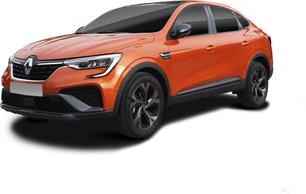
Renault’s Arkana coupe-style compact SUV has been hit with its first makeover, which ushers in a range of styling changes, increased equipment and new model grade names.
There are few cars like it in the compact SUV segment, where vehicles usually favour the boxier, traditional SUV wagon shape over the stylish but often internal space compromised coupe SUVs.
Renault Australia is only expecting about one per cent share of the segment or around 1500 sales a year.
But if you want to stand out from the crowd of Mazda CX-30, Mitsubishi ASX and Toyota Corolla Cross small SUVs then the Arkana might be for you.
The Vitara still looks great, offers impressive real-world fuel economy, possesses a sporty chassis bringing sharp steering and involving handling and roadholding characteristics, and is expertly packaged. No wonder it has remained a consistently strong seller for Suzuki.
But its lack of driver-assist safety equipment, lethargic low-rev performance and stiff, loud ride speak of a small SUV of another era. In too many key areas, it’s rapidly dating and falling behind most rivals nowadays, and can no longer rely on low pricing anymore now that the cheapest base auto is $27K plus ORC.
Still, if you don’t care about the lack of AEB… or a digital speedo, digital radio, rear cupholders or highway quietness, then there’s still a fair bit of fight left in the plucky little Vitara.
Suzuki’s been building them for over 33 years now and such experience shows.
The Arkana is a stylish alternative in a sea of same-same compact SUVs. It's relatively well equipped and has some hidden gems in its ownership and running costs that elevate it above some of the competition.
It’s not a bad thing to steer, either, but the lurchy dual-clutch could be a deal breaker for some.
The sweet spot is the Techno, which misses out on the Esprit Alpine’s special touches but represents the most bang for your buck.
Note: CarsGuide attended this event as a guest of the manufacturer, with meals provided.
Remember that first Vitara of 1988? The chief designer of today’s LY series, Takehito Arai, told us back in 2015 that its squareness and smaller size were inspirational in shaping the current model.
To that end, he went for a muscular look, with off-roader detailing like the five-slot grille, strong shoulder line, clamshell bonnet, blistered rear mudguards and higher-than-class-average ground clearance (of 185mm), evoking other Suzuki 4x4s like the Jimny and Sierra.
Nearly six years on, the design has stood the test of time surprisingly well, with the Suzuki still looking handsome and contemporary – no doubt helped out by the big standard wheels that fill in those arches nicely, along with the vibrant colour options (like our rich beige test example) and two-tone paint application.
The 2019 facelift, by the way, ushered in changes to the toothy grille, bumper, tail-lights lenses (now LEDs), alloy wheels, interior trim and instrumentation (which went more colourful), along with higher-quality-feel interior trim and materials.
This update isn’t a massive overhaul of the Arkana, rather its “refreshing and enhancing” what was already there according to Renault Australia.
And this remains true with the car’s styling. Not much has changed on the outside except for a few minor garnishes and flourishes, especially on the Esprit Alpine variant.
The coupe styling isn’t for everyone. It’s more popular in Europe than Australia but if you want to stand out from the crowd it’s a good place to start.
The Arkana has curves in all the right places and its little grille made up of little Renault badge diamonds is a welcome addition in a world of wide mouth front ends. The C-shaped LED headlights and a large Renault badge add a bit of pop to its look.
The pinched rear end has LED lighting that runs from the tail-lights to the centre badge and Arkana is spelled out in big, bold letters.
The Esprit Alpine stands out with gunmetal highlights on the front bumper and the front and rear skid plates in the same colour. It also adds a Esprit Alpine badge below the side mirror and front door sill plates.
The Esprit Alpine has 'Tricolour' stitching in red, white and blue on the door trim and steering wheel, which is complemented by blue contrast stitching on the gear shifter, seats and centre console.
Cabin quality is variable. There are some nice feeling materials used on the dash and on the door trims but below eye level there are lots of hard wearing plastics. A big slab of faux wood running along the dashboard doesn’t feel as high-quality as you would like. The quality drops a bit in the back row, which is where carmakers often try to cut costs.
Solid white is the only no cost paint colour, but it is not available on the Esprit Alpine. Metallic white, blue, black, grey and red cost $750.
Buyers can also option a black roof for a two-tone look for $600.
There's still plenty to appreciate the instant you slide yourself on to those lofty cushions.
The Vitara is packaged to transport a smaller family (and include much of their clobber) with ease, from the moment the big doors open. An excellent driving position that inspires confidence, heaps of storage in the doors and centre console, good vision and a light and airy ambience are further drawcards.
And while the seats may seem a bit wide and flat to begin with, they're amply supportive over an extended time in them, with a softness to their shape and texture that makes them quite cosy. No lumbar support for the driver is disappointing, though.
Still, it’s easy to see why the Suzuki remains such a consistent seller after all these years without change.
In 2021, the dash has held up pretty well, mainly due to clear instrument dials and Suzuki’s ever-present 7.0-inch touchscreen multimedia system that is ridiculously easy to operate. Never mind the hard and cheap-looking lower-lying plastics, the cabin is beautifully screwed together as well. And it's likely to stay that way for a very long time.
But there are annoyances, beginning with the lack of digital speedometer, especially now that the cheapest Vitara is a near-$30K proposition; for the same reason we’d have hoped for a DAB+ digital radio, auto lights on, rear-seat cupholders and more than just one USB port (located under the climate control system).
Getting in and out of the rear seat is simple, aided by wide doors and lofty seating, again on flat but ultimately comfortable cushions and backrest, though they neither slide or recline as with some other small SUVs. There's heaps of headroom; the raised rear cushion promotes a natural posture which is good for longer journeys, and enough room for three smaller adults to squeeze in. Larger feet can be tucked underneath the front seats too.
However, besides there being no device-charging facilities, you’ll also notice the lack of reading lights, rear air vents (though the front outlets' outputs do reach back OK) and beverage storage. At least the doors have space for a one-litre bottle and the overhead grab handles include coat hooks. And, like the front, it's all light and airy, with good sight lines for bored back-seat riders to stare out from.
Beyond that, the boot is fairly big and square, with a bi-level floor that’s good for hiding smaller items, while there are hooks, a light and 120V outlet for rear-seat occupants to snake some hapless charger cord to.
Cargo capacity is rated at 375 litres – raising to 710L with the 60/40 rear backrests lowered. It’s nice to see a good old-fashioned luggage board instead of the flimsy mesh items some rivals foist upon us nowadays.
All in all, a big, spacious and inviting interior that’s big on practicality and ease, but also showing its age in a few places.
The Arkana isn’t a family SUV, but rather is pitched at younger couples and empty nesters.
Up front there is great forward vision with a higher seating position than hatchbacks and sedans. Electronically adjustable seats and a manually moveable steering wheel means there’s a good seating position for pretty much everyone.
The seats are comfy and the multimedia screen and climate controls are easy to reach. The centre console has a wireless device charger, two USB-A charging ports and a 12-volt socket to keep various devices juiced up.
Two cupholders take up most of the space with minimal storage space leftover. There are decent sized storage bins in the doors and a little net in the passenger seats footwell to stop small items rolling around.
Back seat passengers have their own air con vents and USB charging ports, which is a welcome addition.
In the rear pew is where the Arkana’s stylish coupe-like design dents its practicality. The sloping roof shrinks the windows and reduces headroom, which makes it feel a bit gloomy compared to more boxy-shaped SUVs that makes it no-no for smaller kids.
The boot is a decent size, but it’s longer and lower than other SUVs, which is the price you pay for looking good.
Call it a Covid tax, but the price of the base auto Vitara has jumped $2000 this year, to $26,990 before on-road costs. Top tip: you can save yourself $2000 if you elect to drive the sweeter manual version instead.
Either way, however, this is a problem for buyers, because it puts the ageing small SUV right up against newer competitors with substantially more driver-assist safety features, namely autonomous emergency braking (AEB)… that just aren’t available in the non-turbo Vitara. You'll need to spend well over $30K for the Turbo grades.
Most opponents have these and more, as standard or optional, like blind-spot monitoring, rear cross-traffic alert, lane-keep assistance and adaptive cruise control and automatic high-beam headlights. For some people, the missing safety kit is the deal breaker in the Suzuki. In its defence, an all-new model is coming and this is probably the final full year of the LY series.
If you can't wait and are prepared to see past the lack of AEB, what does the Hungarian-built base Vitara score? Seven airbags (including a driver’s knee item), stability control, anti-lock brakes with electronic brake-force distribution and brake assist and traction control. Nothing revolutionary here. Pretty much like everything else has had these as standard over the past decade.
However, the ever-wily Suzuki does make up for the lack of driver-assist safety with items usually found on mid-grade versions of rival SUVs, like imbedded satellite navigation (as part of a colourful multimedia touchscreen system that also houses a reverse camera, Apple CarPlay/Android Auto and Bluetooth connectivity), voice control, paddle shifters, keyless entry/start, climate control air-con with pollen filter, front fog lights, roof rails and 17-inch alloy wheels (shod with quality Continental tyres too, no less). Plus, there are even a pair of engine-output gauges showing maximum power and torque use – just like in a Rolls-Royce. Fancy/useless gimmickry.
If you’re blissfully unaware of the safety spec shortages or just don’t care, such little luxury extras speak volumes on a glitzy showroom floor.
But then you might clock the lack of digital speedometer and digital radio as reminders that this Vitara is from an earlier era.
Adding premium paint costs $500 while two-tone paint costs $450 more.
The value advantage the Vitara has enjoyed until this year has worn perilously thin.
Initially Renault is launching with just two variants, the mid-tier Techno and top-spec Esprit Alpine, which replace the formerly named Intens and R.S. Line variants.
Despite the update, prices remain the same with the Techno starting at $41,000, before on-road costs, and the Esprit Alpine from $45,000.
An entry-level Evolution grade will arrive later to take the place of the old Zen variant. Expect it to be priced from $37,500.
The Arkana isn’t the cheapest compact SUV on sale with lower starting points for the Hyundai Kona, Kia Seltos and Mazda CX-30 ranges. It is cheaper than the hybrid-only Toyota C-HR and its French rival, the Peugeot 2008.
The two model grades are fairly well stacked with gear to justify the price, though.
Techno shoppers can expect 18-inch alloy wheels, which swell to 19-inche on the Esprit Alpine and all variants have LED head and tail-lights.
Step inside and the Techno grade has black leather and synthetic suede accented seats, which upgrade to more premium synthetic leather and suede upholstery with contrast blue stitching and Alpine badging in the top-spec grade.
The front seats are heated in both grades and the Esprit Alpine has a heated steering wheel, too.
On the tech front both variants have a 9.3-inch portrait-shaped multimedia display paired with a 10.25-inch digital driver display.
Apple CarPlay and Android Auto wireless smartphone mirroring is standard.
The Esprit Alpine version ditches the six-speaker stereo in the Techno for a booming eight-speaker Bose system and it adds a sunroof.
In some markets, the Vitara is offered with Suzuki’s punchy little 1.0-litre three-cylinder turbo petrol engine, as well as the Turbo’s 1.4-litre four-pot turbo option as seen here, but the bulk of Australian sales are powered by a 1586cc 1.6-litre twin-cam 16-valve four-cylinder naturally aspirated petrol engine, known as the M16A.
A peaky unit, it produces maximum power of 86kW at 6000rpm and 156Nm of torque at 4400rpm. Despite modest outputs, a pleasingly low kerb weight of just 1120kg ensures that the Vitara has a favourable power-to-weight ratio, of 76.8kW/tonne.
Drive is transmitted to the front wheels via a six-speed torque converter automatic transmission, complete with a big pair of paddle shifters for some manual manipulation. Or you can just buy the superior six-speed manual and enjoy a substantially more involving drive.
The Arkana keeps the 1.3-litre four-cylinder turbocharged petrol engine from before. It makes 115kW and 262Nm and is paired with a seven-speed dual-clutch auto that drives the front wheels.
That’s plenty of grunt for a car this size, but it’s let down by a glitchy transmission that hesitates a lot at lower speeds and doesn’t do its best work when asked to hustle, either.
That flyweight mass also pays dividends with fuel economy.
Tuned to run on either 91 RON standard unleaded petrol or a 94 RON E10 ethanol-petrol combo, the Vitara returned an efficient 7.6 litres per 100km over our 521km drive in both inner-city traffic and on a highway jaunt.
While that’s still some way off the official combined average of 6.2L/100km (urban: 7.9 and extra urban: 5.2), it still shows Suzuki’s expertise at such economy engines. We regularly visited the Vitara tachometer’s red line – it’s in the nature of this engine to be revved hard and fast – and never really attempted any economy driving out of it.
The published average figure, by the way, translates to a carbon-dioxide emissions rating of 142 grams per kilometre.
Fitted with a 47-litre tank, nearly 760km between refills is possible.
Efficiency is the name of the game with the Arkana’s little turbo engine. The French brand claims it drinks 5.9L/100km on the combined (urban/extra-urban) cycle but we averaged 7.5L/100km on our circa two-hour country road drive according to the trip computer.
The higher speed twisting and turning country roads we drove on aren’t conducive to low fuel use, though.
It has a 50-litre fuel tank and only requires cheaper 91 RON petrol, which is rare for little turbo engines that usually have premium tastes.
For its role shifting a small and light SUV around town, the 86kW/156Nm 1.6-litre twin-cam 16-valve four-cylinder petrol engine provides sufficient if unexciting performance, and a big part of that is the fast-acting and responsive six-speed torque-converter automatic gearbox.
While the Vitara will never be victorious in the traffic lights grand prix, there’s a substantial amount of flexibility within the engine’s rev range, with maximum power coming in at just 200rpm shy of the 6200rpm red line. So, you need to really prod that pedal down if extra muscle is required, and with that there’s quite a lot of mechanical noise coming through, but it isn’t coarse.
Using the big and well-placed paddle shifters helps to draw out a few extra morsels of oomph, but the fact is, compared to the CX-3’s 2.0-litre or HR-V’s 1.8-litre engines, the Suzuki’s has to work hard – and for longer – to cover the same ground at anywhere near approaching the same time. The aforementioned rivals' effortless, torquey response just isn't available to be enjoyed. For that, you'll need the terrifically muscular Turbo.
That’s a pity really, because the Vitara’s chassis is one of the more involving and fun ones in the small SUV class.
Thanks to a light helm, tight turning circle, rear camera, large exterior mirrors and an appreciable amount of all-round vision afforded by the large glass areas, nipping in and out of small traffic gaps or slotting into tight parking spots just isn't an issue in the Suzuki. It feels bred for the urban jungle.
Equally, the Vitara's fast and eager steering provides quick and crisp handling out on the open road as well, with the front end feeling light and agile yet nicely balanced as well. Even through ragged turns, the Suzuki remains on track. Over gravel surfaces it can be driven with reassurance that the traction and stability controls are always there to reel any slides in. It’s very easy and rewarding to punt the Vitara along at speed and with lots of confidence.
But the ride is a little firm in some places, there’s far too much road and tyre noise intrusion and – after a while – the engine’s constant revvy nature becomes a little tiresome.
Note that the fact that Suzuki did not bother engineering this powertrain to take AEB is reason to believe that there probably isn’t much life left for the M16A engine beyond this generation of Vitara.
The Arkana is a bit of a mixed bag on the road. Its engine is a nice little unit but the dual-clutch auto deflates the drive experience.
At lower speeds it hesitates and then gives too much oomph all at once, which can result in some wheel spin. It means you need to be mindful at T-intersections and when turning across traffic and feather the pedals.
This is a symptom of most dual-clutch autos but the Arkana’s is less sophisticated than say ones fitted to Volkswagens, and the Arkana doesn’t have the meaty power and torque bands of performance cars. A conventional torque converter auto would suit it better.
The Arkana does some of its best work at higher speeds, where the dual-clutch is more decisive and it's an admirable highway cruiser.
It isn’t a bad operator through the bends where it exerts excellent body control to minimise rolling. This is complemented by nice steering that is well weighted and accurate. Pedal feel is excellent with no woody or doughy feel to them.
The suspension is on the firmer side and you’ll feel some harsh bumps, especially over consistent smaller ones that it will crash over.
Its rear torsion beam suspension set-up is less sophisticated than the multilink arrangements found in an increasing number of competitors in the segment.
Road noise is noticeable at higher speeds. There's a fair bit of wind noise, too, but it was an especially windy day on our test drive.
The Arkana isn’t a sports car but is a stylish SUV for punting around town and facilitating weekend getaways, but there are other compact players that answer this brief better.
Sadly, an insufficient amount.
Carried out in 2015, the Vitara scored a five-star ANCAP crash-test rating. That wouldn’t be the case today if the base grade was tested underneath 2021’s more stringent regime.
As lamented earlier, the base Vitara has no AEB. For that, along with lane departure warning, ‘Weave Control’ lane keep assist, traffic sign recognition, blind-spot monitor, rear cross-traffic alert, auto high beam and adaptive cruise control, you’ll need to step up to the $32,490 Turbo or its AWD alternative for another $4K. Parking sensors also aren't fitted.
Safety features that are included are seven airbags (dual front, side, curtain and a driver’s knee item), stability control, anti-lock brakes with electronic brake-force distribution and brake assist, traction control, a hill holder and reverse camera.
Two rear-seat ISOFIX points as well as three top tethers for straps are included for younger passengers.
The Arkana holds a maximum five-star ANCAP rating, but it is based on the 2019 crash test of the Renault Captur, with which it shares much of its underpinnings. This rating is due to expire in late 2025.
There are six airbags and a range of active driver aids included as standard and the update adds a 360-degree camera view to all grades.
This joins auto emergency braking with pedestrian and cyclist detection, lane keep assist, blind-spot monitoring, rear cross-traffic alert, radar cruise control and speed sign recognition.
A lot of carmakers just tick the box for active driver aids but don’t think of the calibration. Not Renault. The driver aids barely interjected during the launch drive and only chirped up when needed, which is a welcome reprieve from the overly touchy and nannying sensors found in other cars.
Suzuki has switched to an industry-average five-year/unlimited kilometre warranty and roadside assistance.
Service intervals are every 12 months or 15,000km, while published basic capped-price servicing is available. Prices start at $239 (years one and five) and reach as high as $429 (year three). Total cost is $1565, averaging out to $313 annually at the time of publishing.
Vehicles under five-years old but with higher mileages up to 90,000km can expect to be charged up to $559, according to Suzuki’s website.
There is one part of Renault’s ownership credentials that others can’t match.
Its service intervals are every 12 months and a whopping 30,000km, which is double the industry norm of 15,000km.
If you need to do big kays such as a sales rep or rideshare driver might this will be extremely important.
Five years or 150,000km of capped price servicing visits costs $2385, which is one the expensive side compared to Honda, Hyundai and Toyota but is in the ballpark of similar-sized Kias and Volkswagens.
Renault covers the Arkana with a five year/unlimited km warranty - par for the course in the mainstream market - and five years of roadside assistance.