What's the difference?
Now that the original Mitsubishi ASX is finally gone, the oldest small SUVs still on sale in Australia today are the Mazda CX-3 and Suzuki Vitara.
Both released in 2015, their longevity is due to a combination of good design, strong engineering, sound driving dynamics and an undefinable charm.
Given their high number of rotations around the sun, it’s also surprising that neither has received a major facelift in all this time. Clearly, their creators got it largely right early on.
Until now. The Vitara steps up with the Series III makeover, ushering in a fresh nose, larger central touchscreen and a hybrid tech upgrade for the (now-sole) turbo powertrain, among other more-minor changes.
Are these enough to keep the venerable Vitara from vulnerability?
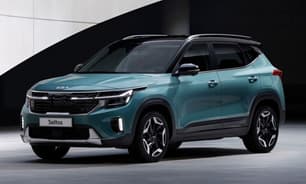
Looking for a small SUV that’s not tiny? The Kia Seltos could be that SUV, and it’s been updated for 2023.
This review covers the entire Seltos range and reviews this small SUV based on its safety, practicality, price and features, plus ownership costs, its fuel economy and what it’s like to drive.
So, if you’re thinking about a Honda HR-V, a Toyota Corolla Cross or something even as large as a Hyundai Tucson or Kia Sportage then you need to be thinking about a Kia Seltos, too.
In car years, 11 is ancient.
Back when it was first released, this-generation Vitara’s competitive pricing, progressive yet pretty design, pleasant interior packaging, sporty dynamics and general driving ease helped establish the emerging small SUV segment into the powerhouse it is today.
In some ways, today’s Turbo Hybrid still impresses, especially with its punchy performance, promising economy and no-nonsense packaging. Objectively, it is still a decent proposition, with few actual vices.
But the 2026 Vitara’s high pricing, embarrassingly outdated interior, underwhelming specification and noisy ride leave it feeling too expensive, too old and too exposed against newer and more-sophisticated rivals.
Even the brightest stars eventually need to retire.
Note: CarsGuide attended this event as a guest of the manufacturer, with travel and meals provided.
Kia’s updated Seltos is more expensive than the previous version but it's better as well.
The entry grade no longer has hubcaps and gets alloy wheels, all grades have directional air vents in the second row, the jerky dual-clutch auto is gone and an excellent regular eight-speed auto has arrived, plus there’s more safety tech and modern displays screens.
What hasn’t changed is the Seltos’s size. It’s a big, small SUV, that’s easy to park in tight spaces but roomy inside even for tall, awkward humans like me.
The sweet spot in the range is the Sport+ with the 1.6-litre engine, if only it had the LED headlights that only come on the GT-Line.
Note: CarsGuide attended this event as a guest of the manufacturer, with meals provided.
While the albeit-cheeky Mazda CX-3 clearly looks like a product of last decade, the Vitara’s boxy, broad-stance proportions were prescient, pointing to the upright shapes that prevail today. In other words, the good-looking design has aged remarkably well.
Changes to the headlights, a reshaped bumper, a revised grille, restyled wheels and paint colours are the only ways you can differentiate new from old, ignoring the Hybrid badge out back.
We wonder whether Suzuki should have tried harder visually updating the Vitara?
Measuring in at nearly 4.2 metres long, 1.8m wide and 1.6m high, the square-rigged styling hides the smallness of the Vitara, yet also seems to liberate more space inside than you might expect, aided by deep side windows.
Conversely, Suzuki’s decision to retain the old Vitara dashboard – including much of the same instrumentation – roots it into the middle of last decade. This is very disappointing.
This updated Seltos has had a few styling tweaks, too. The grille is taller and there’s a new headlight design which on the GT-Line is stunning with its LED running lights.
The rear of the Seltos has been restyled as well, with a new tail-light design and again on the GT-Line there’s an LED strip which runs between them.
The Seltos is pretty big for a small SUV. At 4.4m long it’s bigger than a Hyundai Kona and a Honda HR-V and about the same size as a Nissan Qashqai and Corolla Cross.
What’s good about that is you’re getting more space inside with a package that’s still smallish on the outside.
If you think the Seltos’ look is familiar, then I agree. The Honda HR-V and Haval Jolion have very similar tail-light designs and the profile follows many of the same styling cues of the Toyota Corolla Cross.
To my eyes, though, I think the Seltos is the more refined looking of its peers with a more modern and interesting interior.
Speaking of which, keep in mind that the top-of-the-range GT-Line’s cabin is far more fancy than the interior of the entry grade S. The GT-line’s large double digital displays are impressive and the buttons around the shifter for seat heating and ventilation are replaced with blank plastic panels in the S.
Hard plastic armrests were another of my gripes about the previous entry grade Seltos, too.
Still all cabins have a premium look even if the feel isn’t luxurious throughout on all grades.
The practical shape, ease of access and spacious, airy cabin were reasons to buy the Vitara way back when, and remain relevant today.
But, stepping inside and taking a look around transports you to another time, like hearing Let it Happen by Tame Impala.
In the press release, Suzuki states: “Physical control switches remain a key focus, ensuring ease of use while driving, a touchpoint of Suzuki’s practical design philosophy.” Changing nothing in nearly a dozen years in production to save money seems more like the company’s key focus here. Even the steering wheel is precisely the same.
As we said earlier, nothing changed inside other than some minor trim, save for the new multimedia system that looks cheap and aftermarket compared to Suzuki’s earlier, distinctive and colourful quadrant layout. We welcome the inclusion of a digital speedometer, however.
Broad if flat front seats do the job, ahead of a workable driving position that helps provide good all-round vision as well as an easy reach to the multitude of buttons and switches placed around. The plastics have already proven to be long-lasting, while there is sufficient storage to be found. The climate control is effective, too.
The rear seat environment is spacious and pleasant enough, but lacks amenities like USB-C ports, cupholders and central air vents.
Further back, the load area is relatively large and simple to use. Cargo capacity varies from an unremarkable 362 litres to 642L (VDA – to the window height) or 1119L (to the ceiling), with the 60/40 rear backrests dropped providing extra versatility.
Thankfully, a space-saver spare wheel is included.
Overall, then, the Vitara’s cabin is roomy and user-friendly for a small SUV, but it also appears hopelessly out of date. That Suzuki also had the unrelated e-Vitara electric vehicle at the launch event just served to underline that fact.
Some small SUVs are seriously small, which might be fine for some, but if you’re hoping to also have enough space for passengers in the back seats, and a boot which can carry plenty of luggage then the Seltos is a good choice.
Even at 191cm tall I had more than enough room to sit behind my driving position with good headroom back there, too.
Cabin storage is also good with door pockets front and rear, and a deep centre console box. As for cupholders there are two up front on all grades, while the Sport+ and GT-Line get two more in the second row fold-down armrest.
Boot capacity depends on if you’ve requested a full-sized spare wheel or the space-saver spare. With the space-saver you’ll have more room at 469 litres, while the full-sized wheel under the boot floor will leave you with 433 litres. That’s still decent for the class.
The new Seltos has directional air vents for back seat passengers which is a win (motoring journalists had been complaining about the lack of them for years) and there are also two USB ports (Type-C) for the second row along with another two for those in the front, plus a 12V outlet.
From $39,990 (all prices are drive-away unless stated otherwise), 2026’s cheapest Vitara, the Turbo Hybrid 2WD, seems provocatively expensive for an 11-year-old generation. And the all-wheel drive (AWD) model dubbed 'AllGrip' is a heady $46,000. Oof.
This puts the base Vitara’s price well above Chinese hybrid equivalents like the Haval Jolion HEV and MG ZS Hybrid+, about on a par with popular small-SUV hybrids including the Honda HR-V, Hyundai Kona and Toyota Corolla Cross, and in company with lower-spec petrol-powered iterations of the Honda CR-V, Hyundai Tucson, Kia Seltos, Kia Sportage, Mazda CX-30, Mitsubishi ASX, Mitsubishi Outlander, Nissan X-Trail, Renault Duster, Subaru Crosstrek, Skoda Kamiq, Volkswagen T-Cross and VW T-Roc.
Facing a lion’s den of fierce rivals is putting things mildly. The Vitara’s value struggles to stack up.
But consider this.
Back in 2015, the base Vitara cost $23K, drive-away – or $31.4K in 2026 money adjusted for inflation. However, that was for a 1.6-litre petrol manual; the auto added the equivalent of another $2.7K and the optional turbo that came soon after (dubbed 'BoosterJet' – and now standard equipment) cost another $6.8K, coming to $41K.
Huh. Suzuki isn’t being so delusionally greedy, then.
And that’s not taking in the latest model’s unique hybrid tech, extra safety of advanced driver-assist technologies (ADAS) such as autonomous emergency braking (AEB), rear cross-traffic alert (RCTA), lane departure warning and blind-spot monitoring, or Apple CarPlay/Android Auto connectivity, or a host of other extra features that have since been applied to an evolving Vitara over the years. Plus, import costs from Hungary are said to have skyrocketed.
If we compare what the 2026 Turbo Hybrid 2WD costs against the pre-facelift 2024 Turbo 2WD from $36,490, before on-road costs, the price rises aren’t nearly as bad as they seem (though runout ’24-build models are currently being promoted at $34,590, drive-away).
So, what else does your $40K-plus Vitara Turbo Hybrid give you?
Not much compared to most of the competition listed earlier. Climate control, rear privacy glass, LED automatic headlights, cloth upholstery, adaptive cruise control, a 7.0-inch touchscreen, reversing camera, 17-inch alloy wheels and flat paint are bare minimum at this price point.
Metallic paint demands another $745 if the standard white isn’t your bag.
Stretching to the $45,990 AWD adds a panoramic sunroof, 9.0-inch touchscreen, six instead of four speakers, extra driving modes, synthetic leather trim and two extra modish colours – beige or grey-blue that are also available with a two-tone black combo for an extra $1345.
The Vitara is over a decade old, but costs new-model money, lacks features found in rivals costing thousands less and only allows for a five-year warranty when some others offer up to 10.
Obama was US President when this Suzuki launched. The world it finds itself in today seems almost unrecognisable.
The price of the Kia Seltos has increased by about $2000 across the range, but you are getting more in the way of features. Let me take you through the model line-up.
There are four grades: the entry grade S, then the Sport, Sport+ and GT-Line. Those are all available with the 2.0-litre petrol engine and front-wheel drive.
The Sport+ and GT-Line can also be had with a more powerful engine which is a 1.6-litre turbo-petrol with all-wheel drive.
So, the list prices for the 2.0-litre engine start at $29,500 for the S, then step up to $32,700 for the Sport, $35,800 for the Sport+, and $41,500 for the GT-Line.
The 1.6-litre turbo engine is a more expensive proposition and in the Sport+ you’ll pay $39,300, and to pair it with the GT-Line grade you’ll need to hand over $44,900, before on-road costs.
Kia was also doing drive-away pricing at the launch of the new Seltos. So check with your dealership to ensure that the offer is still available.
Coming standard on the S grade for the first time are alloy wheels, they’re small at 16-inches but better than hubcaps, and there’s also roof rails.
Inside, there are cloth seats, an 8.0-inch media display, digital driver’s display, air-conditioning, wireless Apple CarPlay and wireless Android Auto.
The Sport grade adds 17-inch alloy wheels, auto headlights, a 10.25-inch media screen and matching 10.25-inch driver display, digital radio, sat nav, climate control, plus Apple CarPlay and Android Auto.
The Sport+ has all the Sport’s features but brings a proximity key with push-button start, privacy glass, power driver’s seat, synthetic leather upholstery and extra safety tech which we’ll get to soon.
The top-of-the-range GT-Line has all the Sport+ features but adds a power front passenger seat, heated and ventilated front seats, sunroof and a power tailgate.
The GT-Line also comes with the option of two-tone body paint - that is a black roof with 'Clear White' or 'Pluton Blue' body colours. Be advised that this combination is not available with the sun roof.
The value is good, but I don’t agree with Kia’s decision to keep the LED headlights for the GT-Line only and leaving all other grades stuck with dim Halogen headlights.
Being able to seem clearly on dark Australian country roads at night shouldn’t be a luxury. Toyota offers LED headlights across the Corolla Cross range from the entry grade up.
If you’re expecting a Toyota-style series-parallel hybrid system here, forget it.
Instead, Suzuki offers a far-simpler, lighter and cheaper alternative that, by and large, does reduce fuel consumption. In other words, this is a mild-hybrid electric vehicle (MHEV) that, unlike others like Mazda’s, you can feel working away.
On paper, things look a bit shaky, since power drops noticeably compared to the previous 1.4-litre, four-cylinder, turbo-petrol BoosterJet engine this unit is based on.
This version makes just under 81kW of power at 4500rpm, instead of 103kW at 5500rpm, in the interests of economy. Torque jumps though, from 220Nm to 235Nm, between a low 2000rpm to 2500rpm.
More importantly, it is coupled to a 48-volt integrated starter motor generator acting as an electric motor, and 48V 8Ah lithium-ion battery, adding an additional 12kW/50Nm to simultaneously boost acceleration and reduce consumption and emissions.
Power is sent to the front wheels via a six-speed torque-converter automatic transmission, while the AWD version also sends drive to the rear axle when slippage is detected.
The whole MHEV system adds just 15kg, and is nestled between the MacPherson strut front axle and torsion beam rear end, for even weight distribution.
The Seltos range has two engines to choose from: a 2.0-litre four-cylinder petrol engine making 110kW/180Nm and a 1.6-litre turbo-petrol engine producing even more grunt at 146kW/265Nm.
The 2.0-litre engine comes with a CVT which is a type of automatic transmission and the 1.6-litre engine has an eight-speed auto.
CVT stands for Continuously Variable Transmission and some people (me included) find the droning they cause the engine to make to be annoying. They also come with a feeling of less acceleration.
The good news is the eight-speed auto that comes with the 1.6-litre is a great transmission with smooth shifts and a sporty nature that matches the punchy engine.
This eight-speed auto is welcome because it also replaces the jerky dual-clutch transmission that had been paired with the 1.6-litre engine in the previous Seltos.
All-wheel drive is only available with the 1.6-litre engine while front-wheel drive comes solely with the 2.0-litre.
So, if you’re after great acceleration and better traction then the 1.6-litre is the way to go. If you’re not after a sporty driving experience then the 2.0-litre engine will suit you, and it costs less.
The Vitara Turbo Hybrid 2WD returns a combined average 5.8 litres per 100km, while the AWD version is rated at 5.9L/100km. This translates to between 130 grams and 139g/km of carbon-dioxide emissions, respectively.
The previous 1.4-litre turbo equivalents were 5.9L and 6.2L/100km, so that mild-hybrid tech seems to make some difference. Our box-fresh test car’s trip computer driving around Sydney’s outer suburbs displayed 6.2L/100km.
Filling the 47L fuel tank with the required 95 RON premium-unleaded petrol, expect to average around 810km of range.
The smaller engine actually uses more fuel, but not a great deal more. Kia says the 1.6-litre engine with all-wheel drive uses 7.4L/100km after a combination of open and urban roads. The 2.0-litre engine according to Kia will use half a litre less at 6.9L/100km.
Both engines only need 'standard' 91 RON petrol, too - that’s the cheap one.
Where is the hybrid variant? Good question. The answer is, there isn’t one. And neither is one coming, I’ve asked. That’s disappointing considering the Corolla Cross comes with a hybrid version of each grade in its line-up.
It’s for this reason the Seltos range scores a lower mark for fuel efficiency.
Suzuki allowed only a frustratingly limited amount of time for us to drive the Vitara Turbo Hybrid 2WD, over some outer-suburban Sydney back roads, in convoy with a lead car and in heavy traffic, so first impressions are limited.
But, unsurprisingly, it’s all very familiar, after years of testing earlier iterations.
Essentially, acceleration now feels leisurely in 'Eco' and 'Auto' when previously the 1.4L BoosterJet always felt punchy, but it becomes much stronger in 'Sport', suggesting the MHEV’s economy focus is the priority. The latter mode makes the Vitara feel lively and moves things along fairly quickly, but leaving it in Sport mode would defeat the purpose of trying to save fuel.
Meanwhile, the Vitara’s chassis calibration remains on the sporty side, with keen steering response and a decent level of handling agility there for the taking. And even the ride comfort wasn’t too bad, considering that too little suspension travel and too much road noise betray the age of this vehicle’s platform – though that may have also had something to do with us driving this back-to-back with the smoother e-Vitara EV.
Finally, the ADAS tech didn’t seem to interfere at all, though a longer drive may reveal otherwise.
The Vitara still drives okay, then, but its refinement and noise suppression may be issues for some people used to newer SUVs. The bigger problem for us is just how old the driving experience feels sitting inside such a dated cabin. Stale sums it up.
We also had a brief stint around a moderately-demanding off-road 4WD course to test the Turbo Hybrid AWD’s AllGrip set-up. The limited off-road aids – 4WD Lock, hill-descent control, a paltry 175mm ground clearance – helped see it navigate several carefully-chosen sections fairly confidently, but we can’t imagine this being the deal maker or breaker.
Overall, based on our brief time with it, the Vitara Turbo Hybrid remains an easy, competent and even enjoyable small SUV from behind the wheel, but one that feels dated in too many areas, especially at its asking price.
The Kia Seltos has two personalities. The laid back Seltos with a 2.0-litre engine and the enthusiastic sporty Seltos with the 1.6-litre engine.
Regardless of which Seltos you pick, the ride is comfortable, the handling is good, and the steering is excellent.
Kia says it's worked to make the Seltos’s cabin more insulated from road noise, but having driven it on country roads for hours I think it could do with more sound dampening.
If you’re considering the Sport+ grade and are not sure if the $3500 premium for the 1.6-litre engine is worth it, my answer would be absolutely, if you can afford it.
That 1.6-litre turbo petrol is a great engine and the new eight-speed transmission is excellent. Even as a daily driver I think anybody would enjoy driving this version of the Seltos more, and for those who like sporty driving then it’s definitely the powerplant for you.
Back in 2015, the Vitara scored a maximum five-star ANCAP crash-test rating, but it hasn’t been tested since and that result expired in December, 2022.
Both models come with the expected level of ADAS tech, including AEB, RCTA, lane departure warning, lane keep assist, blind-spot monitor, traffic sign recognition, auto high beam and adaptive cruise control.
There is no data on the operation parameters of the latest AEB system, but previous models operated from above 30km/h while the RCTA functions from 8.0km/h.
Six airbags (dual front, side and curtain) are also featured, along with two outboard rear-seat ISOFIX points and a trio of top tethers for child seats.
The Seltos has the maximum five-star ANCAP safety rating but that’s from 2019. Still, the advanced safety tech is excellent. All grades come with AEB, blind spot warning, lane keeping assistance and rear cross-traffic alert.
All grades also come with the rear occupant alert, which is great for sleep-deprived parents, and there’s also the safe exit feature which will let you and the kids know if a car or cyclist is approaching before you open the door and ruin everybody’s day.
The Sport+ and GT-Line both come with AEB that works at intersections.
It’s good to see front and rear parking sensors standard across the range.
Suzuki offers an industry-average five-year/unlimited kilometre warranty, along with five years of roadside assistance if the vehicle is serviced at an authorised dealer.
Service intervals are every 12 months or 10,000km, while the basic capped-price servicing costs are $329, $429, $339, $539 and $349 annually for the first five years or 100,000km, respectively. That's an average of $397.
At the time of publishing Suzuki listed 90 dealers throughout Australia.
The Seltos is covered by Kia’s seven-year, unlimited-kilometre warranty.
Servicing differs between the two engines.
A Seltos with a 1.6-litre engine needs to be serviced every 12 months or 10,000km and over seven years the average service cost comes to $497 per year.
A Seltos with the 2.0-litre engine needs to be serviced every 12 months or 15,000km and over seven years the average service costs comes to $434 per year.
Capped price servicing is good, but the prices can get higher than $600 for some visits.