What's the difference?
For over thirty years, the Subaru Impreza has been an icon on Australian roads.
If you’re a member of the ‘PlayStation generation’ like me, there’s a very good chance you slapped P plates on one as your first car.
For Subaru the Impreza is more than that. Along with its WRX performance variant, it's the car which put Subaru on the map, raising it from a relatively unknown Japanese automaker to a global household name.
Things change, though, and despite 30-plus years of history as a beloved nameplate, the Impreza has gone from a best-seller to tumbling down the sales charts as buyers shuffle into small SUVs rather than hatchbacks or small sedans.
The question we’re looking to answer today is what this new-generation Impreza has to offer in 2024, and whether it is still worth a look.
Read on to see what we found.
That the 2020 Mini Clubman John Cooper Works is the most powerful Mini to have landed in Australia isn’t all that surprising. After all, parent company BMW has squeezed the thumping four-cylinder engine from the M135i under its bonnet, and that thing creates a snarling beast of any vehicle it finds a home in.
What is a surprise, though, is that having now driven this angry, crackling, snarling hot hatch, what with its burbling exhaust and properly rapid acceleration, is that it took Mini this long to get around to doing it.
So does the engine upgrade now put the Clubman JCW on the same pedestal as the best European hot hatches? There's only one way to find out.
The 2024 Impreza delivers on all the key things which have made the nameplate so well regarded for the last 30-odd years.
The issue is, buyer expectations have moved on. Hatchbacks need to do more than ever to compete with small SUVs, and with today’s fuel prices it’s far more valuable to offer hybrid rather than all-wheel drive.
This is why, despite the sixth-generation Impreza being a tidy high-tech offering with an admirable commitment to safety, I think it will ultimately continue to shrink its market share. This Impreza really is one for the fans.
The Mini Clubman JCW is quirky in a lot of the right ways, and now has a hard-charging engine to up the adrenalin factor. If you were already sold on the idea of joining the Clubman club, this one will steal your heart more than any other.
Over the years the Impreza has changed in its design and intention so much.
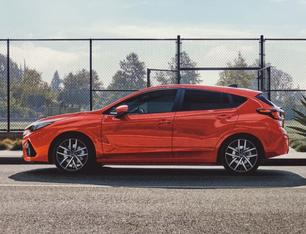
Once known primarily for its sporty sedan variants, today’s Impreza is a far more contemporary hatchback, forgoing the once wagon-like shape for something with the traditional bubble silhouette to align with its rivals.
For better or worse, it also syncs up with the rest of Subaru’s range, with the brand’s current design language on full show, but it also barely evolves from the previous-generation version from the outside.
It trades the chunky square light fittings from the previous car for something a bit more refined this time around, with a similar look and feel to the WRX and Outback.
Inside also gets a similar fit-out to other Subarus in the range, complete with a raised centre console, shapely dash, and the same huge screen from the Crosstrek and Outback which dominates the space and helps simplify things compared to the busy interior and multiple screens of the previous car.
It’s a cosy space with chunky comfortable seats and the signature bumper car steering wheel is a stand-out bit of Subaru design.
Even the base car with its plastic trimmed wheel and basic cloth trims in the door is basic in an almost refreshing way, but unlike some rivals manages to be comfortable, too, thanks to soft trims for your elbows in the doors.
It's no real secret that earlier iterations of the Clubman were, well, a little challenging on the eye (Mini itself says “It was cool - if you were built that way…").
But this face-lifted version is much easier on the eye, if not as a cute a package as the three-door hatch variants. It's dimensions - long, smooth sides, a squared-off rump and bulging grille - somehow work as one to create car that is undoubtedly unique, but also rather fetching.
Inside, it’s all pretty familiar Mini, what with the circle screens and jet-style switches. And it is a stylish space in the cabin, with a good material mix and the addition of wireless Apple CarPlay and Android Auto making the centre screen far more functional.
The only downside is that, for mine, it favours that style over substance. It’s not the most user-friendly space I’ve ever sat in, though I imagine you’d get a little more used to it the more time you spent in there.
Living up to the adventure-ready Subaru promise, the Impreza's interior is quite functional.
Even though many controls have moved to the big central screen, there are individual buttons for temperature adjustment and a permanent touch function for fan speed on the lower third of the screen.
It would be nice to see a full set of physical buttons for climate functions, but this seems like a decent compromise.
Elsewhere there are large bottle holders in each door with a small accompanying pocket, two more rigid bottle holders in the centre console, a small tray behind them, and a huge armrest console box.
Under the multimedia screen there is a bay with a wireless phone charger, but like the Crosstrek, it is finished in a hard plastic material, which means your phone will easy slide around and out of the charging area in the corners, which seems like an oversight.
Adjustability is great, even in the base car, with flexible seats and a wide range of movement for the wheel, letting you easily find a suitable seating position. Width in the cabin is okay, but headroom is excellent.
The back seat offers a solid amount of room for myself behind my own seating position, at 182cm tall, but the middle position is no good for an adult thanks to the presence of a large raise in the floor to allow for the all-wheel drive system underneath.
Amenities for rear passengers are only okay in the base car, with a large bottle holder in the door and a further two in a drop-down centre armrest. There are no adjustable rear air vents or USB power outlets in the L, but outlets are added in the R and S.
Boot space is on the small side, with only 291 litres (VDA) on offer. The high floor means a limited amount of space with the luggage cover in place, although I was surprised to find we could fit the full three-piece CarsGuide luggage set once it was removed, so long as you’re okay not being able to see out the rear window.
Under the floor, the Impreza sports a space-saver spare wheel - a must-have for long-distance regional travellers.
The Clubman is super practical - for a Mini... This is not a Bunnings bandit, and nor will you be piling endless Ikea flatpacks into the boot.
It measures just over 4.2m in the length, 1.4m in height and 1.8m in width, and while they're not massive numbers, you might find yourself surprised by the room in the backset.
I'm around 175cm, and I could sit behind my own driving position with ease - thanks in no small part to the clever scalloped seas that give you extra leg room - and the headroom isn't half bad, either.
Yep, you can definitely fit two adults in the backseat (but never three), and those travelling back there will find air vents to help keep the temp down, as well as USB points and a pair of child seat anchors.
Up front, the cabin somehow manages to feel more cramped, with the steering wheel, centre console and controls on the driver's door all feeling like they're encroaching on your personal space a bit, but it's a comfortable place to sit all the same.
Step around to the barn-door style boot and you'll find what looks a little bit like a station wagon, only without all the space. Yes, it looks like a positive load-lugger next to the three-door hatch, but you still don't get that much space for luggage, with the official number at 360 - 1250 litres.
Now in sixth-generation form, the 2024 Impreza range has been trimmed down to just one hatchback bodystyle and three trim levels - the base L, mid-spec R, and top-spec S.
True to Subaru form these variants are all priced quite close together, and the base L comes with pretty much all the kit you’ll need, with the R and S grades adding mainly luxuries to the equipment list.
Now starting from $31,490, before on-road costs, the Impreza is not as affordable as the previous-generation version, and while it manages to pack a relatively high level of standard equipment, some of its key rivals are a bit cheaper in a segment where every dollar matters.
For example, you can get into a hybrid version of Toyota’s Corolla (Ascent Sport Hybrid - $32,110) for similar money to the entry level 2.0L, the Kia Cerato can be had for under $30,000 (Cerato S Auto - $27,060) while the outgoing Hyundai i30 is significantly cheaper in its most basic trim level (i30 Auto - $26,000).
What might make you think twice is the Subaru’s standard all-wheel drive, where all of its rivals are front-wheel drive, but in an environment where fuel costs are high, I can understand why people would prefer to see a hybrid version instead.
Unlike the Impreza’s Crosstrek small SUV relation, there’s no ‘e-Boxer’ hybrid variant.
Still, standard equipment is high even on the base 2.0L. Included are 17-inch alloy wheels, LED headlights, a massive 11.6-inch multimedia touchscreen with wireless Apple CarPlay and Android Auto and you even get a matching wireless phone charger.
Elsewhere the base car gets cloth seats with manual adjustment, a plastic steering wheel, analogue instrument cluster with a small digital display, and importantly, the majority of Subaru’s very good active safety equipment is standard.
So, what do you get for stepping up the range? At $34,990, the 2.0R adds premium cloth seat trim, additional charging ports in the rear, eight-way power adjust for the driver, heated front seats, a leather steering wheel and shifter, steering responsive LED headlights, and LED fog lights.
At the top of the range, the $37,990 2.0S adds a 10-speaker audio system, built-in sat-nav, an electric sunroof, and synthetic leather seat trim.
The cabin tech, safety, and standard all-wheel drive are the real draws, but you have to want them. The Impreza isn’t the stellar value buy it once was.
Mini is rolling the dice on a new specification strategy designed to take the endless questions and options out of buying a new car.
And so the Clubman JCW is the first Mini to be offered in the Pure trim ($57,900), which seriously limits the personalisation options to get you out of the dealership and behind the wheel as quickly as possible. You can choose from two wheel choices, four exterior paint choices, a back roof or a sunroof, and, well, that's about it.
Outside, your money buys you 18-inch alloys wrapped in Michelin rubber, adaptive suspension, roof rails and LED head and taillights. Inside, expect cloth sports seats, an 8.8-inch screen that's both (wireless) Apple CarPlay and Android Auto equipped, standard navigation, climate control with rear vents and push-button start.
If the Pure doesn't give you enough options, then the regular Clubman JCW ($62,900) will add 19-inch alloys, leather seats, a 12-speaker Harman Kardon stereo, a head-up display and heated front seats. Oh, and all the personalisation options you shake your credit card at.
The Impreza is equipped with just one engine and transmission for its sixth-generation, a 2.0-litre (FB20) four-cylinder horizontally-opposed ‘boxer’ engine mated to a continuously variable automatic transmission, driving all four wheels via the brand’s signature ‘symmetrical’ permanent all-wheel drive system.
The FB series is a development of the successful EJ series engines which lasted from 1989-2021. This more recent engine has new material science, heads, and seals which have helped the brand push service intervals out to 12 months rather than six, and should address issues which the older engines developed over time.
Power is on-par, but not a stand-out in the segment, with peak outputs of 115kW/196Nm.
This is a cracking engine; a twin-charge, 2.0-litre, four-cylinder weapon that sends 225kW and 450Nm thundering to all four tyres.
That power is funnelled through an eight-speed automatic transmission, and will see the Clubman JCW clip 100km/h in 4.9 seconds before pushing on to a 250km/h.
One issue with having a non-turbo, non-hybrid 2.0-litre engine with all-wheel drive is relatively high fuel consumption. The Impreza has an official combined cycle fuel consumption figure of 7.5L/100km which is less than impressive in today’s market of hybrids and downsized turbocharged engines.
In my week of mostly stop-start city driving, the test example drank 11.1L/100km, which is disappointing.
Mercifully, it is capable of running on 91RON unleaded. For those who care, the CO2 output is officially 170g/km which is well above the 140g/km it would need to be at to avoid the wrath of incoming vehicle emissions regulations.
Mini says its Clubman JCW will sip 7.7L/100km on the combined cycle, and emit some 175g/km of C02.
Have you driven a Subaru in the last 10 years? The drive experience here is pretty much uniform with the rest of the automaker’s range.
This means a lot of very appealing traits. For example, the new Impreza has a comfortable, compliant ride, really nicely weighted steering, and solid handling even on slippery surfaces courtesy of the all-wheel drive system.
The FB series engine also has a good bit of pull fairly early in the RPM range which makes it deceptively spritely, although power really hollows out the more you push it.
This makes it nice to drive around town, but less impressive when it comes to overtaking on the freeway.
This is reinforced by the continuously variable automatic which lends the engine a thrashy, rubbery character when pushed, but is nice and predictable at lower speeds.
The rev-happy engine is also quite noisy when a lot is asked of it, and like a lot of Japanese cars, but Subarus in particular, tyre roar picks up in the cabin above 80km/h.
It’s a comfortable and family-friendly drive, and I particularly like the way the plethora of active safety systems sit by the wayside and don’t interfere with the overall experience.
It is just a bit of a shame it doesn’t move the drive experience forward by a huge amount. The current Impreza doesn’t feel meaningfully different from the fifth-generation version which debuted in 2016.
Yes, this is the most powerful Mini to have landed in Australia. And even better, it’ll remain so, or at least equal first, when the Mini GP arrives next year. That car gets this same thumping engine, and the outputs are the same, though the smaller, lighter hatch will no doubt be faster.
It means Clubman JCW shoppers aren't about to lose their street credit, with this engine likely to remain the king of the castle for some time yet.
The Clubman It might tip the scales at 1550kg, but the kilos don’t hurt its straight line speed much. Whack it in sport mode, which also adds this deep bass to the exhaust, plant your right foot and the Clubman positively pounces forward.
Better still, it feels - and sounds - quick, too, There’s this angry snap and crackle on the overrun, and the exhaust genuinely booms in the cabin when you really bury your foot.
You’ve heard the cliches before, of course, about Minis feeling like they’re on rails, and we won’t waste your time with those here. Suffice to say we have pushed Clubman around some pretty tight corners at some pretty decent speeds, and while it doesn’t feel like a featherweight, it also picks and sticks to a line with absolutely no nonsense from the tyres and very little in the way of body roll.
That’s the good, now the not so good. The impressive handling feels like it’s been achieved by hardening up the suspension as much as possible, and the downside of that is that it can feel plenty sharp and bouncy over big bumps. On the right road, it kind of adds to the experience, but I'd imagine the daily commute would start to fray your patience fairly quickly.
There’s also a kind of skittishness to the way it drives fast too, which I actually don’t mind, but others might say isn’t as natural and flowing as others in the segment.
But this is the hardest, fastest clubman you can buy, and so you’re going into it knowing there’s going to be some comfort compromises. And if you’re looking a loud and rorty hot-hatch experience, this thing delivers in spades.
And on the right stretch of road, it’s an absolute hoot.
The majority of active safety equipment is standard across all three Impreza variants including auto emergency braking up to freeway speeds with reverse auto braking, lane support systems, blind-spot monitoring with rear cross-traffic alert, traffic sign recognition, lead vehicle start alert, driver attention alert, and adaptive cruise control.
Stepping up to the 2.0R or 2.0S nets you the front parking camera for a 360-degree parking suite, and high-beam assist for the LED headlights.
Expect the usual traction, brake, and stability controls, alongside the more modern torque vectoring system and an impressive suite of nine airbags. The new Impreza is yet to be rated by ANCAP.
The Clubman JCW arrives with six airbags, a reversing camera, AEB, active cruise, forward collision warning and front and rear parking sensors and what Mini calls Performance Control, which it promises will reduce understeer and increase traction in corners.
The Mini Clubman was awarded the full five-star ANCAP safety rating when tested in 2017.
Subaru offers its fairly standard five-year and unlimited kilometre warranty on the Impreza, with 12 months of roadside assist included.
There is also a five-year fixed-price service program covering the first 75,000km, although it’s nowhere near as affordable as the Corolla or i30, coming in at an average annual cost of $464.64.
The Impreza needs to be serviced once every 12 months or 15,000km, whichever occurs first.
The Mini Clubman JCW is covered by a three-year warranty, and falls under the BMW group's condition-based servicing program, in that it will tell you when it's time for a service.