What's the difference?
For over thirty years, the Subaru Impreza has been an icon on Australian roads.
If you’re a member of the ‘PlayStation generation’ like me, there’s a very good chance you slapped P plates on one as your first car.
For Subaru the Impreza is more than that. Along with its WRX performance variant, it's the car which put Subaru on the map, raising it from a relatively unknown Japanese automaker to a global household name.
Things change, though, and despite 30-plus years of history as a beloved nameplate, the Impreza has gone from a best-seller to tumbling down the sales charts as buyers shuffle into small SUVs rather than hatchbacks or small sedans.
The question we’re looking to answer today is what this new-generation Impreza has to offer in 2024, and whether it is still worth a look.
Read on to see what we found.
In a world where car upgrades often feel like saying, “Can I upsize that?”, it’s refreshing to hop into the updated Audi S3 Sportback.
The flagship RS 3 may still be the holy grail of hot hatch dreams, but with boosted engine outputs and upgraded tech, the S3 is stepping up.
Is the S3 Sportback the smarter pick over pricier rivals? It delivers serious performance and polish without stretching into RS 3 territory. With fierce competition in the segment, let’s see what this contender brings to the table.
The 2024 Impreza delivers on all the key things which have made the nameplate so well regarded for the last 30-odd years.
The issue is, buyer expectations have moved on. Hatchbacks need to do more than ever to compete with small SUVs, and with today’s fuel prices it’s far more valuable to offer hybrid rather than all-wheel drive.
This is why, despite the sixth-generation Impreza being a tidy high-tech offering with an admirable commitment to safety, I think it will ultimately continue to shrink its market share. This Impreza really is one for the fans.
The updated Audi S3 Sportback is a fun-sized dynamo with impressive outputs and athletic road manners. It’s missing a few premium features, but its compact size paired with a gutsy engine makes it a compelling option for drivers who don’t want to compromise on performance (just space).
Over the years the Impreza has changed in its design and intention so much.
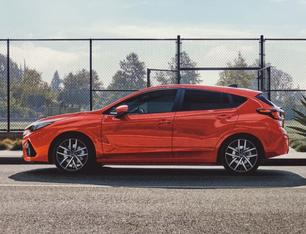
Once known primarily for its sporty sedan variants, today’s Impreza is a far more contemporary hatchback, forgoing the once wagon-like shape for something with the traditional bubble silhouette to align with its rivals.
For better or worse, it also syncs up with the rest of Subaru’s range, with the brand’s current design language on full show, but it also barely evolves from the previous-generation version from the outside.
It trades the chunky square light fittings from the previous car for something a bit more refined this time around, with a similar look and feel to the WRX and Outback.
Inside also gets a similar fit-out to other Subarus in the range, complete with a raised centre console, shapely dash, and the same huge screen from the Crosstrek and Outback which dominates the space and helps simplify things compared to the busy interior and multiple screens of the previous car.
It’s a cosy space with chunky comfortable seats and the signature bumper car steering wheel is a stand-out bit of Subaru design.
Even the base car with its plastic trimmed wheel and basic cloth trims in the door is basic in an almost refreshing way, but unlike some rivals manages to be comfortable, too, thanks to soft trims for your elbows in the doors.
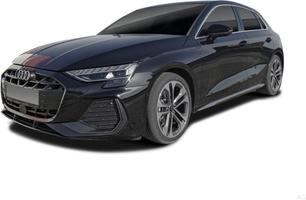
The S3 Sportback may be a small car, but its S design features, like the stylised blackout grille, matrix LED headlights, and 19-inch alloys with red brake calipers, give it a distinctly athletic and fun-loving vibe. It’s compact, but definitely not diminutive and carries serious road presence. It’s hot hatch meets fun-size.
Inside, the S3 looks fabulous. Integrated ambient lighting, a sharp dashboard treatment and a driver-focused cockpit all lend it a premium feel.
The front seats look properly sporty with their integrated headrests, and the quilted Nappa leather upholstery feels great, especially with the eye-catching red contrast stitching.
As for technology, it’s as high-end as you’d expect with a 10.1-inch touchscreen multimedia display and 12.3-inch digital instrument cluster taking centre stage.
The only drawback? No sunroof. Combined with the black headliner and compact cabin, it can feel a little gloomy at times. Still, it’s a cabin you’ll enjoy spending time in.
Living up to the adventure-ready Subaru promise, the Impreza's interior is quite functional.
Even though many controls have moved to the big central screen, there are individual buttons for temperature adjustment and a permanent touch function for fan speed on the lower third of the screen.
It would be nice to see a full set of physical buttons for climate functions, but this seems like a decent compromise.
Elsewhere there are large bottle holders in each door with a small accompanying pocket, two more rigid bottle holders in the centre console, a small tray behind them, and a huge armrest console box.
Under the multimedia screen there is a bay with a wireless phone charger, but like the Crosstrek, it is finished in a hard plastic material, which means your phone will easy slide around and out of the charging area in the corners, which seems like an oversight.
Adjustability is great, even in the base car, with flexible seats and a wide range of movement for the wheel, letting you easily find a suitable seating position. Width in the cabin is okay, but headroom is excellent.
The back seat offers a solid amount of room for myself behind my own seating position, at 182cm tall, but the middle position is no good for an adult thanks to the presence of a large raise in the floor to allow for the all-wheel drive system underneath.
Amenities for rear passengers are only okay in the base car, with a large bottle holder in the door and a further two in a drop-down centre armrest. There are no adjustable rear air vents or USB power outlets in the L, but outlets are added in the R and S.
Boot space is on the small side, with only 291 litres (VDA) on offer. The high floor means a limited amount of space with the luggage cover in place, although I was surprised to find we could fit the full three-piece CarsGuide luggage set once it was removed, so long as you’re okay not being able to see out the rear window.
Under the floor, the Impreza sports a space-saver spare wheel - a must-have for long-distance regional travellers.
Like most hatches, the front row enjoys the most space. While it’s cosy, it never feels cramped. The seats are firm yet comfortable, thanks to their adjustability and expandable under-thigh supports. Access is fairly easy with wide door apertures, though the low seating position might earn a few grunts, especially from taller folks.
Storage up front is well sorted, with a glove box, a small centre console, a dedicated phone cradle and a couple of cup and bottle holders. It’s about what you'd expect for a car this size, but it's enough to keep things tidy.
There are plenty of charging options, with two USB-C ports in each row and a wireless charging pad up front.
The multimedia system is intuitive and easy to use. The touchscreen is responsive, and wireless Apple CarPlay connected without fuss and stayed connected all week. Wireless Android Auto is available, too.
Built-in sat nav is clear, and I love the way directions pull through to the digital instrument panel. The Sonos sound system? Pretty darn good. My son and I had more than one mini-concert on the school run.
As for the rear row, it definitely reminds you this is a small car. At 168cm, I found it on the cramped side of cosy and my husband just laughed when I asked him to try it! The wheel arch also cuts into the door aperture, making access a little awkward. Best to think of it as occasional adult seating. But given the size, that’s no surprise.
Amenities in the back are decent with a couple of map pockets, cup and bottle holders, as well as a fold-down armrest, those USB ports and rear temperature control (but curiously, no fan control). The seats are comfortable enough, but space is limited. Realistically, it’s best suited for two passengers, not three.
Boot space is quite practical. The wide opening and manageable load lip height make it easy to slide items in and out. It offers 325L of space, less than its key rivals, but expands to 1145L with the rear seats folded flat. The handy 40/20/40 split also adds versatility. Under the boot floor, you’ll find a tyre repair kit.
Now in sixth-generation form, the 2024 Impreza range has been trimmed down to just one hatchback bodystyle and three trim levels - the base L, mid-spec R, and top-spec S.
True to Subaru form these variants are all priced quite close together, and the base L comes with pretty much all the kit you’ll need, with the R and S grades adding mainly luxuries to the equipment list.
Now starting from $31,490, before on-road costs, the Impreza is not as affordable as the previous-generation version, and while it manages to pack a relatively high level of standard equipment, some of its key rivals are a bit cheaper in a segment where every dollar matters.
For example, you can get into a hybrid version of Toyota’s Corolla (Ascent Sport Hybrid - $32,110) for similar money to the entry level 2.0L, the Kia Cerato can be had for under $30,000 (Cerato S Auto - $27,060) while the outgoing Hyundai i30 is significantly cheaper in its most basic trim level (i30 Auto - $26,000).
What might make you think twice is the Subaru’s standard all-wheel drive, where all of its rivals are front-wheel drive, but in an environment where fuel costs are high, I can understand why people would prefer to see a hybrid version instead.
Unlike the Impreza’s Crosstrek small SUV relation, there’s no ‘e-Boxer’ hybrid variant.
Still, standard equipment is high even on the base 2.0L. Included are 17-inch alloy wheels, LED headlights, a massive 11.6-inch multimedia touchscreen with wireless Apple CarPlay and Android Auto and you even get a matching wireless phone charger.
Elsewhere the base car gets cloth seats with manual adjustment, a plastic steering wheel, analogue instrument cluster with a small digital display, and importantly, the majority of Subaru’s very good active safety equipment is standard.
So, what do you get for stepping up the range? At $34,990, the 2.0R adds premium cloth seat trim, additional charging ports in the rear, eight-way power adjust for the driver, heated front seats, a leather steering wheel and shifter, steering responsive LED headlights, and LED fog lights.
At the top of the range, the $37,990 2.0S adds a 10-speaker audio system, built-in sat-nav, an electric sunroof, and synthetic leather seat trim.
The cabin tech, safety, and standard all-wheel drive are the real draws, but you have to want them. The Impreza isn’t the stellar value buy it once was.
The A3 Sportback comes in three trim levels, with the S3 technically sitting in the middle, just below the performance-focused RS 3. It's priced from $78,800, before on-road costs, and it shares the same platform and underpinnings as the Volkswagen Golf R. Surprisingly, our test vehicle isn’t significantly more expensive than its Golf R rival which comes in at $70,990 MSRP.
That makes it a more affordable option when compared to premium rivals like the BMW M135 xDrive which starts at $83,600 MSRP and the Mercedes-AMG A35 which comes in at $89,700 MSRP.
The update sees engine outputs improve with it gaining 17kW and 20Nm of torque, resulting in a total of 245kW and 420Nm.
Feature highlights include 19-inch alloy wheels, red brake calipers, electrically-adjustable and heated front seats (with expandable under-thigh support), rear privacy glass, quilted Nappa leather upholstery and 'S Sport' suspension with damper control which lowers the ride height lowered by 15mm.
The updated technology is well-rounded and now comes with wireless Apple CarPlay and Android Auto. There's also three-zone climate control, a 10.1-inch touchscreen multimedia display, a 12.3-inch digital instrument cluster, digital radio, four USB-C ports, a wireless charging pad, built-in satellite navigation and a 15-speaker Sonos 3D sound system.
Still, despite its premium hot hatch status, this grade skips a few luxury touches. Ventilated front seats, a heated steering wheel, heated rear outboard seats and a sunroof are all missing. The BMW M135 xDrive, notably, includes all of these as standard.
Even the powered tailgate with kick-functionality is an optional extra here, adding $660 to the price. At this level that should be standard.
The Impreza is equipped with just one engine and transmission for its sixth-generation, a 2.0-litre (FB20) four-cylinder horizontally-opposed ‘boxer’ engine mated to a continuously variable automatic transmission, driving all four wheels via the brand’s signature ‘symmetrical’ permanent all-wheel drive system.
The FB series is a development of the successful EJ series engines which lasted from 1989-2021. This more recent engine has new material science, heads, and seals which have helped the brand push service intervals out to 12 months rather than six, and should address issues which the older engines developed over time.
Power is on-par, but not a stand-out in the segment, with peak outputs of 115kW/196Nm.
The S3 Sportback wears the quattro badge proudly, meaning it’s all-wheel drive and it pairs a tweaked seven-speed automatic transmission with a 2.0-litre turbocharged, four-cylinder petrol engine.
This update brings a bump in performance over the previous model, including the addition of a rear torque splitter. Power is now up to a gutsy 245kW and 420Nm of torque, launching the S3 from 0 - 100km/h in just 4.7 seconds. That’s proper hot hatch territory.
One issue with having a non-turbo, non-hybrid 2.0-litre engine with all-wheel drive is relatively high fuel consumption. The Impreza has an official combined cycle fuel consumption figure of 7.5L/100km which is less than impressive in today’s market of hybrids and downsized turbocharged engines.
In my week of mostly stop-start city driving, the test example drank 11.1L/100km, which is disappointing.
Mercifully, it is capable of running on 91RON unleaded. For those who care, the CO2 output is officially 170g/km which is well above the 140g/km it would need to be at to avoid the wrath of incoming vehicle emissions regulations.
The S3 Sportback has an official combined fuel consumption figure of 7.9L/100km and a 55-litre fuel tank, giving it a theoretical driving range of up to 696km.
Its key rivals hover around similar numbers, so it's right on the mark for the segment. After a mix of long-distance drives and my usual urban errands, my real-world figure came in at 8.0L/100km - very close to the claim, which I’m pretty happy with.
Have you driven a Subaru in the last 10 years? The drive experience here is pretty much uniform with the rest of the automaker’s range.
This means a lot of very appealing traits. For example, the new Impreza has a comfortable, compliant ride, really nicely weighted steering, and solid handling even on slippery surfaces courtesy of the all-wheel drive system.
The FB series engine also has a good bit of pull fairly early in the RPM range which makes it deceptively spritely, although power really hollows out the more you push it.
This makes it nice to drive around town, but less impressive when it comes to overtaking on the freeway.
This is reinforced by the continuously variable automatic which lends the engine a thrashy, rubbery character when pushed, but is nice and predictable at lower speeds.
The rev-happy engine is also quite noisy when a lot is asked of it, and like a lot of Japanese cars, but Subarus in particular, tyre roar picks up in the cabin above 80km/h.
It’s a comfortable and family-friendly drive, and I particularly like the way the plethora of active safety systems sit by the wayside and don’t interfere with the overall experience.
It is just a bit of a shame it doesn’t move the drive experience forward by a huge amount. The current Impreza doesn’t feel meaningfully different from the fifth-generation version which debuted in 2016.
The S3 Sportback sounds as mean as it looks, and it delivers on that promise with effortless grunt. Acceleration is immediate, with plenty of power on tap when you need it. It’s just fun all around.
The lowered sports suspension and wide tyres do bring some extra noise into the cabin, even at lower speeds. You might find yourself repeating things to rear passengers now and then, but it never feels overwhelming.
Steering and suspension are on the firmer side, so yes, you’ll feel the bumps but the payoff is sharp, responsive handling. Quick lane changes and winding coastal roads are where this car shines.
Visibility is about what you’d expect from a low-slung hot hatch. The pillars don’t obstruct the view, but sitting beside a towering SUV at the lights can make you feel a bit... compact.
Cornering is a strong suit, thanks to the car’s wide stance and AWD system. It feels confidently planted in most conditions. That said, I noticed the occasional wobble through the rear frame on rough sections in heavy rain.
Its compact size makes parking a breeze, especially with the help of multiple sensors. The reversing camera is crisp, but at this price point, the lack of a 360-degree camera view feels like a missed opportunity.
The majority of active safety equipment is standard across all three Impreza variants including auto emergency braking up to freeway speeds with reverse auto braking, lane support systems, blind-spot monitoring with rear cross-traffic alert, traffic sign recognition, lead vehicle start alert, driver attention alert, and adaptive cruise control.
Stepping up to the 2.0R or 2.0S nets you the front parking camera for a 360-degree parking suite, and high-beam assist for the LED headlights.
Expect the usual traction, brake, and stability controls, alongside the more modern torque vectoring system and an impressive suite of nine airbags. The new Impreza is yet to be rated by ANCAP.
The S3 isn’t covered by its 2WD sibling's maximum five-star ANCAP safety rating but it is well-equipped with safety features all the same.
Safety equipment includes blind-spot monitoring, side exit assist, rear cross-traffic alert, lane departure alert, lane keeping aid, park assist, reversing camera, front/rear parking sensors, forward collision warning, autonomous emergency braking and adaptive cruise control with stop and go function.
It also has six airbags but misses out on a front centre airbag. None of the driver assist systems are intrusive to daily driving, which I always like.
The rear row has ISOFIX child seat mounts and three top-tether anchor points but only two child seats will fit.
Subaru offers its fairly standard five-year and unlimited kilometre warranty on the Impreza, with 12 months of roadside assist included.
There is also a five-year fixed-price service program covering the first 75,000km, although it’s nowhere near as affordable as the Corolla or i30, coming in at an average annual cost of $464.64.
The Impreza needs to be serviced once every 12 months or 15,000km, whichever occurs first.
Audi backs the S3 Sportback with a five-year/unlimited kilometre warranty, which is on par with its European rivals. A five-year pre-paid servicing plan is available for $2890 which is cheaper than pay-as-you-go and reasonable for the class.
For those looking to go the extra mile, the 'Audi Advantage' package lets you extend the warranty and capped-price servicing by an additional two years, which represents solid value overall.
Servicing intervals are every 12 months or 15,000km, whichever comes first.