What's the difference?
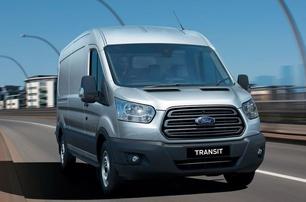
Meet Ford’s electric pioneer for Australia - the E-Transit.
It may not be as exciting as a Tesla Model S, Porsche Taycan or Audi e-tron, but this electric version of the Blue Oval’s large van will help create a new market for zero-emissions commercial vehicles.
This is seen as a major opportunity by Ford to provide an electric alternative to typically diesel-powered vans, which will no doubt prove popular with fleet operators looking to cut fuel costs and corporate emissions. While unlikely to suit all van buyers, thanks to its limited range and recharging restrictions, for those companies with shorter delivery routes it will certainly have appeal.
Ford’s research (performed by YouGov) suggests up to 58 per cent of business “can see EVs becoming part of their vehicle fleet in the future".
But it’s just Ford’s first step into the larger world of electric vehicles. We’ve already had confirmation the smaller E-Transit Custom is headed our way and there are good odds the Mustang Mach-E will eventually find its way to Australian showrooms, so there’s plenty of exciting models in store for Ford.
In the meantime, though, the E-Transit isn’t due in Australia until sometime in the first half of 2023, but CarsGuide was able to take one for a test drive near Ford’s Detroit headquarters recently to get a taste of what’s to come.
The Ford F-150 Platinum – the new top-shelf variant in the company’s F Series truck range – has arrived in Australia as part of the a refreshed line-up.
This full-sized dual-cab ute has a 3.5L twin-turbo V6 petrol engine, myriad drive modes and 4500kg towing capacity and, as such, is regarded as a rival for the likes of the Ram 1500, Chevrolet Silverado and Toyota Tundra.
But with a price-tag tickling $164,000 before on-road costs and at a smidge under six metres long, is this big rig simply too big and too expensive?
We’re testing the short wheelbase (SWB) version this time, so let’s get into it.
Ford has taken an unorthodox approach to entering the electric vehicle market in Australia, avoiding the hype around the Mustang Mach-E and F-150 Lightning and instead laying the foundations with the E-Transit.
But it’s a savvy move, giving the brand a chance to enter what should be a largely untapped market with a vehicle that should appeal to what buyers are looking for. With unchanged space compared to the diesel-powered Transit, the switch to a more powerful electric powertrain makes the E-Transit a win-win scenario for those with a suitable daily driving routine.
Note: CarsGuide attended this event as a guest of the manufacturer, with travel, accommodation and meals provided.
The Ford F-150 Platinum SWB is good but not great.
It has plenty of standard features onboard and some handy touches, it’s nice to drive on-road, and is adequately capable off-road but it lacks the overall plushness its price-tag promises.
The F-150’s smaller sibling, the Ranger Super Duty, does all of this F Truck’s jobs better, has more general appeal and all-round driveability, and it costs much less than the F-150.
Yet I can still see the appeal of the Ford F-150 Platinum SWB. As a potential purchase, it might make a lot more sense to you than me.
Perhaps the most interesting thing about the design is there’s nothing very different about the E-Transit compared to the regular Transit. Which is a good thing, because the Transit is already a popular delivery van so any change for the sake of difference may have messed with the winning formula.
In fact, the design element that is important is the way Ford has laid the battery packs flat inside the ladder-frame chassis which means none of the cargo space has been compromised. This means the E-Transit has the same load area as its internal combustion equivalent, which is key for any delivery van.
The Ford F-150 Platinum SWB is 5908mm long (with a 3697mm wheelbase), 2089mm wide (excluding mirrors) and 1995mm high. It has a listed kerb weight of 2611kg.
It’s a chunky but stretched US-style ute with ample presence, but manages to look like it’s not trying too hard.
It doesn’t hurt this ute’s cause that its appearance now encompasses model year 2024 updates from the US, which include a facelifted exterior with a new front bumper, grille and headlights, as well as a new rear bumper, tail-lights, and gloss-black alloy wheels.
The wheel-and-tyre package (20-inch alloys and 275/60R20 Hankook Dynapro AT2 all-terrains) suit its style, but aren’t particularly great for off-roading – more about that later.
Inside, it’s a cool and practical space with leather-accented seats – those are underdone in terms of feeling posh – and there’s an overall roominess that’s difficult not to like.
In terms of design, this F-150 holds its own, inside and out, against the likes of the Ram, Silverado, and Tundra.
The cabin is very similar to what you’ll find in the Transit, so there will be familiarity for anyone making the switch from the diesel-powered version. The rotary shifter and 12.0-inch tablet-style multimedia screen make for a smart look but also means minimal space is wasted.
It’s a thoughtfully designed cabin, with plenty of usable storage spaces, including three cup-holders, a pair of bottle-holders and deep storage shelves on the top of the dashboard. The doors are particularly noteworthy, with multiple storage areas carved into the available space.
The seats are comfortable and, naturally with a high-roof van, there’s plenty of head room which creates a spacious feeling.
Behind the seats is the cargo area. In the US-specification E-Transit we drove there was a dividing wall between the cabin and the back of the van, with a small sliding door to access the cargo area, but it’s unlikely this will be offered in Australia. Instead, local models will likely have a hard divider between the cabin and back, with a small window for visibility.
As mentioned earlier, the floorspace in the E-Transit remains the same as the Transit thanks to the battery being laid underneath the floor, so there’s plenty of cargo volume that will please fleet buyers.
In the US the E-Transit’s cargo area measures 11.3-cubic-metres with the medium-height roof and expands to 12.4cu/m with the high-roof body.
Ford says the “targeted payload” will be 1616kg.
All in all, the Ford F-150 Platinum’s cabin is a highly practical space.
The 12-way power-adjustable, heated and ventilated front seats (with a handy massage function and memory) recline to a fully flat position and the fold-down centre console work table is a nice touch as is the auto shifter, which stows away flush at the push of a nearby button.
Even though I prefer a vertically oriented screen nowadays, the F-150’s horizontal 12.0-inch LCD touchscreen is easy to use and offers clear, crisp colours so my old codger eyes can cope with the vast array of information and controls depicted onscreen.
The rest of the cabin is as roomy and as practical as can be expected in a dual-cab ute of this size. There are storage spaces and cupholders aplenty, as well as smart device charging points front and rear.
The 60/40 split rear seat even has a shallow lockable under-seat storage.
This F-150’s tub is 1700mm long, 1650mm wide, 543mm deep and measures 1285mm between the wheel arches so it will fit an Aussie pallet or a truckload of your camping equipment.
The tub has a tri-fold hard tonneau cover and the load space has a 12-volt outlet, load box lights, a durable-looking spray-in tub liner, as well as fixed tie-down points at each corner and four sidewall-mounted tie-down points as part of Ford’s BoxLink tie-down system.
The powered tailgate can be opened the usual boring drop-down way or you can use the 'Pro Access Swing Door' of the tailgate to open a side-hinged section as you would a door.
Bonus points for the raised ruler markings on the tailgate’s inner wall and the two G-clamp fitting positions at each side of the tailgate’s top edge.
The F-150 has a keyless entry system with a keypad on the exterior of the front passenger door. Punch in your permanent access code and – bingo – you’re in.
As practical as any of its rivals, the F-150 stays in the race here.
Ford Australia originally announced the E-Transit would arrive by “mid-2022” but that date has been pushed back thanks to the ongoing supply challenges faced by most car companies.
While the initial technical details have been confirmed - the first model available will be the 420L long-wheelbase version - the company hasn’t locked in detailed local specifications and pricing yet.
The closest comparison in the current Transit range is the 350L, which is available in both mid- and high-roof variants. Based on the model we test drove in the US, there are similar specifications between the two, including 16-inch steel wheels, partial-leather-trimmed seats and Ford’s SYNC4 multimedia system displayed on a 12.0-inch centrally mounted screen.
While pricing isn't confirmed, it's likely the E-Transit will carry a premium over the Transit so we'd estimate a starting price in the mid-$60,000 range.
The new Ford F-150 Platinum SWB and long-wheelbase (LWB) body styles are priced from $163,950 (excluding on-road costs), making this top-spec F truck the most expensive yet.
In fact, it comes in at pricier than rivals Ram 1500 and Chevrolet Silverado, but not as much of a hit to the bank account as the Toyota Tundra is.
Also, the “new” F-150s now on offer in Australia are actually the model year 2024 versions of this vehicle.
Standard features onboard the Platinum include a 12.0-inch LCD portrait touchscreen, 12.0-inch digital instrument cluster, a 14-speaker Bang & Olufsen audio system, folding gear shifter, fold-out centre console, leather upholstery, 12-way power-adjustable heated and ventilated front seats (with memory and massage functions), and heated outboard rear seats.
It also gets power side steps, 20-inch alloy wheels, LED headlights and tail-lights, panoramic glass sunroof, spray-in bed-liner and a powered tailgate with a manual swing-door section.
Exterior paint choices include Agate Black, Iconic Silver, Rapid Red, Carbonised Grey, Star White, and Antimatter Blue.
This F-150 matches its rivals, such as the Ram 1500, Chevrolet Silverado, and even the more expensive Toyota Tundra, in terms of standard features.
One element of the E-Transit we are clear on is what’s under the bonnet. The E-Transit is powered by an 198kW/430Nm electric motor that powers the rear wheels and draws energy from a 68kWh battery.
That means the E-Transit is the most powerful member of the Transit family, with the rest of the range powered by the 125kW/390Nm 2.0-litre four-cylinder turbo diesel engine.
Ford claims the E-Transit has a range of 317km (on the WLTP cycle), which may not sound like a lot for a commercial van but Ford claims in the US the daily average for such vehicles is only 120km.
In order to save charge, the E-Transit is equipped with an Eco Mode which limits top speed, regulates acceleration and limits climate control settings. Ford claims this allows the driver to cut energy usage by between eight to 10 per cent when driven at highway speeds or when unladen.
The Ford F-150 Platinum has a 3.5-litre twin-turbo V6 engine producing 298kW at 6000rpm and 678Nm at 3100rpm, and that’s matched to a 10-speed torque converter automatic transmission.
The base-spec XLT gets part-time 4WD but the Lariat and Platinum grades get Ford’s more advanced full-time 4WD system. This setup has selectable two-wheel drive (2H), four-wheel drive high-range (4H), four-wheel drive low-range (4L) and four-wheel drive automatic (4A = 4Auto) that sends drive to the front and rear axles as needed, and which can be safely used on high-traction surfaces, such as bitumen.
The Platinum has a variety of selectable drive modes – including Normal, Eco, Sport, Tow/Haul, Slippery, and Off-Road – and an electronic locking rear diff.
This is a proven engine-and-auto pairing and is more than a match for any of the F-150’s rivals’ powertrains.
Charging will be a key element of the E-Transit’s appeal (or not) to buyers, with fleets needing to maximise the van’s time on the road. Ford claims that with a 115kW DC fast-charger the E-Transit battery can go from 15 per cent charge to 80 per cent in just 34 minutes.
With the onboard 11.3kW charger it takes 8.2 hours to get the battery back to 100 per cent capacity.
The E-Transit supports bi-directional use of the battery too. In the US the E-Transit is available with its Pro Power Onboard technology as an option. This allows for the driver to draw up to 2.4kW of power from the vehicle’s battery to power tools and other equipment as necessary.
One feature that is confirmed for the Australian-bound E-Transit is what Ford calls, Scheduled Pre-Conditioning. This is a system that allows the operator to pre-set the climate control for the cabin while the van is still on charge so that you can still have maximum charge available when you start driving.
Official fuel consumption is listed as 13.4L/100km (combined).
On test I recorded 14.1L/100km, but that figure included a solid half-day of off-roading.
Based on my on-test figures, a full tank (136 litres) of unleaded petrol in this F-150 will get you a driving range of about 965km.
For a big ute, it exhibits reasonable fuel usage.
Electric vehicles have earned a reputation for rapid, exciting acceleration… but that’s not the case with the E-Transit. Performance could best be described as modest, with adequate but unspectacular acceleration.
Which is fine, because the E-Transit is not meant to be a ‘ludicrously’ quick van, instead it’s meant to haul a load as efficiently as possible. On that front it does a good job, with smooth (albeit gentle) acceleration and steady pulling power.
It’s important to note, though, that our test car was unladen - with only some shelving installed in the back. So we’ll have to reserve judgement on how the E-Transit performs with a full load on-board, on Australian roads.
The rest of the driving experience is as you’ll find with the Transit. The steering is nicely weighted and direct, which makes manoeuvring such a huge vehicle straightforward.
The ride is on the firm side, which isn’t unusual for either a van or an electric vehicle as it needs to control so much weight, but it isn’t uncomfortable and offers good control.
From the get-go, this short-wheelbase F-150 is a smooth driving ute on road.
And the V6 offers a welcome low-level rumble as a soundtrack to your driving experience. Nice.
It’s a big vehicle with a steel ladder-frame chassis and a lengthy wheelbase, but it suits our conditions, especially with Aussie-tuned steering, impressive on-road ride and handling and its new continuously controlled adaptive dampers setup works in conjunction with the Terrain Management System and is claimed “to enhance vehicle control on every surface”, according to Ford Australia.
This system does iron out much of the jarring sharpness often felt in test vehicles along chopped-up back-country roads on the way to my unofficial 4WD proving ground.
F-150s are imported to Australia from the USA as left-hand-drive vehicles and reengineered to right-hand drive by Melbourne-based RMA Automotive, at the company’s production facility in Melbourne.
The utes undergo a comprehensive transformation – including changes to steering, driver displays, air-con, as well as software upgrades, to name but a few – aimed at making them capable of excelling in Aussie conditions.
And it does excel.
This F-150 is well controlled with a planted feel on sealed surfaces, the steering has a nice weight to it in all conditions, acceleration is smooth, and the 10-speed auto delivers clever management of this big ute.
It’s very quiet and comfortable in the cabin. You can just barely register the low-level rumble of the twin-turbocharged V6 as you truck along stretches of highway and rural back roads.
On-road, the F-150 is a near-perfect open-road touring vehicle. The bonus is, as a Platinum driver, you have access to a suite of driver-assist tech which includes modes aimed at making the task of 4WDing (Off-Road) and towing (Tow/Haul) safer, more controlled and, consequently, more enjoyable than it otherwise may be.
Much better suited to towing and hauling than 4WDing, the F-150 still makes a good fist of it, but it does have off-road limitations.
It has to be driven with consideration, and you have to understand and appreciate the off-road parameters in which this F-150 performs best. If you drive anything more severe than light-to-medium-duty off-roading, then you risk damage.
Otherwise, visibility is great, the driving position is commanding, steering at low speeds is well-weighted and precise, and throttle response is impressive.
Again, this is a big ute so it has off-road angles you’d expect for a vehicle this large: the approach angle is listed as 24.5 degrees, departure angle is 25.3 and ramp-over is 20 degrees.
Ground clearance is listed as 239mm and wading depth is 700mm. Bash plates do offer the front differential, transfer case and fuel tank some protection though.
The tyres – Hankook Dynapro AT2 all-terrains (275/60R20) – aren’t well suited to 4WDing, but more aggressive all-terrain tyres on an 18-inch rim and an aftermarket suspension lift would go some of the way to help sort out the F-150’s off-road issues with its less-than-ideal showroom-standard rubber, only adequate ground clearance and off-road angles.
For such a big ute, payload is an underwhelming 704kg. For reference, the Ram 1500 (878kg) and Chevrolet Silverado (757kg) offer more, and even mainstream dual-cab utes, such as the Ford Ranger – 966kg (kerb weight)/1010kg (min kerb weight) – offer better payloads.
If you’re looking for a decent towing platform, it’s likely an F Series is already on your shopping list. This F-150’s maximum unbraked towing capacity is 750kg and 4500kg (braked), Gross Vehicle Mass is 3315kg and Gross Combined Mass is 7365kg.
This F-150 remains on par with rivals in the 4WD stakes.
The current Transit is not rated by ANCAP, as is the case with most of its full-size van rivals because the safety authority tends to focus on the mid-size vans - such as the Transit Custom, Toyota HiAce and Hyundai Staria-Load.
However, the E-Transit does have a solid safety package, with driver and passenger front, side and curtain airbags all standard. While the E-Transit’s local safety package isn’t locked in, the Transit already boasts autonomous emergency braking with pedestrian detection, lane-keep assist with lane-departure warning, rollover mitigation, side-wind stabilisation, trailer sway control and traffic-sign recognition, so it’s probably a safe bet these will all be included on the E-Transit.
We drove the high-roof E-Transit in the US and with a high-mounted reversing camera it was surprisingly easy to navigate for such a big vehicle.
The Ford F-150 has not been fully tested by ANCAP, but the safety watchdog did award it a Platinum collision avoidance score of 81 per cent in 2025. This rating applies only to Lariat and Platinum grades, not the XLT.
Standard safety gear includes six airbags, front and rear parking sensors, blind-spot monitoring, rear cross-traffic alert, lane-keep assist, traffic sign recognition, a surround-view camera, auto emergency braking (AEB), adaptive cruise control and trailer sway control.
There are top-tether child-seat attachment points in the rear seat but no ISOFIX points.
In safety terms, the F-150 has a stack of gear onboard which keeps it competitive against rivals.
Ford Australia has already confirmed that the E-Transit will be covered by Ford’s now-standard five-year, unlimited kilometre warranty, plus an extended eight-year/160,000km warranty specifically for the battery and high-voltage electric components.
The F-150 has a five-year/unlimited-kilometre warranty and that’s pretty much standard for vehicles in the Aussie market.
Servicing is scheduled for every 12 months or 15,000km, whichever occurs soonest and the F-150’s 12 months of free roadside assistance is extended when those schedules are followed.
Ford’s five-year pre-paid service package for this vehicle costs $1968, working at an average cost of $393.60 per service.
Ford Australia has about 180 dealerships.
In ownership terms, the F-150 remains competitive against its full-sized rivals.