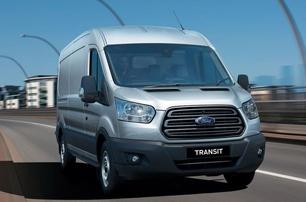
Ford Transit vs Volkswagen Transporter

What's the difference?

VS
Ford Transit
Ford Transit

$41,880 - $78,950

2023 price

Volkswagen Transporter

$45,890 - $85,590

2026 price

Summary

2023 Ford Transit
2026 Volkswagen Transporter
Safety Rating

Engine Type
Diesel Turbo 4, 2.0L

Fuel Type
Diesel

Diesel
Fuel Efficiency
0.0L/100km (combined)

-
Seating
3

0
Dislikes
  • Modest performance
  • Ride is firm
  • Pricing unclear

  • Electric Transporter is very expensive
  • Electric Transporter has limited range
  • Could have more safety items
2023 Ford Transit Summary

Meet Ford’s electric pioneer for Australia - the E-Transit.

It may not be as exciting as a Tesla Model S, Porsche Taycan or Audi e-tron, but this electric version of the Blue Oval’s large van will help create a new market for zero-emissions commercial vehicles

This is seen as a major opportunity by Ford to provide an electric alternative to typically diesel-powered vans, which will no doubt prove popular with fleet operators looking to cut fuel costs and corporate emissions. While unlikely to suit all van buyers, thanks to its limited range and recharging restrictions, for those companies with shorter delivery routes it will certainly have appeal.

Ford’s research (performed by YouGov) suggests up to 58 per cent of business “can see EVs becoming part of their vehicle fleet in the future".

But it’s just Ford’s first step into the larger world of electric vehicles. We’ve already had confirmation the smaller E-Transit Custom is headed our way and there are good odds the Mustang Mach-E will eventually find its way to Australian showrooms, so there’s plenty of exciting models in store for Ford.

In the meantime, though, the E-Transit isn’t due in Australia until sometime in the first half of 2023, but CarsGuide was able to take one for a test drive near Ford’s Detroit headquarters recently to get a taste of what’s to come. 

View full pricing & specs
2026 Volkswagen Transporter Summary

Commercial vans are not an exciting segment of the car industry - but they are big business.

Not only do businesses, especially fleets, need a quality van, if you can crack the market there are meaningful sales for some of the biggest name brands in the country.

Unsurprisingly, Toyota dominates the mid-size van market with its HiAce, which notched up more than 12,000 sales in 2024 to make it one of the market leader's most popular models. For Ford the Transit Custom is even more important as the brand’s third best-selling vehicle behind the Ranger and Everest.

Which is why the decline of Volkswagen’s Transporter has been a big deal for the brand, and it’s why the arrival of the all-new, seventh-generation model is such a big deal. The German maker only sold 875 Transporters last year, as the transition between the out-going model and this new one hit hard.

But that’s the past, Volkswagen is focused on the future, with high hopes this new Transporter can rise back up the sales charts. It also completes VW’s commercial van line-up, sitting alongside the smaller Caddy and ID.Buzz Cargo as well as the larger Crafter.

This new Transporter is slightly less Volkswagen than the previous six generations, though, as it is now platform sharing with Ford as part of the two automotive giants’ commercial partnership (which sees the Amarok also based on the Ranger).

By working together it has allowed the two companies to develop not only a new diesel-powered van but also an all-electric offering and a plug-in hybrid. The latter won’t be available until sometime in 2026, but we’ve just driven the new diesel and electric Transporter.

View full pricing & specs

Deep dive comparison

2023 Ford Transit 2026 Volkswagen Transporter

Change vehicle