What's the difference?
Meet Ford’s electric pioneer for Australia - the E-Transit.
It may not be as exciting as a Tesla Model S, Porsche Taycan or Audi e-tron, but this electric version of the Blue Oval’s large van will help create a new market for zero-emissions commercial vehicles.
This is seen as a major opportunity by Ford to provide an electric alternative to typically diesel-powered vans, which will no doubt prove popular with fleet operators looking to cut fuel costs and corporate emissions. While unlikely to suit all van buyers, thanks to its limited range and recharging restrictions, for those companies with shorter delivery routes it will certainly have appeal.
Ford’s research (performed by YouGov) suggests up to 58 per cent of business “can see EVs becoming part of their vehicle fleet in the future".
But it’s just Ford’s first step into the larger world of electric vehicles. We’ve already had confirmation the smaller E-Transit Custom is headed our way and there are good odds the Mustang Mach-E will eventually find its way to Australian showrooms, so there’s plenty of exciting models in store for Ford.
In the meantime, though, the E-Transit isn’t due in Australia until sometime in the first half of 2023, but CarsGuide was able to take one for a test drive near Ford’s Detroit headquarters recently to get a taste of what’s to come.
The Mercedes-Benz V-Class van isn’t made for ferrying parcels from point to point. No, even though it is based on the Vito courier van, the V-Class is all about human cargo.
And let’s be clear, here: we’re not talking about chucking people in the back and hoping they get to their destination without cracks or breakages. This is a luxury van made to move people in comfort and style, with all the trimmings you’d expect of a vehicle bearing the three-pointed star badge.
So, is it any good? I played hire-car driver to find out.
Ford has taken an unorthodox approach to entering the electric vehicle market in Australia, avoiding the hype around the Mustang Mach-E and F-150 Lightning and instead laying the foundations with the E-Transit.
But it’s a savvy move, giving the brand a chance to enter what should be a largely untapped market with a vehicle that should appeal to what buyers are looking for. With unchanged space compared to the diesel-powered Transit, the switch to a more powerful electric powertrain makes the E-Transit a win-win scenario for those with a suitable daily driving routine.
Note: CarsGuide attended this event as a guest of the manufacturer, with travel, accommodation and meals provided.
The Mercedes-Benz V-Class, and in particular the Mercedes-Benz V220d, lives up to the notion of a luxury people-mover – for the most part. The leaking door is a concern, but may be confined to this vehicle only.
But in most every other way it has the whole prestige bus thing sorted. There is no denying that a more affordable van from a less, shall we say, desirable brand would do just as good a job.
But if you need to be seen to be offering the most luxurious people-mover you can buy in Australia, then you really ought to be looking at the V-Class…. just maybe go for the V250d, if the budget can stretch that far.
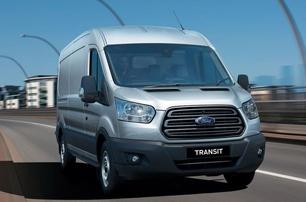
Perhaps the most interesting thing about the design is there’s nothing very different about the E-Transit compared to the regular Transit. Which is a good thing, because the Transit is already a popular delivery van so any change for the sake of difference may have messed with the winning formula.
In fact, the design element that is important is the way Ford has laid the battery packs flat inside the ladder-frame chassis which means none of the cargo space has been compromised. This means the E-Transit has the same load area as its internal combustion equivalent, which is key for any delivery van.
This doesn’t look like your everyday Mercedes-Benz commercial van – the V-Class is certainly more at home parked in the driveway of a luxury hotel than alongside the back door in the alley behind it.
Admittedly it isn’t as attractive as the Avantgarde flagship, but it has the whole Benz ‘family look’ thing going on, with a stylish grille, swept headlights and a streamlined body. A box on wheels it may be, but it’s a box with nicely rounded edges.
The 17-inch, five-spoke alloy wheels are plain, and the halogen headlights and daytime running lights don’t have quite the same wow factor as the LED units in the high-end model, but it wears that Benz badge loud and proud. And the extremely dark tinted rear windows ensure the privacy of your occupants, as well as giving off the vibe of high-end plush.
I know it’s hard to stray from the formula for a van, but I particularly like the back end of the V-Class – it is reminiscent of the original Vito, with low, broad-set tail-lights and a near-flat backside with a huge tailgate, which doubles as an awning to stand under if the weather is a bit Melbourne.
The interior is typical Benz, or, in the case of the V220d, Benz on a slight budget.
The cabin is very similar to what you’ll find in the Transit, so there will be familiarity for anyone making the switch from the diesel-powered version. The rotary shifter and 12.0-inch tablet-style multimedia screen make for a smart look but also means minimal space is wasted.
It’s a thoughtfully designed cabin, with plenty of usable storage spaces, including three cup-holders, a pair of bottle-holders and deep storage shelves on the top of the dashboard. The doors are particularly noteworthy, with multiple storage areas carved into the available space.
The seats are comfortable and, naturally with a high-roof van, there’s plenty of head room which creates a spacious feeling.
Behind the seats is the cargo area. In the US-specification E-Transit we drove there was a dividing wall between the cabin and the back of the van, with a small sliding door to access the cargo area, but it’s unlikely this will be offered in Australia. Instead, local models will likely have a hard divider between the cabin and back, with a small window for visibility.
As mentioned earlier, the floorspace in the E-Transit remains the same as the Transit thanks to the battery being laid underneath the floor, so there’s plenty of cargo volume that will please fleet buyers.
In the US the E-Transit’s cargo area measures 11.3-cubic-metres with the medium-height roof and expands to 12.4cu/m with the high-roof body.
Ford says the “targeted payload” will be 1616kg.
With the optional eight-seat setup, it’d be hard to think of this van as impractical. And if you consider that it also has a boot capacity of 1030L in its most downsized form (and 4630L with the rear seats removed), any argument seems null and void.
The fact the boot is electrically operated, and that it has a separate tailgate glass opening section, and that you can open the boot using the keyfob – not to mention the kerbside door – just adds to the pragmatic appeal of this van.
The six rear seat backs can all be flattened down, and you can tumble them forward, too – the kerbside seats in a one-by-one motion, the driver’s side ones tumble two-at-a-time. It takes a bit of muscle to do those ones.
Essentially you can set it up as a parcel van if you want, or even as a mobile office – the rear seats can be configured to face each other, in ‘conference’ style. But you need to know that this isn’t an easy process, and once you’ve got it set how you want it, you’ll probably end up just leaving it as is.
Loose-item storage isn’t great, but at least the door pockets are large enough for some bottles and documents.
No matter which way you like it, those in the back will have good ventilation (it has a three-zone climate control system with a separate fan controller in the back above the second-row seats), and a decent amount of space. Crucially, there are no cup or bottle-holders, nor any loose item storage in the back two rows – there are mesh nets on the backrests of the very front seats, but that’s it.
If you plan to use this as a mover of smaller people, the V-Class’s child-seat anchor-point game will not disappoint. It has four ISOFIX anchors (two in each row) and six top tether points – yep, every spot in the back!
Up front there’s a problem with the cup-holder situation, too – there are two, but they’re way down on the floor, meaning it’s hard to access your cuppa on the move. In fact, loose-item storage isn’t great, but at least the door pockets are large enough for some bottles and documents. There’s a sunglass holder, too. The little media screen is a bit disappointing in its size, and the Comand controller codpiece that juts out from the centre console can take some getting used to.
Connecting and reconnecting a phone isn’t too difficult (although you have to pair audio streaming separately to phone streaming – which is weird), and there’s no extended smartphone capability such as Apple CarPlay or Android Auto. Using the navigation system is very simple, but the graphics are extremely aftermarket looking – that’s no bad thing, because Benz’s maps always looked a bit 1990s, but these ones are somewhat cartoonish.
Ford Australia originally announced the E-Transit would arrive by “mid-2022” but that date has been pushed back thanks to the ongoing supply challenges faced by most car companies.
While the initial technical details have been confirmed - the first model available will be the 420L long-wheelbase version - the company hasn’t locked in detailed local specifications and pricing yet.
The closest comparison in the current Transit range is the 350L, which is available in both mid- and high-roof variants. Based on the model we test drove in the US, there are similar specifications between the two, including 16-inch steel wheels, partial-leather-trimmed seats and Ford’s SYNC4 multimedia system displayed on a 12.0-inch centrally mounted screen.
While pricing isn't confirmed, it's likely the E-Transit will carry a premium over the Transit so we'd estimate a starting price in the mid-$60,000 range.
There are two V-Class models you can buy; this newly added V220d variant, at $74,990, or the high-spec V250d Avantgarde, which is listed at $87,200.
That’s a pretty huge difference, especially considering you get plenty of equipment in the lower-spec version. To get a better understanding, let’s list off what’s standard, and what you get if you fork out the extra $12,210 for the top model.
The V220d has a 7.0-inch media screen with Garmin maps, dual USB ports, Bluetooth phone and audio streaming, auto headlights and wipers, DAB+ digital radio, CD, auxiliary and SD input, electric parking brake, electric front-seat adjustment with memory settings, cruise control, colour driver information screen with digital speedometer, black leather trim and sports pedals.
There’s three-zone climate control and velour floor mats up front, too, while parking moves are made easy with the brand’s Active Parking Assist system, which can semi-autonomously park the van for you. Other niceties include front and rear parking sensors, a reversing camera, dark tinted rear glass, heated/folding/auto-dimming side mirrors, and electric side doors and tailgate (with opening glass section).
Stepping up to the V250d sees the addition of a 15-speaker Burmester sound system, ambient lighting (three colours), a higher-resolution 8.0-inch media screen with integrated Wi-Fi hotspot and online access and navigation with live traffic updates, a 360-degree surround-view camera, adaptive cruise control, illuminated door sills in stainless steel, a rear parcel shelf, 18-inch alloy wheels, anodised roof rails, a body kit, chrome exterior trimming, LED adaptive headlights with automated high-beam and LED daytime running lights, and tyre-pressure monitoring.
There’s some separation between the two in terms of engines as well – see below for more detail on that.
And for a little bit of context, there are no other luxury-branded people-movers out there. Buyers may consider alternatives like the Volkswagen Multivan Executive at $83,390 (wait, how much?), but in all honesty, if you can forego the badge and just want space for your money, the Kia Carnival Platinum ($61,290) offers a considerably better value equation.
The car we tested had the optional roof rails ($649) and parking system with surround-view camera ($616) fitted, and was an eight-seat model rather than a seven-seater, which adds $1346 to the price.
One element of the E-Transit we are clear on is what’s under the bonnet. The E-Transit is powered by an 198kW/430Nm electric motor that powers the rear wheels and draws energy from a 68kWh battery.
That means the E-Transit is the most powerful member of the Transit family, with the rest of the range powered by the 125kW/390Nm 2.0-litre four-cylinder turbo diesel engine.
Ford claims the E-Transit has a range of 317km (on the WLTP cycle), which may not sound like a lot for a commercial van but Ford claims in the US the daily average for such vehicles is only 120km.
In order to save charge, the E-Transit is equipped with an Eco Mode which limits top speed, regulates acceleration and limits climate control settings. Ford claims this allows the driver to cut energy usage by between eight to 10 per cent when driven at highway speeds or when unladen.
Both the V220d and V250d are powered by 2.1-litre turbo diesel engines, but in differing states of tune.
The V220d has 120kW of power and 380Nm of torque, while the V250d pumps out 140kW and 440Nm. Those figures are decent given the capacity of the engine, and to help keep fuel use down it has stop-start, sadly it’s a bit grumbly and overactive.
Both run seven-speed automatic transmissions and are rear-wheel drive. The Benz vans have strong towing capability, with an unbraked towing capacity of 750kg, while it can deal with braked trailers up to 2500kg.
Charging will be a key element of the E-Transit’s appeal (or not) to buyers, with fleets needing to maximise the van’s time on the road. Ford claims that with a 115kW DC fast-charger the E-Transit battery can go from 15 per cent charge to 80 per cent in just 34 minutes.
With the onboard 11.3kW charger it takes 8.2 hours to get the battery back to 100 per cent capacity.
The E-Transit supports bi-directional use of the battery too. In the US the E-Transit is available with its Pro Power Onboard technology as an option. This allows for the driver to draw up to 2.4kW of power from the vehicle’s battery to power tools and other equipment as necessary.
One feature that is confirmed for the Australian-bound E-Transit is what Ford calls, Scheduled Pre-Conditioning. This is a system that allows the operator to pre-set the climate control for the cabin while the van is still on charge so that you can still have maximum charge available when you start driving.
Mercedes-Benz claims that over a mix of urban and highway driving, the V-Class will return 6.3 litres per 100km, no matter whether you choose the V220d or the V250d – which is pretty good given the thing is long (5140mm), wide (1928mm) and relatively heavy (almost two tonnes).
Over a lengthy drive in the V220d – some of it on a twisty mountain road, some in stop-start traffic, most on the freeway – I managed 7.2L/100km. This will rise with added bodies, but not by much.
Electric vehicles have earned a reputation for rapid, exciting acceleration… but that’s not the case with the E-Transit. Performance could best be described as modest, with adequate but unspectacular acceleration.
Which is fine, because the E-Transit is not meant to be a ‘ludicrously’ quick van, instead it’s meant to haul a load as efficiently as possible. On that front it does a good job, with smooth (albeit gentle) acceleration and steady pulling power.
It’s important to note, though, that our test car was unladen - with only some shelving installed in the back. So we’ll have to reserve judgement on how the E-Transit performs with a full load on-board, on Australian roads.
The rest of the driving experience is as you’ll find with the Transit. The steering is nicely weighted and direct, which makes manoeuvring such a huge vehicle straightforward.
The ride is on the firm side, which isn’t unusual for either a van or an electric vehicle as it needs to control so much weight, but it isn’t uncomfortable and offers good control.
My drive saw me chauffeur my partner and our dog down to Cooma, where we then took my parents down the coast. We put the V-Class’s flexible seating to the test, as we had to buy a massive bathtub and bring it back with us. This proved that, although this thing is a luxury van, it can also be a hugely practical delivery van.
The comfort on offer was perhaps the biggest advantage for my passengers – with superb suspension composure, ride comfort and body control, the V-Class is like a big boxy limousine.
It won’t set your heart racing in corners as there’s quite a lot of body roll to contend with, but the steering is direct and very nicely weighted, making for easy progress whether you’re piloting it down a mountain pass or dealing with roundabouts or parking lots. The turning circle is small, which in turn makes the van feel smaller than it actually is.
The brakes can feel a little numb underfoot, meaning you might find yourself pushing a little harder on the pedal than you think you ought to. The response is good, though, even with weight on board.
The extra, effortless grunt of the V250d would be advantageous.
What was a little surprising was a lack of torque at higher speeds for overtaking moves. On a slightly sloping country back road with four adults on board, I expected there to be well and truly enough for a quick overtaking move – but the drivetrain didn’t quite have the grunt to get the job done. At least, not in the Comfort drive mode.
By using the ‘Dynamic’ drive selector and choosing Sport mode, there was extra push on offer – the gearing changed, and so did the throttle response – and that made overtaking moves a little easier. But still, the extra, effortless grunt of the V250d would be advantageous, and I know I wouldn’t like having to play with the drive-mode switch every time I overtook. Just leave it in Sport mode? You’ll pay the price on fuel use.
Around town the seven-speed auto went about its job really well, offering smooth shifts in all situations. The transmission can clunk when you engage park or shift to reverse, though, which isn’t overly premium, and there is some turbo lag that you’ll have to remember when you prepare to take off from traffic lights. Another thing that didn’t necessarily persuade my passengers of the premiumness on offer was the fact that the kerbside door leaked when it was raining. Not good.
The current Transit is not rated by ANCAP, as is the case with most of its full-size van rivals because the safety authority tends to focus on the mid-size vans - such as the Transit Custom, Toyota HiAce and Hyundai Staria-Load.
However, the E-Transit does have a solid safety package, with driver and passenger front, side and curtain airbags all standard. While the E-Transit’s local safety package isn’t locked in, the Transit already boasts autonomous emergency braking with pedestrian detection, lane-keep assist with lane-departure warning, rollover mitigation, side-wind stabilisation, trailer sway control and traffic-sign recognition, so it’s probably a safe bet these will all be included on the E-Transit.
We drove the high-roof E-Transit in the US and with a high-mounted reversing camera it was surprisingly easy to navigate for such a big vehicle.
The V-Class has been awarded the highest possible ANCAP crash test score of five stars – it achieved that in 2014, based on a EuroNCAP score that was put through local screening.
It has plenty of safety kit to keep your mind at ease – whether you’re a driver or passenger.
There are six airbags, including full-length curtain coverage, and the V-Class has a reversing camera with dynamic guide lines, an adaptive electronic stability control system (ESP) with load sensitivity and cross-wind assist, rollover mitigation, trailer-sway control (when fitted with a genuine Benz towbar), hill-hold assist, flashing brake lights under emergency braking and driver-drowsiness detection.
There are other handy features, including auto headlights and rain-sensing wipers, auto-dimming interior and exterior mirrors, forward collision warning (not AEB), blind-spot monitoring, lane-keeping assist (but not with steering intervention).
You’ve got spend up to the V250d to get the adaptive cruise control system, but there’s still no AEB on that variant.
Ford Australia has already confirmed that the E-Transit will be covered by Ford’s now-standard five-year, unlimited kilometre warranty, plus an extended eight-year/160,000km warranty specifically for the battery and high-voltage electric components.
Mercedes-Benz Vans backs the V-Class with a three-year/200,000km warranty plan, which is good.
The company has also introduced a new capped-price servicing plan for the V-Class, with maintenance due every 12 months or 25,000km, whichever occurs first. The fact the distance intervals are so far apart could be a bonus for business operators, but the costs are high: the first service costs $556, then the following two visits will set you back $1112 each time. Yikes.
A longer capped-price plan with lower prices would make this van a lot more attractive to business owners. A Kia Carnival could make a lot of sense in that regard, too – even business operators get a seven-year/150,000km warranty with a seven-year/105,000km capped-price plan, and the same cover for roadside assist.