What's the difference?
Meet Ford’s electric pioneer for Australia - the E-Transit.
It may not be as exciting as a Tesla Model S, Porsche Taycan or Audi e-tron, but this electric version of the Blue Oval’s large van will help create a new market for zero-emissions commercial vehicles.
This is seen as a major opportunity by Ford to provide an electric alternative to typically diesel-powered vans, which will no doubt prove popular with fleet operators looking to cut fuel costs and corporate emissions. While unlikely to suit all van buyers, thanks to its limited range and recharging restrictions, for those companies with shorter delivery routes it will certainly have appeal.
Ford’s research (performed by YouGov) suggests up to 58 per cent of business “can see EVs becoming part of their vehicle fleet in the future".
But it’s just Ford’s first step into the larger world of electric vehicles. We’ve already had confirmation the smaller E-Transit Custom is headed our way and there are good odds the Mustang Mach-E will eventually find its way to Australian showrooms, so there’s plenty of exciting models in store for Ford.
In the meantime, though, the E-Transit isn’t due in Australia until sometime in the first half of 2023, but CarsGuide was able to take one for a test drive near Ford’s Detroit headquarters recently to get a taste of what’s to come.
The flagship GAC M8 PHEV Luxury we’re reviewing lives in a strange corner of the family car market. It’s a people mover, but it’s priced like a luxury SUV, designed like a VIP shuttle and powered by a plug-in hybrid system that suggests someone, somewhere, had very specific plans.
It finds itself up against the fully-electric LDV Mifa 9 and Zeekr 009, while also circling the upper end of the Kia Carnival range. The latter of which has proven itself to be the default choice for families.
Which begs the question - who is the GAC M8 actually pitched towards? Families with older teens or ageing grandparents feel like a more natural fit than those deep in the child-seat phase, largely because the M8 prioritises space, comfort and efficiency over the usual kid-wrangling conveniences.
At the same time, its chauffeur-like identity hints at a broader, more commercial audience and one more focused on quiet efficiency and passenger comfort. What can be agreed is the real point of difference here isn’t packaging or versatility, it’s the M8’s plug-in hybrid powertrain, and the way it reshapes where a people mover like this sits within the broader electrified landscape.
Does that approach make sense once you live with it? Let's find out.
Ford has taken an unorthodox approach to entering the electric vehicle market in Australia, avoiding the hype around the Mustang Mach-E and F-150 Lightning and instead laying the foundations with the E-Transit.
But it’s a savvy move, giving the brand a chance to enter what should be a largely untapped market with a vehicle that should appeal to what buyers are looking for. With unchanged space compared to the diesel-powered Transit, the switch to a more powerful electric powertrain makes the E-Transit a win-win scenario for those with a suitable daily driving routine.
Note: CarsGuide attended this event as a guest of the manufacturer, with travel, accommodation and meals provided.
The GAC M8 PHEV Luxury is a people mover that carves out a very specific niche, largely thanks to its plug-in hybrid powertrain and ambitious price point. It’s undeniably well specified and genuinely luxurious inside, but it never quite escapes its chauffeur-like identity as it's a vehicle built around passenger comfort rather than driver engagement.
Being a new brand in our market limits ownership appeal, at least for now. Where the M8 really impresses, though, is efficiency, and that alone may be enough to justify its unusual positioning.
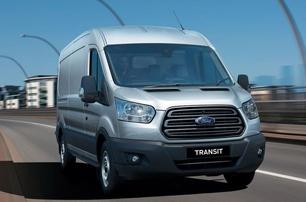
Perhaps the most interesting thing about the design is there’s nothing very different about the E-Transit compared to the regular Transit. Which is a good thing, because the Transit is already a popular delivery van so any change for the sake of difference may have messed with the winning formula.
In fact, the design element that is important is the way Ford has laid the battery packs flat inside the ladder-frame chassis which means none of the cargo space has been compromised. This means the E-Transit has the same load area as its internal combustion equivalent, which is key for any delivery van.
The GAC M8’s design is… well, it’s out there. This isn’t a people mover that fades politely into the background. There are clear parallels with the Lexus LM, right down to the towering grille (complete with a vague hint of spindle shaping), which may well be the tallest grille I’ve encountered!
It’s a big unit, too, measuring 5212mm long, 1893mm wide and 1823mm high. The overall shape is sharply squared-off and prioritises presence over dynamism. It also comes standard with a full suite of LED exterior lighting.
The cabin claws back some design cred, though, as it’s downright plush with its semi-aniline two-tone leather upholstery - finished in a lush burgundy/black duo in our test vehicle. Accent panels vary between a diamond-design for the dashboard and doors, to suede soft-touchpoints and rose-gold inserts liberally scattered across the cabin.
The only accent that doesn’t land is the large swathes of piano black on the centre console as it’s hard to keep clean.
There are some nice little surprises, too, like the fidget spinner-style crystal gear lever, which is surprisingly fun to fiddle with at traffic stops and two sunroofs with the rear fixed panel illuminating with internal ambient light.
Some of the finishes aren’t the best as there are joinery and door handles that don’t line up properly, which is surprisingly more annoying than you’d think once you notice it. But overall, the cabin feels well-considered and luxurious, even if the execution isn't always flawless.
The cabin is very similar to what you’ll find in the Transit, so there will be familiarity for anyone making the switch from the diesel-powered version. The rotary shifter and 12.0-inch tablet-style multimedia screen make for a smart look but also means minimal space is wasted.
It’s a thoughtfully designed cabin, with plenty of usable storage spaces, including three cup-holders, a pair of bottle-holders and deep storage shelves on the top of the dashboard. The doors are particularly noteworthy, with multiple storage areas carved into the available space.
The seats are comfortable and, naturally with a high-roof van, there’s plenty of head room which creates a spacious feeling.
Behind the seats is the cargo area. In the US-specification E-Transit we drove there was a dividing wall between the cabin and the back of the van, with a small sliding door to access the cargo area, but it’s unlikely this will be offered in Australia. Instead, local models will likely have a hard divider between the cabin and back, with a small window for visibility.
As mentioned earlier, the floorspace in the E-Transit remains the same as the Transit thanks to the battery being laid underneath the floor, so there’s plenty of cargo volume that will please fleet buyers.
In the US the E-Transit’s cargo area measures 11.3-cubic-metres with the medium-height roof and expands to 12.4cu/m with the high-roof body.
Ford says the “targeted payload” will be 1616kg.
The front row has plenty of space and the seats feature heating and ventilation, making longer journeys comfortable. However, there’s no extendable under-knee support and only the driver gets lumbar adjustment. I’ve spent much of the week feeling like a chauffeur, as my husband and child insisted on sitting in the back!
The middle row is where the M8 really shines. The captain’s chairs are indulgent, offering full recline, footrests, heating, ventilation, and massage. Comfort is excellent, though the footrest extension limits space for the third row, and even at 168cm I found it a snug fit when fully reclined. Access is straightforward with grab handles and a low 143mm step-in height, though be mindful of kerbs as the doors aren’t forgiving when it comes to tall council strips.
The third row is one of the few that genuinely accommodates adults. Head- and legroom are ample, and the seats feel firm but comfortable, especially with the foldable armrest. Amenities aren't forgotten with four cupholders, two USB-A ports and directional air vents. Access requires sliding through the middle row, so it’s best if those seats are unoccupied, but otherwise it’s not too taxing.
Front-row storage is practical, with a mid-sized glove box, dual-opening middle console, cupholders and a clever phone cradle that integrates a wireless charging pad and cable routing for a tidy set-up. There’s also a USB-A and USB-C port and a 12-volt socket in the large shelf underneath the centre console.
The middle row enjoys three USB-A ports, a USB-C port, directional air vents, retractable sunblinds, tray tables (though not usable while driving) and climate control. Storage is decent, with six cupholders, one of which has heating and cooling, two map pockets, a pull-out drawer and a 220-volt AC outlet.
The 10.1-inch touchscreen multimedia system is serviceable but feels slightly small for the luxury segment. Graphics aren’t the sharpest, the layout isn’t always intuitive and some functions, like the heated steering wheel, require digging through menus. Wireless Apple CarPlay and Android Auto performed flawlessly throughout the week and the 12.3-inch digital instrument cluster is clear and well laid out.
Boot space is modest for a people mover, offering 280L with all rows in place which is enough for a small grocery run but not for a fully-loaded family outing. Folding the third row expands capacity to 1500L, though that leaves you with a four-seater. The loading height is low, which helps, but it has a tall lip which prevents it from being ideal for sitting on during tailgates or picnics. There’s a small underfloor compartment housing the tyre repair kit and a powered tailgate rounds out the package.
Ford Australia originally announced the E-Transit would arrive by “mid-2022” but that date has been pushed back thanks to the ongoing supply challenges faced by most car companies.
While the initial technical details have been confirmed - the first model available will be the 420L long-wheelbase version - the company hasn’t locked in detailed local specifications and pricing yet.
The closest comparison in the current Transit range is the 350L, which is available in both mid- and high-roof variants. Based on the model we test drove in the US, there are similar specifications between the two, including 16-inch steel wheels, partial-leather-trimmed seats and Ford’s SYNC4 multimedia system displayed on a 12.0-inch centrally mounted screen.
While pricing isn't confirmed, it's likely the E-Transit will carry a premium over the Transit so we'd estimate a starting price in the mid-$60,000 range.
There are two grades available for the GAC M8, and for this review we’re in the flagship Luxury, priced from $83,590, before on-road costs. It’s an awkward vehicle to compare because, right now, it’s the only people mover on sale with a plug-in hybrid powertrain.
Its closest like-for-like rivals in terms of size, specification and middle-row captain’s chairs are the all-electric LDV Mifa 9 Luxe and Zeekr 009 (FWD), priced from $129,000 and $115,900, before on-road costs, respectively. Compared to them, the M8 presents strong value. The equation looks less convincing when it’s parked alongside the flagship Kia Carnival Hybrid, which starts from $76,630 MSRP, though the intended markets between the two are notably different.
GAC hasn’t held back on features in the Luxury grade. The front and middle-row captain’s chairs are power-adjustable and offer heating and ventilation, with the middle seats also gaining full recline, extendable footrests and a massage function. Curiously, the driver misses out on massage, though.
Other highlights include a front sunroof with manual blind, a second fixed glass roof, semi-aniline leather upholstery for the first two rows with leather in the third, and a heated steering wheel. Practical conveniences are well covered too, with powered sliding rear doors, a hands-free powered tailgate, acoustic Michelin 18-inch tyres (designed to reduce road noise), a 360-degree camera system, manual rear sunblinds, three-zone climate control and one-touch ‘reset’ buttons for the middle-row seats.
Technology feels thoughtfully specified rather than excessive. There’s a 12.3-inch digital instrument cluster, wireless Apple CarPlay and Android Auto, Bluetooth connectivity and an eight-speaker Yamaha sound system. Charging and power options include six USB-A ports, one USB-C port, a 12-volt socket and a 220-volt AC outlet. The 10.1-inch multimedia touchscreen looks larger than it is thanks to its housing, though it ultimately sits on the smaller side for a vehicle pitching itself at the luxury end of the market.
One element of the E-Transit we are clear on is what’s under the bonnet. The E-Transit is powered by an 198kW/430Nm electric motor that powers the rear wheels and draws energy from a 68kWh battery.
That means the E-Transit is the most powerful member of the Transit family, with the rest of the range powered by the 125kW/390Nm 2.0-litre four-cylinder turbo diesel engine.
Ford claims the E-Transit has a range of 317km (on the WLTP cycle), which may not sound like a lot for a commercial van but Ford claims in the US the daily average for such vehicles is only 120km.
In order to save charge, the E-Transit is equipped with an Eco Mode which limits top speed, regulates acceleration and limits climate control settings. Ford claims this allows the driver to cut energy usage by between eight to 10 per cent when driven at highway speeds or when unladen.
Both M8 grades share the same plug-in hybrid powertrain, pairing a 2.0L, four-cylinder, turbo-petrol engine with a single electric motor. Combined, they produce up to 274kW of power and 630Nm of torque which is impressive on paper, though it only manages 0‑100km/h in 8.8 seconds. Once the battery is depleted, outputs drop to a more modest 140kW/320Nm. Power is sent to the front wheels through a two-speed automatic transmission, and the M8 is not rated for towing.
To get the best performance from this type of set-up will require diligent recharging.
Charging will be a key element of the E-Transit’s appeal (or not) to buyers, with fleets needing to maximise the van’s time on the road. Ford claims that with a 115kW DC fast-charger the E-Transit battery can go from 15 per cent charge to 80 per cent in just 34 minutes.
With the onboard 11.3kW charger it takes 8.2 hours to get the battery back to 100 per cent capacity.
The E-Transit supports bi-directional use of the battery too. In the US the E-Transit is available with its Pro Power Onboard technology as an option. This allows for the driver to draw up to 2.4kW of power from the vehicle’s battery to power tools and other equipment as necessary.
One feature that is confirmed for the Australian-bound E-Transit is what Ford calls, Scheduled Pre-Conditioning. This is a system that allows the operator to pre-set the climate control for the cabin while the van is still on charge so that you can still have maximum charge available when you start driving.
The M8 is equipped with a Type 2 CCS charging port, accepting up to 6.6kW on AC and 39kW on fast DC power. Being able to use a DC charger is a definite plus for a plug-in hybrid and you can charge the battery on this type of charger from zero to 80 per cent in around 30 minutes.
Its 25.57kWh lithium-ion battery is generous for a plug-in, delivering an electric-only range of up to 106km (WTLP). With a combined cycle (urban/extra-urban) fuel consumption figure of 6.1L/100km and a 56L fuel tank, the M8 offers an overall driving range of more than 1000km which is excellent for a vehicle of its size. As with any plug-in, regular charging is key to achieving these figures; over my week of driving, I averaged 6.2L/100km, which is very excellent.
GAC recommends a minimum 91 RON unleaded petrol.
Electric vehicles have earned a reputation for rapid, exciting acceleration… but that’s not the case with the E-Transit. Performance could best be described as modest, with adequate but unspectacular acceleration.
Which is fine, because the E-Transit is not meant to be a ‘ludicrously’ quick van, instead it’s meant to haul a load as efficiently as possible. On that front it does a good job, with smooth (albeit gentle) acceleration and steady pulling power.
It’s important to note, though, that our test car was unladen - with only some shelving installed in the back. So we’ll have to reserve judgement on how the E-Transit performs with a full load on-board, on Australian roads.
The rest of the driving experience is as you’ll find with the Transit. The steering is nicely weighted and direct, which makes manoeuvring such a huge vehicle straightforward.
The ride is on the firm side, which isn’t unusual for either a van or an electric vehicle as it needs to control so much weight, but it isn’t uncomfortable and offers good control.
Around town, the M8 delivers plenty of power and is whisper-quiet when running in electric mode. Once the battery depletes or you switch over to the petrol engine, that sense of instant oomph fades. Overtaking on hills is achievable, but even with an empty car it can feel a little underwhelming.
Steering is light, but the car feels solidly planted in most situations. Handling isn’t as dynamic as a Kia Carnival and the M8 can feel a touch ungainly through bends, though it’s more than manageable for everyday driving.
Ride comfort is high, especially for passengers, due to forgiving suspension and a cabin that doesn't let a whole lot of road or wind noise in. The M8 is a comfortable cruiser.
Visibility is surprisingly good for a 5.2m-long vehicle with minimal blind spots from the driver’s seat. The bonnet and dash, however, stretch further than they appear, which can make judging the nose a little tricky at first.
Ground clearance is only 143mm, so it’s easy to scrape the nose over speed bumps or when parking. The 360-degree camera system is decent, but manoeuvring into tight spaces still requires some care as it fills out a space. You also have to leave about a metre of clearance behind you if you want to open the tailgate.
The current Transit is not rated by ANCAP, as is the case with most of its full-size van rivals because the safety authority tends to focus on the mid-size vans - such as the Transit Custom, Toyota HiAce and Hyundai Staria-Load.
However, the E-Transit does have a solid safety package, with driver and passenger front, side and curtain airbags all standard. While the E-Transit’s local safety package isn’t locked in, the Transit already boasts autonomous emergency braking with pedestrian detection, lane-keep assist with lane-departure warning, rollover mitigation, side-wind stabilisation, trailer sway control and traffic-sign recognition, so it’s probably a safe bet these will all be included on the E-Transit.
We drove the high-roof E-Transit in the US and with a high-mounted reversing camera it was surprisingly easy to navigate for such a big vehicle.
The M8 hasn’t been tested with ANCAP yet and is unrated but it has a good suite of safety equipment including seven airbags with the curtain airbags covering all three rows but unique for the class is another airbag across the rear windscreen. However, it misses out on a front centre airbag., which is a strange omission now.
Standard equipment includes big-ticket systems like blind-spot monitoring, autonomous emergency braking, forward collision warning, lane keeping aid, lane departure warning, traffic sign recognition, rear cross-traffic alert and a clear 360-degree view camera system with front and rear parking sensors.
There is a sound alert and driver seat vibration that activates for some systems which I found to be a good addition. There’s also four ISOFIX child seat mounts (two in each rear row) and a total of five top-tether anchor points. While the M8 has adaptive cruise control, it’s not well-calibrated and creates a middling on-road experience.
Ford Australia has already confirmed that the E-Transit will be covered by Ford’s now-standard five-year, unlimited kilometre warranty, plus an extended eight-year/160,000km warranty specifically for the battery and high-voltage electric components.
The GAC M8 is backed by a seven-year, unlimited-kilometre warranty, along with five years' complimentary roadside assistance, which is competitive against several of its nearest rivals. Service pricing has yet to be confirmed, though servicing is scheduled at 12-month or 15,000km intervals.
For now, the service network is limited, with around 10 centres nationwide, though GAC offers authorised servicing through third-party providers such as MyCar, which helps broaden access in the short term.