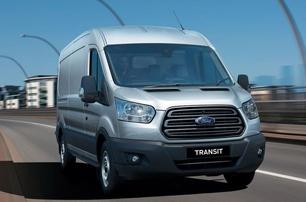
Ford Transit vs Mazda BT-50

What's the difference?

VS
Ford Transit
Ford Transit

—

2023 price

Mazda BT-50
Mazda BT-50

$38,400 - $79,490

2026 price

Summary

2023 Ford Transit
2026 Mazda BT-50
Safety Rating

Engine Type
Diesel Turbo 4, 2.0L

—
Fuel Type
Diesel

—
Fuel Efficiency
0.0L/100km (combined)

—
Seating
3

0
Dislikes
  • Modest performance
  • Ride is firm
  • Pricing unclear

  • Suspension is a bit firm
  • Doesn't have the grunt of the 3.0L version
  • Driver info screen is tiny, hard to read
2023 Ford Transit Summary

Meet Ford’s electric pioneer for Australia - the E-Transit.

It may not be as exciting as a Tesla Model S, Porsche Taycan or Audi e-tron, but this electric version of the Blue Oval’s large van will help create a new market for zero-emissions commercial vehicles. 

This is seen as a major opportunity by Ford to provide an electric alternative to typically diesel-powered vans, which will no doubt prove popular with fleet operators looking to cut fuel costs and corporate emissions. While unlikely to suit all van buyers, thanks to its limited range and recharging restrictions, for those companies with shorter delivery routes it will certainly have appeal.

Ford’s research (performed by YouGov) suggests up to 58 per cent of business “can see EVs becoming part of their vehicle fleet in the future".

But it’s just Ford’s first step into the larger world of electric vehicles. We’ve already had confirmation the smaller E-Transit Custom is headed our way and there are good odds the Mustang Mach-E will eventually find its way to Australian showrooms, so there’s plenty of exciting models in store for Ford.

In the meantime, though, the E-Transit isn’t due in Australia until sometime in the first half of 2023, but CarsGuide was able to take one for a test drive near Ford’s Detroit headquarters recently to get a taste of what’s to come. 

View full pricing & specs
2026 Mazda BT-50 Summary

Traditionally, offering a smaller engine in a particular make or model has been a manufacturer’s way of stripping a few dollars out of the price-tag. In the case of the ute market, that’s more often than not an attempt to rope price-sensitive fleet customers into the family. Not to mention responding to the cut-throat pricing of some of the Chinese newcomers.

A handful of years ago, we saw Mazda do just that with a 1.9-litre turbo-diesel variant for its BT-50 range to give us the XS, entry-level trim specification. But it seems Mazda has had a bit of a rethink about that strategy (in line with Isuzu’s plans, given the BT-50 and D-Max share their major structures and drivelines) and has now upgraded the small-engine variant of the BT-50 with a new engine and the return of the 4X4 option (which was dropped after about 12 months in the previous XS model due to lack of demand).

But perhaps most importantly, the engine in this base-spec BT-50 has now grown from the original 1.9 litres to 2.2 litres. As a result, there’s more torque, more power and an extra couple of gears in the transmission. And with the option of four-wheel drive again, the new XS BT-50 might just get a look in where the previous XS didn’t.

In the end, of course, the XS closes the gap to the other BT-50s in the line-up, perhaps muddying further the question of whether you need to stump up for the full 3.0 litres in the other BT-50s, or take an enough-is-enough stance and save some coin.

View full pricing & specs

Deep dive comparison

2023 Ford Transit 2026 Mazda BT-50

Change vehicle