What's the difference?
Traditionally, offering a smaller engine in a particular make or model has been a manufacturer’s way of stripping a few dollars out of the price-tag. In the case of the ute market, that’s more often than not an attempt to rope price-sensitive fleet customers into the family. Not to mention responding to the cut-throat pricing of some of the Chinese newcomers.
A handful of years ago, we saw Mazda do just that with a 1.9-litre turbo-diesel variant for its BT-50 range to give us the XS, entry-level trim specification. But it seems Mazda has had a bit of a rethink about that strategy (in line with Isuzu’s plans, given the BT-50 and D-Max share their major structures and drivelines) and has now upgraded the small-engine variant of the BT-50 with a new engine and the return of the 4X4 option (which was dropped after about 12 months in the previous XS model due to lack of demand).
But perhaps most importantly, the engine in this base-spec BT-50 has now grown from the original 1.9 litres to 2.2 litres. As a result, there’s more torque, more power and an extra couple of gears in the transmission. And with the option of four-wheel drive again, the new XS BT-50 might just get a look in where the previous XS didn’t.
In the end, of course, the XS closes the gap to the other BT-50s in the line-up, perhaps muddying further the question of whether you need to stump up for the full 3.0 litres in the other BT-50s, or take an enough-is-enough stance and save some coin.
Meet Ford’s electric pioneer for Australia - the E-Transit.
It may not be as exciting as a Tesla Model S, Porsche Taycan or Audi e-tron, but this electric version of the Blue Oval’s large van will help create a new market for zero-emissions commercial vehicles.
This is seen as a major opportunity by Ford to provide an electric alternative to typically diesel-powered vans, which will no doubt prove popular with fleet operators looking to cut fuel costs and corporate emissions. While unlikely to suit all van buyers, thanks to its limited range and recharging restrictions, for those companies with shorter delivery routes it will certainly have appeal.
Ford’s research (performed by YouGov) suggests up to 58 per cent of business “can see EVs becoming part of their vehicle fleet in the future".
But it’s just Ford’s first step into the larger world of electric vehicles. We’ve already had confirmation the smaller E-Transit Custom is headed our way and there are good odds the Mustang Mach-E will eventually find its way to Australian showrooms, so there’s plenty of exciting models in store for Ford.
In the meantime, though, the E-Transit isn’t due in Australia until sometime in the first half of 2023, but CarsGuide was able to take one for a test drive near Ford’s Detroit headquarters recently to get a taste of what’s to come.
Key to the success of the BT-50 XS will be acceptance by fleet buyers. The vehicle, however, seems to be pretty well considered as far as that goes, although as with any stripped-down model, there are features that will be missed. Things like the manual air-conditioning probably won’t make much difference, but the lack of a tyre pressure monitoring system is a bigger issue for a working vehicle. Performance from the smaller engine is still well within acceptable parameters, but we reckon any buyer considering using much of the 3500kg touring capacity would be better off with the 3.0-litre engine offered in the rest of the BT-50 range.
The Mazda is not the best riding of its ilk, and there are competitors with bigger cabins, although, notably, at this point on the pricing ladder, these are often from China rather than Thailand where the Mazda is built. Ultimately it will come down to whether the smaller engine and reduced performance is an issue and also whether the money saved over the bigger-engined BT-50 is enough to justify that and the loss of some creature comforts. But since fleet managers are notoriously hard-nosed about this stuff, there’s a good chance to BT-50 XS will find a market.
Note: CarsGuide attended this event as a guest of the manufacturer, with meals provided.
Ford has taken an unorthodox approach to entering the electric vehicle market in Australia, avoiding the hype around the Mustang Mach-E and F-150 Lightning and instead laying the foundations with the E-Transit.
But it’s a savvy move, giving the brand a chance to enter what should be a largely untapped market with a vehicle that should appeal to what buyers are looking for. With unchanged space compared to the diesel-powered Transit, the switch to a more powerful electric powertrain makes the E-Transit a win-win scenario for those with a suitable daily driving routine.
Note: CarsGuide attended this event as a guest of the manufacturer, with travel, accommodation and meals provided.
Targeting tradies and fleet customers has meant Mazda has embraced the concept of factory accessories. Right now, there are options for tougher front bumpers, bull-bars, snorkels, drop-side trays, an awning, wheel-arch flares (for bigger, aftermarket wheel and tyre packages) driving lights, roof racks, canopies, tub-drawer systems and even a dual battery set-up. All these factory options carry the full Mazda warranty.
But Mazda has gone even further with accessory packs aimed directly at different fleet markets. For instance, there’s the Mine-Spec Pack which incorporates a park-brake alarm, high-mounted brake lights, a reversing buzzer, work-lights, LED rear lighting and pre-wired switches for auxiliary and beacon lighting.
Externally, Mazda's design brief for the BT-50 has clearly been to not frighten the horses. But it's better than that, because it has actually emerged as one of the better looking utes out there. In XS trim, even the steel wheels add a no-nonsense flavour to the overall effect. And where some of the competition appear to be trying very hard to ape the full-sized US-made pick-ups, the Mazda is its own thing.
Inside, the smaller info screens and simple layout in basic black tell the budget story. At the same time, there's a lot to like in terms of the clear, simple analogue gauges and the no-fuss controls including the conventional T-bar, park-brake and ignition key. There's a look and feel that also suggests this is a ute that should be able to take a few knocks in the course of earning a living.
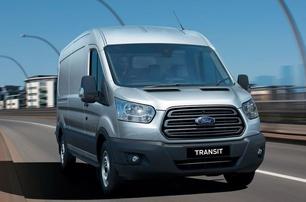
Perhaps the most interesting thing about the design is there’s nothing very different about the E-Transit compared to the regular Transit. Which is a good thing, because the Transit is already a popular delivery van so any change for the sake of difference may have messed with the winning formula.
In fact, the design element that is important is the way Ford has laid the battery packs flat inside the ladder-frame chassis which means none of the cargo space has been compromised. This means the E-Transit has the same load area as its internal combustion equivalent, which is key for any delivery van.
With a choice of cab-chassis of pick-up tub, not to mention the option of a single or dual-cab body in cab-chassis form, the XS allows for a fair bit of creativity in how it’s configured. The cab-chassis, for instance, will accept a conventional drop-side alloy tray or any number of service body configurations right up to camper bodies.
The stock tub on the pick-up version gets a drop-in liner but there’s no power outlet or light that some of the competition offer. The tie-down points are also a bit disappointing with two lower points in the rear of the tub and a pair of higher points in the front. Experience tells us that high-mounted tie-down points are vastly less practical than anchor points mounted close to the cargo floor.
The move to the larger engine has, however, increased the Mazda’s towing ability. From the previous version’s 3000kg towing limit, the new 2.2 can now legally tow 3500kg (with a braked trailer and approved tow-hitch). Payloads vary according to specification, but range from about 1000kg right up to 1379kg for the XS singe-cab-chassis.
The factory-option drop-side tray carries it’s load up high, but offers a flat floor with no wheel-arch intrusions. The standard tub is not as large in any direction, but does have a damped tailgate for safety (you can’t drop it) and convenience (the gas struts help raise it).
In the cabin, you get USB charging ports (two in the front, one in the rear seat) and there are central air-vents for the rear seat of dual-cab models. The dual-cab also has an under-seat storage area, two gloveboxes and a 60/40 split fold rear bench. The doors feature bottle holders and there’s a flip-down glasses compartment in the roof lining.
While the front seats are comfy enough for bigger drivers, the rear seat also goes against dual-cab tradition a little by having plenty of room in every direction, as well as a rational seat-back angle.
The cabin is very similar to what you’ll find in the Transit, so there will be familiarity for anyone making the switch from the diesel-powered version. The rotary shifter and 12.0-inch tablet-style multimedia screen make for a smart look but also means minimal space is wasted.
It’s a thoughtfully designed cabin, with plenty of usable storage spaces, including three cup-holders, a pair of bottle-holders and deep storage shelves on the top of the dashboard. The doors are particularly noteworthy, with multiple storage areas carved into the available space.
The seats are comfortable and, naturally with a high-roof van, there’s plenty of head room which creates a spacious feeling.
Behind the seats is the cargo area. In the US-specification E-Transit we drove there was a dividing wall between the cabin and the back of the van, with a small sliding door to access the cargo area, but it’s unlikely this will be offered in Australia. Instead, local models will likely have a hard divider between the cabin and back, with a small window for visibility.
As mentioned earlier, the floorspace in the E-Transit remains the same as the Transit thanks to the battery being laid underneath the floor, so there’s plenty of cargo volume that will please fleet buyers.
In the US the E-Transit’s cargo area measures 11.3-cubic-metres with the medium-height roof and expands to 12.4cu/m with the high-roof body.
Ford says the “targeted payload” will be 1616kg.
While the XS remains the entry-level BT-50 variant, you once again have the choice of two or four-wheel drive, with price-tags to match. So, starting at the start, the 4x2 XS single-cab cab-chassis now kicks off at $37,900 before on-road costs with the dual-cab pick-up (styleside) 4x2 variant at $46,710.
Move up to all-wheel drive and there’s no single-cab option. Instead, things start with the dual-cab cab-chassis 4x4 at $53,120 and the dual-cab pick-up at $54,720.
Aside from the bigger engine and stronger performance, you now get an eight-speed transmission and there’s fuel-saving stop-start tech that was once only available on higher-spec BT-50s.
Other additions for the XS include LED headlights, adaptive cruise control, wireless connectivity for both Apple Car Play and Android Auto, a reversing camera and an 8.0-inch touchscreen. There’s also digital radio and hill-descent control.
But the XS’ place at the bottom of the BT-50 ladder is confirmed with the cloth-trimmed interior, vinyl flooring and plain steel wheels for all but the dual-cab pick-up 4X4 variant which gets alloy wheels.
Which is all fine and gives the Mazda something of a pointy stick with which to poke at the incoming competitors (mainly) from China, but where does that place the XS relative to the 3.0-litre BT-50? Well, if you take the XT variant with the 3.0L engine and the same body and driveline layout, the XS comes in at just $2500 less. That’s not a huge saving either as an outright number or in terms of the monthly lease repayments.
Part of that is because Mazda has also hiked prices across the BT-50 range in tandem with announcing the new XS. Which means that spec-for-spec 1.9 versus 2.2-litre XS is now $1500 more than it was. But even if Mazda had held prices on the XS variants, would $4000 be enough of a difference? For reference, the original XS sliced $3000 off the 3.0L price when it was launched back in late 2021.
There are areas where you can see where Mazda has pulled a few dollars out of the vehicle, starting inside with the small centre touchscreen, the truly tiny central dash-cluster screen, and the cloth trim. There’s also a bit of hard plastic in evidence and the air-conditioning lacks the set-and-forget function of climate control systems. The keyless entry and start has gone and the XS is started with an old fashioned ignition key. The XS specification also loses the front and rear parking sensors and the tyre-pressure monitoring system.
You might also imagine the drum rear brakes are another giveaway but, in fact, they’re standard across the whole BT-50 line-up.
Ford Australia originally announced the E-Transit would arrive by “mid-2022” but that date has been pushed back thanks to the ongoing supply challenges faced by most car companies.
While the initial technical details have been confirmed - the first model available will be the 420L long-wheelbase version - the company hasn’t locked in detailed local specifications and pricing yet.
The closest comparison in the current Transit range is the 350L, which is available in both mid- and high-roof variants. Based on the model we test drove in the US, there are similar specifications between the two, including 16-inch steel wheels, partial-leather-trimmed seats and Ford’s SYNC4 multimedia system displayed on a 12.0-inch centrally mounted screen.
While pricing isn't confirmed, it's likely the E-Transit will carry a premium over the Transit so we'd estimate a starting price in the mid-$60,000 range.
The new engine capacity of 2.2 litres is up from the 1.9 of the previous XS version but still well short of the 3.0 litres of the more expensive BT-50 versions. And the specifications are pretty much exactly what you’d expect with the new 2.2 just about splitting the difference between the old 1.9 and the 3.0.
In this case, that equates to 120kW of power and 400Nm of torque, while the 1.9 was good for 110kW and 350Nm, and the 3.0 sports 140kW and 450Nm. So, yep, somewhere right about the middle. And that makes sense given the new 2.2 uses the basic mechanical architecture of the 1.9.
But the switch up to the new engine brings one very important change and that’s the adoption of an eight-speed automatic to replace the six-speed unit fitted to the previous XS and the other BT-50s. That has an obvious potential benefit for drivability, but also for fuel economy.
Mazda has also added stop-start tech to the XS in the name of efficiency. But, as we’ve found many times before, the fuel economy benefits seem restricted to the official test results rather than the real world where this technology serves to annoy many drivers more than anything else.
If you opt or the four-wheel-drive variants, you’ll get a rear diff lock but you miss out on an on-road 4x4 setting. Considering the 2.2-litre’s newfound towing capacity (the full 3500kg of the competition), that lack of a 4x4 Auto setting is a shame, but not an unexpected one at this price-point.
One element of the E-Transit we are clear on is what’s under the bonnet. The E-Transit is powered by an 198kW/430Nm electric motor that powers the rear wheels and draws energy from a 68kWh battery.
That means the E-Transit is the most powerful member of the Transit family, with the rest of the range powered by the 125kW/390Nm 2.0-litre four-cylinder turbo diesel engine.
Ford claims the E-Transit has a range of 317km (on the WLTP cycle), which may not sound like a lot for a commercial van but Ford claims in the US the daily average for such vehicles is only 120km.
In order to save charge, the E-Transit is equipped with an Eco Mode which limits top speed, regulates acceleration and limits climate control settings. Ford claims this allows the driver to cut energy usage by between eight to 10 per cent when driven at highway speeds or when unladen.
While one of the expected benefits of the 2.2-litre engine compared with the three-litre unit is a reduction in fuel consumption, the new 2.2 engine goes one big step further by actually being more frugal than the 1.9-litre engine it replaces. Well, in terms of the official government test, anyway.
The single cab-chassis model in new 2.2-litre, two-wheel-drive form posted a combined (urban-highway) fuel number of a creditable 6.9 litres per 100km. Compared with the mechanically similar 1.9 single cab-chassis, that’s a saving of 0.1 litres per kilometre, and a corresponding drop in tailpipe carbon emissions of 1 gram per kilometre.
To be honest, this small improvement is probably largely due to the stop-start system now fitted, which many drivers will turn off at the first opportunity. Even so, the new eight-speed transmission must also be playing a part, so let’s call the old and new engines line-ball in the real world.
The rest of the XS line-up scored official figures of 6.3 litres per 100km for the double-cab pick-up 4x2, 7.1 litres for the double cab-chassis 4x4 and 6.6 litres per 100km for the dual-cab pick-up 4x4.
With the BT-50’s standard 76-litre fuel tank, the theoretical range is more than 1000km. In reality, that’s going to be closer to 800km.
The BT-50 engines do not require AdBlue additive to reduce exhaust emissions.
Charging will be a key element of the E-Transit’s appeal (or not) to buyers, with fleets needing to maximise the van’s time on the road. Ford claims that with a 115kW DC fast-charger the E-Transit battery can go from 15 per cent charge to 80 per cent in just 34 minutes.
With the onboard 11.3kW charger it takes 8.2 hours to get the battery back to 100 per cent capacity.
The E-Transit supports bi-directional use of the battery too. In the US the E-Transit is available with its Pro Power Onboard technology as an option. This allows for the driver to draw up to 2.4kW of power from the vehicle’s battery to power tools and other equipment as necessary.
One feature that is confirmed for the Australian-bound E-Transit is what Ford calls, Scheduled Pre-Conditioning. This is a system that allows the operator to pre-set the climate control for the cabin while the van is still on charge so that you can still have maximum charge available when you start driving.
Striking the right balance between ride comfort and load-lugging capacity has always been the big trick with utes in general. The fact is, there’s probably no ideal setting, especially considering the range of payloads a ute can be expected to carry on any particular day. In the BT-50’s case, Mazda has opted to go for a stiffer suspension tune. That means it can technically tow and haul with the best of them, but it also dictates that ride quality is far from what you’d call plush, even in this market segment.
The ute handles bumps best when the undulations don’t come too hot and fast. But strike a patch of high-frequency lumps and bumps and the suspension, particularly at the rear, starts to pogo about with a corresponding decline in ride control. The steering, too, seems to lack a little feel and is relatively slow-geared (although that has its benefits off-road).
The engine certainly does the job in isolation, but it’s likely to struggle a little with the full three-and-a-half tonnes on the hitch. It’s pretty noisy, too, and definitely sounds like a diesel, unlike some modern diesel designs that are more refined. There’s also a sense that Mazda has ditched some of the sound deadening of other BT-50 models, as the engine is certainly heard and felt. The optional snorkel moves the induction noise right into the driver’s window when it’s open, too.
But the new eight-speed automatic transmission is a beauty. Upshifts are crisp and smooth and even the downshifts as you approach a full stop are measured and calibrated to never intrude. And it’s nice to see a conventional T-bar shifter with no separate park button or non-intuitive movements required.
We didn’t get a chance to try the BT-50’s off-road chops, but past experience tells us that the Mazda will be pretty good. As with many four-wheel-drive utes, the limiting factor will be the standard tyres fitted at the factory.
Electric vehicles have earned a reputation for rapid, exciting acceleration… but that’s not the case with the E-Transit. Performance could best be described as modest, with adequate but unspectacular acceleration.
Which is fine, because the E-Transit is not meant to be a ‘ludicrously’ quick van, instead it’s meant to haul a load as efficiently as possible. On that front it does a good job, with smooth (albeit gentle) acceleration and steady pulling power.
It’s important to note, though, that our test car was unladen - with only some shelving installed in the back. So we’ll have to reserve judgement on how the E-Transit performs with a full load on-board, on Australian roads.
The rest of the driving experience is as you’ll find with the Transit. The steering is nicely weighted and direct, which makes manoeuvring such a huge vehicle straightforward.
The ride is on the firm side, which isn’t unusual for either a van or an electric vehicle as it needs to control so much weight, but it isn’t uncomfortable and offers good control.
While alloy wheels and carpets on the floor might be negotiable on a vehicle like this, a basic level of safety gear is not. So, the XS gets front, knee and side-curtain airbags, as well as givens such as anti-lock brakes and stability control.
But it doesn’t stop there with the BT-50 XS also fitted with the bulk of the current driver aids. Those include blind-spot monitoring, lane keeping assistance, lane-departure warning, rear cross-traffic alert and the reverse camera system. There’s also autonomous emergency braking which can also identify pedestrians and cyclists.
You also get Mazda’s own take on the controversial driver-attention monitor which many ute makers simply haven’t managed to get right in terms of the system’s calibration and how aggressively it acts. The BT-50’s is one of the less intrusive ones.
What’s missing? On a vehicle designed to tow big loads, a tyre pressure monitoring system is a great addition, but not one you’ll get on a BT-50 at this price. We’d also like to see an on-road 4WD setting which would allow the use of all-wheel drive when, say, towing on a bitumen road. More expensive competitors have this, but the Mazda is hardly alone in not offering this tech at this entry-level price.
The XS variant picks up the five-star ANCAP safety rating already awarded to the rest of the BT-50 line-up.
The current Transit is not rated by ANCAP, as is the case with most of its full-size van rivals because the safety authority tends to focus on the mid-size vans - such as the Transit Custom, Toyota HiAce and Hyundai Staria-Load.
However, the E-Transit does have a solid safety package, with driver and passenger front, side and curtain airbags all standard. While the E-Transit’s local safety package isn’t locked in, the Transit already boasts autonomous emergency braking with pedestrian detection, lane-keep assist with lane-departure warning, rollover mitigation, side-wind stabilisation, trailer sway control and traffic-sign recognition, so it’s probably a safe bet these will all be included on the E-Transit.
We drove the high-roof E-Transit in the US and with a high-mounted reversing camera it was surprisingly easy to navigate for such a big vehicle.
Mazda’s standard five-year/unlimited-kilometre warranty applies to the BT-50 range, and includes the first five years of roadside assistance, too.
Service intervals are every 12 months or 15,000km, whichever comes first. Capped-price servicing is available with the first five years of servicing costing $2188 on 4x2 versions and $2302 for 4x4 variants.
It’s worth mentioning that the BT-50’s new engine is Euro 5 compliant but doesn’t require AdBlue, reducing running costs.
Ford Australia has already confirmed that the E-Transit will be covered by Ford’s now-standard five-year, unlimited kilometre warranty, plus an extended eight-year/160,000km warranty specifically for the battery and high-voltage electric components.