What's the difference?
There’s no denying that when most people think of an electric car, they picture a Tesla.
But brands like BMW aren’t just going to sit back and let Elon Musk corner the market.
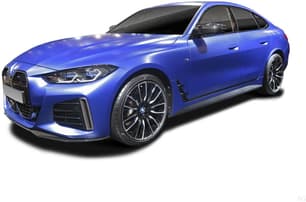
Enter the new i4, which comes as one of three new EVs to join BMW’s stable in 2022 alongside the iX and iX3.
But what makes the i4 different from the other models is that it’s trying to replicate BMW’s much-loved sports sedan formula, with an all-electric powertrain.
So, does this stylish sedan do enough to tempt you away from a petrol or diesel engine?
Something important has shifted.
This is the Skoda Enyaq facelift. Yes, it’s been barely a year since the original finally launched in Australia, after endless delays, in September 2024. And they’ve already gone and changed it.
Yet there’s more going on here than merely updating an ageing mid-sized SUV electric vehicle (EV), because Volkswagen’s Czechian brand is rediscovering its roots. The era of the $40K supermini seems to be passing.
And that’s terrific news for buyers and likely terrifying news for rivals like the BYD Sealion 7, Kia EV5 and Tesla Model Y.
Welcome, then, to the 2026 Enyaq Series II. Does sharper pricing stand for ‘Extra Value’ in this family-focused EV? Let’s find out.
If you’re intimidated by the electric future, don't be, because BMW’s i4 is just as good as any non-M sedan BMW offers right now.
The i4 delivers all the things you love about a 3 Series, engaging driving dynamics, a well-appointed interior and comfortable ride, but its all-electric powertrain means you’ll never have to stop at a servo again.
With a large battery on board, the i4 also serves up a decent driving range that should put anxiety-prone EV drivers at ease.
That is, of course, if you can get onboard with the looks.
The Enyaq facelift is a big deal, and hopefully the start of a fresh era for Skoda, marking a long-overdue return to brand values. Its first Toyota RAV4-sized family EV SUV nails it for value, functionality, comfort, ease, driving enjoyment, efficiency and even the overall ownership experience.
We have yet to drive the base 60 Select with that headline low price so cannot make a definitive call, but the more-expensive 85 Sportline proves Skoda is taking the family EV very, very seriously. Consumers considering a BYD Sealion 7, Kia EV5 or Tesla Model Y would do themselves a disservice to not check out the Enyaq first. The most convincing Skoda in years.
Note: CarsGuide attended this event as a guest of the manufacturer, with travel, accommodation and meals provided.
If the i4 looks familiar, that’s because it is based on the 4 Series Gran Coupe that entered showrooms last year.
This means a four-door liftback body style with a sloping roofline, athletic proportions and sizing close to the Tesla Model 3 and Polestar 2.
Let’s get it out of the way early and talk about the elephant in the room, the oversized front grille.
Say whatever you want about it, there’s no denying it gives the i4 a unique and head-turning look, and in my opinion, it’s not too bad.
In the flesh, it really isn’t as big as the press photos have made it out to be, and with the front numberplate to split it up, it does start to look a bit more like a traditional grille.
In profile, the 19-inch wheels fill out the arches well, and hide the massive brakes that add to the i4’s sporty appearance.
I particularly like the almost flush door handles that look futuristic, but aren’t as pretentious as those retractable handles you see on Teslas and Range Rovers.
Slim tail-lights and a chunky bumper inform the styling of the i4’s rear, but we’re really not a fan of a rear diffuser that keeps the exhaust cut-outs.
It makes sense on a model like the 4 Series Gran Coupe, but it just looks look rather odd on an all-electric model like the i4.
While the outside of the i4 might be all about that big grille, the inside is all about big screens, two of them in fact.
The instrumentation and multimedia screens dominate the experience inside, but BMW has also included physical buttons on the steering wheel and centre stack, as well as a rotary control knob, to make navigating the menus that much easier.
The connected screens differentiate the i4 from its 4 Series Gran Coupe relative, and make the cabin feel futuristic and befitting of the all-electric powertrain.
Overall, the i4’s styling might not be to everyone’s tastes, but BMW definitely gets credit for being bold in its aesthetic choices.
Would have been nice to see BMW’s designers go a bit further in differentiating the i4 from its 4 Series Gran Coupe cousin, but there's no denying the head-turning appeal of this all-electric sedan.
Fun fact. The Czech-built Enyaq’s handsome nose treatment was inspired by the Mandalorian helmet in the Star Wars universe. It’s a massive improvement over the old Kodiaq-esque proboscis that the previous version wore, almost as a mask of apology for being an EV.
Along with the addition of a more-traditional SUV bodystyle that seems to really suit the restyled front, key changes include improved airflow for some pretty impressive efficiency-enhancing aerodynamics (now down slightly to 0.225 Cd and 0.24 Cd for the Coupe and SUV, respectively), varying LED lighting elements according to grade, redesigned wheels, new colours and the abolition of the old Skoda logo for lettering.
Compared to the pre-facelift version, the new Coupe is 5.0mm longer at 4658mm, the same width at 1879mm, 2.0mm higher at 1623mm and 1.0mm-longer in wheelbase at 2766mm. Except for being 1.0mm shorter, surprisingly, these are also the same dimensions for the latest SUV shape.
The Enyaq’s cabin has been subtly revised as well, with a larger touchscreen boasting physical buttons and updated software for improved functionality, though the basics – which have always been sound – remain.
Being a more practical and family-orientated model, the SUV seems more consistent with Skoda's no-nonsense brand values, putting function over form. If you want form over function, go for the (albeit still practical) Enyaq Coupe.
As a premium mid-sized sedan, the BMW i4 offers up enough storage and space for most, but keep in mind there are limitations.
From the driver’s seat, everything is well placed and the electronically adjustable seats offer plenty of adjustability to get comfy for long road trips.
Storage options include an central cubby, glove box, two cupholders and small door pockets that just about fit a bottle, but the design means it rattles around a little.
Speaking of fiddly, between this car, and the weird plastic cowl thing found in the Z4 and 1 Series, BMW needs to be called out for some of the most annoying wireless smartphone charger designs.
This one is tucked all the way under a retractable lid, and is barely wide enough to fit some flagship-sized phones.
However, we will give BMW huge props for its iDrive8 multimedia system, which is displayed on a huge 14.9-inch screen.
The menus are clear, concise and intuitive, while the software is buttery smooth and responsive. It feels snappier than some phones we’ve used in the past.
Credit too for not making all inputs touch, as there is a rotary control knob and voice command capability available.
In the second row, things are a little more cramped, but at 183cm tall I can fit in the outboard seats with tight headroom.
There’s enough leg and shoulder-room, too, and passengers can make use of the climate controls, USB-C charging ports and a fold-down-centre armrest with two cupholders.
Opening the boot reveals 470 litres of volume, but fold the rear seats down and that pace swells to 1290L.
Loading large and bulky items is made much easier thanks to the liftback design, and it’s important to note i4 buyers aren't penalised in terms of practicality as the i4 and 4 Series Gran Coupe share the same boot capacity.
However, the charging cables can get in the way, as there isn’t any dedicated space for them.
The charging point is also in an annoying spot, in the right-rear fender where the petrol cap would be.
It means that you always have to reverse into charging spots, and it can be tricky to manoeuvre the i4 into just the right position to get the charging cable to reach.
The Nissan Leaf's front centre charging port, or the dual charging ports available on the left and right fenders in the Audi e-tron or Porsche Taycan are preferable.
Either Enyaq body style majors on practicality. Large doors open wide, high seating points allow for easy entry/egress, and – once sat – there is an abundance of interior space. Like, heaps.
Where the SUV beats the Coupe is in extra glass area, since the higher – or more formal – roofline allows for bigger windows that in turn improve vision out. And more cargo capacity of course.
Only two 85 Sportline models were available for us to review at the launch, so we cannot tell you about the feel and finish in the new base 60 Select grade. But in Sportline, the ambience bristles with upmarket aspiration, thanks to synthetic leather/suede trim, high-quality plastics and nice contrasting materials. Showy but not overdone.
No complaints about the driving position either, due to a pleasing amount of seat adjustment. Those sporty buckets, by the way, are superb (pun intended) providing ample comfort and support. They look cool, too.
The VW Group has obviously listened to criticism over the glitchy electronic multimedia interface in the earlier MEB vehicles, because the 2026 Enyaq’s 13-inch touchscreen is blissfully easy and drama-free. It may not have the crisp modernity of the vast all-in-one displays found in most Chinese alternatives, but for functionality, it gets the job done.
Key points to keep in mind are that all the major vehicle controls, from climate and audio to phone and car settings, are accessed via buttons or toggles either permanently on the screen or as actual hard switches below the vents.
As such, the display is responsive, feels slick to the touch and looks the business, and doesn’t even attempt to distract you to the degree of many others. Even the volume slider is effective. Possibly the best ever experienced.
Even in driving rain and ensconced in thick fog, the ventilation system made light work of clearing the screen and maintaining the desired temperature. You gotta love German cars for that. Myriad storage options include a hungry glove box, handy centre console with ratcheting armrest for extra comfort and even flocked door bins for bottles and other bits and bobs. And let’s not even mention the umbrella storage within. Skoda’s most enduring calling card, surely.
Result? There aren't shortcuts inside today’s Enyaq, making this one of the most thoughtfully presented EVs, period.
Likewise, the rear seat. Large in structure and equally-friendly in nature, you could be forgiven for thinking you’re sat in an Audi, such is the look and feel in the 85 Sportline. Surely to the annoyance of Q4 e-tron owners. We imagine the 60 Select would seem more like a grey flannel suit, texturally speaking. Which has its own aesthetic appeal for some.
The wide (fixed) bench should fit three across in comfort, vision out is enhanced by narrow front seats to lessen the sense of confinement, and all the little helpful things are present and ready to serve. Vents for faces. Temperature controls. USB outlets for devices. An armrest for elbows. Two types of cupholders – as over-engineered in said armrest as the one within a removable caddy on the floor feels flimsy. Door storage for days. Slots for phones. Sleeves for maps. Lighting for reading. Handles for scaredy cats. And hooks for coats. Skoda puts the metaphorical yak in Enyaq.
Finally, in the business end out back is a massive load area, defined by a high-opening (and powered, remember) tailgate, low ‘n flat floor and typically sensible additions like standard charging cables, remote seat-back folding, shopping hooks, underfloor storage and extra lighting. Capacity is 585 litres in the SUV, up from 570L in the Coupe, while extending the luggage area by dropping those 60/40 seatbacks boost volumes to 1710L and 1610L respectively. Great for sleeping in. Braked trailer towing capacity is 1000kg.
About the only real black mark is the lack of a spare wheel, which could turn a trip away into a nightmare. Instead, the poor Enyaq owner and their family must rely on a tyre inflation kit, which is useless if the wheel has been gashed and is expensive to replace. Destroys the tyre even if it’s just a fixable puncture. Not good enough.
Otherwise, you’ll struggle to find a more-complete, family-focused medium SUV EV. Singles should get a kick out of it too.
With a name like i4, you might be mistaken for thinking this is the sequel to the cute and quirky i3 hatchback released back in 2014.
But sorry duology fans, it isn’t.
Based on the same platform as the ever-popular 3 Series, the i4 is essentially an all-electric version of BMW’s 4 Series Gran Coupe.
And sadly, in 2022 an all-electric powertrain means a price premium.
The i4 kicks off at $99,900, before on-road costs, for this eDrive40 grade - $16,000 more expensive than the comparable 430i Gran Coupe.
Standard equipment includes 19-inch wheels, LED headlights, keyless entry, push-button start, 12.3-inch digital instrument cluster, head-up display, wireless smartphone charging, sports seats, three-zone climate control, interior ambient lighting and a powered tailgate.
Handling multimedia duties is a humungous 14.9-inch touchscreen display, powered by BMW’s latest 'iDrive8' software with features including satellite navigation, wireless Apple CarPlay and Android Auto support, a 10-speaker sound system and digital radio.
Stepping up to the M50 version adds laser headlights, a rear spoiler, sunroof, 16-speaker sound system, metallic paint and heated front seats, but also moves the asking price to $124,900, or $9000 pricier than that M440i Gran Coupe.
Of course, the i4 M50 also scores a dual-motor, all-wheel drive set-up and more potent performance, but we’ll go into more detail about that a little later on.
Is $100,000 too much to pay for an electric mid-sized sedan? Well, the most expensive versions of the Polestar 2 and Tesla Model 3 are much more affordable than this base i4, but then again, neither of those are wearing a BMW badge.
Years ago, an international Skoda boss revealed to us that their brand offered, roughly speaking, 10 per cent more VW for 10 per cent less money and 10 per cent less technology.
So, a decade ago, a base Octavia cost less than the smaller Golf that it was derived from, but cruise control wasn’t standard (or operated via a stalk rather than the VW’s steering-wheel buttons) while the rear suspension featured simpler torsion beams rather than a costlier multi-link set-up.
Skoda was all about being cheaper to build. But things became muddy when both brands started chasing premium buyers, closing the price gap. For these and other reasons, Skoda sales are down. China’s emergence and bullish brands like Kia have also taken their toll.
Which, now, is why the decision has been made to fight back by harking back to previous values, starting with the facelifted Enyaq for 2026, introducing the SUV wagon version hitherto unavailable in Australia.
A new, lower-specification 60 Select version debuts and it starts from a sensational $50,990 (all prices are before-on-road costs). This compares to the old Enyaq Coupe’s $69,990 opener. This is a night-and-day difference.
That’s right. An electric mid-sized SUV from Europe, for not much more than the Chinese Geely EX5 and Leapmotor C10 EV SUVs, and less than the BYD Sealion 7, Kia EV5 and Tesla Model Y that are also from China at the time of publishing.
In fact, the Skoda’s about on a-par with mid-spec hybrids like a Toyota RAV4 and Hyundai Tucson HEVs.
Okay, do keep in mind that the 60 Select grade has a bit less power, at 150kW, and a smaller, 63kWh battery offering 410km of range, compared to the new, $59,990 85 Sportline’s 210kW, 82kWh battery and 547km range.
But, it’s still more than enough performance and battery for most buyers on a budget and is consistent with the EV best-sellers in this class. Crucially, the 60 puts a brand-appropriate distance between the Enyaq and the very-closely-related VW ID.4 Pro 82kWh (also from $59,990), as well as its Cupra Tavascan Endurance 82kWh (from $60,990) and Audi Q4 45 e-tron 82kWh (from $84,900) cousins.
And, being native EVs based on the VW Group’s widespread 'MEB' 400V architecture (like the ID.4, Tavascan and Q4), both the Enyaq 60 and 85 are rear-wheel drive, with a motor mounted out back. A bit like the old Skodas of the Cold War era…
Speaking of Socialist things, please note that some of the Chinese brands do include more kit for less cash, like a glass ceiling, synthetic leather upholstery and powered front seats.
But, for a base Enyaq, the 60 Select isn’t exactly barren, with keyless entry/start, adaptive cruise control, a 13-inch touchscreen display with wireless Apple CarPlay/Android Auto, a wireless charger, digital radio, heated front seats (with adjustable lumbar support), front and rear climate control, front/rear parking sensors, a gesture-operated powered tailgate, an umbrella in one of the doors, charging cables, luggage nets, a removable storage caddy, 19-inch alloy wheels and a seven-year warranty. But no spare wheel, sadly, just a tyre repair kit.
Also fitted are the seven airbags and full ADAS advanced driver-assist systems, including autonomous emergency braking (AEB), lane-support tech and rear cross-traffic alert. And you can find out more on those in the safety section further down.
The racier-looking 85 Sportline adds more muscle and range, as well as matrix LED headlights, leather and synthetic-suede trim, powered, heated and massaging front seats, heated rear seats, regenerative-braking paddles on the steering wheel, 20-inch wheels and more.
Plus, luxuries like a surround-view camera, a head-up display, premium audio, adaptive dampers and 21-inch alloys are bundled up in the 'Ultimate Pack' as a $5000 option. That, and a fixed glass roof, are standard in the flagship Enyaq Coupe 85 Sportline, while a panoramic sunroof with electric sunshade costs $2000 extra in the SUV versions.
Three distinct Enyaq models for now, then, with a high-performance RS with twin motors and AWD returning sometime in 2026.
These make the Skoda excellent value, particularly considering its size and packaging.
If there’s one thing BMW knows how to do well, it’s building a sports sedan like no other. And that holds true for its EVs.
Powering this i4 eDrive40 is a single electric motor that produces 250kW/430Nm, which beats the outputs of even the 330i and 430i Gran Coupe.
With drive sent to the rear wheels, the i4 eDrive40 can accelerate from 0-100km/h in just 5.7 seconds, beating out the aforementioned 330i and 430i models.
For those that want a bit more pep, the top-spec M50 grade’s dual-motor set-up punches out 400kW/795Nm for a lightning quick 3.9s 0-100km/h run.
Compared with its petrol-powered 4 Series Gran Coupe counterpart, the i4 certainly puts up respectable figures, while offering more than a performance match for the Polestar 2 and Tesla Model 3.
Note there is no under-bonnet storage in this EV. Or even a motor in the rear-drive 60 and 85 grades. You’ll find that by the rear axle, instead.
It is a permanently excited synchronous unit, driving the rear wheels via a single-speed transmission.
In the 60 Select, it makes 150kW of power and 310Nm of torque, to propel the base Enyaq from 0-100km/h in 8.1 seconds, on the way to a 160km/h top speed.
Meanwhile, the 85 Sportline lives up to its name with a 210kW/545Nm upgrade, slashing the 0-100km/h time to 6.7s whilst increasing top speed to 180km/h.
With an 84kWh battery the official range on this i4 eDrive40 is pegged at 590km when tested to WLTP standards.
However, when fully charged, our test car's range readout was around 390km.
But keep in mind EVs aren’t as effective in cold weather, and the mercury was showing only three degrees on most days during this freezing Irish winter.
Luckily then, BMW has included DC fast-charging capabilities in the i4 as standard, with its 210kW CCS plug able to take the battery from 10 to 80 per cent in around half an hour.
BMW has included DC fast-charging capabilities in the i4 as standard, with its 210kW CCS plug able to take the battery from 10 to 80 per cent in around half an hour.
Using an 11kW AC charger however, will require 8.5 hours for a full charge.
In a week with the car, I averaged an energy consumption rating of 23.4kWh per 100km, almost matching the official figure of 22.2kWh/100km.
My driving included several long-distance trips on the freeway, however, an environment in which an electric vehicle does not excel.
Worth noting the heavier and more energy-hungry M50’s official driving range drops to 510km, but we’re yet to test its real-world figures.
How efficient are these newly-more-aerodynamic Skoda EV SUVs?
The Australian official combined energy consumption average is 15.9kWh/100km for the 85 Sportline SUV and 15.5 for the Coupe version, with the latter’s swoopier lines contributing to the lower figure.
That also translates to better WLTP range at 561km versus 547km in the 85 Sportline SUV.
No local consumption numbers are yet available for the 60 Select, but in Europe it averages 15.1kWh/100km; the WLTP range is 410km.
AC charging is 11kW and DC charging is 165kW in the 60 Select and 135kW in the others. The lower figure reflects better thermal management whilst still achieving the same result.
Charging from empty to full at home using a normal plug could take up to 40 hours, or nearly 13hr with an optional 7.0kW wallbox, while using a common 50kW DC fast charger on the go to get a top-up to 80 per cent takes about 80 minutes.
One of the benefits of the smaller-battery Enyaq 60 is that those charging times can be cut by about 20 per cent.
So much for the theory. Out in the real world, we managed to consume around 16.1 kilowatt hours per 100km in the standard Sportline, and 16.5kWh/100km in the Ultimate version with the larger 21-inch wheel and tyre package.
That's still pretty efficient.
If you came here just to find out whether BMW has succeeded in transplanting its signature sports sedan characteristics into the all-electric i4, the answer is, yes.
The best thing I can say about the i4 is that, aside from the way power is delivered and the lack of engine and exhaust noise, it feels just like a 3 or a 4 Series.
Steering is sharp and responsive, throttle and brake inputs are immediate, making this rear-drive i4 a delight to drive enthusiastically.
The staggered Michelin Pilot Sport 4 tyres and massive brakes obviously help in this regard, and look, it’s not as sharp as the Porsche Taycan, still the sharpest electric vehicle we’ve driven to date, but the driving experience in this i4 is comparable to the excellent 3 Series.
But I’m not in love with the fake sound piped into the cabin when in 'Sport' mode. It sounds weirdly low-rent and I much prefer to accelerate to triple digit speeds in serene, near-silence.
Switch things up to 'Comfort' mode, and the i4 makes for a surprisingly relaxed drive.
The steering gets bit a looser and the adaptive dampers ease off a little, soaking up bumps and road imperfections with minimal affect to occupants.
Pair this with the nearly-silent electric powertrain, and well, our little one in the back seat has fallen asleep on more than one occasion in my time with the car
You can also adjust the level of regenerative braking in the i4 and operate it with one pedal like in the Nissan Leaf and Hyundai Ioniq 5.
This is a more efficient way to drive an EV as it forces you to look ahead and be careful with your throttle inputs.
One-pedal driving might not be for everyone, but it’s nice to have the option there.
Sadly, no Enyaq 60 Select was available at the launch event – understandable given it won’t arrive at Skoda dealers until November.
But we were in for a treat anyway, because, on the strength of the 85 Sportline, the Enyaq shines, emphatically, solving a riddle as to why European reviewers have been so partial to this model since it debuted in late 2020. And the Series II facelift we have here only serves to heighten the experience.
This is a rapid EV off the line, as the 6.7-second 0-to-100km/h figure attests to. Out on Australian real-world roads, it feels even stronger than that, with urgent acceleration and instant throttle response. And all while being really very smooth, premium-luxury smooth. We’ve driven the Q4 e-tron and Cupra Tavascan with the same powertrain and we’d struggle to tell them apart from behind the wheel.
And so on to the steering, handling and roadholding.
The Enyaq behind the wheel feels light but planted, with just enough feel and interaction for the driver to feel involved and connected. Armed with a trick variable-ratio steering rack, the way the 85 Sportline tips into corners so fluidly, even at higher speeds, reveals a reassuring level of body control. And this isn’t even the RS AWD performance version.
We had reservations about this grade’s standard 20-inch wheel and tyre set-up, with passive suspension, but we need not have worried… as much.
Over quite bad roads in NSW's Hunter Valley, the Skoda dealt with larger bumps well, if also always firmly. Rarely was the ride jarring, but occasional jolts were felt over smaller-frequency stuff. We feel this would be more of an issue in the inner-urban big-city streetscapes, but were not able to assess that at this time.
In contrast, the 21-inch Ultimate version, with adaptive dampers, smothered over much of what the bitumen threw up at us, soaking up the surface in similar fashion to most luxury SUVs fitted with active suspension tech. There’s still an underlying stiffness there, but you’d never call it uncomfortable.
There's a bit too much road noise coming through, though, making that the Enyaq’s biggest dynamic complaint, regardless of specification. Again, the (Pirelli-shod) 21s did it better than the 20s. We wonder what the 19-inch 60 Select version will ride and sound like inside.
Otherwise, the Enyaq is almost annoyingly difficult to fault.
Progressive and instantaneous braking, a well-managed level of regenerative braking, a very tight turning circle, easy vision out to further boost driving confidence, and nuanced advanced driving-assist system (ADAS) intervention all elevate the Skoda way above most rivals, especially those from China with inadequate Australian-road tuning. This is how it’s done, folks.
So, yes, on initial acquaintance, Skoda’s first EV is impressively sorted, offering something for the driver and their occupants. It drives like a much-newer vehicle than its five years on the world market suggests.
Clearly, the brand has had time to iron out the bugs and what we're left with is a very user-friendly, easy and enjoyable EV SUV.
BMW’s i4 is yet to be tested by ANCAP or Euro NCAP, so at the time of publication, doesn’t wear an official crash test rating.
Neither does the closely-related 4 Series Gran Coupe, but the 4 Series Coupe, launched in 2019, received a maximum five-star assessment.
It is unclear how much the changes in body style and powertrain affect the safety of occupants, but the i4 comes with long list of advanced safety features.
Specifically, autonomous emergency braking, lane-keep assist, adaptive cruise control, traffic sign recognition, high-beam assist, a surround-view camera, parking assist, blind-spot monitoring and rear cross-traffic alert are all included at no extra cost.
The pre-facelift Enyaq scored a maximum five-star ANCAP assessment and that was from Euro NCAP testing back in 2021. There hasn’t been a more recent result released.
All models feature a full suite of advanced driver-assist systems, including Autonomous Emergency Braking (operable from 5.0km/h) for pedestrians, cyclists and other vulnerable road users, as well as car-to-car, lane departure warning/assist (from 65km/h), rear cross-traffic alert, blind-spot warning, full-stop adaptive cruise control, exiting-vehicle alert tech, a driver-attention monitor and tyre pressure indicators.
There are seven airbags, including dual front, front-side, head and a front-centre item, as well as rear outboard occupant side and head coverage.
A trio of child-seat top tether points are fitted across the back seat, along with ISOFIX child-seat anchorages in the front passenger seat and two in the rear outboard positions.
Like all BMWs sold in Australia, the i4 comes with a three-year/unlimited kilometre warranty with roadside assist over that period.
This falls short of the now-standard five-year assurance periods offered by premium rivals Audi, Genesis, Jaguar, Lexus and Mercedes-Benz.
Scheduled servicing intervals for the i4 are every 20,000km/24 months, at least in overseas materials.
Australian intervals are yet to be confirmed, but BMW is offering service price plans covering four- and six-year periods in 'Basic' and 'Plus' forms.
The Basic plan for four and six years is set at $1240 and $1765 respectively, while the Plus package is $4805 and $5500.
You’re also in for decent peace of mind, thanks to Skoda’s seven-year/unlimited-kilometre warranty. Service intervals are every two years or 30,000km – whichever comes first. An eight-year/160,000km traction battery warranty also applies.
No capped-price servicing is offered, but pre-paid service packs have been announced for the 85 Sportline models. These are an eight-year/120,000km offer at $1650 (which averages out annually to $206) or a 10-year/150,000km offer at $1950 (which averages out to $195 annually).
There are over 40 Skoda dealers dotted around Australia, and around 65 authorised servicing outlets, some of which are general Volkswagen dealer centres.
All extremely competitive, especially for a German-owned European brand. Which sums the Enyaq up to a tee.